Home Blog Page 1283

NNPC Ltd. reassures public with over 1.5bn litres of petrol

0

The Nigerian National Petroleum Company (NNPC) Ltd. says it has over 1.5 billion litres stock of Premium Motor Spirit (PMS), also known as petrol, which will last for over 30 days.

Mr Olufemi Soneye, Chief Corporate Communications Officer, NNPC Ltd., said this in a statement on Tuesday.

The company called on motorists to shun panic buying of the product as the nationwide supply and distribution of PMS continued to improve across the country.

“In the filling stations monitored across several states, including Lagos and the FCT, the queues have since thinned out, a development that will keep improving daily in other states.

National growth LS

“The Company wishes to state that at the moment, it has over 1.5 billion litres stock of PMS, which is equivalent to over 30 days sufficiency.

“The NNPC Ltd. is also collaborating with relevant agencies, such as the Nigerian Midstream and Downstream Petroleum Regulatory Authority (NMDPRA), labour unions in the sector and security operatives to address hoarding and other unwholesome practices,” he said. (NAN) 

By Emmanuella Anokam

Reps decry increase in cement price

0

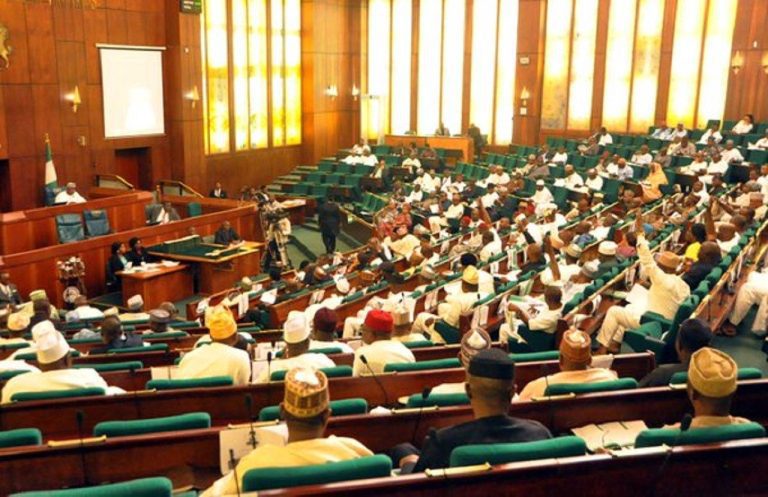
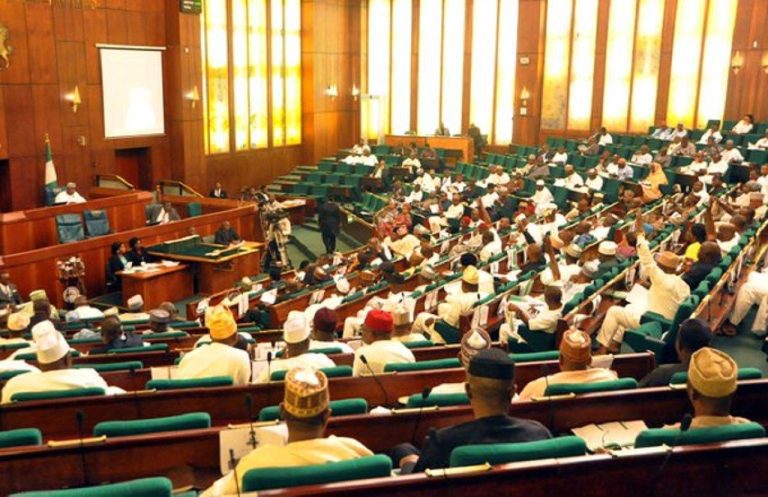
The House of Representatives, has expressed worry over continual rise in the price of cement, saying it is detrimental to the entire economy.

The Deputy Speaker, Rep. Benjamin Kalu said this at an investigative hearing on Arbitrary Increase in Cement Price in Abuja on Tuesday, organised by the House Joint Committee on Solid Minerals, Industry, Commerce and Special Duties in Abuja.
Kalu said that cement remained a fundamental component in construction of vital infrastructure such as bridges, dams, houses, waterworks, and road.

He said that Nigeria had a housing deficit of 16.9 million going by statistics.
“According to the World Bank, Lagos, Ibadan, Kano, and Abuja, have a 20 per cent rise in housing needs yearly.”
He said that the total output in the formal housing sector was estimated at not more than 100,000 units.

The lawmaker added that bridging the gap required affordable and accessible cement prices for both the government and the private sector.
He said while factors such as exchange rates had contributed to rising prices of commodities, it was encouraging to see the value of naira increasing sharply against dollar.
“Notably, the naira has shown remarkable strength against the dollar in past weeks, and Fitch Ratings, a global credit rating agency, recently revised Nigeria’s credit outlook to positive from stable.
“We are also dedicated to enacting laws that prevent a recurrence of the factors that led to the current situation,” he said.
Speaking, the Chairman of the committee, Rep. Jonathan Gaza, said the recent hike in the price of cement was worrisome.
‘’Nigeria has high deficit of housing and other infrastructure.
“To close this gap, both government and the private sector must be articulate and deliberate in putting the right policies and parameters in place to encourage development.
“Therefore, should the price of cement which is a major component for infrastructure development continues to soar uncontrollably, the tendency to stifle life out of that sector is high and the consequences very detrimental,” Gaza said. (NAN)

National growth LS

By Femi Ogunshola

Sim Boxing, and the unboxing of a crime syndicate

0

Boxes have a multitude of uses, and the word “box”, lends itself to diverse contexts. For “Ajala Travelers,” the box is a necessity for keeping goods for their endless journeys. In literature, idiomatically, it can be said that “one has been boxed into a corner;” another might say to deal with a conundrum: “think outside the box;” then there is the “Pandora’s box” that no one wants opened. To “box one’s ear’s” refers to a hit on the head, especially around one’s ears. For those who celebrate Christmas, “Boxing Day,” which is the 26th of December, the second day of Christmastide is not to be joked with: A day to unbox gifts. So much for the box.

Another type of boxes exists in the telecommunications world: The SIM Box. Have you ever received an international call but saw a local phone number ring in? That is SIM Boxing in action. Let me explain.

SIM boxing happens when a person uses a special equipment, what is called a SIM Box containing tens to hundreds of SIM Cards—from 32, to 96, to 512 and more SIMs —to terminate international calls by bringing in the international call into the SIM Box using internet connections and regenerating the calls to the called party from one of the hundred SIMs in the box. This way, the called party will see the local number of the SIM from the SIM Box, and not the original international number calling.

With SIM Boxes, the syndicate charges international call carriers lower rates than what regular Nigerian telecommunications operators would charge, as they do not have to pay the full cost of maintaining and operating a phone network. Basically, they are bypassing the normal route for international phone call termination to terminate international calls cheaply and making windfall profits off it.

National growth LS

Take for instance, a telecommunications operator in Nigeria would ordinarily charge international carriers 10cents per minute for terminating an international call in Nigeria. However, by routing the call through a SIM Boxing syndicate, the international telecommunications carrier only pays a fraction of the charge to the syndicate, say 5cents per minute and does not have to pay the full 10cents per minute charge.

The SIM Boxer will terminate this call to the called subscriber at a rate of, say N15 per minute using one of the SIM cards in their SIM Box. The SIM Boxer thus makes a killing from the differential between the rate charged to the international carrier and the rate paid to telecommunications operators whose SIM they utilise in their SIM Boxes, at the expense of our national security and income of mobile network operators and quality of our service to consumers.

Asides the revenue loss that local mobile network operators suffer courtesy the activities of these syndicates, networks face congestion around areas where the illegal call routings via SIM Boxing occurs. With the huge traffic from the boxes, callers around the area see more dropped calls, poor call quality, and slower data speeds.

The introduction of the linking of National Identity Numbers (NIN) to SIMs is one way the Federal Government has worked to tackle this criminal enterprise. With every SIM in the country being linked to an NIN, an identity is tied to the owner of each line, and regulators now have visibility of ownership. That is not all. There is also the “Max-4 Rule” where a subscriber is not allowed to have more than four lines per network operator linked to his NIN. With this rule in place, coupled with the NIN-SIM Linkage, every telephone subscriber in Nigeria would not just be accurately identifiable but limited to having only four telephone lines per subscriber.

To enforce this rule, the Nigerian Communications Commission (NCC) on the 29th of March 2024 announced the deadline for Mobile Network Operators to bar all subscribers who had five lines and above, and whose NIN failed the verification test of biometrics matching.

Over the last few weeks, sources within the NCC have confirmed cases where a single NIN was linked to over 100,000 lines. Some NINs had well over 10,000 SIMS linked to them, others over a thousand, others had hundreds. Many have questioned the reports and asked, what would any single reasonable person be doing with these number of lines? Justifiable questions, because no sane person—who is not running a business—should own more than five SIM cards.

Given the ‘Max 4 Rule’ in place and the NIN-SIM Linkage Policy, SIM Boxers have been boxed into a corner. The applications they use require tens to thousands of SIM Cards, and the imperative to stay anonymous. If these policies are well and fully implemented, this is the death knell for SIM Boxing merchants.

But the regulator, NCC needs to be fast and ready for the battle ahead. SIM Boxing is a billion-dollar criminal enterprise. They are not going to go down without a fight. It is like taking a bone being chewed from the mouth of a bulldog.

Already, the battle seems to have kicked off. A lawyer, Barrister Olukoya Ogunbeje has recently taken the Federal Government, NCC and Mobile Network Operators to court, claiming that the barring of SIMs not linked to NINs goes against his fundamental human rights, and has cost him the loss of business opportunities. Anyone who has Nigeria’s interest at heart ordinarily supports this policy. It then does not add up seeing a so-called activist lawyer take up such a matter that is clearly against the public interest—unless this is the Haka cry of SIM Boxers.

A most interesting observation with his case is that it is not even a class action, but individually driven. It begs the question then, who is funding Barr. Olukoya Ogungbeje? What is his interest in fighting this policy that puts paid to the business of a criminal enterprise? Is he funded by interests in the SIM Boxing world? Time would tell. But in the meantime, NCC must go head on without fear or intimation and clean the Augean stable of SIM ownership in Nigeria.

Suleiman Bala Bakori is a researcher, and writes from the FCT (First Published on Premium Times)

Oborevwori tasks govt agencies, others on effective use

0

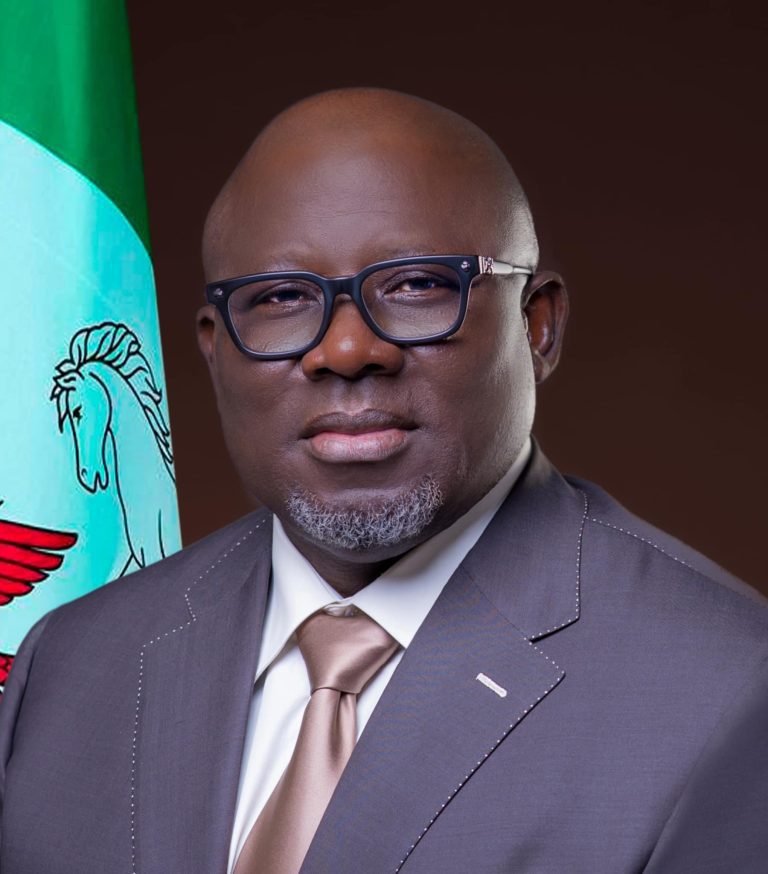
The Delta State Governor, Sheriff Oborevwori, has urged government agencies and other employers of the National Youth Service Corps (NYSC) members to accept and utilise their services effectively.

Oborevwori said this at the official closing ceremony of Batch ‘A’ Stream 11 corps members deployed to the state at the NYSC Orientation Camp, Issele-Uku, on Tuesday.
The governor was represented at the event by Prof. Nyerhovwo Tonukari, Commissioner for Higher Education.

He also urged the local government chairmen, traditional rulers, community leaders and security agencies in the state to prioritise the security of corps members.
“Our environment must become worthy ambassadors of the NYSC, your families and the nation,” he said.
He called on corps members to avoid quick gains that could tarnish their reputation and endanger their lives.
“The state government will continue to ensure that you are provided with an enabling environment to enhance your performance during the service year.
“But you must live up to expectations and Delta State is known for its safety and hospitality.
“I sincerely hope that you have absorbed the lessons of the orientation course, which was put together to instil in you the cultural values and ideals of the NYSC.
“I am aware that it also imparts self-employment initiatives and knowledge that will be invaluable beyond your national service,” he said.

The governor also encouraged them to utilise the Skill Acquisition and Entrepreneurship Development (SAED) programme which they had been exposed to.
He described the initiative as a deliberate strategy aimed at tackling unemployment.
“I urge you to internalise every lesson learnt during the orientation exercise, as these will guide you throughout the service and thereafter.

National growth LS

“l assure you of the warmth and support of Deltans wherever you are posted for your primary assignments,” he said.
He urged the corps members to respect the cultural norms and traditions of the communities where they find themselves.
“While there may be differences between their ways of life and yours, strive to show understanding and adaptability as part of your national service.
“The Delta State Government is committed to its responsibilities to the NYSC and corps members.
“We will continue to do everything within our limited resources to fulfill these obligations,” he said.
Mr Olusegun Alao, State coordinator NYSC, urged corps members to render rewarding service to their host communities.
Alao enjoined them to be exemplary teachers and positively impact on the lives of their pupils and students.
“To my dear corps members, I am delighted to send you out to the various local government areas in the state.
“Carry with you the knowledge gained during your stay here on camp. Your service year is an opportunity to give back to the community.
“Display your educational background, creativity, and leadership abilities. I also urge you to enhance your skills through the SAED post-camp training,” he said.
The state coordinator also commended the state government for its unwavering support to the scheme.
“I express profound gratitude for your unwavering support to the NYSC. We eagerly anticipate your promised intervention to address the challenges,” he said.
He also urged community leaders and corps employers to treat corp members posted to them as their own children and prioritise their welfare and security. (NAN)

By Clara Egbogota

Response operations: Police deploy 30 motorcycles,

0

The Police Command in the Federal Capital (FCT) has deployed its personnel and 30 motorcycles to rural communities in the territory to enhance security response operations.

The Police Public Relations Officer in the FCT, SP Josephine Adeh, stated this in a statement on Tuesday in Abuja.

Adeh said the deployment would aid security response operations and enhance the fight against banditry in rural communities in the FCT.

She said the FCT Minister, Mr Nyesom Wike, recently donated 30 motorcycles to the command in his continuous commitment to the security and safety of residents.

National growth LS

According to her, the motorcycles were donated to enhance security response operations in the remote and rural communities in the nation’s capital where bandits and kidnappers have recently turned to hideouts.

She emphasised that the deployment of the motorcycles, painted police colors, was made to aid swift operational response to communities and areas where vehicles may not easily access in emergency situations.

Also, the Commissioner of Police in charge of the FCT, Mr Benneth Igweh, commended the minister for the gesture and pledged to effectively utilise the motorcycles.

Igweh urged residents to be vigilant and take advantage of the police emergency lines-08032003913, 08028940883, 08061581938 and 07057337653- to report suspicious activities. (NAN)

By Monday Ijeh

NGO trains journalists, stakeholders on ‘EWER’ software in Kaduna

0

An NGO, Mercy Corps and Peace Action for Rapid and Transformative Nigerian Early Response (PARTNER), supported by USAID, has trained some journalists and other stakeholders the utilisation of the newly-developed ‘Early Warning and Early Response (EWER) software.

  on

Cross section of participants at the workshop

The aim of the training, held on Tuesday in Kaduna, was to equip the participants with the necessary skills to effectively utilize the software for transmitting early warning information to the ‘EWER Situation Room’ situated in Abuja.

National growth LS

In an interview, Mr. Steve Agbo, Coordinator of the National EWER Unit at the National Institute for Peace and Conflict Resolution, Abuja, emphasised that the one-day training was crucial for ensuring the collaboration and efficiency of the EWER system among all stakeholders.

He stressed the importance of establishing peace structures across various committees in states such as Plateau, Kaduna, Katsina, Benue, and Nasarawa.

Agbo said, “Today, we gather in Kaduna state to unify and integrate all peace structures.”

He highlighted the significance of understanding the diverse roles and structures pertaining to peace initiatives within different regions, emphasizing the need for collective action to enhance the effectiveness of the early warning system.

 Agbo said that the participants would gain a comprehensive understanding of their respective roles in reporting and responding effectively to early warning signals, thus facilitating a prompt and coordinated response to potential conflicts.’

He further explained that the ultimate goal was to ensure sustainable peace through the efficient operation of the early warning response system.

The News Agency of Nigeria (NAN) reports that the participants emphasised the importance of security agencies keeping their doors open for the citizens to freely report potential conflict signals, while also ensuring the adequate protection of citizens’ privacy.

They stressed that maintaining confidentiality was also  essential for fostering trust and encouraging individuals to report information without fear of reprisal or attack.

The participants also said failure to safeguard confidentiality, could lead to reluctance in sharing crucial information necessary for conflict prevention and resolution.

On his part ,Mr Danjuma Dawop, Chief of Party, Mercy Corps, explained that the training was to foster synergy and coordination among the participants, ensuring seamless conflict reporting from the grassroots level up to the national level.

He underscored the pivotal role of the EWER Situation Room in Abuja, which serves as the central hub for receiving and disseminating early warning reports to relevant security agencies.

During his presentation, Mr John Yisa, Engagement Manager at Mobitech Limited, guided the participants on utilising website platforms effectively for reporting incident signals or occurrences for early response.

 He explained that upon receiving a reported incident, it undergoes verification and is then referred to the relevant personnel for further action through the EWER  toll-free number and websites.

Yisa said that individuals can utilise the website ‘www.partner-ewers.org’, to submit reports, emphasizing the importance of including the date and time of the incident when making a report.(NAN)

By Hussaina Yakubu

Troops’ll receive highest benefits commensurate

0

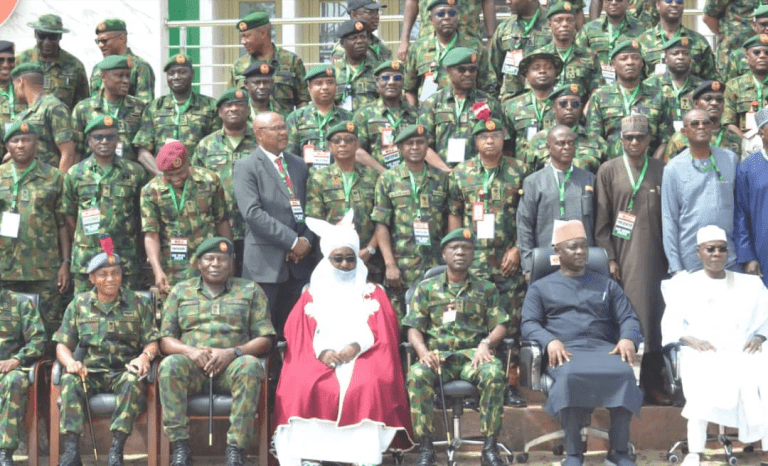
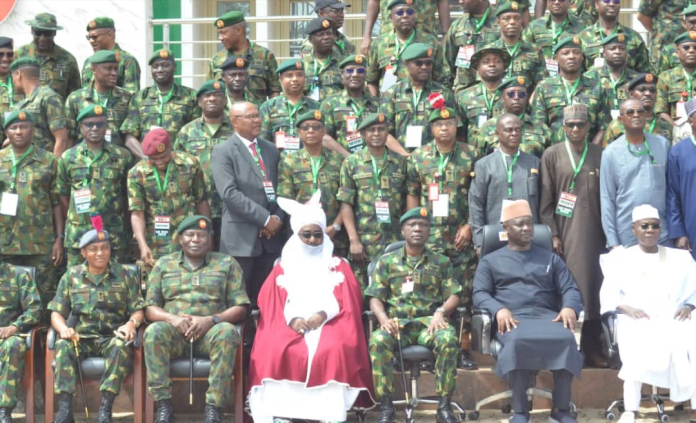
 The Chief of Army Staff (COAS), Lt.-Gen. Taoreed Lagbaja, says the Nigerian Army will continue to engage all the relevant stakeholders to ensure that troops receive the highest benefits commensurate with the sacrifices they make daily in the defence of Nigeria.

 Lagbaja gave the assurance at the week-long, Combat Arms Training (CAT) Week 2024, held at Infantry Corps Centre, Jaji Military Cantonment on Tuesday in Jaji  Kaduna State.

He said, “This event being my maiden CAT Week at the helm of affairs of the Nigerian Army, presents me the opportunity to restate my desire to improve the capabilities of the combat arms towards achieving the constitutional imperatives of the NA.”

Labgaja said the week also presented a unique opportunity for interaction between the combat arms,  other arms and services towards promoting efficiency during operations.

National growth LS

The COAS encouraged all the officers and men in the front lines in the various theatres as well as those serving in other capacities to continue to give their best to ensure the nation is rid of all forms of insecurity.

”Accordingly, all Nigerian Army personnel must remain professional, law-abiding and loyal to the constitution of the Federal Republic of Nigeria as they discharge their constitutional responsibilities,” Lagbaja charged.

The COAS said the event also provided Commanders and Staff Officers the opportunity to chart ways towards sound planning for operations as well as effective leadership and command in combat.

He said, “It further enables brainstorming among commanders and staff of the combat arms to evolve practicable solutions to addressing operational, administrative, and logistic concerns affecting operational efficiency in ongoing and future dynamic contemporary operations.”

Lagbaja said the theme for this year’s CAT Week, “Sound Administration: A Panacea for Improved Combat Arms’ Efficiency in a Joint Environment”, was very apt and relevant as it resonated with a pivotal pillar of his Command Philosophy.

 According to him, sound administration has been established to be among several key indices that enhanced the operational efficiency of all strong military forces over history.

Lagbaja said, “I am committed to ensuring the highest standards of administrative measures are emplaced to enhance the welfare of Nigerian Army personnel and their families so as to enhance operational efficiency.

”Since assuming command as the Chief of Army Staff, I have sustained all administrative endeavours initiated by my predecessors.

“Likewise, I have also initiated some intervention programmes, specifically in the areas of accommodation, loans and family support to enhance troops’ morale.

 “Some of such efforts are the COAS Empowerment Loan Scheme and the Affordable Housing Ownership Option for All Soldiers. “

He said these programmes were among several administrative efforts that would hopefully be actualised under his leadership in line with hisvision for a more efficient Nigerian Army.

Lagbaja said combat arms remained at the core of all the operational activities in the conduct of operations across all theatres of operation.

He added, “I am also not oblivious of the challenges of inadequate spares and assemblies, poor accommodation and other administrative issues that have negatively impacted the functionality of these arms.

“Thus, much of my focus will be directed towards addressing these challenges to achieve operational efficiency. “

The COAS  further said that attention would also be directed towards enhancing the capabilities of the combat arms through training, equipment and sound administration.

He further challenged the combat arms to leverage the skills and competencies inherent in the Combat Support and Combat Service Support Corps for enhancing doctrine and capabilities needed to defeat contemporary threats.

The COAS appreciated  President Bola Tinubu for his unflinching support to the Nigerian Army.

Gov. Uba Sani of Kaduna State, while declaring the week opened, said the government and the people of the state identify with the Armed Forces of Nigeria in general and in this instance the Nigerian Army.

The Governor was represented by the Overseeing Commissioner for Internal Security and Home Affairs Mr Samuel Aruwan .

He said the Nigerian Army remained a reliable and resilient partner in the development of the State, in the light of the current security threats plaguing it.

Earlier, the Commander, Infantry Corps, Maj.-Gen. Olufemi Oluyede, said the CAT Week was an auspicious event in which the Infantry and Armoured Corps, being the combat arms of the NA take turns to host annually.

Oluyede said the event served as a forum for discussing pertinent issues affecting combat arms operations as well as those of the NA at large.

He said, ” The Infantry considers itself privileged to host the first CAT week since the COAS assumed leadership as the 23rd  COAS of the NA.”

Oluyede highlighted that combating the dynamic threats confronting the nation has led to the vast deployment of NA personnel across the country.

 He said, “This situation has overstretched the manpower resources of the NA particularly infantry troops with attendant administrative consequences.

“Some of the noteworthy administrative challenges experienced include obsolete equipment, inadequate manpower and insufficient welfare amongst others which have affected operational efficiency negatively.

“This has impacted on the moral component of the NA fighting power and overall operational efficiency of the force

”However, through the purposeful leadership of the COAS, which seeks to reposition the NA to defeat contemporary and future threats, considerable efforts have been sustained and initiated with significant progress made in addressing these challenges.”

The News Agency of Nigeria (NAN), reports that  Yahaya was also among the past Commanders of the Infantry and Armour Corps as well as other astute retired Generals and servingOofficers  present at the event.(NAN

By Mohammed Tijjani
Troops neutralise notorious IPOB commander, Tochukwu,

0

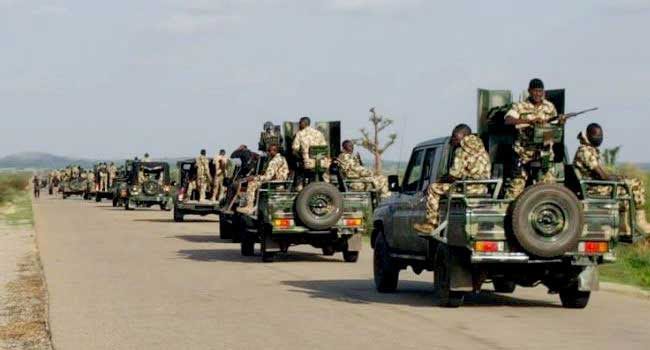
Troops of the Nigerian Army in conjunction with personnel of other security agencies have eliminated a notorious IPOB/ESN Commander, known as Tochukwu, alias Ojoto and two others in encounter at the their camp at Ihiteukwa in Imo.

The post on the Nigerian Army X Handle on Tuesday said the operation was conducted with personnel of the Nigeria Police, Department of State Services, and Nigerian Security and Civil Defence Corps.

It said the troops conducted a successful special clearance operation across the general areas of Udda, Ihiteukwa, and Orsumoghu, along the borders of Orsu and Ihiala Local Government Areas of Imo and Anambra States, respectively.

The army added that the troops encountered members of the Indigenous People of Biafra (IPOB) and the Eastern Security Network (ESN) who had been using the area as a sanctuary.

National growth LS

The army said the insurgents, on sighting troops, employed guerrilla tactics, lobbing improvised explosive devices (IEDs) from concealed positions and  riddling the roads with booby traps.

According to the army, in spite of the terrorists’ guerrilla tactics, troops maintained their resolve and countered the attacks with tactical precision, employing superior firepower to neutralise Tochukwu and two others.

“The operation led to the recovery of firearms, communication devices, narcotics, and personal effects of the terrorists. Notably, two undetonated IEDs, six  detonated IEDs and bomb-making materials were captured by the gallant troops.

“The operation has  dealt a significant blow to the terrorists’ networks in the region.

“The IEDs and bomb-making materials were safely destroyed,” it said.

Army said that its troops had in another operation in Cross River, engaged in a fierce gun battle with a group of  suspected kidnappers in the remote community of Akparanbong in Ikom Local Government Area.

It said that the troops, while on routine patrol stormed the kidnappers’ hideout, leading to a gun battle that forced the kidnappers to retreat hastily leaving behind teo AK 47 Rifles, six Magazines, variety of ammunition and three mobile phones.

According to the army, all the items have been recovered by the troops. (NAN)

By Sumaila Ogbaje

Numbers vs Value, By Dakuku Peterside

0


The issue of minimum wage or salary increase or by whatever nomenclature is a complicated policy issue. The wage increase is neither good nor bad, but as a policy choice, it must be tied to some ultimate objective and benchmarked on the projected cost of living and inflationary trends over a given period. A pay rise can improve employees’ motivation while giving them more purchasing power and disposable income. It may result in businesses being shut down, hyperinflation, joblessness, and a decline in the value of the national currency. At face value, salary increases are a tool to address inequality, poverty, and welfare or an incentive to check corruption. However, the issue is more profound than this surface-level discourse.

Recently, the federal government announced a new salary raise for mainstream federal workers. This is not the new minimum wage; at least, that is what we are told. Some state governments followed suit with discordant tunes. The truth is that for the average Nigerian worker, with headline inflation at 33.2% by March 2024 and food inflation at 40.1%, the current wage is insufficient and cannot sustain any worker. This underscores the need for the government and all labour employers in Nigeria to review salaries. However, the government’s current economic realities and financial position make it challenging to create a salary increase that is not backed by increased value and productivity. While it may seem complicated, this measured approach is necessary to avoid harsh negative implications on the economy and the unintended backlash on people with low incomes and many on the fringes of our society. 

Expectedly a policy to help people experiencing poverty and create some semblance of equity within our socio-economic ecosystem, salary increases for government workers, albeit less than 25% of the workforce, will have ramifications. Given these difficulties evident in the new policy, the government and labour leadership must play a balancing act to midwife a new salary structure that is fit for purpose yet germane to the multifaceted nuances of our current economic reality.   

The wage increase will result in both negative and positive economic impacts. On the negative side, inflation will worsen, small and medium-scale businesses (SMEs) barely managing to survive will be hugely impacted, and the cost of doing business will skyrocket. How many SMEs can afford this increase? Most of the companies are struggling with paying the existing minimum wage, given the rise in the cost of doing business, interest in loans is over 40%, the cost of raw materials is over the roof, consumers with little income are squeezed to a pulp by the constant increase in prices. Besides, how many state governments can afford it? Most Nigerian states have failed to optimize their potential and go cap in hand every month to FAAC. Across a sizeable economic terrain like Nigeria, a uniform nationwide minimum wage may be foolhardy. Costs of living are divergent across the country. States should negotiate with labour unions for acceptable minimum wage structures in different states and geopolitical zones. There may be an urgent need to de-link the minimum wage issue from national politics. 

National growth LS

On the positive side, wages should increase in tandem with the cost of living. It will keep workers motivated and may even help the economy rebound. A living wage is not only desirable but expedient. What Nigerian workers earn today is a “symbolic wage” and has no practical bearing on reality. The federal minimum wage, currently at N30,000, was last raised in 2019 when the inflation rate was 11-12%. The purchasing power of the naira has since been eroded by 276% (compared to the 2019 rate). Nigeria is ranked 44th in Africa for minimum wage, according to Prof. Kemi Okuwa of the Nigerian Institute of Social and Economic Research. These factors indicate the need for a wage increase to address the growing disparity between wages and the cost of living.

When implementing wage  increases, the government must exercise caution to ensure that its devotion to its responsibility   does not have the reverse impact. The government must develop a robust economic plan to  reduce cost of living as well mitigate the ripple effects on low-income workers, SMEs, and the macroeconomy. We remember the infamous Udorji’s Commission saga and its economic impact. Many economic historians have pointed to the significant shake-up of the salary structure by the Udorji Commission as one of the major problems of Nigeria’s economy in the 1970s that upended our pricing system and created significant price inflation in the economy. We must learn from history! A situation where the monetary reward for work is increased but not based on productivity will often lead to unwarranted inflation. 

Productivity and added value creation should be a significant consideration among many bases for ascribing monetary wage increases, not just policy or legislation. Can the government link the increase in public servants’ wages and salaries to measurable productivity? Any increase in the cost of production and labour at this point, with no corresponding increase in added value to production, is not sustainable and often is an aberration to the system. Therefore, a balanced approach that considers both the need for increased wages and the economic reality of our country is crucial. This will ensure that our wage policy is fair and sustainable in the long run.

The problem with government-induced increase is that only a limited number of workers, civil servants at the federal level, will get the money; many states may claim they need the means to pay that. Even if the state civil services pay that, combined with the federal civil service, they make up less than 25% of the employed workforce in Nigeria.   Most of our workforce comprises low-wage workers, whom SMEs and Organized Private Sector firms employ. These small businesses are struggling to pay the N30,000 per month minimum wage, much more than the new minimum wage. This minimum wage will make these workers poorer if they do not get it like the civil servants because they all buy from the same market. 

Besides, making unenforceable laws does not make sense. In other climes, it is against the law not to pay the minimum wage. It is enforced with explicit punishment for breaking the law. In Nigeria, this is different. Nothing happens even if any tier of government fails to pay the minimum wage. Most businesses will completely ignore the new salary structure, and there will be no legal consequences. The government must put some teeth to the new minimum wage rule for equity and justice and at least make it stick across the board. It must also consult widely and make the minimum wage more realistic. 

I understand the need for an increase in salary because of hyperinflation that has eroded purchasing power. However, I am preaching caution and a measured approach to dealing with this issue by considering all the ramifications and putting measures in place to cushion unintended consequences. Our recent experience has shown that a salary increase may start a merry-go-round of cyclical inflation that begins with a salary increase, and then inflation eats up the value, and then we are back to where we started. In an economy with over 40% food inflation, all stakeholders must apply caution and careful measures in implementing a new salary structure. However, governments (federal, state, and local) cannot afford to play politics with the issue of “living wage”. 

The implications of creating new salary structures and increasing the minimum wage are complex and multifaceted, requiring careful consideration of various factors, including economic conditions, industry dynamics, and social equity goals. Although I advocate for workers getting a living wage and meaningful salaries, given our current economic realities, a more measured approach based on value addition, productivity, and accountability will suffice. As the new wages are implemented, a corresponding demand for increased productivity must be implemented by all stakeholders to make the system sustainable.

I understand the need for government intervention in this, especially the political benefits to the government in terms of reasonable public opinion and support, good labour relations and collective bargaining dynamics, and the corresponding public and political debates and legislative actions this generates; however, the economic exigencies – potential job losses, negative impact on SMEs, and inflationary pressures – must be paramount and considered. A living wage is the right of every Nigerian, and we must fight for that to reduce income inequality gaps and fight multidimensional poverty. High productivity and less economic legislation are the way forward, and the current confusion in the debate over a minimum wage needs to be more holistic and better informed. All the variables must be on the table, devoid of political grandstanding.

Reps call for truce over UniAbuja face-off

0

The House of Representatives, has called for a truce between the Academic Staff Union (ASUU) and the management of the University of Abuja, over the current strike.

Rep. Abubakar Fulata, the Chairman, House Committee on University Education, said this when he received the Vice-Chancellor of the University, Prof. Abdul-Rasheed Na’Allah and a team of ASUU members from the institution at the National Assembly on Tuesday in Abuja.

“The need to ensure non-disruption of academic activities led to the intervention, which made the Federal Government to remove universities from the Integrated Personnel and Payroll Information System (IPPIS).

“When we came on board, we promised that there should be no disruption of academic activities in Nigerian universities. We observed that university managements were in complex condition under IPPIS.

National growth LS

“We made the appeal, and President Bola Tinubu listened to us and removed universities and other tertiary institutions from IPPIS,” he said.
Fulata appealed to ASUU to suspend the indefinite strike that began on May 2.

He promised that the National Assembly would soon come up with a bill that would address the problem regarding the appointment of a VC and the running of universities in the absence of a council.

He appealed to ASUU to suspend the strike while further consultations were ongoing to finally resolve the impasse

Ealier, Dr Sylvanus Ugo, the Chairman of the university’s chapter of ASUU, said the meeting was to find an amicable solution to the problems on the ground.
Ugod said the issues in contention that resulted in the indefinite strike included the illegal advertisement for the vacancy of the post of Vice-Chancellor.

He said that it was the governing council that was responsible for the appointment of a new VC, but in the absence of the council, the Senate of the university could elect an acting VC.

Other issues he raised included the illegal appointment of deans, recruitment of staff without due process, illegal promotion, and the removal of ASUU from the University’s Micro Finance Bank in spite of its numerous investments.

Na’Allah, in his response, said the 6th Vice-Chancellor of the University was expected to retire from service in June.

He said the Minister of Education gave the permission to place advertisement in respect of the vacancy for the post of VC of the University.

Na’Allah said that all appointments, recruitments, and promotions carried out were in consonance with the University Act (NAN)

By Femi Ogunshola