Home Blog Page 1255

Democracy Day: Nigeria’s unity can’t be traded – Tinubu

0

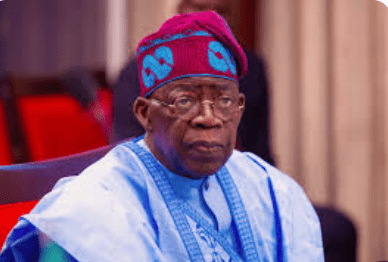
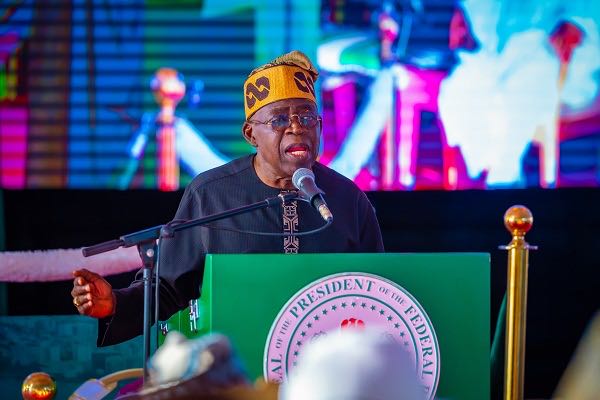
President Bola Tinubu has emphasised that the unity of Nigeria can not be traded.

Tinubu, speaking at the  Presidential Democracy Day Dinner on Wednesday at the Banquet Hall in the State House, Abuja, pledged to bring Nigeria back to its glory of harvesting.

He described Nigeria’s diversity as unending and stated that it is the best path to success.


“Nigeria is a great country. We enshrined in our national anthem the essence of service. I have seen many governors, both live and on TV, serving their people. Thank you all. In this hall tonight, everybody has forgotten the partisanship colours and embraced that green-white-green, which depicts Nigeria and the values we hold dear to ourselves.

“That is the baton and the reason we say we will hand over a banner without stain to our children and grandchildren. Is it not true that Nigeria is greater than any one of us? That the unity of this country cannot be traded? Nigeria is blessed. Our complexity, yes. Our diversity, is unending, but it is the best road to success”, the President said.

On minimum wage, in a jovial mode, Tinubu said, “We are going to pay what Nigerians can afford. What you can afford, what I can afford, that is what we call cutting your coat according to your size. If you have a size at all.”

He stated that citizenship goes beyond its dictionary definition and encompasses actual character. He urged for increased investment in national orientation to reawaken citizens’ awareness.


The President continued, “The promises that we made, struggling to bring the food prices down. Those bandits must leave the farmers alone, and we will bring Nigeria back to its glory of harvesting. We can do it. We can produce our way out of the misery of complaint.

“We can make Nigeria a tremendously successful country. If we gather as we gather here tonight, encourage our children about the charter of our value system. As they look upon me as the leader to make the changes, what about the rest of you, the rest of your children making those changes too, what do you tell them? How do you teach them?

“Whatever we have to invest in our national orientation, I think we should do it. Distinguished leaders, we have a lot of work that we must do for our country, about our citizens. Citizenship is not just the dictionary meaning of it. It is the actual character. Let’s teach our children to know that as Nigerians, we will do the work we are called upon to do, as one family, one nation under God.”

Responding to the social media buzz about his fall, he explained, “In the morning I skipped, it is all over social media. They were confused whether I was doing buga or babariga, but it is a day to celebrate democracy while doing Idobale (Yoruba cultural way of greeting). I am a traditional Yoruba boy, and I did my Idobale.

“It is a day that is worthy of falling for. We aren’t going to move an inch. I have heard excellent comments and very touching remarks about myself and the past. I thank you all. My sincere gratitude to all of you for standing by me. I promise you I won’t fall.”

Messi to end career at Inter Miami but not retiring yet

0

Argentina superstar Lionel Messi has again expressed his profound love for the game of football, saying he is not retiring just yet.
The World Cup winner is currently with his national team as they prepare for this year’s Copa America billed to hold in the United States.
Messi has been playing for Inter Milan, a US MLS club over the past year, and has scored 12 goals in 12 games this season for the league leaders.
The eight-time Ballon d’Or winner has a contract with Inter Miami to 2025 with the option of a further year.
Read Also: Juventus name Motta as Allegri replacement
“As of today, I think it’s going to be my last club. I’m not ready to leave football either,” the forward told ESPN.
“It was a difficult step to leave Europe to come here. The fact of having been world champion helped a lot to see things differently also.
“I love playing football. I enjoy the training, every day of the matches. [I am] a little afraid that everything will end.
“That’s why I enjoy everything much more, because I’m aware that there’s less and less to go and I have a good time at the club.
“I enjoy the little details that I know I’m going to miss when I don’t play any more.”
36-year-old Messi will now focus on leading Argentina to defend the Copa America title they won in 2021.
The post Messi to end career at Inter Miami but not retiring yet appeared first on Latest Nigeria News | Top Stories from TVN.

Strategies for Transforming Africa’s Manufacturing Fortunes – Elijah Oyeyinka

0

Africa stands at a pivotal moment in its industrial journey. With vast natural resources and a growing young workforce, the continent has the potential to become a manufacturing powerhouse. However, several challenges impede this progress. By optimizing manufacturing processes, Africa can significantly boost business prospects, create employment opportunities, and stimulate overall economic growth. This article explores the intricacies of automation, capital deepening, and the essential role of government. It also analyzes the advantages of transitioning from labor-intensive processes and reflects on the developmental trajectories of developed economies, engaging in the convergence versus divergence debate.

The Current State of Manufacturing in Africa

Manufacturing in Africa remains underdeveloped despite its potential. According to the World Bank, the manufacturing sector contributes a mere 10% to Sub-Saharan Africa’s GDP, compared to 16% in East Asia and the Pacific. This statistic highlights a substantial opportunity for growth and underscores the need for strategic interventions to unlock Africa’s manufacturing potential.

A McKinsey report titled “Lions on the Move II: Realizing the Potential of Africa’s Economies” projects that Africa could nearly double its manufacturing output to $930 billion by 2025 if it can overcome its constraints. This growth could potentially create up to 14 million stable jobs over the same period, highlighting the immense potential of the sector.

Strategies for Optimization

To optimize manufacturing in Africa, several strategies can be adopted:

1. Industrial Zones and Parks

Establishing industrial zones and parks with clear zoning regulations can centralize manufacturing activities, reduce costs, and improve efficiency. These zones can be equipped with necessary infrastructure such as power, water, and transportation networks. Ethiopia’s Hawassa Industrial Park serves as a successful model, providing a dedicated space for the textile industry, leading to job creation and increased exports. According to a 2020 Deloitte Report, industrial zones can boost manufacturing productivity by up to 20%.

2. Public-Private Partnerships (PPPs)

Engaging in PPPs can facilitate the development of manufacturing infrastructure. Private sector involvement can bring in expertise and investment, while the government can provide regulatory support and incentives. The success of Rwanda’s Kigali Special Economic Zone is attributed to effective PPPs that have attracted significant foreign investment. KPMG’s 2020 report on PPPs in Africa highlights that well-structured partnerships can leverage private capital and expertise, driving large-scale industrial projects.

3. Technology and Innovation

Leveraging technology and innovation can drive efficiency in manufacturing. Automation, AI, and IoT can streamline processes, reduce waste, and enhance productivity. South Africa’s adoption of smart manufacturing technologies in its automotive sector has improved production efficiency and global competitiveness. According to a report by PwC titled “Digital Factories 2020”, smart manufacturing could add up to $15 trillion to global GDP by 2030, with significant gains for early adopters in developing regions.

4. Skill Development

Investing in education and vocational training is vital to equip the workforce with the necessary skills for modern manufacturing. This can increase productivity and attract high-value manufacturing activities. Initiatives like the African Union’s Continental Education Strategy for Africa (CESA) 2016-2025 aim to enhance technical and vocational education and training across the continent. A World Economic Forum report indicates that upskilling could boost GDP growth rates by 2% in countries with high youth unemployment.

Automation and Capital Deepening

Introducing automation and capital deepening into African manufacturing processes is a game-changer. Automation involves using technology to perform tasks that traditionally require human labor, while capital deepening refers to increasing the amount of capital per worker, enhancing productivity.The introduction of automation and capital deepening can initially lead to concerns about job displacement. However, this transition can offer substantial long-term benefits, including:

  1. Job Transformation: Rather than eliminating jobs, automation transforms them. Workers can shift from repetitive, low-skill tasks to higher-skill roles in managing and maintaining automated systems. This shift requires targeted training programs to equip workers with the necessary skills.
  2. Increased Productivity: Automation and capital deepening increase productivity, making African manufacturing more competitive globally. Higher productivity can lead to increased output and lower costs, driving economic growth. McKinsey’s Global Institute report, “A Future that Works: Automation, Employment, and Productivity,” suggests that automation could raise global productivity growth by 0.8 to 1.4% annually.
  3. Economic Diversification: Higher productivity can spur economic diversification, reducing reliance on a single sector and enhancing economic stability. Diversification into high-tech and capital-intensive industries can create new job opportunities and foster innovation.

Government’s Role

Government can play a pivotal role in driving the optimization of manufacturing in Africa.Simplifying regulatory frameworks to facilitate easier land acquisition and investment and streamliningthe processes for property registration and construction permits can attract domestic and foreign investors.Equally,tax incentives and subsidies for companies investing in automation and advanced manufacturing technologies will spur innovation. These incentives can lower the barriers to adopting new technologies and encourage innovation. Deloitte’s report on African industrialization stresses the importance of fiscal incentives in attracting manufacturing investments. Government should invest in critical infrastructure such as power, transportation, and communication networks to support industrial growth. Reliable infrastructure is essential for efficient manufacturing operations and supply chain management. According to the African Development Bank, closing Africa’s infrastructure gap could increase GDP growth by up to 2%.Lastly, educational and trainingprograms should be developed to align with the needs of a modern manufacturing sector, focusing on STEM (Science, Technology, Engineering, and Mathematics) and vocational training. Partnerships between governments, educational institutions, and industry can create training programs tailored to the demands of the manufacturing sector.

Case Study of Nigeria

Nigeria, Africa’s largest economy and most populous nation, provides a compelling case study for the optimization of manufacturing. The Nigerian manufacturing sector has significant potential, but it faces several challenges. The biggest challenge is inconsistent and unreliable power supply which has created a significant bottleneck for manufacturers in Nigeria. The World Bank reports that Nigerian firms experience an average of 32 power outages per month, leading to substantial production losses.Poor transportation infrastructure also hinders the efficient movement of goods. Nigeria’s road network is often in disrepair, and the country has a limited railway system, which impacts supply chain efficiency.Complex and opaque regulatory environments deter investment; the recent revelation by the CEO of TotalEnergies, Patrick Pouyanne, paints a gloomy picture.  Manufacturers face significant delays in obtaining permits and licenses, which stymies growth.

Despite these challenges, Nigeria has made strides in certain areas. The establishment of free trade zones, such as the Lekki Free Trade Zone, has attracted foreign investment and boosted manufacturing output. Furthermore, initiatives like the Nigerian Industrial Revolution Plan (NIRP) aim to address key issues and enhance the sector’s competitiveness. According to the Nigerian Bureau of Statistics, the manufacturing sector grew by 3.4% in 2021, indicating positive momentum. Nonetheless, recent data has shown a slight decline.

Convergence vs. Divergence

The debate over convergence versus divergence in economic development is pertinent when discussing Africa’s manufacturing potential. Convergence theory suggests that poorer economies will eventually catch up to richer ones as they adopt more advanced technologies and practices. In contrast, divergence theory posits that gaps between wealthy and developing nations may persist or even widen due to structural inefficiencies and unequal access to resources.

There is evidence supporting convergence in Africa. Several African countries have demonstrated substantial economic growth by adopting best practices from developed economies. Countries like Kenya and Nigeria have rapidly adopted mobile technology and fintech, leapfrogging traditional banking systems and spurring economic growth.Significant investments in infrastructure, such as Ethiopia’s extensive railway network, have improved connectivity and facilitated industrial growth.

However, divergence challenges remain. Persistent institutional weaknesses and corruption can hinder economic progress and reliance on resource extraction rather than value-added manufacturing can limit economic diversification and growth.

Economic Impact of Manufacturing Optimization

Optimizing manufacturing in Africa can have far-reaching economic impacts. Efficient manufacturing processes can create millions of jobs, particularly for the continent’s young population. The International Labour Organization (ILO) estimates that Africa needs to create 18 million new jobs annually to absorb new entrants into the labor market. A robust manufacturing sector can drive GDP growth. According to the African Development Bank (AfDB), a 1% increase in manufacturing output can lead to a 0.7% increase in GDP. Finally, improved manufacturing efficiency can enhance Africa’s competitiveness in global markets. This can increase exports, reduce trade deficits, and improve foreign exchange reserves.

Conclusion

The optimization of manufacturing in Africa is critical for the continent’s economic future. Addressing inefficiencies through strategic reforms and investments can unlock significant business prospects, create employment opportunities, and drive economic growth. By embracing automation, capital deepening, and leveraging the government’s crucial role, Africa can transform its manufacturing sector. Learning from the efficient manufacturing practices of developed economies, African nations can chart a path towards sustainable industrialization and prosperity. The convergence versus divergence debate underscores the potential for Africa to catch up with advanced economies, provided the right strategies and policies are implemented.

Author: Elijah Oyeyinka, MBA, ACA

Profile: LinkedIn Profile

Elijah Oyeyinka is a seasoned finance executive with over 8 years experience in finance, accounting, and corporate strategy. He is currently an Investment Banking Associate at TD Securities LLC USA. He holds a B.Sc. in Economics from Obafemi Awolowo University (First Class Honours) and an MBA from University of Michigan, Ross Business School. He is also a Chartered Accountant and associate member of ICAN, with cognate practical experience.


Sokoto okays N30,000, N20,000 for workers, pensioners as Sallah bonus

0

As Muslim faithful across the globe prepare for the forthcoming Eid-el-Kabir amidst the high cost of goods, the Governor of Sokoto State, Aliyu Sokoto, has approved the sum of 30,000 naira for all categories of workers in the state.

The governor in a press statement made available to newsmen in the state on Wednesday by his Chief Press Secretary, Abubakar Bawa, said the governor also approved 20,000 naira to all categories of pensioners as well as those receiving allowance from the state government.

According to Bawa, the payment which is expected to commence on Thursday was aimed at ensuring that civil servants in the state celebrate the Eid-el-Kabir with ease.

Recall that the governor had earlier approved the payment of June Salary on Monday, June 10, to all the categories of workers including local government workers.

The statement read, “The Executive Governor of Sokoto State, Ahmed Aliyu Sokoto,  has graciously approved the payment of Sallah gifts (Goron sallah) to all the state’s and local governments workers, pensioners as well as those receiving allowances under the Local governments and the Primary Health Care Development Agency.

“The payment, which is in two categories, is as follows; state and local government workers are to enjoy N30.000 each, while pensioners and those receiving allowances in the local governments and Primary Health Care, Agency are to receive N 20,000 each as his Sallah largesse to them.

“The magnanimous gesture, which commences on Thursday, the 13th of June is aimed at ensuring that the civil servants  observe this year’s Eid-el-Kabir Kabir with relative  ease”

The statement further said, “Similarly, the governor has approved the release of cash allocation for June to all the MDAs in the state.

“It could be recalled that barely three days ago,  Gov. Aliyu directed the payment of June’s salary to all the civil servants in the state, all in an attempt to make the workers financially stable before and during the Sallah festivities”.

Aliyu, who is currently on pilgrimage in the holy land however charged the workers in the state to reciprocate the good gesture by being dedicated and punctual to work.

He also prayed for hitch-free sallah celebrations in Sokoto, Nigeria and the world over.

Tinubu shrugs off slip, calls it ‘Idobale’ for Democracy Day

0

President Bola Tinubu has responded to the viral video of him slipping while boarding the presidential vehicle at Eagles Square in Abuja.

Tinubu jokingly referred to the fall as a “swagger” and explained that as a traditional Yoruba boy, he was performing a customary greeting called “dobale” to mark Democracy Day.

Tinubu made this known during the state Banquet Dinner at the Presidential Villa, Abuja, to mark this year’s Democracy Day.

With a dash of humour, Tinubu said, “Early this morning, I had a swagger and it’s on the social media. They were confused about whether I was doing Buga or doing babariga, But, It is a day to celebrate democracy while doing “Idobale” for the day.

“I am a traditionally Yoruba boy and I did my ‘Idobale’”

According Online earlier reported that Tinubu approached the vehicle shortly after he arrived at the venue of the 2024 Democracy Day, but lost his footing momentarily as he was about to step into the vehicle.

However, despite the slip, the President regained his balance and continued with the proceedings.

Watch video here:

All rights reserved. This material, and other digital content on this website, may not be reproduced, published, broadcast, rewritten or redistributed in whole or in part without prior express written permission from According.

Contact: [email protected]

Democracy Day: CSOs protest, urge government to end suffering in Nigeria

0

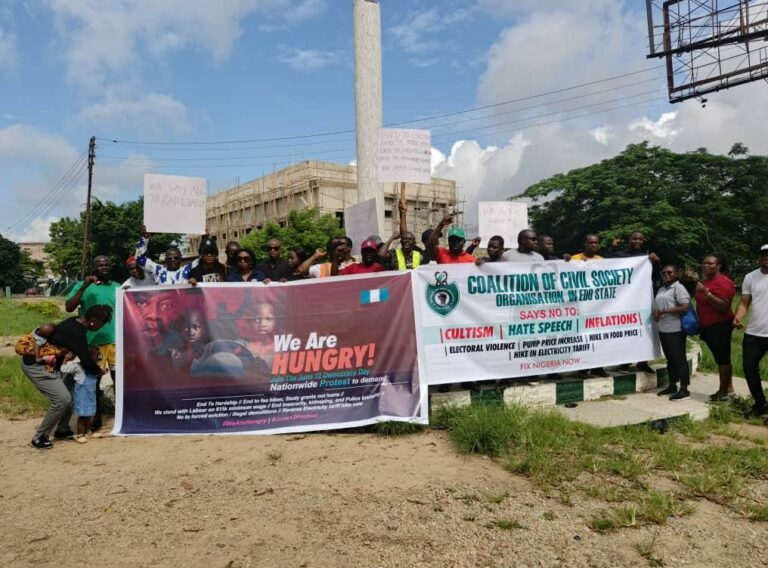
Civil societies under the aegis of Edo State Civil Society Organisations, EDOSCO, protested on Wednesday against the continued suffering of the masses in Nigeria.
TVN reports that the governorship candidate of the African Action Congress, AAC, Oberaifo Udoh, also joined the members of EDOSCO to protest the economic hardship in the country.
The protesters called on the government to end the suffering of the masses and advance policies that will benefit a lot of Nigerians.
The spokesman of EDOSCO, Kola Edokpayi, said the protest was to express their frustration over the state of the nation.
Edokpayi, who said the group rejects the current brand of democracy being practiced in the country, noted that the masses are suffocating due to the iron grip of hunger, poverty and the economic downturn under President Bola Tinubu.
According to him: “We are saying that this country should be fixed so that we can avoid agitation for self-determination as witnessed in the South East, with people in that region saying they are not part of Nigeria. Those piloting the affairs of the country have failed woefully. These people travel abroad and see how things work there; unfortunately, they fail to replicate what they see here.
“We call on the government to end the suffering of the masses and institute policies that will better the lot of Nigerians. The leaders know the solution. We want them to give us employment and create an enabling environment for investors to come into the country.
“They must halt insecurity and fix power. Why are they increasing tariffs when the power supply is epileptic? The suffering must end so that the masses will stop agitating for their rights.”
Also speaking, Oberaifo Udoh called on government at all levels to rise and fix the country as Nigerians can no longer bear the pains coupled with senseless killings and insecurity around the nation.
“Nigerians can no longer feed their families comfortably because of the hardship in the country,” he added.
Democracy Day: CSOs protest, urge government to end suffering in Nigeria

Salihu Lukman finally resigns from APC

0

A former National Vice Chairman of the All Progressives Congress (APC), North-West, Salihu Lukman, has resigned from the party.
Lukman, who confirmed his resignation in a statement issued on Wednesday in Abuja, said he took the decision due to the lack of internal democracy in APC.
The former Director-General of the Progressives Governors Forum (PGF) has been critical of the party since last year.
Lukman had last week challenged the country’s opposition parties and other stakeholders in the Nigerian project to come together and vote out the APC-led federal government in the 2027 general election over poor performance.
The statement read: “Given all this, it is possible to remain in APC if at all President Tinubu will allow internal reform in the party to return it to its founding vision, which as it is, is very remote. But my reality now in the party is that my membership has been rendered useless and there is no need for me to continue to impose myself.
READ ALSO: Salihu Lukman challenges Nigerians to vote out Tinubu in 2027
“I have therefore gone back to the trenches and will try to work with all committed Nigerians who agree and subscribe to the goal of actively campaigning for the survival and development of democracy in Nigeria.
“We must grow our democracy to the point whereby elected representatives at all levels are accountable to the party and it is possible for Nigerians represented by various interests to develop strong relationships with political parties and elected governments based on which policies of governments can be made to reflect wider interests of Nigerians.
“I am confident that a strong democracy with functional political parties is possible in Nigeria. I am also confident that in our lifetime we can produce governments that are truly capable of making the lives of Nigerians better. I don’t expect party leaders will agree with my decision. I believe that eventually, we will be united will all party leaders and other Nigerians who are committed to developing Nigerian democracy.”
The post Salihu Lukman finally resigns from APC appeared first on Latest Nigeria News | Top Stories from TVN.

Russian nuclear-powered submarine arrives Cuba

0

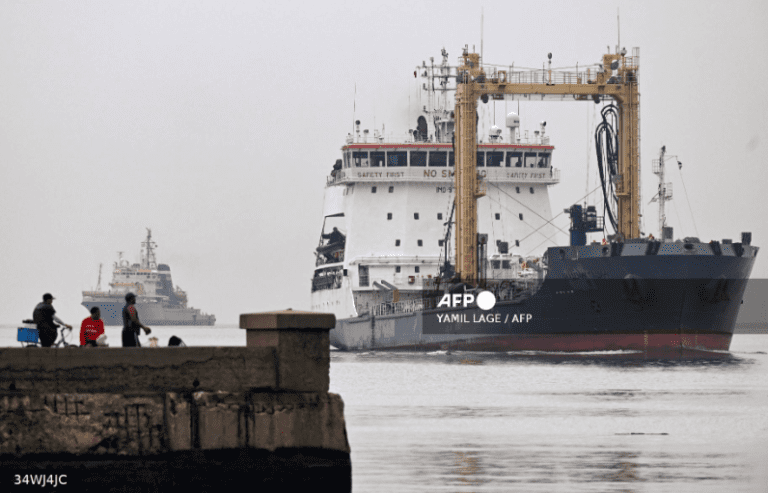
A Russian nuclear-powered submarine and other naval vessels arrived in Cuba Wednesday for a five-day visit to the communist island off Florida’s coast in a show of force amid spiralling US-Russian tensions.

The submarine Kazan, which Cuba says is not carrying nuclear weapons, was accompanied by the frigate Admiral Gorshkov, as well as an oil tanker and a salvage tug.

Russia’s defence ministry said in a statement that before entering the Havana port, the fleet “completed an exercise on the use of high-precision missile weapons.”

The unusual deployment of the Russian military so close to the United States — particularly the powerful submarine — comes amid major tensions over the war in Ukraine, where the Western-backed government is fighting a Russian invasion.

“We of course take it seriously, but these exercises don’t pose a threat to the United States,” Deputy Pentagon Press Secretary Sabrina Singh told journalists.

The port call coincided on Wednesday with a meeting in Moscow between Cuba’s Foreign Minister Bruno Rodriguez and his Russian counterpart Sergei Lavrov, as the two former Cold War allies further tighten their links.

During the meeting, Rodriguez expressed his government’s “rejection of the expansion of the North Atlantic Treaty Organization (NATO) towards the Russian border,” which he said “led to the current conflict in Europe, and especially between Moscow and Kyiv,” according to a Cuban foreign ministry statement.

He also called for “a diplomatic, constructive and realistic solution” to the crisis.

The Kazan and Admiral Gorshkov, which is one of Russia’s most modern warships, could be seen just off Havana, which is about 90 miles (145 kilometres) from the tip of Florida.

The tanker Pashin and the tug, flying the white, blue and red tricolour of Russia, entered the harbour early Wednesday morning, an AFP reporter said.

“In the coming days, the crews of the ships and support vessels will take part in several protocol events,” Russia’s defence ministry said in a statement published by the Interfax news agency.

Cuba’s military said the visit by the naval detachment “strictly complies with international regulations” and is a nod to “the historic relations of friendship” between Havana and Moscow.

Pentagon press secretary Singh said port calls of this nature are “routine naval visits that we’ve seen under different administrations.”

“We’re always constantly going to monitor any foreign vessels operating near US territorial waters.”

Cuban President Miguel Diaz-Canel met with Russian counterpart Vladimir Putin last month for the annual May 9 military parade on Red Square outside the Kremlin.

He wished Russia “success” in its Ukraine offensive and condemned “the geopolitical manipulation” of the United States, in comments reported by Russia’s TASS news agency.

During the Cold War, Cuba was an important client state for the Soviet Union. The deployment of Soviet nuclear missile sites on the island triggered the Cuban Missile Crisis of 1962 when Washington and Moscow came close to war.

Relations between Russia and Cuba have become closer since a 2022 meeting between Diaz-Canel and Putin.

AFP

Juventus name Motta as Allegri replacement

0

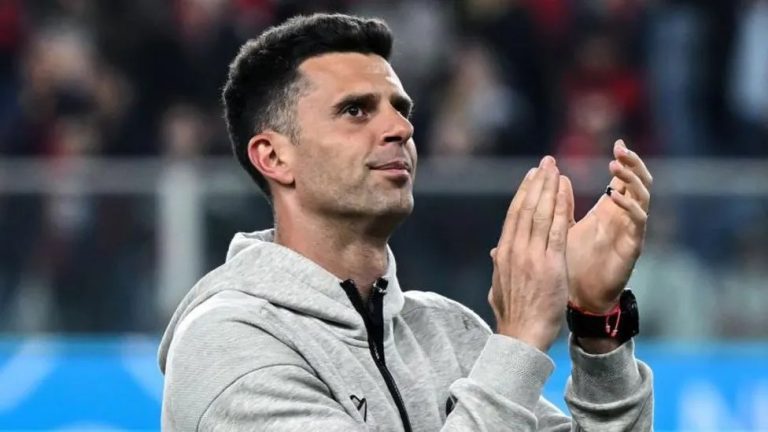
Serie A giants Juventus have appointed former Bologna boss Thiago Motta as their new manager.
Motta is becoming boss at the Old Lady following the departure of former manager Massimiliano Allegri days after the team won the Coppa Italia.
Motta, a former Inter Milan midfielder, has signed a three-year deal until June 2027.
Read Also: Juve sack Allegri days after Coppa Italia triumph
Motta oversaw Bologna’s qualification for the Champions League last season, finishing fifth in the table.
“I am really happy to begin a new chapter at the helm of a great club like Juventus,” said Motta.
“I thank the owners and the management, who can be sure of my ambition to keep the Juventus flag flying high and to please the fans.”
During his playing days, Motta also played for Barcelona, Atletico Madrid, Genoa and Paris St-Germain, where he ended his career.
The post Juventus name Motta as Allegri replacement appeared first on Latest Nigeria News | Top Stories from TVN.

Lagos Assembly passed 300 bills, 2000 resolutions in 25 years – Speaker

0

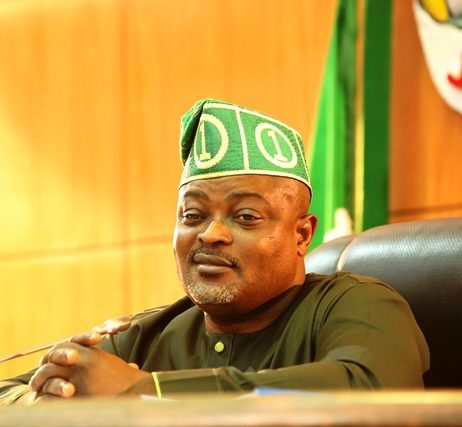
The Lagos State House of Assembly has passed 300 bills and 2,000 resolutions since the return of democratic dispensation in 1999.

The Speaker, Mudashiru Obasa stated this at a programme to commemorate 25 years of democratic governance on Wednesday in the state.

The programme, organised by the Lagos State House of Assembly was themed “Building a Brighter Future: A Journey of Hope and Aspirations”.

Obasa revealed that some of the bills and resolutions were historic.

He added that many of the bills eventually became laws which had impacted residents greatly as well as people outside of the state.

“Particularly worthy of mention are the Financial Autonomy law, Neighbourhood Safety Agency law, Regulation Approval law, and the Local Government Administration law, which created 37 Local Council Development Areas (LCDAS).

“This is in addition to the existing 20 local government areas in the state for the purpose of bringing government closer to the teeming Lagosians. The law also creates a four-year tenure for elected officials of the local government councils, making Lagos the first state in Nigeria to do so.

“Also, there is the Traffic Sector Reform law which created the Bus Rapid Transportation (BRT) system and the Lagos State Transport Management Authority (LASTMA) law.

Our BRT law became a prototype design for many other states in Nigeria and some West African countries like Ghana and the Gambia.

“As a matter of fact, most of our laws, including our House Rules, have become models for other State Houses of Assembly in Nigeria,” he said.

Speaking on education, he stated that the Assembly had enacted the Lagos State University of Science and Technology law which converted the old Lagos State Polytechnic to a full university.

He noted that one of the beauties of law was that it would eliminate the discrimination against polytechnic graduates in the labour market.

Obasa added that the Lagos State College of Education was upgraded to the Lagos State University of Education through an enabling law, thereby increasing the number of universities established by the state to three.

The Speaker said in a bid to proffer solutions to the security challenges facing the country,  the Assembly pioneered the agitation for the creation of state police.

He said due to constitutional constraints, an abridged form of security outfit called the Neighbourhood Safety Corps Agency was created to assist the police in maintaining law and order and enhance community policing in the state.

Obasa recalled that the very first session of the Assembly was headed by Mr Oladosu Osinowo (Ikorodu Urban II constituency) between October 1979 and September 1983.

He said Osinowo laid the foundation for the vibrancy of the House as well as the brilliant leadership for which the Assembly was revered.

He said at the time Osinowo was Speaker, Lateef Jakande was the state governor and that his administration built the  Assembly complex.

He said the second Lagos Legislative Assembly was headed by Mr Oladimeji Longe (itire-Ikate constituency) between October 1983 and December 1983 while Shakirudeen Kinyomi (Ojo I constituency) was the Speaker in the third Legislative Assembly.

The speaker said that the Fourth Legislative Assembly, led by  Dr Olorunnibe Mamora (Kosofe I constituency), was inaugurated by the then governor of the state and now President Bola Tinubu on June 2, 1999.

“The Assembly has enjoyed relative stability in its leadership with only four Presiding Officers in 25 years of uninterrupted democracy in Nigeria.

“This has, in no doubt, enhanced innovation, competence and capacity. Mamora led the House between June 1999 and June 2003, followed by Mr Jokotola Pelumi (Epe II), who led between June 2003 and December 2005.

“Then, Mr Adeyemi Ikuforiji (Epe I) took the mantle and led between December 2005 and June 2015. In addition, I am the current and longest serving legislator and Speaker in Nigeria, I was first elected Speaker in June 2015, I was re-elected in 2019 and again returned in 2023,” he said.

He added that the Assembly’s avowed commitment to excellence in all its ramifications had made the state the bride of all since 1999.

Obasa said the Assembly had lived by its creed, reflecting positively on the constituents who had put their hopes on it as an alternative dispute resolution mechanism for prompt, fair and effective dispensation of justice.

NAN