Tiv communities in Nasarawa State have raised the alarm over the alleged forceful acquisition of 10,000 hectares of their ancestral land by the state government.
They described the development as violations of their fundamental rights and threats to their security and socioeconomic well-being.
The communities have appealed to the Attorney General of the Federation and Minister of Justice, the Executive Secretary of the National Human Rights Commission, the Office of the Senate President, and the Office of the Speaker for intervention.
The Tiv communities stated that they rely heavily on their ancestral lands for farming and survival.
They expressed their grievances through their lawyer, Jerry Aondo, in a statement issued Wednesday in Abuja.
The affected communities include Akaha, Utsuwa, Usula, Udugh, China, Shankodi, Ikyorchiha, and Ayarkeke in the Obi/Awe Local Government Area of the state.
They claim the state’s decision to deprive them of their land without offering alternatives is unjust and illegal, violating principles of natural justice.
In a petition to Nasarawa State Governor Abdullahi Sule, Aondo pointed out that the land acquisition process is a clear violation of their rights as Nigerian citizens.
The communities alleged that the government, aided by traditional rulers and village heads, is coercively acquiring their land.
The petition, dated April 10, noted that the communities’ hardships would be exacerbated by previous forced land acquisitions in Awe/Doma Local Government Area, which lacked a clear plan for balanced economic development and did not benefit the Tiv indigenes of the state.
“Already the atmosphere in the area is tense, with the frequent unannounced deployments of security personnel leading to alleged assaults, arrests, and harassment of the people all under the guise of government actions, thereby instilling fear among the residents.
“Last Friday a group of armed security operatives attacked the community leading to injuries and loss of properties to the people.
“We call on Governor Sule to intervene urgently as we are confident of his administration’s ability to deliver justice.” The lawyer stated.
The communities, however, expressed confidence in Sule’s administration’s ability to deliver justice, acknowledging the governor’s past efforts to restore peace and security to the Tiv people, who have suffered from communal crises resulting in loss of lives, property, and severe economic hardship due to displacement.
Land seizure: Tiv communities protest, seek intervention from NASS, AGF
Land seizure: Tiv communities protest, seek intervention from NASS, AGF
Should Nigerian politicians earn N62,000?


Each time a country goes through minimum wage negotiation, you can take it for granted that the argument to put politicians on that same salary scale will come up. It is a common argument, one that the Victorian Socialists Party in Australia included in their campaign promises. Granted, they were an upcoming party—the equivalent of the many political parties in Nigeria that exist through their press releases until elections are around the corner—and were unlikely to win anyway. Still, asking politicians to feel what they dish out is a universally resonant sentiment. In 1816, when the United States Congressmen voted to increase their salaries to $1500 a year (from the cumulative $900), a significant number of them were promptly voted out! Such reactions show how much people have always resented their delegates living above the majority of the people they are supposed to represent.
In Nigeria, we have repeatedly heard versions of the argument as the Nigeria Labour Congress slugs it out with the Federal Government on calibrating the pay scale. The NLC started out with N615,000, a rather outrageous sum even for a negotiation starting point. They revised their offer to 495,000 and are now down to N250,000. The Federal Government, meanwhile, is offering them N62,000. In bargaining, the union leaders justify their figures by comparing the sum with politicians’ income. To enhance the moral legitimacy of their stance, the breakdown of lawmakers’ income has been circulated in the media along with the payslip of a prominent media aide. If they could earn that much, the workers too should be able to up their demands. While we know it is highly improbable that our politicians would ever legalise such a proposal, it is a discussion still worth having. The Nigerian political class earns a high income. If placed on a minimum wage, will it make a difference?
Arguments in favour of the proposal assert that politicians are public representatives and their realities should not be distant from the society they purportedly administer. Besides, politics is not a profession one should embark on for the salaries but for the prospect of making a social impact. This line of argument is not entirely without provenance. Until the 20th century, lawmakers in Britain (the country that colonised/modernised half of the world) were unpaid. In those times, it was not a full-time job but a partial vocation for propertied men who could afford to take some time off to deliberate for society.
Several analysts suggest a correlation between the income we pay politicians and the quality of governance. They argue that better salaries induce better people into politics, which is good for the system. The standard reference point for those who take this position is Singapore. Their lawmakers are officially the highest paid in the world earning about $900,000 per year (for comparison, US congressmen earn about $178,000). Singaporean ministers earn around $1.1m, while their president earns about $1.7m (the US president earns $400,000). Other countries, especially in the Middle East (like Saudi Arabia, UAE, and Kuwait) and Europe (Monaco, Norway, and Sweden), also have leaders earning humongous salaries. What do these countries have in common? Good governance, high quality of life, minimal corruption, and leaders who demonstrate public accountability.
Now, as even an elementary analyst knows, correlation is not causation. The fact that higher salaries have something to do with better governance elsewhere does not necessarily make it the defining reason those countries enjoy good leadership. Nigeria is a fantastic example of higher salaries not making any difference in leadership quality. In fact, all the arguments advanced for paying politicians higher salaries fall apart in Nigeria. They say politics is an elite enterprise and if you want to draw the best minds in your society, you must pay them well above—or at least the equivalent of—what they would have earned if they worked for wealthy private corporations. People who get into power should enjoy a high quality of life to free them from pursuing other enterprises that will expectedly bring them money. That idea does not quite hold up here because the meritocracy that selects people in those societies is still largely alien to us. People frequently get into power in spite of—not because of—merit.
That explains why, except for a handful, Nigerian politics is mostly populated by a category that does not even represent the quality of minds that freely litter its landscape. Looking at those who represent us in power, you would never quite know that Nigerians are brilliant people who excel in parts of the world where they are allowed to thrive. Our politics is skewed in such a way that the worst of us mostly tends to represent the best of us. Ironically, some analysts use African countries such as Nigeria as an exemplar of the low-quality governance you get when you underpay your public administrators.
Nigerian lawmakers earn as much as their US counterparts, but they do not compare favourably. Listen to our lawmakers debate an issue, and you will understand that they themselves are a problem that higher salaries simply cannot fix. For instance, the quality of their “debate” over the re-introduced national anthem was beneath the level of what you will get at a newspaper stand where the Free Readers Association members converge to argue everything from world politics to sports. The discussants did not come across as if they did any homework on the subject; their contributions were mostly extempore and hardly insightful. I have witnessed agboolé meetings where the old men who mediate conflicts demonstrate far better rhetorical and oratorical skills. So where exactly is the elitism that is supposed to distinguish them from the rest of us and justify their pay?
They also confound the idea that if politicians earned enough, they would look away from bribes. Nigeria serially defies abstract postulations in this respect. Someone like Orji Uzor Kalu was not a pauper before he got into politics, yet he once went to jail on allegations of corruption. His story is not even unique. Governors steal and steal while they are in office, and when they are leaving, they will still get the lawmakers to sign them unconscionably fat pensions. Then they will go to the Senate where they will continue to steal. Nothing is ever enough for them, no matter how much they manage to amass.
To be fair to them, the nature of public office in Nigeria induces stealing, especially if you already lack a strong moral core. The average politician is always hustled by the mass of beggars who throng their abode in search of kobo tokens of survival. Such demands on public leaders push them to steal to augment their earnings. Still, that does not change the argument that in our society, our politicians are the same breed of hustlers whether rich or poor. There are hardly any distinctions between them when it comes to corruption. Paying people who have no such self-awareness higher salaries will not raise their standards. It will only widen their already wide mouths.
If more money has not allowed them to create the space necessary to develop themselves intellectually and ideologically, paying them less (by putting them on a minimum wage) will not make much difference either. No reasonable person thinks there is any path to that proposal ever getting actualised, but we bring it up because it is a good argument that at least reminds our out-of-touch politicians to stay level-headed. In the ongoing context of wage negotiation in Nigeria, it is funny seeing people pointlessly arguing against the idea. There is no path to ever paying politicians minimum wage, but bringing it up is also not an entirely futile exercise. Leaders who determine our lives need such occasional reminders to be—hopefully—empathic.
Pepe Receives $8 Million From Crypto Whales Setting The Precedent, Will Angry Pepe Fork Be Next On The List?


The meme coin market is currently experiencing a frenzy of activity with smart buyers looking to get in on the action. Just recently, the popular meme coin Pepe (PEPE) received an outstanding $8 million from crypto whales amidst a price correction. This highlights the investor confidence and interest in the token. Amidst this, questions have been raised regarding the new meme coin Angry Pepe Fork’s (APORK) ability to be the next meme coin giant. With its impressive features and unique roadmap, does Angry Pepe Fork (APORK) possess enough potential to be next on the list?
Pepe (PEPE) Receives $8 Million Injection From Crypto Whales Amidst Price Correction
In a recent turn of events, crypto whales have spent over $8M acquiring Pepe (PEPE) tokens. Over the last week, a wallet associated with a popular crypto firm acquired over 447 billion units of PEPE coin, worth about $5.5 million from popular exchange Binance. Alongside this acquisition, an unidentified wallet bought around 232 billion Pepe tokens worth over $2.8 million.
This significant move demonstrates an increased interest and investor confidence in the token and comes amidst a price correction after Pepe’s previous decline. Although Pepe price has seen a recent decline, with a 14% downward movement in the last 7 days, this recent acquisition might ignite a surge in its value.
Meanwhile, this is already evident in Pepe’s trading volume with the token witnessing a notable rise of over 50%. Furthermore, with a surge of over 24% in the last month, analysts are highly optimistic, projecting the meme coin to mirror its previous highs and make a complete comeback.
Angry Pepe Fork (APORK) Set To Surpass Expectations, Demonstrates Potential With Impressive Features
Having recently begun its presale journey, Angry Pepe Fork (APORK) is already making headlines for its outstanding prospect in the meme coin market. While traders and crypto enthusiasts wonder about its potential to be the next meme coin giant, Angry Pepe Fork particularly features a unique “Conquer-to-Earn ” mechanism that could mark a shift in the meme coin market. Notably, this innovative approach promotes collaboration aimed at knocking out stale meme coins from the market.
However, there is more to this project than its incentivized Conquer-to-Earn mechanism. Among its numerous attributes, Angry Pepe Fork’s emphasis on security stands out. Featuring a smart contract audit, the meme coin project ensures that security on its platform is not exposed to any vulnerability, thereby providing a secure space for users to trade and hold assets. This move has increased its appeal in the meme coin market, making it one of the top meme coins to watch.
Furthermore, Angry Pepe Fork boasts a staking dApp on its platform where users can choose to lock their $APORK tokens for an extended period ranging from 30, 60, or 90 days. This particularly promotes the long-term holding of the native token as the longer you hold, the more returns you get. For investors searching for a meme coin with huge profit potential and scaling possibilities, Angry Pepe Fork presents a perfect opportunity.
While the native APORK token is currently selling for $0.014 in the initial presale phase, now presents an opportune moment to buy as its current trajectory indicates a coming surge in price. Besides, experts are predicting the token to grow by 200% before the end of the presale, and possibly 300% plus once it completes its presale and subsequent listing on several top-tier exchanges.
Like Pepe Coin, Does Angry Pepe Fork Possess Enough Potential To Soar?
Currently, in its first presale stage, Angry Pepe Fork is showing promise as its impressive features have drawn the attention of traders and crypto enthusiasts in the meme coin market. As it continues its current trajectory, experts have remained optimistic, projecting the token to soar to incredible heights in the coming weeks and months.
Tears as 31-year-old man allegedly killed by herdsmen in Ogbomoso is buried [PHOTOS]
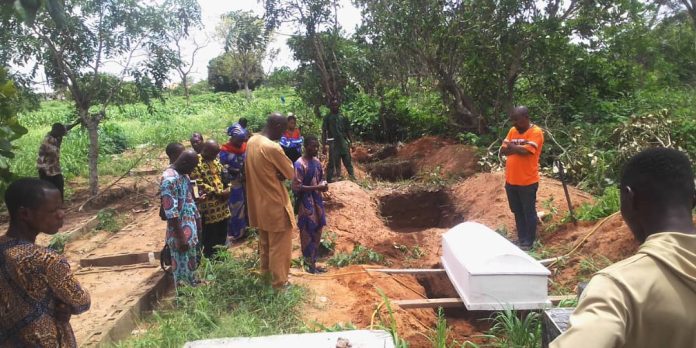
Family and friends wept profusely as they gathered to pay their final respects to a 31-year-old bachelor who was reportedly killed by herdsmen in Ogbomoso.
Our correspondent gathered that the remains of Solomon Adigun, the 31-year-old bachelor stabbed to death by Fulani herdsmen in Ogbomoso recently, were laid to rest on Wednesday.
It was learned that Adigun was allegedly killed on his farm at Elemuye in the Surulere Local Government Area.
Sources disclosed that Adigun had earlier complained about the destruction of his father’s farm by the suspects, during which a cow reportedly died. He was thereafter killed on his farm.
TVN reports that the burial of the 31-year-old was held at the Ogbomoso Baptist Conference Cemetery at Aroje along the old Ilorin road on Wednesday.
The burial was attended by family members and sympathizers.
Family, friends, and sympathisers who were at the burial wept profusely as the remains of the deceased were committed to the earth.
One of the sympathisers, who asked not to be named, described the deceased as an easy-going person.
He urged governments at all levels and security operatives to assist the people of the area to curb future occurrences.
“His death is devastating not only because we were close but also because he was a hardworking, nice person dedicated to the service of God. I am still in grief.
“It is getting out of hand. This year alone, I have heard about three deaths caused by these herdsmen in Ogbomoso. The government should protect us.
“It is critical; the herdsmen now snatch okadas (motorcycles), destroy people’s farms with impunity, and attack people in their homes. Fulanis are killing a lot of people. Nigerians must rise before people resort to self-help,” he said.
Tears as 31-year-old man allegedly killed by herdsmen in Ogbomoso is buried [PHOTOS]
Rotary renovates Ogun school building


Rotary Club of Agbara (District 9110 of Nigeria) has renovated a school building at the Agbara Grammar School in Ogun State as part of its effort to enhance educational opportunities for underprivileged communities.
The president of the club, Joshua Cole, said the renovation of one of the school buildings which cost over N30m, was to amplify educational access and quality for students from disadvantaged backgrounds.
Speaking at the inauguration of the three-block of classrooms at the Agbara Grammar school and a renovated primary health centre at Igbesa on Wednesday, Cole said the deteriorating and abandoned state of the school’s building prompted the club to embark on the renovation.
He added that the club mobilised resources and expertise to undertake comprehensive repairs, including changing the roof, replacing doors and windows, and installing a ceiling.
He explained, “Three years ago as director of projects, I was moving around the communities looking for projects we could do in that rotary year. Somehow fate brought me to this school. When I got here, I saw this building behind me in a very deplorable state. It was close to having just a carcass building and students were learning there.
“So, what we did was to discuss with the school management if they wanted our support to renovate it. And of course, they said yes, we had to do the writing by going to the commissioner for education who gave us approval to go ahead and do the renovation works. I went back to the club, and told them my intentions alongside my board, and they approved it.
“When we came in here, we had a budget of about N9.5 million. We were thinking it was going to be just a small one, but not knowing that there were no pillars, no beams, you know, the roof was in a very terrible state, so we had to take off the roof. We reinforced the building by bringing more and introducing more pillars. We brought in beams. And that cost us over 30 million.
“When we started, the economy was good. When we started, cement was still about five thousand naira. But halfway into the project, the cost of cement went high to about ten thousand naira. The cost of granite went so high. So if you have to put all that together, of course, manpower, and labour, it was a very strong one for us to manage, but we’re able to get it done.”
Cole, however, said the renovation of the school building was to provide a conducive environment for learning and growth.
He said the club also renovated the primary health centre in Igbesa to be able to provide qualitative healthcare to the people.
He reaffirmed the club’s commitment to empowering future generations and fostering positive change at the local level.
On her part, the District Governor of Rotary District 9110, Ifeyinwa Ejezie said the club remains steadfast in its mission to address pressing societal challenges.
She stressed Rotary’s dedication to the eight areas of focus, including basic education and literacy, health, and environmental sustainability.
She added that the club created a Rotary Community corp to look after projects and ensure they are well sustained and maintained.
“We are here to commission this large three block of classrooms and also commission the Igbesa health centre. All these we are doing is because we appreciate the fact that the government cannot do it alone and that Nigeria is a large country with over 200 million population.
“Government cannot do it alone. That’s why we join hands with the government in doing good around the world and touching our communities.
“Our theme for this rotary year is to create hope in the world. And how better to create hope in the world than what we are witnessing here today?
“This is what rotary is known for. We create hope all over the world, not just in Nigeria. Because Rotary is the largest and the biggest NGO you have in the whole world. And we have a presence in over 200 countries in the world. So in these 200 countries in the world, all we do is do good in the world. And that is why we are here today,” she stated.
Earlier in her remarks, the Deputy Governor of Ogun State, Engr. Noimot Salako-Oyedele commended the club for assisting the government in the area of education and health.
Represented by the vice chairman of Ado-Odo Ota Local Government Area Council, Sadat Animashaun, the Deputy Governor promised that the government would ensure the renovated facilities are well managed and put to use.
June 12: Why you can’t fail – Shehu Sani tells Tinubu
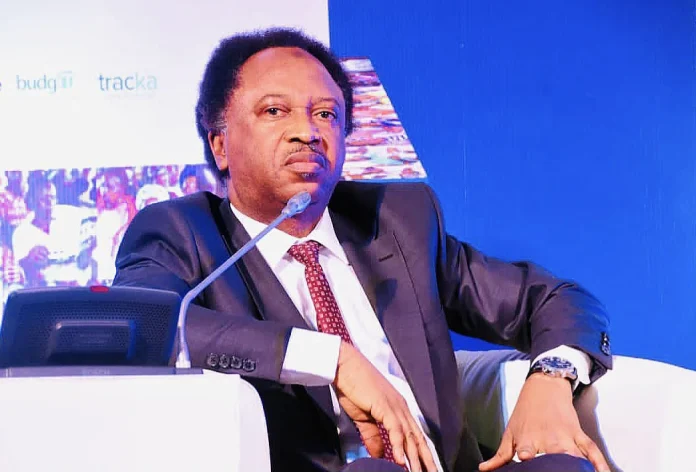
Former Kaduna Central Senator, Shehu Sani, has said President Bola Tinubu has a duty to succeed.
Sani said Tinubu’s failure means those who fought for democracy have nothing new to offer Nigeria.
He made this statement while speaking at a special dinner organised to mark Democracy Day at the State House Conference Centre in Abuja on Wednesday.
The former lawmaker also noted that national anthem alone cannot unite a nation.
Sani said only the ideals of freedom, justice, and equity can truly unite Nigeria.
According to Shehu: “Mr President, I will like to draw your attention to this fact and this truth, a national anthem cannot unite a nation, a national pledge cannot unite a nation, a constitution cannot unite a nation.
“A nation is united by the ideals of freedom, a nation is united by equity and by justice.
“This democracy was not a gift given to us by the military, it was not a lottery that we won, it was a product of struggle and sacrifice.
“Mr President, you have a duty to succeed. If you succeed, we will share your glory because you came from the trenches, you came from that struggle, you came from that period of struggle.
“Mr President, if you fail, they will say that those of you who fought for democracy have nothing new to offer Nigeria.”
June 12: Why you can’t fail – Shehu Sani tells Tinubu
Group backs Tinubu over moves to ensure LG autonomy
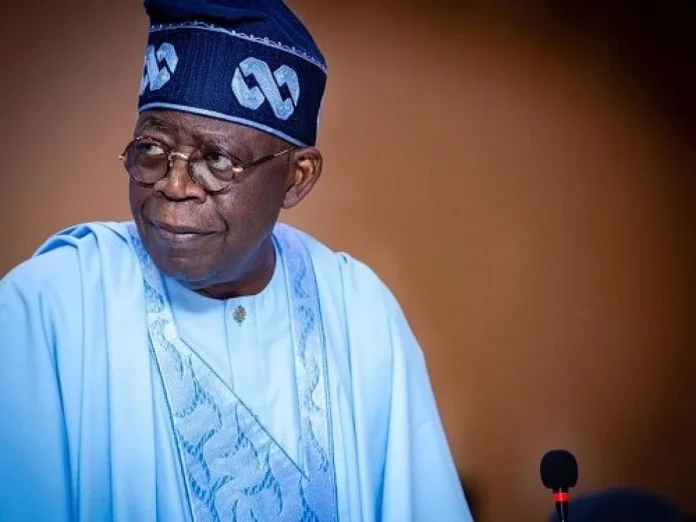
A northern Nigeria group, Arewa Think Tank (ATTK), has thrown its weight behind President Bola Ahmed Tinubu’s moves to ensure local governments enjoy financial autonomy in his administration.
President Tinubu recently criticised state governors for what he termed an overbearing influence on the administration of local government councils in the country.
Muhammad Alhaji Yakubu, the Chief Convener of ATTK, noted in a statement that issues of accountability and ineffectiveness hinder the growth of local council authorities.
He stressed that state governors must be held accountable for the lack of adequate development at the grassroots.
He said, “Arewa Think Tank is in line with President Tinubu for criticizing the governors who, during elections, rely on local governments to garner votes but, after the polls, focus solely on the state level.”
He added that they believe Tinubu is doing his very best to enhance the revenue base of the country, stressing that the governors must also be sympathetic and urgently consider the needs of the local people.
The group expressed their delight and support for the federal government’s suit against the 36 state governors before the Supreme Court, seeking the enforcement of full autonomy for local governments.
The group also criticised what it termed deliberate efforts to undermine the best brains in President Tinubu’s administration, starting with the Comptroller General of Customs.
Group backs Tinubu over moves to ensure LG autonomy
June 12: Governor Uba Sani orders release of 110 inmates
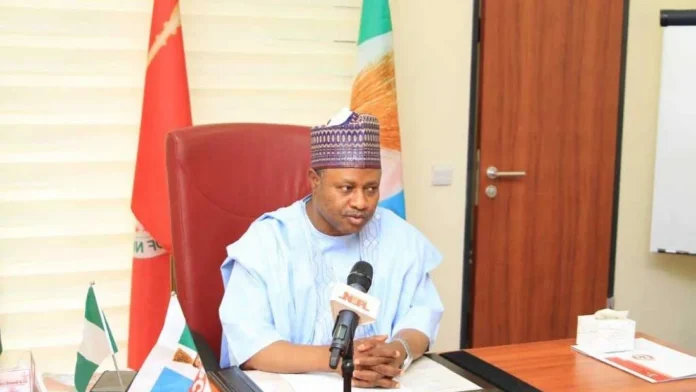
Governor Uba Sani has ordered the release of 110 convicts as part of his administrative powers and to mark the 2024 June 12 Democracy Day.
Senator Uba Sani, Governor of Kaduna State, in a statement paying tribute to the late Chief Gani Fawehinmi, SAN, GCON (of blessed memory), who devoted his boundless energy and legal skills to advocating for reform of the penal system, further expressed concern about overcrowding in correctional facilities and the fact that many citizens are languishing in such facilities due to their social and economic conditions.
“There are many citizens in such centers due to their inability to pay small fines. Some were also convicted because they could not afford a lawyer. We live in a society where the underprivileged do not have the financial wherewithal to vigorously pursue justice.
“Our administration is anchored on justice and fairness. We are committed to bringing succor to the poor, vulnerable, and underserved in Kaduna State. We have zero tolerance for discrimination. We strongly believe in the inherent goodness of every person. Everyone deserves a second chance. Persons in custodial centers can turn over a new leaf and contribute to the growth and development of our state,” he said.
Governor Uba Sani urged released inmates to reciprocate the government’s gesture by displaying good character.
“I encourage them to acquire one or two skills. Our administration is eager and willing to assist them in acquiring skills. It is not too late for them to be useful to themselves, their families, and society.
“As part of our interventions to support the operations of the Kaduna Custodial Centre, I have directed the installation of solar-powered streetlights and provision of operational vehicles. I have also instructed the Attorney General and Commissioner of Justice to collaborate with the Controller on other areas of need,” he added.
June 12: Governor Uba Sani orders release of 110 inmates
June 12: Stakeholders canvas strengthening of LGs, citizen participation

As Nigeria marks Democracy Day on Wednesday, stakeholders have called for the strengthening of local government administration to promote good governance and ensure effective and accountable democracy.
The call was made during a virtual event with the theme “June 12 Democracy Dialogue,” organized by The Office of the Citizen (OOTC), an initiative stemming from Pillar One of the #FixPolitics Initiative.
Speakers at the event included Obiageli Ezekwesili, former minister Frank Nweke II, Convener of Chess in Slums Africa Tunde Onakoya, founder of BudgIT Seun Onigbinde and founder of Community Life Project, Ngozi Iwere.
Other participants were Nigerian spoken word and performance poetry artist and author, Dike Chukwumerije, Sam Amadi of the Centre for Public Policy and Research, Sesugh Akume of Advocate for Good Governance, Anthony Ubani, the founder of Talkademy Joyce Daniels, and the Executive Chairman of Igbogbo-Baiyeku Local Council Development Area, Lagos, Olusesan Daini.
In his speech, the Chairman of the #FixPolitics Initiative, Mr Frank Nweke Junior, said Nigerians have the collective responsibility to understand how they are governed and to help those who don’t understand the system.
Nweke emphasized the need to increase funding to local governments and hold the system accountable.
Speaking at the event, former Minister of Education Obiageli Ezekwesili noted that Nigeria is facing structural challenges in its democracy and governance.
According to her, Nigeria’s democracy will not bring development unless structural solutions are found for its dysfunctional system.
“We have to correct the structure. We have to make sure that the local government is at the center of the structural reform in Nigeria,” she said.
One of the panelists, Aisha Yesufu, suggested that it is important for people to understand that the office of the citizen is the highest office in the land, calling for citizenship enlightenment and empowerment.
Yesufu maintained that people, especially at the grassroots, have the right to make demands and ask questions about governance in their local areas.
She also stressed the need to grant financial autonomy to local governments.
“There should be full autonomy. Funds should be sent directly to the Local Governments, and not tampered with.”
Answering questions during one of the sessions, Olusesan Daini highlighted some of the functions and responsibilities of local governments, including the preservation of natural resources, provisions of primary health care, education, infrastructure, and roads.
Daini highlighted the problems of local governments, including poor funding and limited administrative capacity, among others.
He noted that citizenship participation at the grassroots is key, lamenting that people at the local government level were not engaging but rather patronizing their leaders.
Also speaking in one of the sessions, Ngozi Iwere suggested that local governments should be allowed to conduct their own elections.
She, however, stressed that elections for local governments must still be transparent, even if managed by a centralized body.
“It is not much about if it’s a centralized body. It still has to be transparent and have integrity,” Iwere said.
She also noted that citizens should demand that their votes count in every situation.
Oluseun Onigbinde also spoke, highlighting the need for data at the grassroots, while Sesugh Akume discussed best practices for local governments.
Akume emphasised the rule of law, decentralization, and autonomy for local governments.
He noted that local governments weren’t allowed to function effectively due to too much control.
June 12: Stakeholders canvas strengthening of LGs, citizen participation
Nigerian Army declares four suspected bandits wanted in Taraba
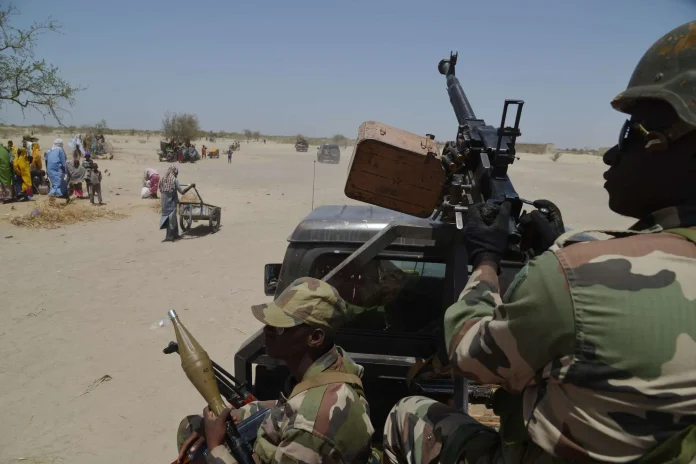
Troops of the 6 Brigade Nigerian Army/Sector 3 Operation WHIRL STROKE (OPWS) have declared four suspected bandits wanted in Taraba State.
The suspects, identified by the troops on the army’s X handle, are Isah, Shagari, Dogo and Teller.
The army also announced a recent successful operation in the state, which led to the dismantling of a bandit camp located in the Chinkai Forest of Wukari Local Government Area of Taraba.
Valuable items, including 12 mobile phones, 3 international passports, and various mystical charms utilized by the criminals, were recovered from the bandit camp.
The operation, which took place on Tuesday, was successful due to actionable information provided by some good Samaritans.
“Acting on actionable intelligence reports detailing the continuous criminal activities by terrorist groups sheltering in the Chinkai Forest, troops of the 93 Battalion Sub-Sector 3B OPWS launched the clearance operation.
The troops meticulously combed through the dense forest areas notorious for harboring kidnappers’ camps, prompting the terrorists to flee upon sighting the advancing troops.
The operation led to the destruction of several makeshift structures linked to wanted kidnapping kingpins such as Isah, Shagari, Dogo, and Teller,” the communication reads.
The successful clearance operation, according to the army, demonstrates the unwavering commitment of the 6 Brigade Nigerian Army/Sector 3 OPWS to confront insecurity head-on in Taraba State.
They urged the public to remain vigilant and cooperate with security agencies by promptly reporting any suspicious activities within their communities.
“The Nigerian Army continues to prioritize the safety and security of all citizens, and operations such as this reaffirm our dedication to eradicating criminal elements that threaten the peace and stability of Taraba State and its environs,” it added.
Nigerian Army declares four suspected bandits wanted in Taraba
