Home Blog Page 1226

Arase’s removal unwarranted, says PANDEF

0

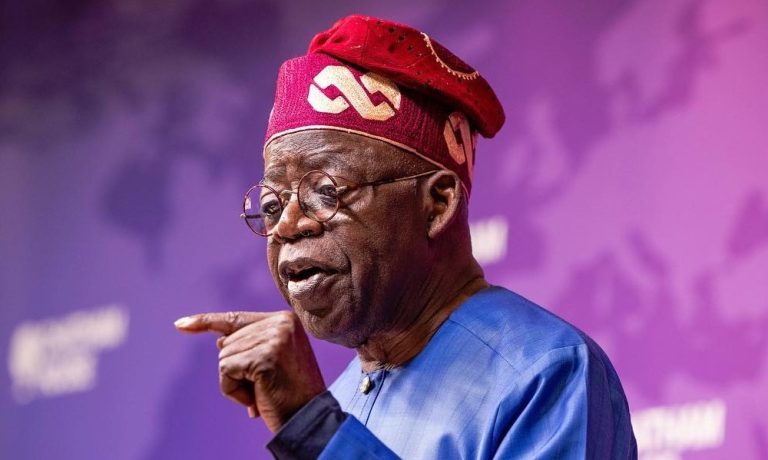
The Pan-Niger Delta Forum has condemned the removal of the former Chairman of the Police Service Commission, Solomon Arase, describing it as “unwarranted, and an unnecessary provocation”, which reflects negatively on the administration of President Bola Tinubu.

The According reports that President Tinubu had last Tuesday appointed retired Deputy Inspector-General of Police, Hashimu Argungu, as the new Chairman of the Police Service Commission, ending Arase’s tenure.

Arase was appointed in January 2023 by former President Muhammadu Buhari.

PANDEF said Arase’s removal portrayed the Tinubu-led administration as one which did not regard competence and integrity but sacrificed merit on the altar of favouritism.

This was contained in a statement signed by the National Chairman of PANDEF, Senator Emmanuel Essien, on Sunday, who asked the President to tell Nigerians what had warranted Arase’s dismissal, noting the reforms the former PSC Chairman had instituted during his tenure.

The statement partly reads “We, hereby, express profound disappointment, and denounce the unjust manner in which Dr. Solomon Arase, a former Inspector General of Police, was relieved of his duties as Chairman of the Police Service Commission by President Bola Ahmed Tinubu on Monday, 10th June 2024.

“PANDEF views Arase’s removal as unwarranted, and an unnecessary provocation that reflects negatively on Tinubu’s administration, indicating a lack of regard for the nation’s laws that Mr. President swore to uphold and protect.

“This singular act further portrays this administration as one that does not prioritise competence, integrity, and efficiency; sacrificing merit on the altar of favouritism. The pivotal question remains, “What warranted Solomon Arase’s removal from office by President Bola Ahmed Tinubu?”

PANDEF urged “Tinubu to tell Nigerians, and the world, at large, the reason or reasons for Arase’s removal. We stand against injustice, oppression, and likewise, misconduct.

“The question arises as to why any serious government would dismiss a personality like Solomon Arase, who had initiated positive reforms and improvements at the Commission, and given his meritorious track record as a diligent police officer, who rose through the ranks to become the 18th Inspector General of Police of the Nigeria Police Force and retired with dignity.”

Essien stated that the President had contravened the law under Section 3, subsection (1)a of the Police Service Commission Act 2002, subject to the provisions of Section 4 of the Act, which provided for a four-year term for the PSC Chair, noting that past Presidents had appointed former Chairmen for the stipulated four-year

Essien said, “According to Section 3, subsection (1)a of the Police Service Commission Act 2002, subject to the provisions of Section 4 of the Act, a member of the Commission, other than ex-officio members, shall each hold office for a term of four years and no more.

“It is important to recall that when President Muhammadu Buhari assumed office, he retained Sir Mike Okiro as Chairman of the Police Service Commission until the end of Okiro’s tenure, appointing Musiliu Smith, also a former IGP, in May 2018 to succeed Okiro. Sir Mike Okiro, the 13th Inspector General of Police from 2007 to 2009, was appointed as Chairman of the Police Service Commission in May 2013 by Buhari’s predecessor, former President Goodluck Jonathan.”

PANDEF also alleged marginalization of its people by the Tinubu administration, adding that political considerations should not be entertained in appointing a chairman for the PSC.

They cautioned the President against continued disregard for the Constitution as it sent the wrong message to citizens and posed a threat to Nigeria’s stability.

Essien said, “It is pertinent to implore that political considerations mustn’t be entertained in appointments to sensitive institutions such as the Police Service Commission.

“Mr President should likewise note that the continued disregard for the constitution and the rule of law by the government not only mirrors negatively on law enforcement officers, the military, and political leaders but also sends a dangerous message to citizens, posing a threat to Nigeria’s stability.”
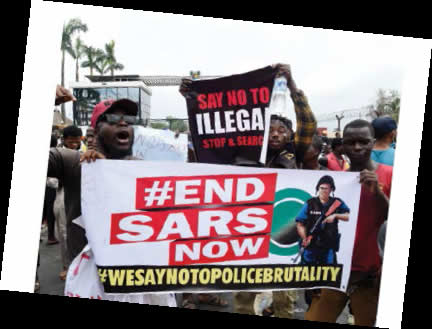
No EndSARS protester in detention, police fault Shehu Sani

0

The Nigeria Police Force has refuted the statement made by a former Senator, Shehu Sani, during the 2024 Democracy Day Dinner, where he alleged that some individuals who were involved in the 2020 EndSARS protests are still being detained.

Speaking at the dinner on Wednesday, Sani called on President Bola Tinubu to pardon the EndSARS protesters, who are still in detention.

In a press release signed by the Force’s spokesperson, ACP Olumuyiwa Adejobi, on Sunday, the police denied the assertion, stating that all detained persons have been processed in accordance with the law and none are currently held in custody.

The statement read, “The Nigeria Police Force categorically denies the recent allegations made by Senator Shehu Sani at the 2024 Democracy Day Dinner on June 12, 2024, at the Presidential Villa in Abuja, where the former Senator falsely claimed that some young people have been detained since the 2020 EndSARS protest.

“The Nigeria Police affirms that no individual is being unlawfully detained by the Nigeria Police Force or any other security agency in Nigeria due to the EndSARS protest.

“All arrested individuals have been processed according to the law, and none remain unlawfully detained.”

The statement further cited Governor Babajide Sanwo-Olu of Lagos State as having pardoned about 100 suspects who were arrested during the EndSARS protests.

“For emphasis, no one anywhere in Nigeria is under police detention or being wrongly persecuted for participating in the EndSARS protest.

“The issues surrounding the protest have been debated, researched, and documented, and lessons have been learned. We have forgiven ourselves and moved on,” the statement added.

The police further urged the public to disregard the claim and remain assured of their commitment to upholding justice, the rule of law, and human rights.

“We encourage verifying information before making public statements to avoid harm and incitement,” the statement concluded.

Clark urges Tinubu to release Nnamdi Kanu, cites Bodejo’s case

0

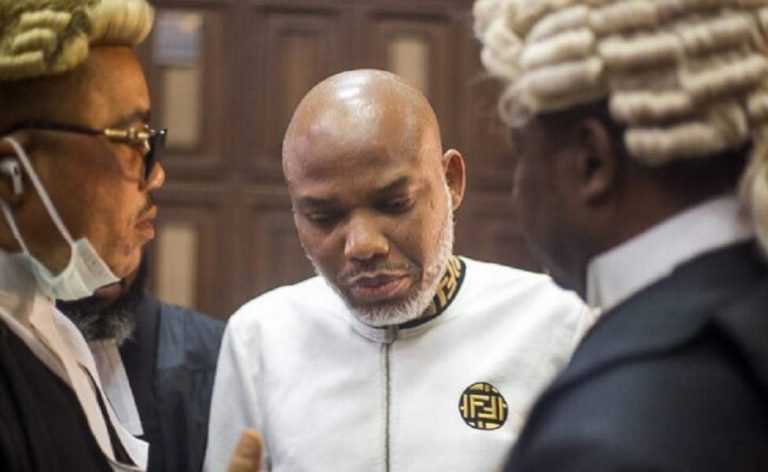
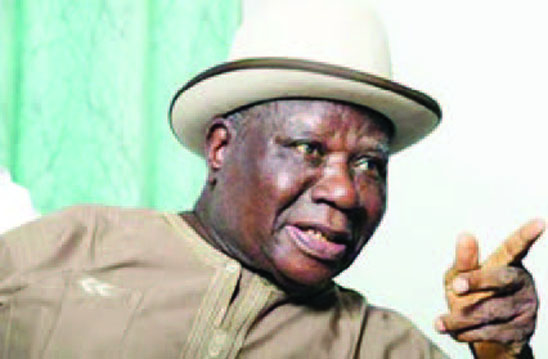
In a detailed letter to President Bola Tinubu, Chief Edwin Clark, a former Federal Commissioner for Information and South-South leader, has urged the release of Nnamdi Kanu, the detained leader of the Indigenous People of Biafra (IPOB). Clark drew parallels with the case of Bello Bodejo, the President of Miyetti Allah Kautal Hore, who had terrorism charges dropped against him.
Clark emphasized the need for a political solution to address the demands of the Igbos, who feel marginalized and short-changed in the country. He stressed that releasing Kanu would complete Nigeria’s reconciliation and end the Monday sit-at-home order in the South-East.
While acknowledging his disagreement with IPOB’s methods, Clark advocated for a united Nigeria where all citizens have equal rights. He advised the government to adopt a “carrot and stick approach” instead of military force in addressing IPOB youths’ grievances.
The elder statesman also reminded President Tinubu of his longstanding support for restructuring, essential for a united Nigeria. He urged the President to reassure Nigerians of their oneness and equality, emphasizing that no section owns the country more than any other.
Clark’s letter, titled “PART II: A CALL FOR THE REINTEGRATION OF THE IGBOS INTO THE MAINSTREAM OF NIGERIA AND A CALL FOR THE RELEASE OF NNAMDI KANU BY MR PRESIDENT ON POLITICAL GROUNDS AS IN THE CASE OF THE MIYETTI ALLAH PRESIDENT ABDULLAHI BELLO BODEJO,” reiterated his stance on the need for Nigeria’s unity and equal treatment of all citizens.
“I have never supported the activities of IPOB under the leadership of Nnamdi Kanu, but today, Nigeria, a broken country where many groups and nativities have cried foul to the way Nigeria had been going since 1999 because of the Military Constitution imposed on Nigerians by the Military. Today, our economy is failing, our democracy is failing, our education and health institutions are collapsing, the youths are jobless, and some people are treated as second-class citizens while a few enjoy the fruit of the so-called democracy we are passing through, coupled with the violence and insecurity in the South-East; and if allowed to continue, the consequences will be very unpleasant to all Nigerians.”
Read also: 160,000 kids living with HIV in Nigeria’, Christian body says
“It would be recalled that during the gubernatorial election, Nigerians were informed that the detained IPOB leader, Nnamdi Kanu had disowned Simon Ekpa led faction of IPOB. It was partly as a result of this, that the elections were peacefully held in Anambra State which brought Prof Chukwuma Soludo into power.”
“The release of Nnamdi Kanu by Mr President on political grounds is overdue as earlier explained. Mr President should direct the Attorney General to enter a nolle prosequi to free Nnamdi Kanu who has shown his intention to work with the Federal Government, in order to bring peace and stability in the South-East and to Nigerians as a whole as it has been recently done in similar cases of treasonable felony as in the case of Miyetti Allah president, Abdullahi Bello Bodejo of Nasarawa state.”
“Mr. President, the recent adoption of the Independent National Anthem by all Nigerians imposes on us that we must practice what we preach and the release of Nnamdi Kanu is one of such cases. I respectfully wish to remind you or draw your attention to the first stanza of our National Anthem thus; “Nigeria we hail thee, Our own dear native land, Though tribe and tongue may differ, In brotherhood we stand, Nigerians all, and proud to serve Our sovereign Motherland.”
The post Clark urges Tinubu to release Nnamdi Kanu, cites Bodejo’s case appeared first on Latest Nigeria News | Top Stories from TVN.

Heatstroke kills 14 Jordanian pilgrims in Mecca

0

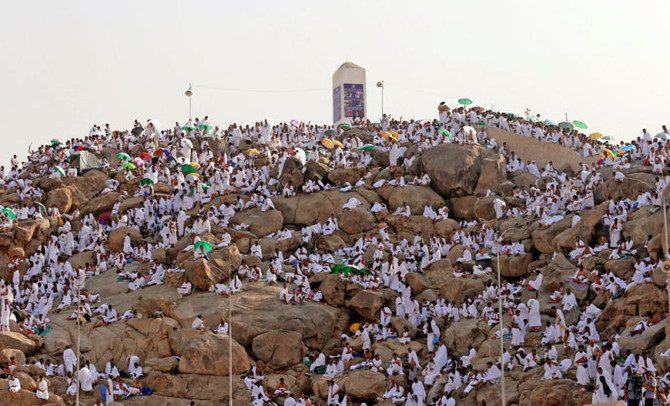
Fourteen Jordanian pilgrims have died while performing rituals related to the hajj and 17 others missing.

Jordan’s official news agency disclosed this on Sunday.

The agency said the pilgrims died as a result of exposure to extreme sun and heat, based on a report from Jordan’s Foreign Ministry.

Temperatures in Mecca reached nearly 110 degrees Fahrenheit on Sunday with recent studies indicating that climate change will increase health risks there.

On Saturday, the country’s medical centre for heat exhaustion treated 225 pilgrims for heat stress and fatigue.

Meanwhile, this is not the first death during pilgrimage, previous pilgrimages have also seen fatalities, including those caused by stampedes.

In 2015, a stampede resulted in over 700 deaths. In recent years, many pilgrims, often elderly, have suffered from heat stress, with numerous fatalities due to extreme heat.

As one of the five pillars of Islam, the pilgrimage involves several outdoor rituals in Mecca and the surrounding desert, such as praying outside the Great Mosque and spending a day in prayer at Mount Arafat, often under intense sunlight.

Scientists have warned that when the hajj, which follows the lunar calendar, occurs during the summer, as it did this year, weather conditions can be particularly harsh.

To mitigate heat stress, Saudi authorities have implemented relief measures, including using water mist sprays to cool the air and providing water, umbrellas, and air-conditioned transportation for pilgrims, which scientists say have helped reduce heat-related cases.

160,000 kids living with HIV in Nigeria’, Christian body says

0

The Christian Council of Nigeria (CCN) has urged the government and relevant stakeholders to intensify efforts to combat the spread of HIV/AIDS among children in the country.
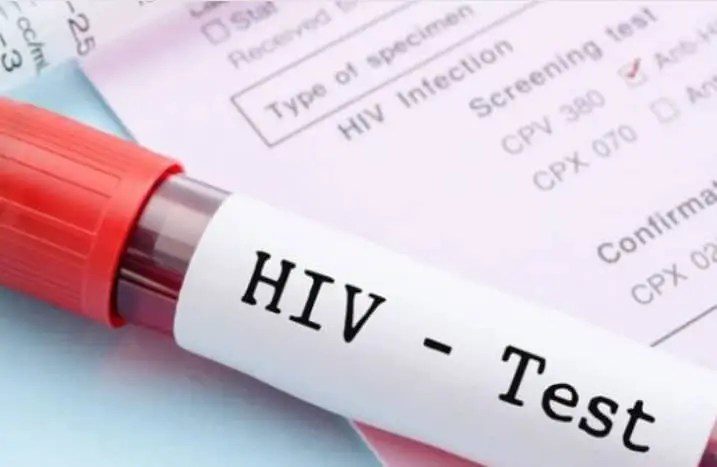
According to the CCN, Nigeria has an estimated 160,000 children living with HIV, with only 45,000 receiving treatment.
At the close-out ceremony of the HIV intervention program implemented in collaboration with the World Council of Churches (WCC) in Abuja, the CCN President, Most Rev. David Onuoha, represented by Archbishop Peter ogunmuyiwa, decried the high number of children living with HIV in Nigeria, stressing the need for urgent action to address the situation.
“Our mission is to identify with the needy and less privileged, and to make a positive impact on their lives. Our efforts have been enriching and impactful. We are committed to combating the HIV epidemic in our society, and we urge all relevant NGOs and government agencies to join us in this crusade,” he said.
While acknowledging progress in preventing mother-to-child transmission, Onuoha emphasized the need for more work. “According to statistics, Nigeria has a high number of children who are HIV victims – 160,000, with only 45,000 undergoing treatment. This is unacceptable, and we must do more to address this issue.”
Gracias Ross, WCC representative, reiterated the organization’s commitment to supporting Nigeria in the fight against HIV/AIDS.
Read also: Presidency fires back at New York Times, says Tinubu inherited “dead economy” in need of urgent surgery
“160,000 children are living with HIV, but remember that two million people are living with HIV in Nigeria. They will have partners and children. In what condition will these children be born? We must change things. If these children are alone and don’t have a family, the church has to be their family. This is the calling that we should become the father of the fatherless and fight for the widows and fight for justice”, Ross said.
Ross also highlighted the need for comprehensive education on sexuality, saying, “You can imagine how many young people don’t have any positive orientation on sexuality. So the Church should be bringing light to these large numbers of young people in Nigeria who are not having information.”
Rev. Dr. Evans Onyemara, CCN General Secretary, appreciated the WCC’s support and highlighted success stories from the program’s implementation in several states. He acknowledged contributions from partners, including the National Agency for the Control of AIDS (NACA) and the Christian Health Association of Nigeria (CHAN), and looked forward to continued collaboration to eradicate the disease.
The event featured goodwill messages from stakeholders, emphasizing the need for sustained collaboration to combat HIV/AIDS.
The CCN and WCC’s efforts aim to provide support and treatment to those affected, reduce stigma, and promote awareness and education to prevent the spread of the disease.
The post 160,000 kids living with HIV in Nigeria’, Christian body says appeared first on Latest Nigeria News | Top Stories from TVN.

Three die in Osun road crashes

0

Three lives were lost while 22 other commuters sustained injury in two separate road accidents that occurred in Aagba and Sekona in Osun State on Sunday.

Details about the Aagba accident are still sketchy at the time of filing this report.

It was however learnt that the accident involved a motorcycle carrying three people and a private car, driven by a man, who reportedly fled the scene after the crash.

The three deceased were said to be those travelling on the motorcycle.

Confirming the accident, the Public Relations Officer of Osun State Command of the Nigeria Security and Civil Defence Corps, Kehinde Adeleke, said officers from the command had visited the scene.

Adeleke said, “The accident involved a Toyota Camry pencil light and a motorcycle with plate no AKD 810 QX. The accident claimed the lives of three persons on the motorcycle on the spot.”

“Meanwhile, 22 people sustained various degrees of injuries in another accident that occurred also on Sunday in Sekona, along the Osogbo-Gbongan expressway.”

Giving further details about the crash, Adeleke said, “The accident was reportedly caused by the Toyota Hummer bus which left its lane and had a head-on collision with the Vehicle coming from the opposite direction.

“It was discovered that the Toyota Hummer bus driver slept while driving. Adult men and women including children sustained varying degrees of injuries/ fractures, while the Toyota Hummer bus (driver) sustained fractures on both legs.

“Three persons in the Fiat Van and 19 were injured in the Toyota Hummer bus. The victims were evacuated and taken to Sekona Government Clinic for first aid and were later moved to UNIOSN Teaching Hospital by Government ambulance for proper medical attention.”

The Osun NSCDC State Commandant, Dr Michael Adaralewa, expressed concern over many auto crashes recorded during the festive period.

Adaralewa enjoined members of the public to avoid reckless driving.

He also urged them not to drive under the influence of alcohol or drugs, urging commuters to exercise caution and restraint while driving.

Presidency fires back at New York Times, says Tinubu inherited “dead economy” in need of urgent surgery

0

The Presidency has launched a robust response to the New York Times’ report on Nigeria’s economic situation, characterizing the article as “jaundiced”, “misleading”, and “typical of the predetermined and derogatory manner” in which foreign media outlets often report on African countries.
In a comprehensive statement, the Special Adviser to the President on Information and Strategy, Bayo Onanuga, on Sunday, presented a detailed rebuttal, emphasizing that President Bola Tinubu inherited an economy in shambles when he assumed office in May 2023.
The Presidency painted a stark picture of an economy bleeding from decades of mismanagement, with a staggering infrastructural deficit, unsustainable fuel subsidy regime, and a currency in free fall.
According to the Presidency, the Tinubu administration had to perform “urgent surgery” to prevent the economy from collapsing like Zimbabwe and Venezuela. The government’s policy decisions, including the removal of fuel subsidies and the unification of exchange rates, were taken to stem the economic hemorrhage and restore stability.
The Presidency acknowledged the challenges faced by Nigerians amid the inflationary spiral but highlighted the positive aspects of the economy and the ameliorative policies being implemented. It cited the economy’s trade surplus, portfolio investments, and loans from the World Bank and other institutions as testaments to restored confidence.
The government assured that it was working assiduously to address food inflation, with increased agricultural production, retail shops selling raw food items at lower prices, and incentives for farmers. It noted that Nigeria was not alone in facing a cost-of-living crisis, citing the US and Europe as examples, and expressed optimism that the country would overcome its difficulties like it had done in the past.
“The report, based on several interviews, is at best jaundiced, all gloom and doom, as it never mentioned the positive aspects in the same economy as well as the ameliorative policies being implemented by the central and state governments.
“To be sure, President Tinubu did not create the economic problems Nigeria faces today. He inherited them. As a respected economist in our country once put it, Tinubu inherited a dead economy.
“The economy was bleeding and needed quick surgery to avoid being plunged into the abyss, as happened in Zimbabwe and Venezuela.
“For decades, Nigeria had maintained a fuel subsidy regime that gulped $84.39 billion between 2005 and 2022 from the public treasury in a country with huge infrastructural deficits and in high need of better social services for its citizens.
“The state oil firm, NNPC, the sole importer, had amassed trillions of naira in debts for absorbing the unsustainable subsidy payments in its books. By the time President Tinubu took over the leadership of the country, there was no provision made for fuel subsidy payments in the national budget beyond June 2023.
Read also: Nigeria, other African countries’ mounting debt profile forces AfDB to inaugurate ADMIN
“The budget itself had a striking feature: it planned to spend 97 percent of revenue servicing debt, with little left for recurrent or capital expenditure. The previous government had resorted to massive borrowing to cover such costs.
“Like oil, the exchange rate was also being subsidized by the government, with an estimated $1.5 billion spent monthly by the CBN to ‘defend’ the currency against the unquenchable demand for the dollar by the country’s import-dependent economy.
“President Tinubu had to deal with the cancer of public finance on the first day by rolling back the subsidy regime and the generosity that spread to neighbouring countries. Then, his administration floated the naira.
“After some months of the storm, with the naira sliding as low as N1,900 to the US dollar, some stability is being restored, though there remain some challenges. The exchange rate is now below N1500 to the dollar, and there are prospects that the naira could regain its muscle and appreciate to between N1000 and N1200 before the end of the year.
“The economy recorded a trade surplus of N6.52 trillion in Q1, as against a deficit of N1.4 trillion in Q4 of 2023. Portfolio investors have streamed in as long-term investors.
“When Diageo wanted to sell its stake in Guinness Nigeria, it had the Singaporean conglomerate, Tolaram, ready for the uptake. With the World Bank extending a $2.25 billion loan and other loans by the AfDB and Afreximbank coming in, Nigeria has become bankable again. This is all because the reforms being implemented have restored some confidence.
“The inflationary rate is slowing down, as shown in the figures released by the National Bureau of Statistics for April. Food inflation remains the biggest challenge, and the government is working very hard to rein it in with increased agricultural production.
“The Tinubu administration and the 36 states are working assiduously to produce food in abundance to reduce the cost. Some state governments, such as Lagos and Akwa Ibom, have set up retail shops to sell raw food items to residents at a lower price than the market price.
“The Tinubu government, in November last year, in consonance with its food emergency declaration, invested heavily in dry-season farming, giving farmers incentives to produce wheat, maize, and rice. The CBN has donated N100 billion worth of fertiliser to farmers, and numerous incentives are being implemented. In the western part of Nigeria, the six governors have announced plans to invest massively in agriculture.
“Nigeria is not the only country in the world facing a rising cost of living crisis. The USA, too, is contending with a similar crisis, with families finding it hard to make ends meet. US Treasury Secretary Janet Yellen raised this concern recently. Europe is similarly in the throes of a cost-of-living crisis.
“As those countries are trying to confront the problem, the Tinubu administration is also working hard to overturn the economic problems in Nigeria.
“Our country faced economic difficulties in the past, an experience that has been captured in folk songs. Just like we overcame then, we shall overcome our present difficulties very soon.
The Presidency’s response is a clear indication that the government will not take criticism lying down, especially when it comes from foreign media outlets perceived as having a biased narrative against African countries.
The post Presidency fires back at New York Times, says Tinubu inherited “dead economy” in need of urgent surgery appeared first on Latest Nigeria News | Top Stories from TVN.

Direct AGF to release Nnamdi Kanu, Clark writes Tinubu

0

The leader of the Ijaw nation, Edwin Clark, has called on President Bola Tinubu, to direct the Attorney General of the Federation, Lateef Fagbemi, to file a nolle prosequi for the release of the leader of the Independent People of Biafra, Nnamdi Kanu.

Clark urged Tinubu to ask the Attorney General of the Federation to file a nolle prosequi to release the detained IPOB leader, noting that his (Kanu’s) freedom on political grounds was long overdue.

This was contained in a second letter to the President on Sunday, following a first in which the elder statesman urged the President not to tow the path of his predecessor, President Muhammadu Buhari, who marginalised and subjugated the Igbos, by exempting them from certain appointments.

“The release of Nnamdi Kanu by Mr President on political grounds is overdue as earlier explained. Mr President should direct the Attorney General to enter a nolle prosequi to free Nnamdi Kanu who has shown his intention to work with the Federal Government, to bring peace and stability in the South-East and to Nigerians as a whole, as it has been recently done in similar cases of treasonable felony as in the case of Miyetti Allah president, Abdullahi Bello Bodejo of Nasarawa state.”, he said.

The According however reports that Kanu was denied bail in April by Justice Binta Nyako of the Federal High Court sitting in Abuja, who granted an accelerated hearing instead.

In his letter, Clark said the move would complete the reconciliation of Nigeria and end the sit-at-home order in the Southeast.

He said the IPOB had “fashioned a place for itself” in the hearts and minds of young people, because of the short-changing of Igbos from the South East over the years while urging the use of the “carrot and stick approach”, rather than military force, in addressing the agitations in the region.

“Apart from demanding the restructuring of Nigeria, the political freedom of Nnamdi Kanu will no doubt complete the reconciliation of Nigeria and bring an end to the needless Monday sit-at-home order, which has disturbed businesses and civil activities in the South-East.

“The short-changing of the Igbos of the South East over the years is the reason why IPOB has fashioned a place for itself in the hearts and minds of the young people in the Southeast with its demand for self-determination. I have physically seen these IPOB boys in action, at the Ekwueme Square in Awka, Anambra State, when I attended a meeting of the Southern and Middle Belt Leaders Forum there.

“None of these youths witnessed the civil war and are, definitely, not abreast with the history of the war and its full ramifications. I advise, therefore, that rather than the use of military force which has already proved counter-productive, they should be carefully treated with the “carrot and stick approach”, in the interest of the peace, stability, and progress of Nigeria as a whole and the Southeast zone in particular.”

Clark further emphasised the importance of reintegrating the Igbos into the mainstream of Nigeria, in which their region would be equal with other regions in the country, noting that anything short of that would not be in the interest of the country.

“Let me re-emphasize the importance and urgency of reintegrating the Igbos into the mainstream of Nigeria where their region will be equal with other regions in all ramifications, meaning that they should be fully and unconditionally united or be admitted into the Union of Nigeria as it was before the civil war.

“Anything short of that is not in the interest of a united Nigeria and there may be no end to the insecurity in Nigeria.”

He also called for the restructuring of Nigeria, of which he said the President had also been a principal advocate before becoming Senator and the Governor of Lagos state, adding that restructuring the country “will be one of your most enduring legacies when you leave office”.

“Mr President you have always been the principal advocate of restructuring even before you became Senator of the Federal Republic of Nigeria and Governor of Lagos State.

“During your time, you passionately advocated for a Sovereign National Conference, which was even more inclusive than the current restructuring we are demanding, in Nigeria. Undoubtedly, this pursuit of restructuring will be one of your most enduring legacies when you leave office,” he added.

Foundation decries UN’s bias against men

0

A Non-governmental Organisation, the Life After Abuse Foundation has decried United Nation’s systemic gender bias against men while urging it to commit more to promoting gender equality and recognition for men.

The Founder and President of the Foundation, Ms Halima Layeni, said this in a statement on Sunday in Lagos.

Layeni, who referenced the UN’s disposition to Father’s Day, men and their contributions to society said the UN has never acknowledged the importance of celebrating men and their contributions to society.

The News Agency of Nigeria reports that Father’s Day is celebrated worldwide to recognise the contribution that fathers and father figures make to the lives of their families.

Although Father’s Day is celebrated on a variety of dates worldwide, many countries observe this day which celebrates fatherhood and male parenting on the third Sunday in June.

Layeni said that the UN proclaims its commitment to gender equality, yet it hypocritically ignores the unseen sacrifices of fathers, husbands, and sons.

According to her, the UN claims to champion the rights of the marginalized, but men are seemingly invisible to it.
She added the Organisation’s silence was deafening, as it perpetuates a harmful narrative that men were not worthy of recognition or celebration.

She said that this not only harms men but also has far-reaching consequences for families, communities, and society as a whole.

“Despite the United Nation’s lofty pledges to achieve a just and equal world, it has consistently ignored days dedicated to celebrating men.

“This blatant disregard for half of the global population is a stark reminder of the systemic gender bias that pervades your institution.

“You celebrate numerous days dedicated to women, including International Women’s Day (March 8), International Girls’ Day (October 11), International Day of the Girl Child (October 11), Women’s History Month (March), International Women’s Day of Peace and Disarmament (May 24).

“These celebrations are important and necessary, but they also highlight the stark contrast in recognition and celebration of men”, Layeni said.

She said that there were no UN-recognised days dedicated to celebrating men or boys, a disparity that perpetuated harmful gender stereotypes and discrimination.
She said that this omission reinforced harmful gender stereotypes, limiting men’s ability to express emotions, seek help, and pursue non-traditional roles.

She added that it also neglected the unique challenges men faced, including higher rates of suicide, homelessness, and incarceration.

“Therefore, I demand accountability from the United Nations. It is time for you to acknowledge the importance of celebrating men and their contributions.

“It is time for you to recognise the value of fathers, the impact of positive male role models, and the sacrifices men make for their families and communities”, she said.

Layeni expressed optimism that there would be a response and a plan of action by the UN to address the issue.

According to her, the world is watching, and men deserve better, saying it is time for the United Nations to practice what it preaches and truly champion gender equality for all.

“Your failure to act will have far-reaching consequences. It will perpetuate a world where men are marginalised, boys are disenfranchised, and families suffer.

“It will undermine your credibility and legitimacy; it will show the world that your commitments to gender equality are nothing more than empty promises”, she said.

NAN

Anglican bishop blames historical, economic factors for Nigeria’s woes

0

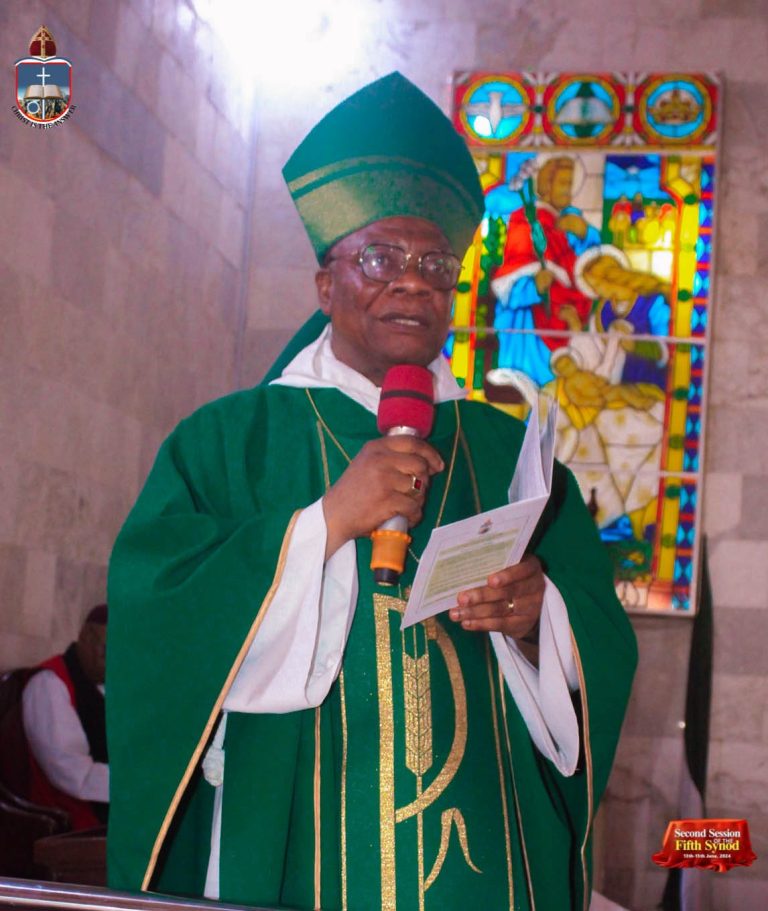
The Anglican Bishop of the Diocese of Awori, Rev Akin Atere, has observed that the roots of Nigeria’s multiple problems can be traced to a complex interplay of historical, political, social, and economic factors that have shaped the country’s trajectory over the years.

Atere made this observation while delivering his charge at the second session of the 5th Synod of the Diocese of Awori, held at the Cathedral Church of St. James, Ipate Oyinbo Ota, Ogun State, on June 14.

The theme of the synod was “Taking Root Before Bearing Fruits.”

Atere highlighted that the uneven distribution of wealth, brought about by a dysfunctional economic and social system, has resulted in “the rich getting richer and the poor poorer.”

He commended President Bola Tinubu’s efforts to revamp the nation’s economy, noting that “No doubt, some giant strides have been taken, even though most of them are too painful.”

In his extensive address on the importance of roots in human emancipation, Atere lamented that the living standard of many Nigerians has deteriorated below the poverty level.

He remarked, “Today, every commodity in the Nigerian market is beyond the reach of the average Nigerian. A situation where more than 120 million Nigerians out of a population of 220 million are wallowing in abject poverty amidst abundant human and mineral resources is shameful and unacceptable.”

Atere pointed out the paradox of Nigeria, Africa’s largest oil producer, experiencing one of the highest levels of poverty on the continent.

He attributed part of this to the colonial period, which imposed artificial boundaries that amalgamated diverse ethnic groups, leading to ethnic tensions and a lack of national unity.

The Bishop criticized the pervasive corruption in the country, which he said has undermined the rule of law and eroded public trust in institutions.

He stated, “The prevalence of corruption has also contributed to economic stagnation, as it deters foreign investment and hampers economic growth.”

Atere noted that weak and unaccountable institutions have created a breeding ground for corruption, nepotism, and impunity among the political elite, hindering the country’s progress.

He further explained that the politicization of ethnicity and religion has exacerbated divisions in the country, making it difficult to build a cohesive national identity. Atere highlighted the ongoing challenges in the health, education, and power sectors, lamenting Nigeria’s lagging progress in these areas.

Addressing these challenges, Atere suggested, “will require comprehensive and sustained efforts to promote good governance, foster national unity, combat corruption, strengthen institutions, invest in education and healthcare, diversify the economy, and promote social inclusion.”

He urged the government to diversify the economy by investing in agriculture, manufacturing, and technology sectors, and to implement policies that attract foreign investment, improve infrastructure, and promote entrepreneurship to stimulate economic growth and create job opportunities.

He emphasized the need for policies to address “income inequalities, improve access to education and healthcare, and ensure equal opportunities for all citizens. Strengthening the legal system and promoting human rights awareness were also highlighted as essential for a just and equitable society.”

On security, Atere urged the government to enhance security agencies and engage in sustained dialogue for conflict resolution.

He advocated for community policing and addressing the root causes of insecurity, such as poverty and marginalization, noting his support for state police.

To promote unity, Atere called for policies that encourage inclusivity, dialogue, and understanding among diverse communities.

He used the synod to highlight the diocese’s achievements over the past year, including the creation of more parishes and the collaboration with Faith Comes By Hearing to translate parts of the Bible into the Awori language.