Home Blog Page 1216

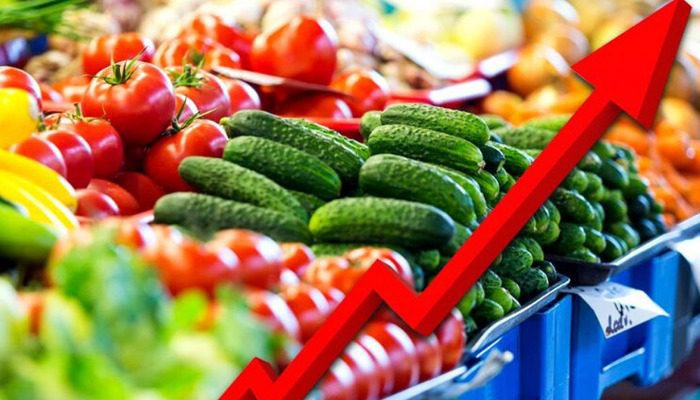
Food inflation soars by 61% in one year-NBS report

0

Nigerians are finding it more difficult to feed themselves, as food inflation rose to 40.66 per cent in May, The According reports.

This was as the cost of food rose by 61 per cent from 25.25 per cent in June 2023 to 40.66 per cent in May 2024, highlighting a steady rise in the cost of living.

This is according to an analysis of the latest Consumer Price Index and Inflation report released by the National Bureau of Statistics.

The CPI measures the average change over time in the prices of goods and services consumed by people for day-to-day living.

On Saturday, the NBS disclosed that headline inflation moved by 0.26 per cent to 33.95 per cent from 33.69 per cent recorded in April.

The report noted that the inflation rate climbed to a 28-year high since March 1996 on higher food and transport prices.

It said, “In May 2024, the headline inflation rate increased to 33.95 per cent relative to the April 2024 headline inflation rate which was 33.69 per cent.”

The statistics agency also reported major contributing items to headline inflation in May 2024 including food & non-alcoholic beverages (contributing 17.59 per cent), housing, water, and electricity, gas & other fuel (contributing 5.68 per cent), and clothing & footwear (contributing 2.60 per cent).

A breakdown of the data showed that the price of food commodities increased steadily from 25.25 per cent in June, to 26.98 per cent in July, 29.34 per cent, 30.64 per cent in August, 31.52 per cent in September, 31.52 per cent October, 32.84 per cent in November and 33.93 per cent as the end of December 2023.

The rate further increased to 35.41 per cent in January, 37.92 per cent in February, crossed the 40 per cent mark in March, 40.53 per cent in April and 40.66 per cent in May.

NBS said the rate rose to 40.66 per cent in May, compared to the 24.82 per cent reported in the same month last year — indicating an increase of 15.84 per cent points.

The bureau said semovita, oatflake, yam flour prepackage, garri, bean, etc (which are under bread and cereals class), Irish potatoes, yam, water yam, etc (under potatoes, yam and other tubers class), contributed to the year-on-year increase in the food inflation rate.

Other contributors are palm oil, vegetable oil, etc (under oil and fat), stockfish, mudfish, crayfish, etc (under fish class), beef head, chicken-live, pork head, and bush meat (under meat class).

“The food inflation rate in May 2024 was 40.66 per cent on a year-on-year basis, which was 15.84 per cent points higher compared to the rate recorded in May 2023 (24.82 per cent).

“The average annual rate of Food inflation for the twelve months ending May 2024 over the previous twelve-month average was 34.06 per cent, which was 10.41 per cent points increase from the average annual rate of change recorded in May 2023 (23.65 per cent),” the report said.

Similarly, Bauchi, Kogi, and Oyo are Nigeria’s three most expensive states on a year-on-year basis after recording the highest All-Items Inflation in May 2024.

The report said in May 2024, the All-Items inflation rate on a Year-on-Year basis was highest in Bauchi 42.30 per cent, Kogi (39.38 per cent Oyo (37.73 per cent).

On the flip side, Borno (25.97 per cent), Benue (27.74 per cent) and Delta (28.67 per cent) recorded the slowest rise in Headline inflation on a Year-on-Year basis.

In recent years, food prices have been on the rise across Nigeria. The situation deteriorated due to the impact of government policies such as the removal of subsidies on petrol, among others.

The upward trend in the prices of these staples and other products has weakened the purchasing power of many citizens, making it difficult for many households in the country to afford daily meals.

At the March Monetary Policy Committee meeting, the Governor of the Central Bank of Nigeria, Olayemi Cardoso, said that the huge purchase of foodstuffs by the government as palliatives is contributing to the galloping food inflation in the country.

The CBN governor noted that inflationary pressure had failed to abate despite the hike in the interest rate in February.

He said, “Staff reports show that the principal drivers of acceleration in inflation are hikes in food and energy prices which are associated with structural factors. Further, new dimensions of inflationary pressure are emerging. First, ‘seller inflation’ arising from the oligopolistic structure of commodity markets such as noticed in the prices of local commodities is gaining significance. In addition, huge purchases by the government for distribution as palliatives to vulnerable citizenry is adding another dimension to the food price inflation, with seasonal factors of food price increases during religious fasting and festive periods, adding price cyclicality.”

Commenting, an economist with Lotus Beta Analytics, Shadrach Israel, expressed concern about the alarming rise in inflation rates, stating, “The surge in annual inflation rate from 21 per cent to over 30 per cent in just a year, and the persistent 60 per cent food inflation rate, are clear indicators of underlying structural issues in the economy.”

Israel urged the government to take immediate action, implementing a multi-pronged approach, including monetary policy tightening, supply-side reforms, social protection programmes, and structural reforms to address the underlying issues driving inflation.

“The government must take immediate action to restore the purchasing power of its citizens and promote economic growth and stability.

“The fact that food prices have increased by 50 per cent compared to last year is particularly concerning, as food is a significant component of household expenditure in Nigeria,” Israel added.

“The government must address the underlying structural issues, such as the heavy reliance on oil exports, and promote economic diversification.”

A development economist Jonathan Thomas, also stated, “The impact of inflation on the Sallah celebration is a clear example of how economic instability can affect the welfare of citizens.

“The significant decrease in purchasing power has made it challenging for Nigerians to afford necessities, dampening the spirit of the celebration.”

Thomas described the high insecurity which has displaced many farmers from the farm belts in the country is a significant structural issue that needs to be addressed.

“Nigeria must fight insecurity to a standstill to help farmers return to their farms that way, food inflation can be tackled while the government should also diversify its economy to reduce its vulnerability to external shocks and promote sustainable economic growth.

“The government must prioritise economic reforms and diversification including tackling insecurity to ensure a more prosperous and stable future for Nigerians,” he said.
Modular refineries back Dangote, seek Tinubu’s intervention

0

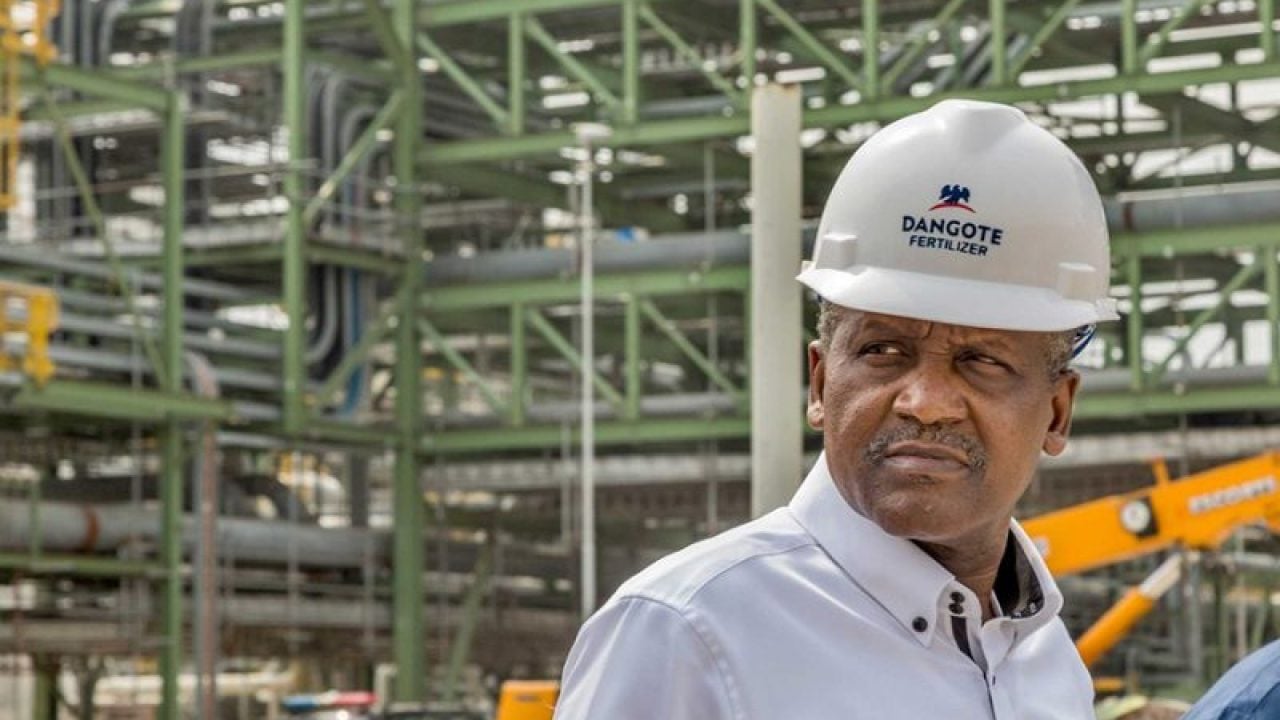
Modular refineries, on Sunday, confirmed the concerns raised by Africa’s richest man, Aliko Dangote, on the fact that some mafias in the oil sector were bent at stopping in-country refining of crude oil for the production of Premium Motor Spirit, popularly called petrol, and other refined petroleum products.

Operators of modular refineries stated that they had raised this concern severally in the past but received no positive feedback, stressing that the Chairman of Dangote Petroleum Refinery just re-echoed it last week.

They spoke to our correspondent through their umbrella association, Crude Oil Refinery Owners Association of Nigeria, while reacting to Dangote’s recent revelation on the matter.

CORAN is a registered association of modular and conventional refinery companies in Nigeria. Modular refineries are simplified refineries that require significantly less capital investment than traditional full-scale refineries.

The Publicity Secretary, CORAN, Eche Idoko, said, “You can see that Dangote has raised similar concerns just as we’ve been saying all along about the mafias in the oil sector. These merchants have held the country hostage, especially in the area of our domestic petroleum products’ supply and it is crippling the whole economy.”

 Last week, Dangote revealed that both local and international cartels, which he described as “mafia”, made repeated attempts to sabotage the $19bn Dangote Petroleum Refinery project located in Lagos.

“Well, I knew that there would be a fight. But I didn’t know that the mafia in oil, they are stronger than the mafia in drugs. I can tell you that. Yes, it’s a fact,” he said.

Dangote, who described himself as a fighter, said they tried all sorts to stop him. Dangote spoke at the Afreximbank Annual Meetings and AfriCaribbean Trade & Investment Forum in Nassau, The Bahamas.

“As a matter of fact during the COVID period, some of the international banks were looking forward to making sure that they push us into default of our loans so that the project will just be dead. And that didn’t happen with the help of banks like Afreximbank,” the oil firm’s boss had stated.

CORAN explained that the rise in food inflation in Nigeria could also be attributed to the hike in the pump prices of petroleum products, especially PMS, stressing that in-country refining would have helped in tackling these costs.

“The reason why this government hasn’t been able to tackle inflation, especially food inflation in the country is because of the prices of petroleum products. And you can’t keep playing the ostrich,” Idoko stated.

He added, “Yes we understand that if you are in OPEC you can decide to peg the price of your crude to OPEC standard, but in all OPEC-member countries, including Saudi Arabia, Russia, etc, they all have special arrangements internally for their people.

“They have special arrangements for domestic use of crude. Even South Africa has crude oil reserves, but where is Nigeria’s reserves? And I don’t mean oil reserves in the ground that are yet explored, but reserves that are stored somewhere.”

On June 3, 2024, The According reported that the Minister of State for Petroleum Resources (Oil), Heineken Lokpobiri, declared that Nigeria would continue to comply with crude oil production adjustments approved by the Organisation of Petroleum Exporting Countries.

Lokpobiri, who spoke at the 37th OPEC and OPEC+ meeting, had explained that the oil production adjustments by the global oil cartel were meant to stabilise the market.

“Nigeria remains unwavering in its commitment to the agreements made under the Declaration of Cooperation. Our adherence to these production adjustments is crucial for maintaining market balance and supporting global efforts toward sustainable oil market stability,” the minister had stated in a statement.

But CORAN argued that the mafias in the oil sector were fighting Nigeria from attaining self-sufficiency in the domestic refining of crude oil because these persons were profiting from petroleum products’ importation into the country.

“Who is this present government talking with on issues that has to do with supply, energy efficiency and others? Who are they talking with, who are the stakeholders? We have made efforts to meet with the President severally, but every attempt was blocked. Who are those benefitting from the current situation in the country?” the association’s spokesperson stated.

Idoko added, “And if they don’t believe us because we are an association of smaller refineries, at least they have heard Dangote say it now. Who are these people fighting the self-sufficiency in the refining of petroleum products in Nigeria? The Minister of Petroleum, who is actually the President, should speak about this.

“He should tell us what is his principle. Is he looking at creating self-sufficiency in domestic refining of petroleum products or that he wants to continue the regime of petroleum importation? If it means the presidency speaking to Nigerians directly, telling us what their policy thrust is on this matter, then fine.”

Dangote had also during his speech revealed that international oil companies denied him access to their crude because they did not think he could succeed with the 650,000 barrels per day capacity refinery.

“In a system where, for 35 years, people are used to counting good money, and all of a sudden, they see that the days of counting that money have come to an end, you don’t expect them to pray for you. Of course, you expect them to fight back.

“And I think that is the process that we’re now really going through. But the truth is that, yes, the country, the sub-region, and also the continent, of sub-Saharan Africa, need this refinery. So, you expect them to fight through non-supply of crude, non-purchase of the product, but I think it’s all temporary. We’ll get there,” he added.

Dangote has been importing crude oil from the United States to get feedstock for the refinery.

Also recall that The According exclusively reported earlier this month that international financiers that were meant to fund the construction of about 20 modular refineries in Nigeria had withheld their funds due to the challenge of getting guarantees for crude oil supply to the facilities when they are completed.

Producers of crude oil in Nigeria, who are largely international oil companies, have not been able to provide guarantees to assure the financiers that crude would be supplied to the modular refineries when the plants are set to produce refined petroleum products.

Based on this, funders of the facilities have held onto their funds pending when the Federal Government would be able to impress it on IOCs to provide the guarantees required for crude oil supply to modular refiners.

Although Nigeria prides itself as the largest crude oil producer in Africa, it exports bulk of its crude to earn foreign exchange, starving domestic refiners who find it tough to source the United States dollar required for the purchase crude.

Nigeria currently has 25 licensed modular refineries. Five of them are operating and producing diesel, kerosene, black oil and naphtha. About 10 are under various stages of completion, while the others have received licences to establish.

Operators of modular refineries had told our correspondent that aside from the five that were in operation currently, the remaining plants were embattled due to the major challenge of crude oil unavailability, a development that has stalled funding from financiers.

“Only about five of our members have completed their refineries. The others are having a major challenge. This challenge is that the people who are supposed to finance them have not disbursed financing for construction because they want some level of guarantee.

“A guarantee that if they finish the refinery, they are going to get feedstock, which, of course, is crude oil,” Idoko had stated.

Efforts to get the Nigerian Upstream Petroleum Regulatory Commission, on Sunday, to speak on the concerns raised by the refinery operators were not successful.

The spokesperson of the commission, Olaide Shonola, could not be reached, as her number was not connecting, while she had yet to respond to a text message sent to her on the subject up till when this report was filed.

However, while responding to the demand for a Conditional Term Sheet by the financiers of modular refiners earlier, the commission stated that it received figures on the production capacities of indigenous refineries and had presented them to crude oil producers to make the commodity available.

NUPRC’s Chief Executive Officer, Gbenga Komolafe, while reacting to a question by our correspondent on the matter, however, stated that the commission would not guarantee supply to refineries that had yet to come into existence.

“This still borders on the implementation of the domestic crude oil obligation. First of all let me make it clear that establishing a refinery of whatever capacity, whether it is a modular refinery or the bigger sized refinery, is a commercial engagement. So the commission can’t come in to give any form of guarantee. I need to make that clear.

“However, the regulator will only implement the provisions of the PIA given that all the regulatory activities of the commission are expected to be in compliance with the provisions of the law. So as it relates to guaranteeing feedstock to refiners, that is enshrined under section 109 of the PIA.

“And what we have just done in furtherance of that provision is that we have put in place a regulation that has to do with domestic crude oil obligation. So in the implementation of that provision, what we do is that we receive the figures on the domestic refining capacity from the Nigerian Midstream and Downstream Petroleum Regulatory Authority.

“And once we receive that, our development and production department factors the numbers against the capacities of the various producers within the upstream sector and makes it obligatory for them (crude producers) to meet those numbers, thereby guaranteeing that volume of supply to existing licensed and operating refineries, not refineries that have not come into existence,” Komolafe had explained.

The NUPRC boss had stressed that “we do not guarantee crude for financing of refineries that have not come into existence.”

Recall that the commission recently promised to ensure that crude oil was supplied to domestic refiners

It stated that in compliance with the provisions of Section 109(2) of the Petroleum Industry Act 2021, the NUPRC in a landmark move, had developed a template guiding the activities for Domestic Crude Oil Supply Obligation.

“The commission in conjunction with relevant stakeholders from NNPC Upstream Investment Management Services, representatives of Crude Oil/Condensate Producers, Crude Oil Refinery-Owners Association of Nigeria, and Dangote Petroleum Refinery came up with the template for the buy-in of all.

“This is in a bid to foster a seamless implementation of the DCSO and ensure consistent supply of crude oil to domestic refineries,” Komolafe had stated.

Joshua moves ahead Fury in new WBC rankings

0

Former world heavyweight champion Anthony Joshua has jumped above Tyson Fury into first place in the latest WBC heavyweight rankings with the ‘Gypsy King’ now ranked second, According Sports Extra reports.

Fury lost his WBC heavyweight title when Oleksandr Usyk beat him in May’s undisputed clash in Saudi Arabia.

Having been previously ranked as champion, Fury has now fallen into the challenger pecking order and has been placed as the second-ranked heavyweight contender by the WBC.

The organisation has placed him below long-term British-Nigerian rival Joshua, who sits behind Usyk, whom he has lost to twice.

Joshua has back-to-back impressive wins over Francis Ngannou and Otto Wallin under his belt, and may well compete for the vacant IBF title against Daniel Dubois in September.

Agit Kabayel rounds out the top three after his impressive underdog win over Frank Sanchez on the Fury vs Usyk bill in May.

Zhilei Zhang sits in fourth after his huge KO win over Deontay Wilder, while Nigerian heavyweight boxer Efe Ajagba makes up the top five holding the WBC ‘silver’ trinket belt.

Jared Anderson is in sixth with Martin Bakole and Kabayel’s rival Sanchez ranked at no.7 and no.8. Joe Joyce keeps a place in the top ten in ninth, while rising star Bakhodir Jalolov completes the list.

It is another damaging blow for the ‘Gypsy King’ who had held the belt since beating Wilder in 2020. He had since made some big defences against the likes of Derek Chisora, Dillian Whyte and Francis Ngannou on his march to the undisputed clash.

Luckily for the Briton, he will get a shot at immediate redemption on December 21 when he is signed to face Usyk in a sequel. It will be a chance to earn back his precious WBC belt, and hand Usyk his first career defeat, just as the Ukrainian inflicted on him in their previous encounter.

Fury is now back in the gym six months out from the clash and has vowed to rewrite his name in the history books.

Power outage hits Ghana, others as Nigeria’s gas disruption lingers

0

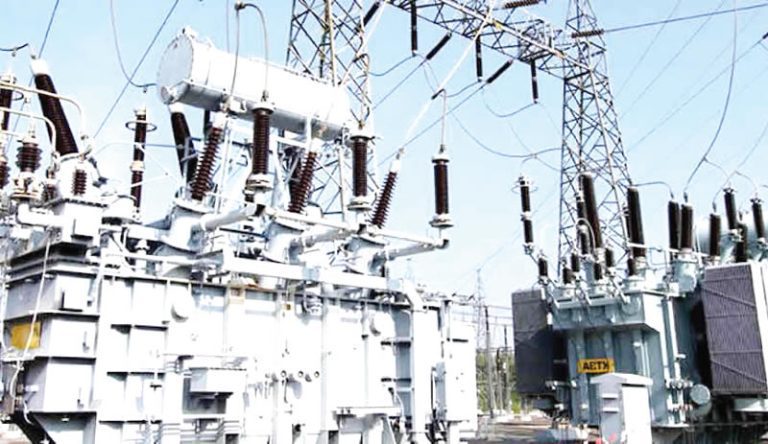
Some parts of Ghana and other West African countries are currently experiencing blackouts due to a lingering disruption in gas supply from Nigeria.

According to findings by our correspondent, there have been blackouts in several cities in Ghana, Republic of Benin and Togo, following the development.

The West African Gas Pipeline Company Limited in Accra, Ghana, had on Wednesday announced it was experiencing a drop in gas volumes available for transportation.

In a statement, WAPCO said one of its gas producers in Nigeria was carrying out some maintenance works. As a result, the gas producer was said to have shut its facility for a three-week maintenance work.

This, it said, resulted in a decrease in gas available for WAPCo to transport to customers in Togo, Benin and Ghana.

“The West African Gas Pipeline Company Limited regrets to announce that it is experiencing a drop in gas volumes available for transportation due to ongoing maintenance works by one of its gas producers in Nigeria.

“One of the producers of the natural gas WAPCo transports from Nigeria has shut down its facility for a three-week maintenance, resulting in a decrease of gas available for WAPCo to transport to customers in Togo, Benin and Ghana. The current situation is entirely out of WAPCo’s control.

“WAPCo continues to transport gas from the Westen Region of Ghana to Tema, also in Ghana, and we expect normalcy to return after the maintenance activities,” the statement read.

Consequently, the affected countries are now currently experiencing power challenges due to the development, according to findings.

Already, the Ghana Grid Company Limited and the Electricity Company of Ghana have informed electricity consumers in the country that some areas have been plunged into the darkness.

In a jointly signed statement, Ghana Grid Company Limited and the Electricity Company of Ghana said they “wish to inform the public that due to a reduction in gas supply from Nigeria since Wednesday 12th June 2024 some areas across the country have experienced interruption in power supply.”

The statement read further, “The West Africa Gas Pipeline Company, in a statement, has explained that the reduction in gas supply was due to maintenance works being undertaken by a gas supplier in Nigeria and is projected to last three weeks.

“The maintenance has caused a reduction in overall power generation capacity in Ghana which could result in load management over the period of the work.”

While apologising to its customers, GRIDCo and ECG assured the public that they were collaborating with other stakeholders in the power value chain to optimise available resources to ensure minimal impact of the reduction in gas supply on consumers.

“GRIDCo and ECG sincerely apologise for the inconvenience caused,” the statement concluded.

The West African Gas Pipeline Company Limited owns and operates the West African Gas Pipeline, a regional infrastructure linking natural gas resources to customers within the West Africa sub-region especially in Ghana.

The WAGP is a bi-directional pipeline system with gas supply from both the east (Nigeria) and the west (Ghana) of the pipeline system.

Iheanacho nears Saudi switch

0

Super Eagles forward Kelechi Iheanacho is at the center of transfer speculations as a prominent Saudi Arabian club (yet unnamed) has expressed strong interest in securing his services. The club’s president has declared their intent to go all out to sign the 27-year-old former Leicester City forward.

Iheanacho, who spent seven years with Leicester City, made over 100 appearances for the club and won the FA Cup, Community Shield and EFL Championship titles.

During the last season, he scored six goals in 26 matches across all competitions, contributing significantly to Leicester’s EFL Championship triumph and their promotion back to the Premier League.

However, on June 7, 2024, Leicester City announced that Iheanacho would be departing the club at the end of the season.

The Nigerian forward’s potential move to Saudi Arabia would see him join a growing list of international stars, including Cristiano Ronaldo, Neymar, and Karim Benzema, who have recently moved to the Saudi Pro League.

With his departure from Leicester confirmed, Iheanacho is reportedly close to finalizing a deal, where he would bring his experience and goal-scoring prowess to the ambitious Saudi side.

The transfer, if completed, would mark a new chapter in Iheanacho’s career, providing him an opportunity to showcase his talents on a new stage while contributing to the rising profile of football in Saudi Arabia.

All rights reserved. This material, and other digital content on this website, may not be reproduced, published, broadcast, rewritten or redistributed in whole or in part without prior express written permission from According.

Contact: [email protected]

NFF should ban Osimhen for Finidi outburst – Peterside

0

Former Nigerian goalkeeper Idah Peterside has said that Nigerian footballer Victor Osimhen should be banned from the national team if he fails to apologise to embattled coach Finidi Goege for his outburst on social media on Friday.

In a viral video on X (formerly Twitter), Peterside criticized Osimhen’s behavior, deeming it disrespectful and unacceptable.

“I think action should be taken, or he should be banned from playing for the national team. If we allow this kind of thing to continue, it would not augur well for Nigeria. The men who have served and given everything to our great country. So sanity must be brought to our football. He (Osimhen) needs to come outside and apologize for the things he said to Finidi,” Peterside said on social media.

“Finidi George is a legend, You don’t just widen your mouth and say things that are unpalatable. If you have issues with the man, pick up your phone and call him. That’s what responsible people do. Osimhen has just shown a bit of irresponsibility, and that’s unexpected. I think the NFF should call Osimhen and ask him to apologize. He has to apologize for saying things.

“Our national team is sacred; days when we wore the jersey, we respected it, and people that went before us. He’s not the first, and neither would he be the last. He should come out openly and apologize openly to former footballers, NFF, Finidi, and Nigerians.”

The controversy began after Finidi expressed frustration over the lack of support from the NFF during a meeting with Sports Minister John Enoh in Abuja. Finidi alleged that certain players, supported by influential individuals, were untouchable and undisciplined and it was rumoured that he specifically called Osimhen out.

In response, Osimhen took to Instagram live to express his anger and disappointment, declaring that he has lost respect for Finidi, asserting that respect should be mutual, and vowed to share evidence of their conversation to clarify the situation.

Shaibu backs APC candidate, labels Ighodalo outsider

0

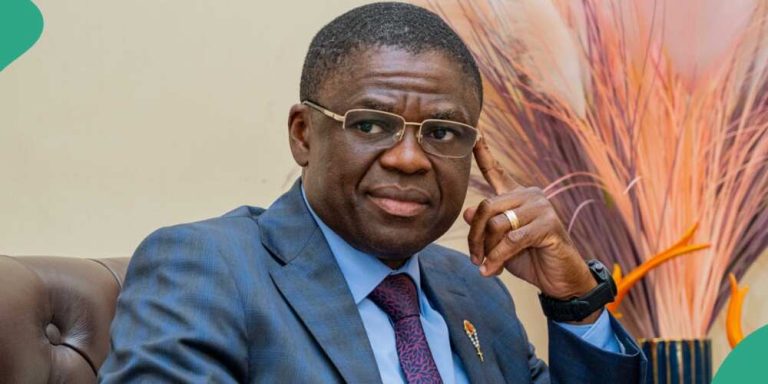
A former deputy governor of Edo State, Philip Shaibu, on Sunday, said he would be supporting the candidate of the All Progressives Congress, Senator Monday Okpebholo for the September 21 governorship election.

Shaibu was impeached by the state House of Assembly on April 8 after a protracted battle with Governor Godwin Obaseki over his succession bid.

He said Okpebholo had the characteristics of the ‘homeboy’ needed to take over governance in Edo State.

Shaibu spoke to journalists on the sidelines of the Fathers’ Day celebration at the St Paul Catholic Church in Benin City.

He described the candidate of the Peoples Democratic Party, Asue Ighodalo, as a product of godfatherism, which, he said, had been eradicated from the political history of Edo State.

He said a former governor of the state, Adams Oshiomhole, preached against godfatherism and he joined Obaseki to fight against godfatherism during the 2020 election, adding that he had also learnt new political strategies from the governor.

Shaibu said, “I am a very good learner and learning is what is most important in our lives and we must continue to learn till we die. Governor Obaseki says he has the right to support whoever he wants to support but he also forgot that he doesn’t have the right to stop anybody from supporting whoever they wants to support. So, it is my right to also decide who I want to support.

“I will support a homeboy. I came into the contest to be governor of Edo State because I needed governance to return to a homeboy, somebody who understands our plight and somebody who understands what the people are feeling.

“We don’t want an outsider. We have experimented with an outsider and it is not working, so this time, we want a homeboy. We have only two home boys in the major political parties; one is in the Labour Party and one is in the All Progressives Congress.

“I chose to follow the homeboy in the APC. The man they are parading in the PDP is an outsider and we have also agreed that no more godfatherism in Edo. The man the PDP is parading is the godson of Obaseki and there is no way a godson can be governor of Edo State again.”

On whether he would not be accused of anti-party activity since he is still a member of the PDP, Shiabu said, “No, it is not anti-party because I know that in the last election, the governor was one leg in the Labour Party and one leg in the PDP, so it can’t be anti-party now.”

On the capacity of Okpebholo, he said, “Enough of English that takes us nowhere. We are talking about governance, the man who understands the plight of the people. He wears the shoes and knows where it pinches.

“A man that has never voted, how can he be seeking our vote? And we are comparing him to a man that is a sitting senator who is really a homeboy!”

Purpose and practice of National Anthem

0

A National Anthem is one of the instruments of modern government. The lyrics are typically approved by the government and people as correctly expressing their history and national aspirations. It normally serves as an embellishment of the national personality to create national pride and endear the nation to the citizens. It is sung at important national, sub-national, sports and school events. It lends importance, credence and solemnity to such events. Citizens sing it standing reverently and respectfully usually with their right palm on their left breast as a sign of meditative communion with the nation. A National Anthem amounts to the music of a national secular faith. The lyrics and music are therefore at the very heart of the nation. Ideally, a National Anthem is a patriotic song aimed at galvanising national patriotism by socialising the citizenry, thus producing patriotic citizens. National Anthems are therefore not mere symbolic national cosmetics, but essential national spiritual instruments for national edification. Even the monarchy-centred British National Anthem which was adopted in September 1745 aimed at the edification of the nation using the monarchy as the rallying point.

National Anthems became very prominent in the 18th century. Claude Joseph Rouget de Lisle wrote the poem of the French National Anthem in 1792. He also composed its music, which was adopted as the French National Anthem on July 14, 1795. It was a war song during the French Revolution. It is no surprise, therefore, that Anne-Marie described it as “bold, catchy and revolutionary.” It is a celebration of French chivalry and the popularisation of the French revolutionary triad of ‘liberty, equality and brotherhood.’ Similarly, the American National Anthem was inspired by the victory over the British at Fort McHenry during the war of 1812. The anthem, “The Star-Spangled Banner” is a song based on the poem “The Defence of Fort McHenry.” No wonder it celebrates what is often described as elements of American character, namely: independence, bravery and heroism in such phrases as ‘land of the free’ and ‘home of the brave.’ It was also Scott Key, the lyricist, who supplied the tune of a popular British song for his poem, which was officially adopted as the American National Anthem in 1931.

The British acquired different parts of Nigeria either as colony or protectorate, by conquest or by treaty and coalesced them into the Colony and Protectorate of Southern Nigeria and Protectorate of Northern Nigeria. In 1914, the two were amalgamated into one country called Nigeria. The name Nigeria was coined by Flora Shaw, the girlfriend of Lieutenant General Frederick Lugard, a boisterous officer, who was deployed to colonial service. After a stint in Uganda in which he introduced indirect rule, he was posted to Nigeria where he effected the amalgamation that was aimed at a colonial-balanced budget rather than the integration of the two halves of Nigeria. He then assumed the title of Governor-General although there were no Governors. In 1959, a year to the date set for Nigeria’s independence from colonial rule, an advert was posted for contestants to produce the National Anthem. Over 500 Nigerians submitted entries but paradoxically the lyric submitted by a British expatriate, Lilian Jean Williams, was selected as the winning entry while the music competition was won by a British ballet musician, Frances Brenda. As one would expect, Ezekiel Mphahlele recorded the criticism of Nigerians that the winners of the National Anthem were both Britons rather than Nigerians. It is contradictory, some people argued, that a very significant document for the independence of Nigeria from Britain was British-brewed. It was therefore not an autochthonous document, which is a serious charge in independence matters as it would appear to detract from the independence of those who claim preparedness and readiness for independence if they could not prepare their own National Anthem. By that date (1959), Nigeria had produced such literary giants like Chinua Achebe who had published the globally successful “Things Fall Apart” and Wole Soyinka who had published and staged many plays including, in fact, the Independence Play, “A Dance of the Forests.” It could not have been that Nigeria which went ahead to produce a Nobel Laureate in Literature and more than 200 entries annually for the Nigerian Prize in Literature could not have produced a winning entry for the National Anthem. As it were, they were Britons who made the statement, “Nigeria We Hail Thee.”

The Anthem was in use from Independence in 1960 till 1978 when the military administration of General Olusegun Obasanjo replaced it with “Arise O Compatriots” which was written by four Nigerians – John A. Ilechukwu, Eme Etim Akpan, Babatunde A. Ogunnaike, O Sola Omoigui, and P. O. Aderibigbe. The music was written by a Nigerian, B. E. Odiase. The second anthem lasted 46 years.

President Ebele Jonathan convened the 2014 National Conference which approved the recommendation of its Committee on Political Restructuring and Forms of Government that Nigeria should revert to the old National Anthem or what some people term the ‘Original National Anthem.’ The conference based its submission on two main grounds. First, it was of the opinion that the old anthem is a better symbol of unity, peace and prosperity without substantiating how it does. Second, the conference argued that the change would assist Nigeria to achieve its goal of building a fully integrated nation. The two grounds sounded good to the ear but are hardly plausible. At best, they are general political platitudes. They also, more or less, form the basis of the adoption of what the Senate President, Godswill Akpabio, termed the “updated National Anthem.” The protagonists argued that “Nigeria We Hail Thee” connects “more to our core with a deeper meaning.” This is still in the realm of generalisations. Candidate Bola Tinubu had promised to revert to the old anthem during his presidential campaign, claiming that it “describes us much better” because “it is about service, commitment and nation-building.”

There is no prescribed amendatory process for a National Anthem because it is not specifically written into the constitution. The change is therefore technically not an amendment to the constitution. It could therefore be handled as a bill which is what was done in this case. Democracy demands a participatory process which normally involves a public hearing. At the public hearing, the Attorney General of the Federation and Minister of Justice, Mr Lateef Fagbemi (SAN) argued that public hearing is necessary but not sufficient for the proposed amendment. For him, “it should be subjected to a wider consultation” to reflect the general wish of Nigerians. The Senate Majority Leader, Opeyemi Bamidele, is quoted to have said, on the same subject, that “if considered necessary, further consultation would be had on the matter.” It turned out that no further consultation was had on the matter. The ‘original anthem’ was therefore brought back without subjecting it to any editing.  This is the point of departure for the next section.

The term “updated National Anthem” by Senator Akpabio is not borne out by even the minutest editing of the anthem. It was reproduced completely with the most offensive derogatory line of the lyric which states, “Though tribe and tongue may differ; in brotherhood, we stand.” The derogation is proved by the fact that the term ‘tribe’ is reserved for Africans, Indians and Native Americans and not for peoples in similar circumstances in Europe and the United States. Chinua Achebe in his “Things Fall Apart” had referred to the penchant of colonial officers and European anthropologists for denigrating colonial peoples as tribesmen. We rely on the definitions of two eminent Dictionaries of the English Language to demonstrate discriminatory attribution of the term to Africans and in this particular instance to Nigerians.

The Oxford English Dictionary defines tribe as “an aggregate of people in a primitive and barbarous condition” just as the Century Dictionary defines it as “a division of a barbarous race of people.” To retain this in the National Anthem will be the worst and most unfortunate intentional self-denigration in the twenty-first century. Even worse than that is the fact that the colonial metropolis deliberately applied the word ‘tribe’ as a justificatory phraseology for colonialism and its attendant atrocities. It inflicts a double jeopardy on colonial peoples and neutralises the right of independence. To retain it in the National Anthem is to accept that self-determination is a concession for which Nigerians should show gratitude. Self-determination is a right.

The conjunction ‘Though’ that begins the third line of the anthem suggests that the differences caused by ‘tribe and tongue’ are major obstacles to unity but moderated by brotherhood as a solvent. The role of brotherhood as solvent for the differences between tribe and tongue is counter-intuitive because differences would not have been noticeable and/or worrying if brotherhood is an efficacious solvent in the first place. Even if brotherhood were efficacious, the word brotherhood has become suspect as sexist in matters of this nature. It is better avoided in critical matters like the National Anthem.

In conclusion, we want to put on record the speed with which the ‘original’ anthem was brought back to life. It shows that the National Assembly can speedily attend to issues. In this same spirit, we implore the National Assembly to set in motion the process of expunging the offensive words so as to relieve all Nigerians of the memories of colonialism in our National Anthem. We also want to use this occasion and medium to remind Nigerians that colonialism is alive and well. It comes now in the form of loans, grants, establishment of military posts. In the words of the arch colonialist, Cecil Rhodes, ‘colonialism is philanthropy with 10 per cent.’ It is not only the Greeks that give Greek gifts.


  • Izevbaye, Emeritus Professor of English; Adeniran, Professor of Linguistics; and Ayoade, Emeritus Professor of Political Science, write from the University of Ibadan, Nigeria

Police probe death of US-based businessman in Lagos hotel

0

The Lagos State Police Command has begun an investigation to unravel the circumstances surrounding the death of a businessman, Onyejekwe Izuchukwu, whose remains were found in a hotel room in the Ikoyi area of the state.

According Metro gathered that Izuchukwu, who was based in Texas, USA, returned to Nigeria for some business dealings when the tragedy that claimed his life struck on June 9, 2024.

The 62-year-old businessman was said to have lodged in the hotel in Ikoyi while engaging in the business activities that brought him back to the country.

Speaking anonymously to our correspondent on Sunday, a source, who didn’t disclose his name over fear of victimisation, said Izuchukwu started lodging in the hotel on Thursday, June 6, until one of the cleaners, while attempting to clean his room, found him lying motionless on the floor of the room.

According to the source, the cleaner, after suspecting that the businessman had died, informed the management of the hotel and the hotel, through its Chief Security Officer, reported the case to the police.

The source said, “He (Izuchukwu) was a customer, who lodged in the hotel on June 6, 2024, and was found dead in his hotel room on June 9, 2024, around 7 pm by a cleaner in the hotel.

“It was the Assistant Chief Security Officer of the hotel located in Ikoyi who reported that Onyejekwe Izuchukwu, 62, was found dead on the floor of the room he lodged to the police.

“Despite discovering him in that state, a doctor was also invited to assess him and it was the doctor who confirmed him dead.”

Until Izuchukwu’s death, an online platform, okay.ng, hinted that he had served as the President of Bits and Drilling Tools, a division of Schlumberger, where he led the development of innovative drilling technologies designed to reduce costs and improve efficiency in the oil and gas industry.

The state Police Public Relations Officer, Benjamin Hundeyin, when contacted, said the command had commenced an investigation into the case.

He said, “Izuchukwu was found lifeless on the floor of the hotel room. A doctor confirmed him dead and his (Izuchukwu) corpse has been deposited in a morgue in Ikeja for autopsy. The command has commenced an investigation into the case.”

GTBank drags 60 bank chiefs to court

0

Guaranty Trust Bank has dragged no fewer than 60 top executives of 13 commercial banks to court as a pending suit between GTBank and Afex Commodity Exchange over N17bn Anchor Borrowers Programme loan lingers.

The 60 executives including the chairmen, chief executive officers, directors, and company secretaries of the 13 banks are facing contempt proceedings for allegedly failing to implement a No-Debit-Order reportedly placed on the accounts of Afex Commodity Exchange with the banks.

In suit no FHC/L/CS/911/2024 involving Guaranty Trust Bank Limited and AFEX Commodities Exchange Limited, the Federal High Court, Lagos division presided by Justice CJ Aneke signed an order for the bank chairmen, MDs, directors, company secretaries and the liquidator of Heritage Bank (Nigeria Deposit Insurance Corporation) to be committed to jail for failing to obey its May 27, 2024 ruling.

A legal notice titled ‘Order to serve notice of disobedience to order of court vide newspaper publication’ published in some national dailies including The According on Thursday, partly read, “An order granting leave to the Plaintiff Applicant to serve Form 48 (Notice of Consequences of Disobedience to Order of Court) dated 11th June, 2024 and all other forms and processes that may be issued in this contempt proceedings inclusive of Form 49 on the 1st-60st parties cited for contempt

The matter was adjourned to next Thursday.

Parties cited for contempt include  Access Bank, Citibank, Jaiz Bank, Union Bank, Fidelity Bank, First Bank of Nigeria Plc, First City Monument Bank, NDIC (liquidator for Heritage Bank), Polaris Bank, Stanbic IBTC Bank, Standard Chartered Bank, Taj Bank, United Bank for Africa and Zenith Bank alongside its principal officers.

In the court ruling dated May 27, 2024, twenty banks were directed to transfer monies standing to the credit of the respondent into the AFEX’s account with GTB until the N17.81bn is repaid.

The N17.81bn loans comprise N15.77bn; the amount outstanding and unpaid, as of April 17, 2024, and the cost of recovery and incidental expenses in the sum of N2.04bn.

The court also granted an injunction allowing GTB to take over AFEX 16 warehouses located across seven states and sell the commodities stored in them, which it said were procured with the Central Bank of Nigeria Anchor Borrowers’ loan facility.

Earlier in the month, the court had served contempt proceedings against AFEX and some of its principal officers including Ayodele Balogun, Jendayi Fraaser, Justin Topilow, Mobolaji Adeoye and Koonal Ghandi.

According to court papers, AFEX had sourced the Anchor Borrowers Programme Loan facility from GTB to provide finance for smallholder farmers registered under the CBN Anchor Borrower’s programme.

The loan was expected to be repaid from the sale of commodities. However, AFEX failed to uphold its end of the deal even after an extension.

In a statement following the interim court order, AFEX claimed that it had repaid about 90 per cent of the loan facility.

“However, a portion of the loan remains outstanding with the farmers and while we have paid out a portion out of our own purse, we remain in discussions with CBN over the outstanding amounts of the said facility,” the exchange said.

It also said the full value of the loan was utilised to provide input to farmers in three consecutive seasons, starting in 2020.

The exchange added that it had remained consistent with repaying the loans until economic headwinds impacted the operations of the farmers that they had disbursed the money to.

“Over 800,000 hectares of farmland were financed through the course of the programme’s operationalisation; however, significant macro and policy headwinds, including the cash crunch on the back of the Naira redesign policy, severely impacted the productive capacity and market participation of the smallholder farmers in the 2022/2023 season.

“This resulted in less than 40 cent repayment from farmers on their input loan bundles, down from our 90per cent repayment rates in the previous eight years of providing input financing for farmers. The low repayment rate ultimately impacted on our ability to refund the full value of the loan at the end of Q1 2023 and following a 6-month extension period,” AFEX added.

The commodities exchange also stated that the lingering effects of the cash crunch have continued to impact farmers, who sold at below market value to get immediate cash inflows to sustain their families in the period and remain unable to pay back.

Meanwhile, AFEX has called on the Central Bank of Nigeria to activate the collateral guarantee of up to 70 per cent clause included in the Anchor Borrowers programme.

“Evidenced in the attached letters, our engagements with Guaranty Trust Bank Limited, a Participating Financial Institution in the program, as well as the apex bank have seen us highlight these limitations on the part of the defaulting farmers with suggestions being made to the CBN to activate the risk-sharing structure put in place for the program and release funds accordingly to sustain activities and allow for needed recovery efforts in our agriculture sector.

“In light of these engagements, we consider the recent steps by Guaranty Trust Bank Limited to be premature, coming in the midst of open conversations that are being had with all parties to find a path to resolution that does not unduly punish farmers, who have been the biggest hit by macroeconomic conditions that they had no control over,” AFEX concluded.

CBN at the inception of the programme in 2015 said the broad objective was to create economic linkages between smallholder farmers and processors to increase agricultural output and ensure food price stability.

The  Anchor Borrowers’ Programme guidelines stipulate that upon harvest, benefiting farmers are to repay their loans with produce (which must cover the loan principal and interest) to an anchor, who pays the cash equivalent to the farmer’s account.

By 2022, at least 4.8 million people had benefitted from the Anchor Borrowers Programme and the  CBN in a 2023 statement said it released N1.079tn  under the programme, out of which over N500bn is due for repayment.

The programme has since been discontinued by the CBN as it pivots from development financing interventions to its core duty of price and monetary stability.