Home Blog Page 1197

Thailand approves same-sex marriage

0

Thailand on Tuesday became the first country in Southeast Asia to legalise same-sex marriage, in a historic parliamentary vote hailed as a “victory” by campaigners.

The Senate upper house gave final approval — by 130 votes to four, with 18 abstentions — to changes to the marriage law allowing same-sex couples to tie the knot.

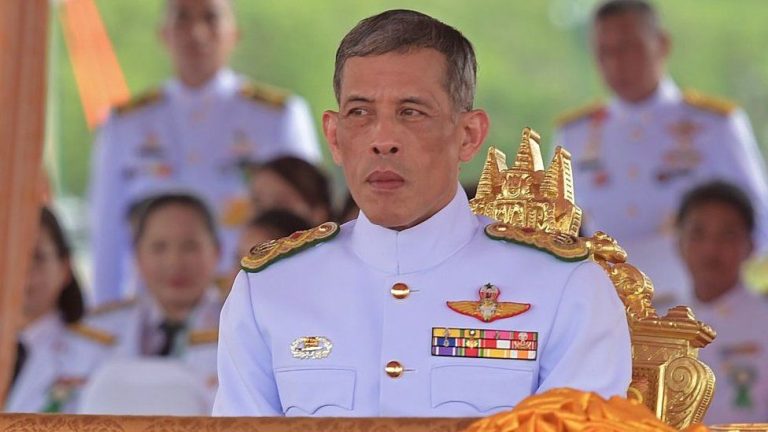
The new legislation will now go to King Maha Vajiralongkorn for royal assent and come into force 120 days after publication in the official Royal Gazette.

Thailand will become only the third place in Asia where same-sex couples can get hitched, after Taiwan and Nepal, and activists are hoping the first weddings could be celebrated as early as October.

“We are very proud of everyone involved in this historic moment. You have helped to bring about a massive change,” Plaifah Kyoka Shodladd, an LGBTQ activist and member of the committee that scrutinised the law, told senators after the vote.

“Today love wins over prejudice.”

Ahead of the vote, Tunyawaj Kamolwongwat, an MP with the progressive Move Forward Party, said the change in the law was “a victory for the people”.

The new legislation changes references to “men”, “women”, “husbands” and “wives” in marriage laws to gender-neutral terms.

It also gives same-sex couples the same rights as heterosexual ones when it comes to adoption and inheritance.

“My partner has one boy and I want to have legal rights to formally adopt him as my child and to have a say about his well-being. This bill will allow it,” Kevin Pehthai Thanomkhet, 30, told AFP.

Prime Minister Srettha Thavisin, who has been vocal in his support for the LGBTQ community and the bill, will open his official residence to activists and supporters for celebrations later.

Activists also plan an evening rally featuring a drag show in central Bangkok, where giant shopping malls have been flying the rainbow flag in a show of support since the start of Pride Month in June.

Thailand has long enjoyed a reputation for tolerance of the LGBTQ community, and opinion polls reported in local media show overwhelming public support for equal marriage.

More than 30 countries around the world have legalised marriage for all since the Netherlands became the first to celebrate same-sex unions in 2001.

But in Asia, only Taiwan and Nepal recognise marriage equality. India came close in October, but the Supreme Court referred the decision back to parliament.

“I am so happy to see how far we have come,” said Chotika Hlengpeng, a participant in the Pride march that drew thousands of enthusiasts in Bangkok early in June.

Tuesday’s vote is the culmination of years of campaigning and thwarted attempts to pass equal marriage laws.

While the move enjoys popular support, much of Buddhist-majority Thailand still retains traditional and conservative values.

LGBTQ people, while highly visible, say they still face barriers and discrimination in everyday life.

Some activists have criticised the new laws for failing to recognise transgender and non-binary people, who will still not be allowed to change their gender on official identity documents.

AFP

Global civilian deaths in conflicts rise 72% in 2023

0

Civilian deaths due to armed conflicts around the world soared 72 per cent last year, the UN rights chief, Volker Turk, said Tuesday.

This significant rise highlights a worsening situation in terms of civilian safety and the impact of armed conflicts on non-combatant populations globally.

Turk told the opening of a United Nations Human Rights Council session about the alarming increase in the proportion of women and children killed.

“In 2023, data gathered by my Office shows the number of civilian deaths in armed conflict soared by 72 per cent.

“The proportion of women killed in 2023 doubled and that of children tripled,” he said.

Details later…

AFP

All rights reserved. This material, and other digital content on this website, may not be reproduced, published, broadcast, rewritten or redistributed in whole or in part without prior express written permission from According.

Contact: [email protected]

OPINION: Edu, Sadiya, Halima, Bello, et al

0

HE ruling elites have us by the balls. Our collective capacity for short memory is like none anywhere else in the world. So it’s usually easy for our rulers to make egregious appointments into critical public positions or to proclaim vexatious policy and then sit back. We, Nigerians, will huff and puff and threaten fire and brimstone if the appointment or policy was not reviewed or reversed. Our rulers will conveniently keep quiet knowing that ‘nothing mega’ or nothing will happen. After a few days, maximum one week, we will move on and the hitherto concerning appointment and/or policy will disappear from the news media headlines.
Almost every federal administration since 1999 has used this strategy to wear out the people and overcome citizens’ inconveniences. But the extant regime of the All Progressives Congress (APC) political party has elevated this practice to an art form. Whenever it backpedals from chosen options it was usually to create the impression that it was a listening government. No, it’s not. It has never been since 2015 when its candidate and the affliction of Nigeria, Maj.-Gen. Muhammadu Buhari, assumed office as president. That utter failure who approximated what a ruler should not be in a country desperate for rescue from political and economic morass and paralysis regarded the presidency as a trophy and not a call to service. When Buhari failed in his three consecutive quests to be elected Nigeria’s president, he publicly bemoaned his fate but later claimed that Nigeria and Nigerians would be the ultimate losers. He had told us that he was offering himself for the presidency because he was the Messiah Nigeria was waiting for. Some shallow Nigerians including pseudo intellectuals believed him and his coterie of choristers that if given a chance at the topmost office he would turn the country around. Buhari got the chance in 2015 and actually succeeded in turning the country around – for the worse. Through incompetence and ‘non-governance’ he took Nigeria back by 30 years or one generation.
Everything that could go wrong went wrong under Buhari. Politics was bastardised. Merit was whimsically discarded in appointments to sensitive and non -sensitive offices. His tribesmen seized virtually every level of governance. Religion became a vital consideration for recruitment so much so that for almost eight years of his ruinous reign, national security meetings could conveniently be conducted in Hausa language and the attendees would be at home. Buhari reserved the greater carnage for the economy. He so borrowed funds from offshore financial institutions that an impression was created that borrowing was fast going out of fashion and that international funds were about to dry up. Buhari’s Nigeria scrambled for foreign loans in a manner that resembled European powers’ scramble and partition of Africa in Germany in 1885. Yet that regime was not satisfied with the quantum of the foreign loans it saddled Nigeria with. It turned inward and started borrowing from the domestic money market through the issuing of treasury bills and other debt instruments. It was still not satisfied. Then it resorted to printing Naira that was backed by nothing until it accumulated a staggering N30 trillion through the Ways and Means of the central bank. You will be grossly mistaken if you think it ended there. No. That calamity called Buhari then proceeded to auction millions of barrels of Nigeria’s crude oil whilst they were yet to be extracted from under the ground. He collected the payments upfront and squandered them. As these were happening the national leader of the APC and now Buhari’s successor, Alhaji Bola Ahmed Tinubu cheered him on, saying Buhari was the next best thing to happen to Nigeria after sliced bread.
Buhari introduced or at least aggravated rulers not feeling obligated to explain anything to Nigerians. As president he once spent 103 days abroad on medical tourism without telling Nigerians what he suffered from nor how much was taken from the treasury to offset his medical bills. It has to be acknowledged that the impunity started with Alhaji Umaru Yar’Adua, our sick president who eventually died in office in 2010.
READ ALSO:OPINION: Slush funds for dubious petrol subsidy payments
Here in this column last week we said that Tinubu is contemptuous of Nigerians. He is not alone. Agencies of the government under Tinubu are fast learning how not to take Nigerians seriously. They are learning that an issue, no matter how serious, can go away if you just ignore it long enough. And there are quite a handful of such matters that are being forced to fade from our memories. One of such serious issues of alleged sleaze is the case of Betta Chimaobim Edu, the suspended minister of humanitarian affairs. When Minister Edu was suspended from office last January, a presidential spokesman said it was in line with Tinubu’s commitment to upholding the highest standards of integrity, transparency, and accountability in the management of the commonwealth of Nigerians. Of course, Nigerians knew that the Presidency was lying. All the same she was referred to the Economic and Financial Crimes Commission (EFCC). Edu reported to the anti-graft agency which quizzed her and released her on bail before the sunset same day. The bail terms were not disclosed then. They have still not been published. The EFCC is still investigating her alleged sleaze the least of which had to do with paying government money running into hundreds of millions of Naira into a private individual’s personal bank account contrary to regulations. It’s now six months and counting and the Edu saga is receding from our memories.
Ms Halima Shehu is the national coordinator and chief executive officer of the National Social Investment Programme Agency, a parastatal of the corruption -prone humanitarian affairs ministry. Ms Shehu whose agency oversees the government’s conditional cash transfer programme had a few days earlier had herself suspended by Minister Edu on allegation of tampering with billions of Naira of public funds. The last that was heard of Ms Shehu’s case was six months ago when the EFCC said it was still investigating her alleged sleaze. Edu and Shehu are walking freely and probably travelling in and out of Nigeria. So much for the zero tolerance for corruption by the Tinubu regime. Still ‘nothing mega’.
But before Edu there was Sadiya Umar-Farouk, also a humanitarian affairs minister under Buhari. Indeed the pioneer minister of that slush money ministry. She’s being probed by this regime over allegations that N37.1 billion was laundered through her ministry. The status of the case is, like everything else, uncertain. By the way, it will be recalled that it was the same notorious ministry that allegedly expended N500,000,000 million to feed school pupils who were locked down at home in 2020 during COVID -19.
Finally, there’s the N82billion fraud allegation against Alhaji Yahaya Bello, governor of Kogi state for eight years until last January. It has been a ding dong affair. He was once cornered like a rat when the EFCC operatives laid siege to his house in Abuja. But his successor allegedly used the cover of his immunity to spring him out of the trap. Bello has remained underground since then from where he has been negotiating the terms of his appearance in court to answer to the allegations levelled against him. That’s the state of our country where suspects dictate the terms and place for their interrogation and arraignment in court. The same EFCC that is begging and appeasing Bello will readily invade students hostels and bachelors’ eve parties to arrest youngsters for alleged Internet fraud while their military and police counterparts smash doors and windows to arrest harmless journalists and traumatize their families. The crime of the journalists is that they are doing the work of holding government accountable to the people. State security agents are increasingly becoming freelance tormentors of hapless and helpless Nigerians. This fumbling and failing regime has effectively resurrected the Draconian Decree 4 of the Buhari military era with its implementation of the Cyber Security Act. Fortunately, history has it that in Nigeria tyranny has a short lifespan.
The post OPINION: Edu, Sadiya, Halima, Bello, et al appeared first on Latest Nigeria News | Top Stories from TVN.

Lagos police rescue Lebanese Fouani brothers kidnapped on Lagos waters regain freedom

0

The three Lebanese Founi brothers, Abbas Fouani, Youssef Fouani, and Amtal Fouani, who were abducted by gunmen last Friday in Lagos, have been rescued by operatives of the Lagos State Police Command.
The State Police Public Relations Officer (PPRO), Benjamin Hundeyin, confirmed the rescue of the Lebanese businessmen in a statement on Tuesday, without giving further details.
TVN had on Friday, reported the abduction of the three brothers who are behind Fouani Nigeria Ltd, an electronics business giant and the sole distributor of LG, Hisense, and Maxi products in Nigeria.
READ ALSO:Gunmen on Lagos waters abduct three foreigners, MD of Fouani, firm representing LG, Hisense
The three brothers were reportedly coming from their factory when they were kidnapped around Falomo Bridge while traveling from Apapa to Victoria Island by boat.
“In a brazen act that has sent shockwaves through Lagos, armed gunmen have abducted four people traveling by boat,” the Ripples report had stated.
Hundeyin had, on Saturday, confirmed the abduction of the Fouani brothers in a statement.
“Yes, it is true. We got the report and we are looking into it. Please, I’m not obliged to state more than that,” he had said.
The post Lagos police rescue Lebanese Fouani brothers kidnapped on Lagos waters regain freedom appeared first on Latest Nigeria News | Top Stories from TVN.

Nigerians not only ones facing poverty, says Tinubu

0

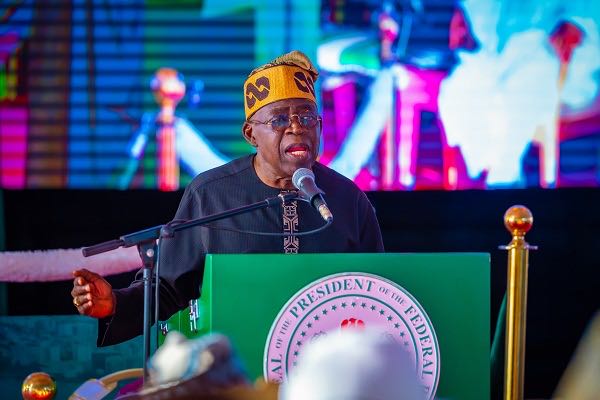
President Bola Tinubu has said that Nigerians are not the only ones facing poverty in the world.

While admitting that there are poverty and suffering in the land, Tinubu said the challenges must be tackled.

One of the ways of tackling them, he explained, is to eliminate banditry and terrorism so that farmers cab return to the farm.

According to a statement on Tuesday by his Special Adviser on Media and Publicity Ajuri Ngelale, the President said this in Lagos on Monday when he received a delegation from the National Assembly who came to felicitate with him on the occasion of Eid-el-Kabir.

The delegation was led by the Senate President, Godswill Akpabio, alongside the Deputy Senate President, Jibrin Barau and Deputy Speaker of the House of Representatives, Benjamin Kalu, among others.

According to him, it is imperative for Nigerians to have a change of value system for the nation to make progress.

“Yes, there is poverty; there is suffering in the land. We are not the only people facing such, but we must face our challenges.

“We must find a way to eliminate banditry and terrorism so that farmers can bring out food from the farmland.

“If you do not have good roads to bring the food to the population, even if you grow the food and you are losing 60-70 per cent to damages, you will pay the price,” the President said.

He challenged citizens to have a change of mindset about Nigeria if the nation is to overcome its current challenges.

“The need (for some citizens) to change the rent-seeking mindset and become more productive to the economy is a challenge. The need to stop smuggling and all economic sabotage.

“Why should we have people removing rail tracks and all that, stealing electric cables and sabotaging the economy?

“We must embrace the campaign to change our value system. We must tell our people that the challenge we face is for all of us to change our mindset about our country,” Tinubu stressed.

The President also commended the leadership of the National Assembly for the support extended to his administration, which he said had resulted in some of the important developments recorded by his administration.

“It is great pride for me to have the best of partners in the National Assembly. We have to drill down and be all-inclusive in our bid to satisfy our people.

“It is daunting, but we cannot run away from the fact that this country must survive the hardship,” he stated.

The President acknowledged the challenges and the task ahead, assuring the nation of his unwavering determination to turn things around.”

OPINION …June 12: Democracy Day With Lagos Lawmakers

0

One of the highlights of the recent celebrations of Democracy Day, on June 12, was the series of anniversary lectures organized to mark 25 years of Unbroken Democracy in Nigeria. At the Presidential Villa, Alhaji Bello Masari, former Speaker of the House of Representatives was Guest Lecturer on the subject: “25 Years of Enduring Democracy: Prospects for the Future”. In Abeokuta, Ogun State, at the June 12 Cultural Centre, Kuto, the Ogun State Government held a public lecture with the theme: “June 12-Defining Moment in the Democratic Development in Nigeria.” There was also a 2024 Democracy Day Lecture organized by the Aminu Kano Centre for Democratic Research and Training in collaboration with SEDSAC: Humanitarian Initiative titled “Democracy and The Nigerian Citizens: Profit or Loss?” The lecture was delivered by Dr. Sa’idu Dukawa. There were activities in other parts of Nigeria as well.
It is interesting to see how June 12, its symbolism and place in Nigerian history has become a rallying point, that it was originally, and the man whose martyrdom underlines that symbolism, Chief MKO Abiola has now been accorded a rightful, and due recognition in the annals of Nigerian history for all that he did to champion the cause of democracy. This is both interesting and remarkable because indeed in this same country, many of those who benefitted from the democratic struggle conveniently revised the story of June 12. In the South West however, MKO Abiola Day was celebrated in Lagos, Oyo, Ondo, Ogun and Osun states. The Federal Government of Nigeria celebrated Democracy Day on May 29, the day Nigeria transitioned from decades of uninterrupted military rule to civilian rule in 1999. Despite the celebration of MKO Abiola across the South West – his statues were erected, streets, stadiums, schools and public buildings were named after him, and even with Lagos State iconizing some of the non-Yoruba heroes of the struggle, including Rear Admiral Ndubuisi Kanu, Bagauda Kaltho and many others, some revisionists came up with the patently false narrative that June 12 was a Yoruba, South-West affair.
There were attempts to lobby the Nigerian Government to do the right thing: declare Abiola, the winner of the annulled June 12, 1993 Presidential election, grant him a post-humous national honour and make restitution for the injustice of 1993, beyond the fact of the political solution of 1999 which ensured that the two major contenders for the Presidency post-military era were Yorubas: Chief Olusegun Obasanjo (PDP) and Chief Olu Falae (AD/APP). The closest that Abiola and June 12 were acknowledged at the centre was in 2014 at the Nigeria Centenary Awards, honouring 100 remarkable individuals who have made great impact in the making of Nigeria in the last century. The Abiola family did not think listing their patriarch among a long list of persons including Lord Lugard and his consort, Flora Shaw was good enough. The family turned down the award. Despite this politics of acknowledgement, MKO Abiola and June 12 nonetheless lived on in the hearts and on the tip of the pens of many: the media, civil society, artists across the genres and more importantly, the progressives who gathered at his graveside, every June to remember and honour him.
The attempt to reduce MKO and the June 12 phenomenon to a narrow, ethnic moment has also been exposed for the lie that it is in the growing bibliography on the subject by both scholars and direct observers/participants. These writings include, Heroes of Democracy by Joe Igbokwe, June 1993: Annulment by Abraham Oshoko, Frank Kokori, The Struggle for June 12, Omo Omoruyi, The Tale of June 12: The Betrayal of the Democratic Rights of Nigerians; Wale Oshun, The Open Grave: NADECO and the Struggle for Democracy and Clapping With One Hand: June 12 and the Crisis of a State Nation; Humphrey Nwosu, Laying the Foundation for Nigeria’s Democracy: My Account of June 12, 1993; Abimbola Aboderin, Democracy and the Untold Story of June 12; Deba Uwadiae, Abiodun Adeniyi, Emeka Nwosu and Segun Olanipekun, Nigeria’s Aborted Third Republic and the June Debacle: Reporters’ Account and Wole Soyinka’s memoir, You Must Set Forth At Dawn. The major turning point arrived on June 6, 2018 when then President Muhammadu Buhari changed Democracy Day from May 29, to June 12. As Buhari put it, “June 12 was the day when Nigerians in millions expressed their democratic will in what was undisputedly the freest, fairest and most peaceful elections since our independence. The fact that the outcome of that election was not upheld by the then military government doesn’t distract from the democratic credential of that process. Accordingly, after due consultations, the Federal Government has decided that henceforth June 12, will be celebrated as Democracy Day. Therefore, the government has decided to award posthumously the highest honour of the land GCFR, to the late Chief MKO Abiola, the presumed winner of the June 12, 1993 cancelled elections.” President Buhari sent a Public Holiday Amendment Bill to the National Assembly to remove May 29 as a public holiday and replace it with June 12. This was approved by the Senate. On Monday, June 10, 2019, President Buhari assented to the Bill. This was an act of courage and bold assertiveness that would for long be remembered as a key aspect of Buhari’s legacy. Other Presidents before him skirted around the Abiola and June 12 question or avoided it altogether, including Abiola’s kinsman, President Olusegun Obasanjo who had once quipped that “Abiola is not the Messiah Nigeria needs”. Buhari considered Abiola’s messianism so important, he gave him the highest honour in the land, placing him at the same rank as Nigerian Presidents and former Heads of State. He stopped short of declaring him the winner of the June 12, 1993 Presidential election, but he made it clear that the Abiola story is the Nigerian story. He practically shut up the reductionists and revisionists. With the amendment of the Public Holidays Act, turning June 12 into a national holiday, Buhari affirmed the nationalism of both Abiola and June 12. This was a special moment of epiphany for the President. He made a mark where others before him could not tread. The MKO Abiola story is a mix of narratives, false and true, intrigues, treachery, contradictions and tropes of disambiguation. Every year since 2019, the festival and the stories get re-enacted every June 12.
READ ALSO:OPINION: Slush funds for dubious petrol subsidy payments
I was invited to one of such special events, and for reasons of convenience and proximity, public and private, I was at the Lagos State House of Assembly Complex, Alausa, Ikeja to attend the commemoration of 25 years of Unbroken Democratic Governance in Nigeria put together by Rt. Hon. Mudashiru Obasa and his colleagues. It was an evening event, a gala night, designed in the shape of a cocktail, with greater emphasis on discussions and reflections on key themes about Nigeria’s democratic process. A total of ten guest speakers had been invited to speak on different aspects of the democratic project in Nigeria, drawn from government, business, and the diplomatic community. The guest list was broadly inclusive: members of the Lagos state House of Assembly, the Executive and Judicial Arms of Government, past and present, the civil society, academia, traditional rulers and chiefs, business chieftains, members of the diplomatic corps, the Lagos Governance Advisory Council, chairmen and officials of Local Governments and LCDAs in Lagos and general ladies and gentlemen. The hall was filled up.
The Lagos State House of Assembly section of the Secretariat in Alausa is a sprawling architectural wonder unto itself, with halls and large passageways, beautified and designed to give the lawmakers the dignity that befits that arm of government. As is to be expected the Assembly’s invitation was honoured. Oftentimes, when stories are told about State Houses of Assembly, it could be when the members are quarrelling with the Executives over budgetary allocations or the Governor needs their services to impeach an errant Deputy Governor. For the most part, State Houses of Assembly, especially in states where the ruling party in the state controls the majority in the House do their work obediently. They simply do as the Governor wishes. It was therefore refreshing to hear that a State House of Assembly wanted to do something that requires some serious thinking and reflection. I carried my two eyes and two legs to go and see.
There were ten speakers, including Mr. Babatunde Raji Fashola, SAN, former Governor of Lagos State (2007 – 2015) speaking on “Federalism: The Quest for a Perfect Union”, Hon. Abike Dabiri-Erewa, CEO, Nigerians in Diaspora Commission (NIDCOM) on “The Role of Nigerian Women in Nation-Building”, Mr. Debo Adeniran, Chairman Centre for Anti-Corruption and Open Leadership (CACOL) on “The Concept of Democracy and Human Rights”; Dr. Muda Yusuf, Director, Centre for the Promotion of Private Enterprises (CPPE) and former DG, Lagos Chamber of Commerce and industry offering “Economic Perspective on Nigeria’s Democratic Governance, Professor Eghosa Osaghae, DG, Nigerian Institute of International Affairs (NIIA) on “Nigerian Foreign Policy in a Democracy: Gains and Prospect” in addition to the Consul General of the French Embassy, Laurent Favier, Weert Buerner, the Consul General of Germany; Ugo Boni, the Consul General of Italy, Jonny Baxter, the British Deputy High Commissioner, Michael A. Ervin, US Political and Economic Chief in Lagos – all on “Foreign Perspectives on Nigeria’s Democratic Governance”. This was quite a broad range of topics and speakers, which I thought was rather long, but surprisingly everyone showed up and the evening soon got off to a spirited start. I was even more surprised that despite the design of the programme as an evening cocktail, with the people standing, people stood through it all till the end. Every Speaker had the chance to speak for about ten minutes. I recall a number of highlights.
Hon Mudasiru Obasa, Speaker of the Assembly made an eloquent case for the role that the Lagos State House of Assembly has played in the democratic governance of Nigeria in the context of its own jurisdiction. Obasa was even generous enough going all the way back to the very first session of the House in October 1979 to date, that is – far beyond the 25-year reference term. He disclosed that the Lagos House specifically since 1999 has passed over 300 laws and 2,000 resolutions, many of which have become models for other State Houses of Assembly. Obasa is one of the longest serving legislators and Speakers in Nigeria. He has been a legislator since 2007 and Speaker of the Lagos Assembly since 2015. There must be something he does right that endears him to his constituency (Agege 1) and to his colleagues in Alausa. I was struck by two of his statements when he said, after paying tributes to the heroes of June 12, that “It is a duty to also remember those who are responsible for the annulment of that democratic process, some alive, some dead…This is also to remind those who are coming behind us that the democracy we are enjoying today was built by some people, some of whom lost their lives and properties.”
Earlier the same day, in Abuja, President Bola Tinubu had delivered a Democracy Day Speech which was marred by the treatment of MKO Abiola in parenthesis, and the omission of many important heroes. The event in Abuja was also reduced by the thoughtless, sycophantic unveiling of a poorly painted portrait of President Tinubu at the Eagle Square on June 12. Obasa’s list was far more comprehensive and detailed than the President’s. And he did not forget to name and chide those who stood in the way of the people’s struggle, noting that “history will not forget all their roles while sabotaging the democratic progress of this nation”. Still, many names remain left out of the accounts simply because June 12 was truly the people’s struggle. How come Professor Humphrey Nwosu, the man who presided over the freest and fairest election in Nigeria has been forgotten? He was a hero. And why are we not naming the promoters of Association for Better Nigeria (ABN) by Arthur Nzeribe and Abimbola Davies, the disgraceful Youths Earnestly Ask for Abacha (YEAA) led by Daniel Kanu, rogue judges, and the hungry traditional rulers who identified with Abacha. Obasa’s list helped to give a fuller picture, more names and groups would still have to be called out for their role in the June debacle.
Mr. Fashola, SAN echoed the same thoughts that we must ensure that democracy remains unbroken, and lawmakers have a crucial role to play in protecting democratic values, justice and human rights. Fashola posited that Nigeria is running a Federal system but the challenge is to make the system more perfect to protect individual rights. He believes that progress has been made in the past 25 years but there are still areas of improvement, citing the need for the Lagos Assembly to make laws, for example, to compel landlords in Lagos State not to collect rent for one or two years as is the norm. Mrs. Dabiri-Erewa made a case for women empowerment which naturally drew cheers from the women folk in attendance. Mr Adeniran was clear-minded about the important role of the civil society in Nigeria’s democratic process. Dr. Muda Yusuf said democracy must be protected to protect and attract investment, and thus promote prosperity. The diplomats from France, Germany, Italy, UK, and US in unison and almost in a rehearsed manner congratulated Nigerians and urged us to sustain and consolidate democratic rule.
It is easy to hold talks in Nigeria, and commemorate anniversaries but the key challenge is for our leaders to walk the talk and live up to the same ideals and values that they espouse. In all, June 12 is about us, our country and how seriously we take ourselves and our future. The Lagos State House of Assembly should organize more events, to provide opportunities for interaction with the public, on key subjects and ideas which may not necessarily fall under the purview of public hearing. There are 40 members in the Lagos House, representing 20 Local Government Areas further sub-divided into Local Council Development Areas, with two members representing a Local Government. I met one of the members who introduced herself as Okanlawon, the only non-APC member in the Lagos Assembly. I predicted to her verily, that she would be a member of the APC before the 2027 election, given the nature of Nigerian politics. In the future, the Lagos State House of Assembly should allow us to sit down at public events of the type they had on June 12, and there should be room for interventions by the audience. Altogether, that was a good outing.
ERRATUM: In this column last week: “A Day With Seyi Makinde,” (June 11), I wrote that “Governor Makinde is the only Governor to have broken the jinx of a second term in office in Oyo State.” My attention has been drawn to the fact that the honour of being the first to do so, belongs to late Senator Abiola Ajimobi, nicknamed KOSELERI, Oyo State Governor, 2011 -2019. I stand corrected. The error is regretted.
AUTHOR: Reuben Abati

Articles published in our Graffiti section are strictly the opinion of the writers and do not represent the views of TVN or its editorial stand.
The post OPINION …June 12: Democracy Day With Lagos Lawmakers appeared first on Latest Nigeria News | Top Stories from TVN.
‘Any Igbo person investing in Lagos, north needs brain examination’ —IPOB

0

The outlawed Indigenous People of Biafra (IPOB), has warned Ndigbo against investing in Lagos and the Northern parts of Nigeria, saying any Igbo person who does that needs to have his brain examined.
The Biafra Republic agitators who gave the warning in a statement posted on X on Monday night, said it was reacting to an appeal by a Yoruba which reportedly called on the Igbo communities in Lagos for a dialogue following the alleged demolition of their businesses by the Lagos State government.
In the IPOB statement issued by its Media and Publicity Secretary, Emma Powerful, the group said the invitation for a dialogue was a mere ploy to put a final nail on the coffin of Igbo businesses in the state.
The statement titled “Ndigbo should ignore every deceptive lobby to invest in Lagos,” added that Igbo businessmen should rather go back to their region to invest.
The statement reads:
“The attention of the global family and movement of the Indigenous People of Biafra (IPOB) ably led by the great leader, Mazi Nnamdi Okwuchukwu Kanu, has been drawn to the deceptive letter from a group of faceless Yoruba Leaders and Stakeholders calling on Igbo communities in Lagos State for a dialogue.
Ndigbo must not fall into any deception to continue investments in Lagos State, where their investments are not protected.
As much as IPOB does not oppose any genuine dialogue between the Yorubas and Ndigbo in Lagos State, IPOB will object to any dialogue that is intended to lure Ndigbo to continue investing in the hostile environment of Lagos State.
READ ALSO:IPOB alleges indiscriminate arrest of Igbo youths over killing of soldiers
Ndigbo have done all they can to belong to Nigeria, but Nigeria keeps rejecting Ndigbo with exclusivity and ethnic bigotry policies. Ndigbo has lost millions of investments and lives in the Northern and Western regions of Nigeria.
In the North, Ndigbo are always the victims of any religious and political riots during which Northerners destroy, loot, and burn down businesses and properties belonging to Ndigbo.
Recently, in the Western Region particularly in Lagos State, Biafran businesses and properties have been targeted by the Lagos state Government criminals, and we will no longer tolerate our people to continue investing in Yoruba land.
Lagos State is not Igboland. Lagos State Government has demolished properties and investment of Ndigbo. Many Igbo dominated markets in Lagos have either been demolished or burnt down and taken over by the Lagos State government. On the basis of the aforementioned, any Igbo person investing in the Northern and Western Regions of Nigeria needs DNA tests.
IPOB calls on all Biafrans to stop investing in Yoruba land and Arewa land. All investments should be channeled to Biafran Land.
Our people who invested in Biafra land are doing well and are helping to create jobs for our youth. Biafrans have been an engine of growth in any society they find themselves in.
In all parts of the world where Ndigbo reside, they directly or indirectly contribute to the development of that area. It’s in our DNA to build others alongside ourselves, and we cannot stop because it is our covenant with God Almighty (Chukwu Okike Abiama) to bring light wherever we go, however, enough of investing in the hostile regions of Nigeria where our investments are not secure.
Let us take our investments to Igboland where our investments will be safe.
Where was this Yoruba group when their Governor Sanwo-Olu and the Lagos House of Assembly promulgated a bigotry law that targeted Ndigbo’s businesses and properties in Lagos? How many of Ndigbo were compensated after their businesses and properties were demolished?
Ndigbo should go back home and invest and forget Yoruba land. Irrespective of the State sponsored insecurity Fulani stooges called governors used to deter investments, Alaigbo is still more conducive and secure for investment compared to the enemy territories of the West and the North.
Ndigbo should know that Nigeria dislikes the audacity and ambitious spirit of an Igbo person. Instead of learning and adapting to the doggedness of Ndigbo, many Nigerians envy us. This unwarranted envy, jealousy, and blessings of Chukwu Okike Abiama is the reason that Ndigbo is being targeted.
The same envy made the revered Yoruba leader, late Obafemi Awolowo, a Nigerian Finance Minister in the 1960s, to promulgate an economic annihilation decree that led to Nigeria paying every rich Igbo person who had money in any Nigerian bank twenty pounds(£20) irrespective of how much they had in any Nigerian bank after the Nigeria genocidal war against Biafra.
Similarly, the same government promulgated abandoned property law against Ndigbo during that genocidal war with Igbo brothers in Port Harcourt and elsewhere to create enemity with brothers, uncles, and cousins.
The abandoned property law gave other malicious Nigerians rights to ownership of houses and properties that belonged to Ndigbo after the genocidal war, but Yorubas and the Northern Elders refused to do the abandon properties against Ndigbo in their own lands. Any Igbo person who continues to invest in Lagos and in the North with the current state of events needs his brain examination.
The West and North did not indulge in abandoned properties but decided to destroy Ndigbo investments and properties in their own regions.
Returning your property and investments home is a signal to our willingness for Biafra freedom and sovereignty. Do not allow yourself to be a victim of abandoned property or disciminatory policies.
Ndigbo must not fall into the repetitive deception of the so-called “One Nigeria.” The ethnic sentiments displayed against Ndigbo because of Mr. Peter Obi’s presidential ambition cannot be overstated. That should be an eye-opener to all.
There is a lot of land in Igboland and a young and vibrant population to make businesses boom. Together, we can build our own Dubai and Japan of Africa in Biafra land.”
The post ‘Any Igbo person investing in Lagos, north needs brain examination’ —IPOB appeared first on Latest Nigeria News | Top Stories from TVN.

Police rescue three abducted Fouani brothers, others

0

The Lagos State Police Command has confirmed that the abducted Fouani brothers and two others have been rescued.

The spokesperson for the command, Benjamin Hundeyin, made it known via a text message to our correspondent on Tuesday.

According to him the abducted brothers identified as Abbas Fouani, Youssef Fouani, and Amtal Fouani, who were abducted on June 14 around 6pm in Lagos were rescued by late last night in Orugbo Iddo by the marine police.

Fouani Nigeria Limited specialises in electronics and is the sole distributor of LG, Hisense, and Maxi products in Nigeria.

The three brothers were said to have been returning from their factory by boat when they were abducted.

He said, “Yes five of them were rescued. Three Lebanese, the boat captain and his assistant.”

Details later…

All rights reserved. This material, and other digital content on this website, may not be reproduced, published, broadcast, rewritten or redistributed in whole or in part without prior express written permission from According.

Contact: [email protected]

English Premier League 2024/2025 Fixtures Announced

0

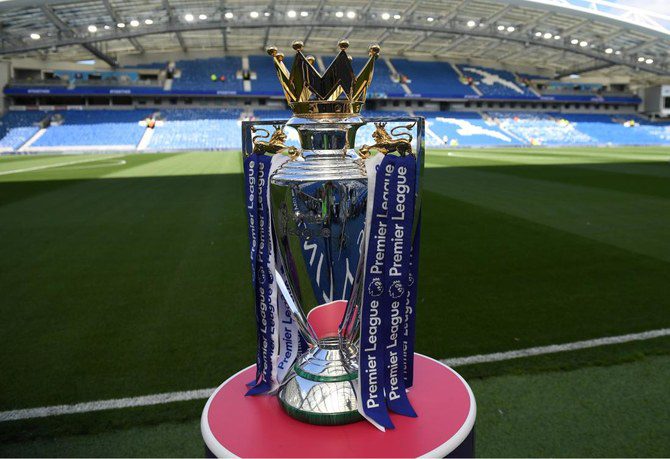
The English Premier League has released the fixtures for the 2024/2025 season, with Matchday 1 set to kick off on the weekend of August 17 and 18, 2024.

Fans are counting down the days until the action begins.

Premier League lovers and supporters across the globe are buzzing with excitement as the schedule promises thrilling matches and fierce competition from day one.

According Online reports that EPL released the 380 matches fixture on Tuesday.

The final round of games will be played on Sunday May 25, 2025. All matches will kick-off at the same time.

Meanwhile, the 2024 summer transfer window for the Premier League opened on Friday, June 14, coinciding with the start of Euro 2024.

The window will close at 11pm UK time on Friday, August 30.

The Premier League has moved Deadline Day forward to align with other major European leagues following discussions with the leagues in England, Germany, Italy, Spain, and France.

Newly Promoted Clubs

This season, the Premier League welcomes three newly-promoted clubs from the Championship: Leicester City, Ipswich Town, and Southampton.

These teams have shown remarkable performance in the championship and are ready to make their mark in the top tier of English football.

Leicester City: The Foxes return to the Premier League after a brief stint in the Championship. They will look to reclaim their status as a formidable side, reminiscent of their fairy-tale title-winning season in 2015/2016.

Ipswich Town: Ipswich makes a much-anticipated return to the Premier League, ending a 22-year absence from the top flight. Their fans are eager to see how they fare against the elite teams of English football.

Southampton: The Saints are back in the Premier League after just one season in the Championship. Known for their strong youth academy, they will aim to secure a stable position in the league.

Season Expectations

As the new season approaches, all eyes will be on these fixtures to see how the teams perform.

The Premier League continues to be the pinnacle of football excitement, with every match bringing the possibility of surprise and drama.

Fans can expect a season full of intense battles, stunning goals, and unforgettable moments.

Stay tuned for more updates and in-depth analysis as we count down to the kickoff of the 2024/2025 Premier League season!

Here are the full fixtures the 38 weeks:

2024/25 Matchweek 1 fixtures

Friday 16 August 2024

20:00 Man Utd v Fulham

Saturday 17 August 2024

12:30 Ipswich Town v Liverpool

Arsenal v Wolves

Everton v Brighton

Newcastle United v Southampton

Nottingham Forest v AFC Bournemouth

17:30 West Ham v Aston Villa

Sunday 18 August 2024

14:00 Brentford v Crystal Palace

16:30 Chelsea v Man City

Monday 19 August 2024

20:00 Leicester City v Spurs

Details later

RIVERS: Amid refusal to step down, Gov Fubara, directs LG bosses to hand over to admin heads

0

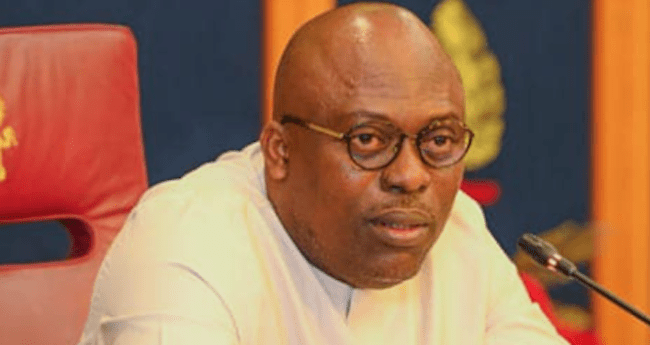
Governor of National Rivers State, Siminalayi Fubara, has directed the 23 local government chairmen in the state to hand over to heads of administration of their various councils.
Fubara gave the directive during a statewide broadcast on Tuesday morning.
READ ALSO:Fubara’s faction of Rivers Assembly confirms eight commissioner nominees
The directive comes in the wake of the tenure expiration of the council bosses who have however, refused to vacate offices, hanging on a court directive and claiming their tenures were extended by six months.
The three-year tenure of the elected chairmen, vice chairmen and councillors terminated on Monday.
More to come…
The post RIVERS: Amid refusal to step down, Gov Fubara, directs LG bosses to hand over to admin heads appeared first on Latest Nigeria News | Top Stories from TVN.