Security operatives in Spain have confirmed the arrest of a British national who has been accused of being the ring leader of a group that hacked dozens of US companies.
Spanish police confirmed in a news release that the unnamed 22-year-old British national, who was going to depart the nation on a charter flight to Naples, was detained at Palma airport.
In a statement made public on Tuesday, the Spanish police claimed that the suspected hacker ringleader broke into at least 45 US organizations using passwords stolen through phishing schemes, allowing for the theft of cryptocurrency and confidential company data.
READ ALSO:US accuses Russian-backed hackers of stealing govt emails during Microsoft cyberattack
The authorities claim that the suspected hacker, whose arrest was captured in a video shared on YouTube, had $27 million in bitcoin when he was taken into custody.
The accused person and the cybercrime organization he allegedly headed were not identified by Spanish police.
It was gathered that the arrested person is the purported leader of the group that planned the hacks against Twilio in 2022.
The post British national who allegedly hacked dozens of US firms arrested in Spain appeared first on Latest Nigeria News | Top Stories from TVN.
British national who allegedly hacked dozens of US firms arrested in Spain

Cross River leads prevalence of Sickle Cell Disease in Nigeria, as advocates call for action

The Nigerian government has been tasked to Improve emergency Sickle Cell Disease, SCD, services to ensure quick and empathetic response and also to widen the cover of the National Health Insurance Act, NHIA, for persons living with SCD.
The call comes amid the commemoration of the 2024 World Sickle Cell Day, with the global theme, “Hope Through Progress: Advancing Sickle Cell Care Globally.
As sickle cell disease continues to pose a significant health concern in Nigeria, health experts and advocates are now brainstorming on solutions to help reduce the prevalence of the disease, which stands at 100,000 to 150,000 sickle cell births annually in the country.
In Nigeria, Cross River State has the highest SCD prevalence rate similar to the national average according to a 2019 study by Hematologists.
Recently, our correspondent sat down with an SCD survivor, a health advocate and a Nguvu Change Leader, Onor-Obassi Egim Tawo, to look at the sickle cell scourge as it affects Nigeria.
Here are excerpts…
DP: In your experience from the advocacy work that you do, how bad do you think the Nigerian sickle cell situation is?
It is as bad as it can get. We are the world’s capital of SCD, our healthcare facilities are not structured well enough to provide the needed care, our government is doing little to nothing about it, and awareness is very minimal. Public Health awareness campaigns are mostly sponsored by individuals, individual organisations, sickle cell communities and groups. The Sickle Cell Act is still waiting to be enacted among other issues.
DP: Tell us a little about your experience working in the sickle cell awareness space
Aside from my personal experience living with SCD and having lost a brother to SCD, working in the sickle cell space exposed me to the needs of the sickle cell community, and the perception of society to this community before and after our campaigns. As an individual, I do not have the monopoly of experiencing everything warriors (persons living with SCD) experience but working in this space, sharing experiences and helping these people exposed me to their needs, and how best to help and promote awareness.
DP: Who is more likely to be impaired by SCD, a child or an adult
An adult is most likely to be impaired. As a child, one is still under the care and protection of parents and may not fully know or understand the realities of living with SCD.
As an adult on the other hand, interacting with society, working and earning a living, making choices and being responsible for one’s self, you come face-to-face with these realities. For instance, dealing with stress as a child can be managed by the parents to prevent a crisis. They may decide the child should go not to school for a week, or take an exam or participate in sporting activities etc. As an adult, it is difficult to manage stress when you have to work to earn a living.
DP: From your work, how common will you say SCD is, and where is it most prevalent in Nigeria?
My campaign efforts have been physically limited to Cross River State even though our virtual programmes have a wider reach to at least 9 more states in Nigeria. Every space I find myself in, in secondary school, at the University, law school, church, social gathering etc, there is always someone living with SCD or a caregiver to someone living with SCD. The prevalence rate is quite high in Cross River State. According to a 2019 study authored by most of my Hematologists¹, the prevalence of sickle in Calabar, Cross River State is similar to the national average.
DP: What are the biggest challenges against ending sickle cell disease you have seen in your work?
One major challenge is indifference to the knowledge, impact and existence of sickle cell disorders by members of the public who will rather hold on to the myths and negative perceptions they have about SCD.
A solution to this is the government’s active involvement in awareness creation, enacting and implementing laws and policies for the prevention of SCD as well as laws against discrimination of persons living with SCD.
DP: Does Nigeria have what it takes to care for SCD patients
Yes, we do. We just need to organise our priorities and have a reorientation about SCD, understanding that it affects every one of us directly or indirectly regardless of age, gender, political, cultural or religious orientation or social standing in society.
DP: How do you think the Nigerian healthcare systems can improve support for those living with SCD?
Improve our emergency services to be quick, empathetic and more responsive. Most times during SCD emergencies, we have very tired doctors, possibly exhausted from working all day available to respond to the emergency and somehow take out their frustrations on the crying patient.
Ensure healthcare facilities are adequate to meet the needs. I had surgery 3 years ago and because of the absence of equipment, I had to stay in the hospital for 3 more weeks while the doctors improvised a tool to serve the same purpose.
Train our healthcare providers on the peculiar needs of SCD patients.
Widen the cover of the National Health Insurance Scheme (NHIS) for persons with SCD etc.
DP: What strategies or treatments do you think are most effective in managing the disease?
Basically, good food, drinking enough water, taking routine medicines and adhering to the doctor’s instructions; are the “dos” and “don’ts” of SCD like avoiding strenuous activities and the effects of extreme temperatures. This will to a large extent limit frequent breakdowns and prevent complications. The strategies for managing SCD will depend on each warrior.
DP: What kind of support do patients need from family, community or even healthcare providers?
Empathy mostly. Not pity. Warriors will also need medical, financial and mental health support for their health and well-being.
DP: Are there support groups or resources for patients
Yes, there are. Several even. Most sickle cell organisations have a support group component, in-person or virtually. My organisation, Okare Sickle Cell Foundation annually hosts a support group event for warriors and their caregivers. Some hospitals like the University of Calabar Teaching Hospital (UCTH) have a support group for persons living with SCD who meet regularly.
DP: How do you think awareness can be raised to educate the public about SCD?
There are several ways SCD awareness can be raised. I have explored several of these and found them effective;
Hosting SCD awareness events
Community outreaches
Outreaches to secondary schools, tertiary institutions and religious institutions
Through media outlets like Radio/TV, newspaper publications, billboards etc
Through social media platforms
DP: How can the public get involved in awareness creation
By first becoming intentionally aware. You cannot give what you don’t have.
DP: Do you think policy changes are necessary in the fight against sickle cell disease?
Yes, there are. As earlier stated in my answer to question 5, policy changes are necessary because they establish a framework of how things should go regardless of any individual inclinations, biases or personal belief systems.
DP: Any special systemic gaps or healthcare challenges you would want the government to work on?
Yes. SCD is suffered by a majority of Nigerians. The government should treat it like a public health concern that it is and make it a priority. We have a National Health Insurance Scheme (NHIS) that does not cover pain management medicines, certain hospital stays and surgeries. I know this from personal experience. I believe the scheme is discriminatory in this sense. The NHIS Scheme should be reviewed with the understanding of the peculiar needs of the sickle cell community.
The government should also establish a practical strategy for fighting SCD. Laws and policies should be put in place for the prevention, care, and management of SCD, as well as research into treatments/cures. Policies like mandating genotype counselling and testing for intending couples during the marriage registration process as proposed in my campaign at one campaign to the Ministry of Interior.
DP: How do you think communities can better support individuals with sickle cell disease?
I believe that with proper awareness and education about SCD and the troubles associated with living with SCD, our communities can better support the SCD community. The negative perception will cease and there will be more empathy and necessary accommodations for persons living with SCD at work, in schools, in our healthcare facilities and in our religious and social gatherings.
DP: What is your take on the issue of stigma, is that real for SCD patients?
Yes. Very real. Consciously or unconsciously, people stigmatise people living with SCD and their caregivers/parents. This is because SCD is viewed as something to be ashamed of; a curse, witchcraft, or that the carrier is a good pretender.
This negative perception of persons living with SCD is sponsored by either ignorance, indifference or an absolute lack of empathy especially when it comes from healthcare professionals and/or caregivers.
DP: From your experience in the field, how expensive is it to manage SCD
Managing SCD is not a one-size-fits-all thing because it is experienced differently in different individuals. Consequently, the management and quality of care for each individual will be different.
The basic routine medicines are not expensive: Folic Acid, b-complex, paludrine, vitamin C etc. However, pain management would require some stronger pills, infusions and hospitalization for days to weeks. Some carriers rarely experience the pain episodes, others can experience it on a monthly basis. Some carriers, in addition to managing SCD, could also suffer complications like leg ulcers, eye problems, organ failure, avascular necrosis etc requiring comprehensive care. Most times this care will include surgical procedures. This was the case with me that inspired my book, Northwest. So yes. Managing SCD is expensive.
Cross River leads prevalence of Sickle Cell Disease in Nigeria, as advocates call for action
S.Africa’s Ramaphosa sworn in for second term as president
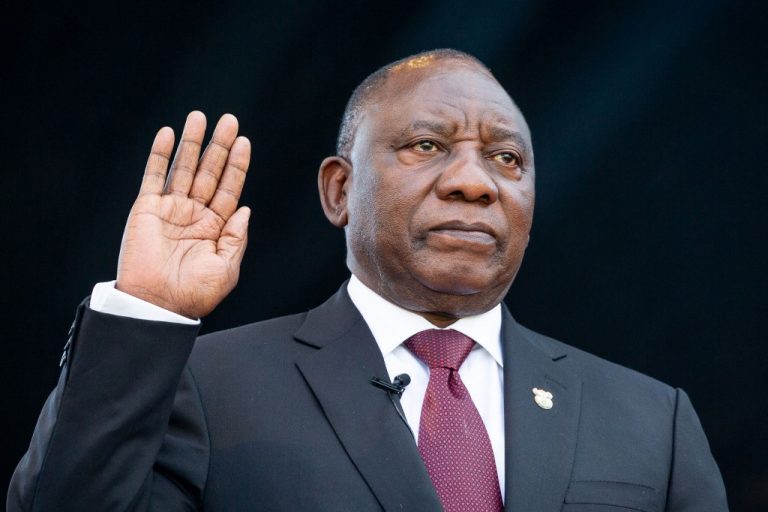

South Africa’s Cyril Ramaphosa hailed “the beginning of a new era” on Wednesday as he was sworn in for a second full term as president after his weakened African National Congress (ANC) struck a hard-won government coalition deal to remain in power.
Lawmakers voted overwhelmingly to re-elect the 71-year-old last week after a May 29 general election produced no outright winner for the first time in three decades.
“The formation of a government of national unity is a moment of profound significance. It is the beginning of a new era,” Ramaphosa said, after taking the oath of office during a ceremony at the Union Buildings, the seat of government, in Pretoria.
“The voters of South Africa did not give any single party the full mandate to govern our country alone,” he added, speaking before lawmakers, foreign dignitaries, religious and traditional leaders and cheering supporters.
“They have directed us to work together to address their plight and realise their aspirations.”
Ramaphosa is expected to announce his cabinet in the coming days, as talks with coalition members continue.
Numerous heads of state, including Nigerian President Bola Ahmed Tinubu, Angola’s Joao Lourenco, Congo Brazzaville’s Denis Sassou Nguesso and Eswatini’s absolute leader King Mswati III attended the inauguration.
Guests in suits, fancy dresses and coats to keep warm in the chilly winter weather started to arrive early in the morning amid a heavy police presence.
VIPs, some singing anti-apartheid struggle songs, were allowed into a small amphitheatre within the imposing, sandstone government building.
Other attendees, some holding South African flags, sat on a lawn outside as dancers and musicians performed on a big stage.
After Ramaphosa was sworn in, a band played the national anthem, followed by a 21-gun salute and a fly past by the air force.
Third time lucky
It was the third time Ramaphosa has taken the oath.
The former trade unionist turned millionaire businessman first came to power in 2018, after his predecessor and rival Jacob Zuma was forced out before the end of his term under the cloud of corruption allegations.
Ramaphosa was then re-appointed for a full five-year term in 2019. In South Africa, voters elect the parliament, which then votes for the president.
Ramaphosa promised a new dawn for South Africa, launched an anti-graft drive and started to reform a collapsing energy system.
But under his watch, the economy languished, blighted by power cuts, crime remained rife and unemployment increased to 32.9 percent.
In May, he led the ANC into yet another vote, but the historied party of the late Nelson Mandela came out bruised.
It won only 40 percent — down from 57.5 percent five years earlier.
For the first time since the advent of democracy in 1994, it lost its absolute majority in parliament and was left scrambling to find coalition partners to remain in power.
It has since agreed to form what it calls a national unity government with several other parties.
Unity
They include the centre-right Democratic Alliance (DA), the Zulu nationalist Inkatha Freedom Party, the anti-immigration Patriotic Alliance and the small centre-left GOOD party.
The deal allowed Ramaphosa to comfortably see off a last-minute challenge by firebrand leftist politician Julius Malema, with 283 lawmakers in the 400-seat National Assembly voting to put him back in office.
But it has faced a vociferous opposition from the left, with Malema’s Economic Freedom Fighters and former president Zuma’s uMkhonto weSizwe (MK) refusing to take part and denouncing the inclusion of right-wing parties and the white-led, free-market DA.
MK came third in the election but has contested the results.
Party spokesman Nhlamulo Ndhlela said in a statement ahead of the ceremony that its lawmakers would snub the “farcical inauguration of Cyril Ramaphosa as the puppet DA-sponsored President”, also using a racial slur to describe the ANC leader.
But Ramaphosa said voters had stressed they were “impatient with political bickering” and wanted parties to “put their needs and aspirations first” and “work together for the sake” of the country.
“We must reject every attempt to divide or distract us, to sow doubt or cynicism, or to turn us against one another,” he said, in an apparent, veiled dig at his opponents.
“As leaders, as political parties, we are called upon to work in partnership towards a growing economy, better jobs, safer communities and a government that works for its people.”
AFP
Declare state of emergency in Rivers, APC tells FG
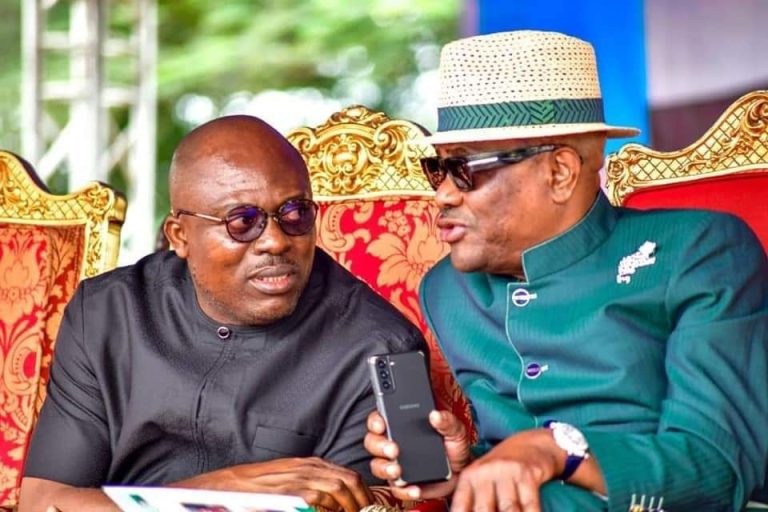

The leadership of the All Progressives Congress in Rivers State on Wednesday called on the Federal Government to declare a state of emergency in the state, saying there is a full-blown war there.
The APC Caretaker Committee Chairman, Chief Tony Okocha, made the call during a media briefing in Port Harcourt on Wednesday.
He stated, “Rivers State is at war. And the dramatis personae who are responsible for the mayhem that has claimed lives are known.
“The governor is helpless, the police bias helpless. Therefore the APC in Rivers State is calling for a state of emergency in Rivers State as a way of taming the mayhem, and the upsurge that is going on in the state.
“I call on the federal government to act fast in this regard.”
Details later…
All rights reserved. This material, and other digital content on this website, may not be reproduced, published, broadcast, rewritten or redistributed in whole or in part without prior express written permission from According.
Contact: [email protected]
Famous linguist, Noam Chomsky, not dead, says wife


Noam Chomsky’s wife, Valeria Wasserman Chomsky, says reports Tuesday that the famed linguist and activist had died are untrue, reports The Associated Press.
“No, it is false,” she wrote Tuesday in response to an emailed query from AP.
Noam Chomsky, 95, had been hospitalized in Brazil while recovering from a stroke suffered a year ago, Valeria Chomsky told the AP last week.
But the Beneficencia Portuguesa hospital in Sao Paulo said in a statement that Chomsky was discharged on Tuesday to continue his treatment at home.
Earlier Tuesday, Chomsky was trending on X as false reports of his death abounded. Jacobin and The New Statesman published obituaries for Chomsky, though the former changed its headline from “We Remember Noam Chomsky” to “Let’s Celebrate Noam Chomsky.”
The New Statesman took its essay by former Greek finance minister Yanis Varoufakis down altogether. Brazilian news site Diario do Centro do Mundo also took down its story announcing Chomsky’s death and issued a correction.
The Chomskys have had a residence in Brazil since 2015. Noam Chomsky, known to millions for his criticisms of U.S. foreign policy, taught for decades at the Massachusetts Institute of Technology.
In 2017, he joined the College of Social & Behavioral Sciences at the University of Arizona in Tucson.
All rights reserved. This material, and other digital content on this website, may not be reproduced, published, broadcast, rewritten or redistributed in whole or in part without prior express written permission from According.
Contact: [email protected]
Top ten most expensive cities to live in 2024


If you are currently searching for places to move to outside Nigeria you should probably avoid places with high cost of living driven by its competitive housing market, transportation costs, and high prices for goods and services.
The Cost of Living City Ranking 2024 holds Hong Kong and Singapore as the most expensive cities for expatriates. They hold the first and second spots on the list.
The survey compared the costs of over 200 items in each of the 226 cities studied, including housing, transportation, food, clothing, household goods, and entertainment.
High inflation and rising economic and geopolitical tensions have driven up housing, utilities, local taxes, and education prices, according to the report which features European cities as some of the most expensive places to live in. SEE FULL LIST HERE
All rights reserved. This material, and other digital content on this website, may not be reproduced, published, broadcast, rewritten or redistributed in whole or in part without prior express written permission from According.
Contact: [email protected]
FG targets increased FDIs with tax breaks, duty waivers


The Federal Government has announced plans to drive foreign direct investments by deploying the use of incentives.
These incentives include customs duty waivers, tax breaks, and deferred payments to the government during the initial phases of business operations, NAN reports.
The Managing Director of Nigeria Export Processing Zones Authority, Olufemi Ogunyemi on Tuesday said the incentives include tax breaks, duty waivers and deferred payments, noting that the move was in response to challenges posed by foreign exchange constraints and unreliable power supply.
He stated that the move is an effort to reduce production costs and incentivise companies to maintain their operations within Nigeria.
He added that by alleviating the financial burden through customs duty waivers and tax breaks, the Nigeria Export Processing Zones Authority aims to create a favourable business environment that encourages both local and foreign investment.
“To mitigate these challenges, NEPZA is actively involved in providing power generation solutions tailored to the needs of businesses operating within its zones.
“This initiative aims to reduce production costs and incentivise companies to maintain operations in Nigeria. We offer a range of incentives designed to attract and retain foreign direct investment.
“These incentives include customs duty waivers, tax breaks, and deferred payments to the government at the start-up phase of businesses.
This initiative is expected to not only support existing businesses but also attract new ventures looking to capitalise on these incentives to establish and expand their operations in Nigeria,” Ogunyemi said.
He emphasised the importance of corporate social responsibility as a reciprocal obligation for businesses benefiting from these incentives noting that the organisation requires investors to contribute to societal development through CSR initiatives, ensuring that economic growth is coupled with sustainable community impact.
“And on top of that, there is something people call CSR but I call it Community Social Regeneration. I think that is a more accurate description.
“And it is part of the requirements we have on all these investors,’’ he said
Kwara Gov, Emir, others console Saraki over mother’s death
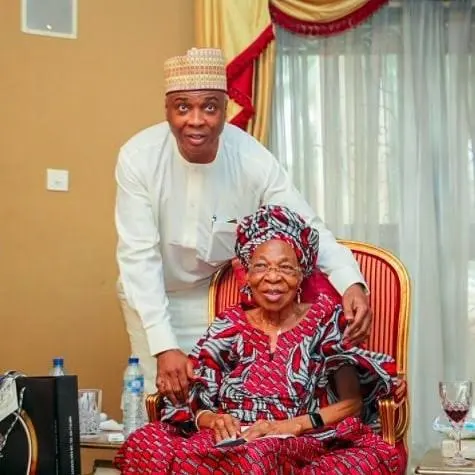

Kwara State Governor, AbdulRahman AbdulRazaq; Emir of Ilorin, Alhaji Ibrahim Sulu-Gambari, and the state branch of the Peoples Democratic Party have commiserated with the former Senate President, Dr Bukola Saraki, over the death of his mother, Mrs Florence Saraki.
The death of Florence Saraki was confirmed on Tuesday by the former Senate President.
Governor AbdulRazaq, in a statement signed by Rafiu Ajakaye, his Chief Press Secretary, sends his condolences to the Sarakis on the death of their matriarch, which occurred on Tuesday, June 18.
“The Governor particularly commiserates with the former Senate President Abubakar Saraki, Senator Gbemisola Saraki, Mr. Olaolu Saraki, and the rest of the family on the sad development.
“The Governor urges the Sarakis to be consoled by the fine legacies of their matriarch.
“Governor AbdulRazaq prays to God to repose the soul of Chief Mrs Florence Saraki and uphold the family after her death”, the statement said.
In his message, the Emir of Ilorin and Chairman of Kwara State Traditional Rulers Council, Alhaji Sulu-Gambari, also commiserated with the former Senate President over the death of his mother.
Sulu-Gambari described the deceased “as a wonderful mother, a great philanthropist and virtuous wife of Dr. Olusola Saraki, the late Waziri of Ilorin whose contributions to humanity will forever be remembered.”
This is contained in a condolence message issued by the Emir’s spokesman, Mallam Abdulazeez Arowona, on Wednesday.
“Alhaji Sulu-Gambari sends his heartfelt condolences to Dr. Bukola Saraki, a two-term governor of Kwara State and former Senate President of Nigeria as well as his siblings over the demise of their beloved matriarch.”
He also extends his condolences to both immediate and extended family members of the deceased, stressing that, “Late Madam Florence Morenike Saraki lived a fulfilled life with numerous accomplishments.”
The monarch therefore prayed that Almighty God repose her soul and grant the families the fortitude to bear the great loss.
In his message, former Speaker of the Kwara state House of Assembly, Professor Ali Ahmad, expressed sadness over the demise of Mrs Saraki.
In a condolence statement he signed on Wednesday in Ilorin, the former speaker shared in the grief of the Saraki family, describing the passing of their matriarch as sad and shocking.
He also highlighted Mama’s impact as a bridge-builder and a dedicated mother to her children.
Ali extended his heartfelt condolences to the entire Saraki family, urging them to take solace in the impactful life of their matriarch. He especially sympathized with the president of the 8th Senate on the sad development, praying for Allah to strengthen his resolve and comfort him on the loss of his mother.
He prayed that God Almighty accept the return of Mrs Saraki, forgive her misdeeds, and grant her eternal rest.
JUST IN: GOV Fubara takes hold of Rivers LGs, swears in caretaker chairmen
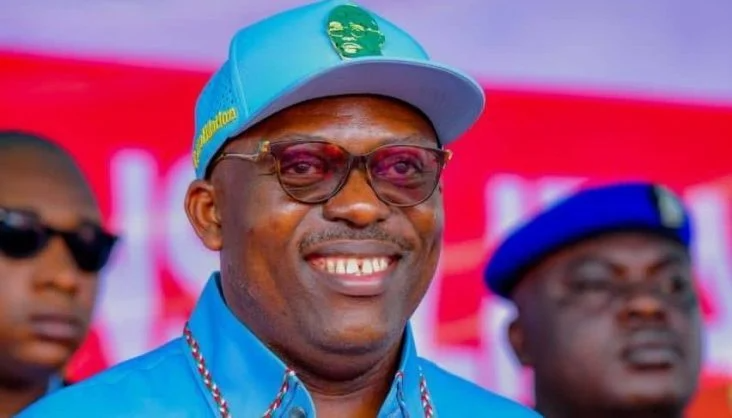
Rivers State Governor, Siminalayi Fubara has taken a step future in consolidating a hold on power in the state by swearing in new caretaker chairmen for the 23 local government areas of the state.
The swearing-in was done on Wednesday at the Government House in Port Harcourt, the state capital amid tight security.
The swearing-in comes a day after he forwarded the list to the state House of Assembly led by factional Speaker, Victor Jumbo.
It will be recalled that the lawmakers had invited the nominees for screening as early as 8am on Wednesday.
Below are the names of the caretaker chairmen:
Abua/Odua LGA – Madigai Dickson
Ahoada East LGA – Happy Benneth
Ahoada West LGA – Mr. Daddy John Green
Akuku Toru LGa – Otonye Briggs
Andoni LGA – Reginald Ekaan
Asari Toru LGA – Orolosoma Amachree
Bonny LGA – Alabota Anengi Barasua
Degema LGA – Anthony Soberekon
Eleme LGA – Brain Gokpa
Emouha LGA – David Omereji
Etche LGA – John Otamiri
READ ALSO:Fubara meets security chiefs as local govt crisis spreads in Rivers
Gokana LGA – Kenneth Kpeden
Ikwerre LGA – Darlington Orji
Khana LGA – Marvin Yobana
Obia/Akpor LGA – Chijioke Ihunwo
Ogba/Egbema/Ndoni LGA – Princewill Ejekwe
Ogu/Bolo LGA – Evans Bipi
Okrika LGA – Princess Ogan
Omuma LGA – Promise Reginald
Opobo/Nkoro LGA – Enyiada Cookey-Gam
Oyigbo LGA – – Gogo Philip
Port Harcourt LGA – Ichemati Ezebunwo
Tai LGA – Matthew Dike
The swearing of caretaker chairmen adds another twist to the political crisis in the state months after the Rivers Assembly passed the Local Government Amendment Bill into law.
Though Fubara refused to assent the bill, the lawmakers led by Martin Amaewhule vetoed him.
The law empowered the Rivers State Assembly to extend the tenure of council chairpersons, their vice, and councillors where it is deemed impossible to hold elections before the end of their three-year tenure.
But a court nullified the amended law, prompting an appeal. The appeal court is set to deliver a ruling on the matter on June 20, 2024.
The post JUST IN: GOV Fubara takes hold of Rivers LGs, swears in caretaker chairmen appeared first on Latest Nigeria News | Top Stories from TVN.
Police arrest airport taxi passenger for attempted car snatching


The Police Command in Lagos State has said it arrested a 35-year-old passenger, who attempted to snatch an airport taxi from its driver.
The spokesperson for the command, Benjamin Hundeyin, confirmed the arrest to newsmen on Wednesday in Lagos.
Hundeyin said that the case was reported to the Alausa Police Division on June 11 at about 1:40 a.m., by the taxi driver.
He explained that the driver said that at about 1:20 a.m., on June 11, while on driving service at the Chevron area of Ajah, he was stopped by the suspect, pretending to be a passenger.
He quoted the taxi driver as saying that the suspect requested that he take him to the Shrine in Agidigbi, Alausa area of Ikeja, and on conclusion on the fare, they both started the journey to the destination.
“On getting to the Mobolaji Bank Anthony Way, by 7UP Alausa Ikeja, the suspect, who was sitting beside him suddenly brought out a knife from his bag and attacked him in an attempt to snatch his Toyota Camry car.
“In the process, the driver sustained a deep knife cut on his hand while trying to struggle with the suspect.
“He quickly raised an alarm, and some good Nigerians came to his rescue, while the suspect took to his heels.
”However, after a hot chase, he was later arrested by the Anti-Crime team of the Alausa police division,” he said.
Hundeyin said that the suspect was taken to the station with the car as an exhibit, while investigation was ongoing.
He said in another development, a 28-year-old man, who had been parading himself as military personnel with the uniform of his friend serving in Maiduguri, was arrested for impersonation.
Hundeyin said that the fake soldier was arrested last Friday at about 5:45 p.m., by operatives from Ilemba Hausa Division, while on Surveillance patrol at Jinadu Street, Ajangbadi.
He said that the suspect was fully dressed in complete army camouflage uniform and riding a black unregistered motorcycle when he was arrested.
The spokesperson said that on sighting the policemen, the suspect abandoned the motorcycle and took to his heels but the officers gave him a chase and arrested him.
“Preliminary investigation revealed that the suspect is not a soldier and the army camouflage uniform belongs to his friend, who is a military personnel serving in Maiduguri,” he said.
NAN