Introduction:
Godfatherism, a phenomenon where a powerful individual exerts significant influence over political affairs, has been a longstanding feature of Nigeria’s political landscape. However, when this influence is wielded unchecked, it can lead to catastrophic consequences.
The ongoing saga in Rivers State, where former Governor Nyesom Wike is locked in a bitter struggle with his successor, Governor Siminalayi Fubara, serves as a poignant reminder of the dangers of unchecked godfatherism.
Background:
Wike, who served as governor of Rivers State from 2015 to 2023, has been accused of attempting to maintain a stranglehold on the state’s politics even after leaving office. His handpicked successor, Governor Fubara, has refused to kowtow to Wike’s demands, leading to a protracted battle for control. The crisis has snowballed, with Rivers elders and youths turning against Wike, accusing him of attempting to undermine the state’s democratic institutions.
Running Battle:
The conflict between Wike and Fubara began shortly after the latter’s inauguration, with Wike seeking to exert influence over key appointments and policy decisions. Fubara’s refusal to acquiesce has led to a series of verbal and legal salvos, with both sides trading accusations of treachery and betrayal.
Rivers Elders and Youths Turn Against Wike:
In a surprising twist, prominent Rivers elders and youths have publicly denounced Wike’s actions, accusing him of attempting to perpetuate a culture of godfatherism. Stakeholders, including traditional leaders, civil society organizations, and youth groups, have condemned Wike’s behavior as “antithetical to democratic principles.”
READ ALSO:NEWS REVIEW: Atiku’s shift on zoning: A calculated move or genuine party loyalty?
Important Quotes for Your Rivers crisis:
– “Wike’s actions are a clear attempt to undermine our democratic institutions. We will not stand idly by while he tries to perpetuate a culture of godfatherism.” – Chief Ferdinand Alabraba, Chairman, Rivers State Council of Traditional Rulers
– “We thought Wike was a democrat, but his actions have shown that he is averse to allowing anyone else to lead. He wants to be the only godfather in Rivers State.” – Dr. Chidi Okere, President, Rivers State Civil Society Organizations
– “We, the youths of Rivers State, reject Wike’s brand of godfatherism. We want a government that is accountable to the people, not one that is beholden to a single individual.” – Comrade Ibuchi Okafor, President, Rivers State Youth Council
Conclusion:
The crisis in Rivers State serves as a stark reminder of the dangers of unchecked godfatherism. Wike’s attempts to maintain a stranglehold on the state’s politics has led to widespread condemnation and resistance. As the battle for control continues, it is clear that the people of Rivers State will no longer tolerate the whims of a single individual. The era of godfatherism in Rivers State is coming to an end, and a new era of democratic governance is on the horizon.
The post NEWS REVIEW…: Wike: When godfatherism goes wrong – A tale of power struggle in Rivers appeared first on Latest Nigeria News | Top Stories from TVN.
NEWS REVIEW…: Wike: When godfatherism goes wrong – A tale of power struggle in Rivers

Footballers of Nigerian roots at EURO 2024


The Euro 2024 tournament has lit up the sporting world with giant slaying clash, mouthwatering goals and record-breaking performances all in the first round of games that have recorded 34 goals so far with FIFA top-ranked Belgium suffering an early defeat to low-ranked Slovakia.
Real Madrid youngster, Arda Guler broke Cristiano Ronaldo’s record to become the youngest player to score on their Euros debut against Georgia. The ‘Turkish Messi’ did it in style by netting a worldie that has been nominated for goal of the round.
Amidst the series of entertaining games on display at the EURO 2024, Nigeria has found a way to squeeze itself into the tournament and for some Nigerians, it is a distraction from the recent poor performance of the Super Eagles in the World Cup qualifiers.
Among the standout players are several players with Nigerian roots, who, while representing European nations, carry the heritage and legacy of Nigeria.
The footballers who ply their trades at clubs like Bayern Munich, and Arsenal, amongst others have openly embraced their parents’ Nigerian roots and have pivotal roles to play for teams like Germany, Netherlands, England, and Italy. SEE THE NIGERIA-BORN STARS HERE
All rights reserved. This material, and other digital content on this website, may not be reproduced, published, broadcast, rewritten or redistributed in whole or in part without prior express written permission from According.
Contact: [email protected]
Police arrest six, rescue nine kidnap victims in Benue


Policemen in Benue State have arrested six suspects for kidnapping and fraud.
The spokesperson for the state command, Catherine Anene, in a statement made available to journalists in Makurdi on Wednesday said nine kidnap victims were rescued
Anene said that three of the arrested suspects were kidnappers and the other three were fraudsters.
The PPRO noted that the suspected kidnappers were responsible for the kidnap of some passengers of a Benue Links vehicle after killing the driver.
Part of the statement read, “On the 13/06/2024 at about 1700hrs information was received that, while a Benue links vehicle was conveying passengers from Onitsha to Makurdi, gunmen suddenly emerged from a nearby forest around Ojano-Oglewu and shot sporadically at the vehicle, causing the vehicle to stop at the forest.
“The driver of the said vehicle sustained gunshot injuries that led to his death while the passengers were kidnapped.
“During the investigation, nine suspects were rescued, while on 17/6/2024 three suspects, named Saleh Hassan ‘m’, Yakubu Alhaji Kande and Yunusa Idris all of Keana LGA, Nasarawa State were trailed and arrested in connection with the case.”
It added that the two suspected fraudsters were arrested at Kigh village along Naka road on Monday.
“During the operation, one Philip Matthew ‘m’ 25 yrs, Haribu Jafai ‘m’ 27yrs and John Ode Arubi ‘m’ 24yrs, were arrested,” the statement read.
The PPRO listed items recovered from the suspected fraudsters include two iPhones, five laptops, different ATM cards, and five 9mm live ammunition.
All rights reserved. This material, and other digital content on this website, may not be reproduced, published, broadcast, rewritten or redistributed in whole or in part without prior express written permission from According.
Contact: [email protected]
MAN seeks action on insecurity after Fouani Group MD released
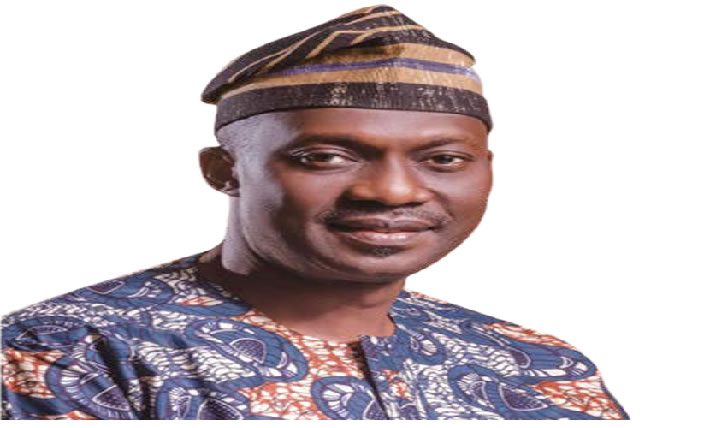

The Manufacturers Association of Nigeria has expressed concern over the state of insecurity in the country while commending security agencies for the release of the kidnapped Managing Director of Fouani Group.
The Fouani Group is a member of the association.
The Director General of MAN, Segun Ajayi-Kadir, stated that the recent incident has left the entire manufacturing community shocked and concerned about the safety of its chief executives and workforce.
In a statement sent to The According Online on Wednesday, Ajayi-Kadir said, the association, on receiving the news of the unfortunate incident, frantically made contact with relevant authorities, including security agencies, to express its deep concerns and to reaffirm its confidence in the ability of the agencies to briskly bring an end to the nightmare.
“We are glad that the efforts of the security agencies paid off and yielded results without casualties among the victims.” Ajayi-Kadir further stated,
Ajayi-Kadir, “MAN commends the security agencies for the safe release of Mr. Fouani. The Association urges intensified efforts to tackle the rising cases of kidnapping and insecurity in the country, as it poses a significant threat to the business community and the overall economic development of Nigeria.
“This, if not checked, will erode investor confidence in the economy and further jeopardize the efforts of the present administration of President Bola Ahmed Tinubu at repositioning the economy for growth.
“MAN also extends its solidarity and hearty felicitation to the family and colleagues of the Managing Director over the release. The association remains concerned about the safety and well-being of its members and will continue to collaborate with authorities to address security challenges facing the operators in the manufacturing sector in particular and the nation in general.”
MAN is the leading voice of the manufacturing sector in Nigeria, representing the collective interests of manufacturers in the country.
The rescued Managing Director of Fouani Nigeria Limited, which specialises in electronics and is the sole distributor of LG, Hisense, and Maxi products in the country, along with three Lebanese nationals who were rescued on Monday night after being abducted on Friday, June 14, 2024, have reunited with their families. (
The Police Public Relations Officer of Lagos State Police Command, SP Benjamin Hundeyin, confirmed to our correspondent on Tuesday that the victims were rescued on Monday night and that they had been safely returned to their apartment on Banana Island.
According Metro had reported that the Managing Director and the three Lebanese were kidnapped by armed men while travelling by boat from Apapa to Victoria Island around Falomo Bridge, sending shockwaves through the state and prompting immediate law enforcement action.
Nigeria to send first civilian to Space


The Federal Government of Nigeria is set to send the first citizen to space.
The Director General, National Space Research and Development Agency, Dr Mathew Adepoju disclosed this at a press conference in Abuja on Wednesday.
The FG signed the Memorandum of Understanding in a collaboration between NASRDA and The Space Exploration and Research Agency.
The DG noted that “This collaboration, which is coming to the country, marks a significant milestone in Nigeria’s 25th anniversary of Space Exploration journey and opens new opportunities for scientific research and technological advancement.”
Details later…
All rights reserved. This material, and other digital content on this website, may not be reproduced, published, broadcast, rewritten or redistributed in whole or in part without prior express written permission from According.
Contact: [email protected]
Fubara goes after former LG bosses, orders audit of councils’ accounts
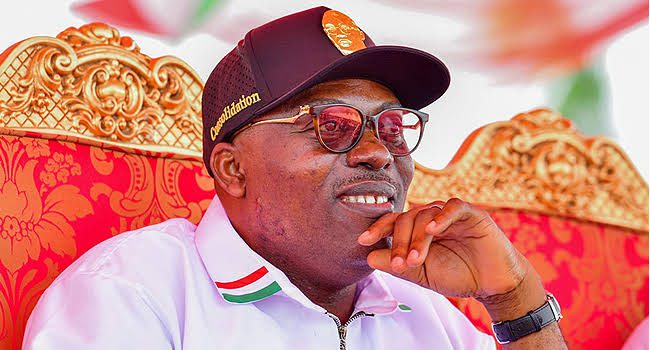
The Rivers State Governor Siminalayi Fubara has instructed the Auditor General of the State to begin the audit of the accounts of the 23 Local Government Areas for the past three years.
Recall that Fubara on Wednesday swore-in 23 Caretaker Committee Chairmen for the 23 Local Government Councils of the State.
The swearing-in was done on Wednesday at the Government House in Port Harcourt, the state capital amid tight security.
The swearing-in comes a day after he forwarded the list to the state House of Assembly led by factional Speaker, Victor Jumbo.
READ ALSO: JUST IN: GOV Fubara takes hold of Rivers LGs, swears in caretaker chairmen
During the swearing in of the Caretaker Committee Chairmen of the Local Government Areas, the governor said the measure was to serve as a check for the incoming officials.
He encouraged the caretaker chairmen not to see themselves as superheroes, but to protect the interests of their people.
He also told them to demonstrate that the government made the right choice in appointing them.
The post Fubara goes after former LG bosses, orders audit of councils’ accounts appeared first on Latest Nigeria News | Top Stories from TVN.
Aiyedatiwa appoints 10 new aides
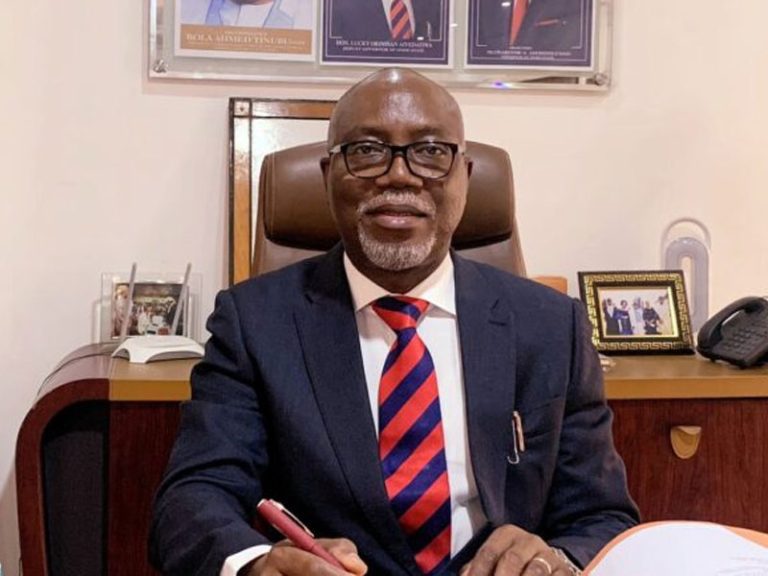

The Ondo State Governor, Lucky Aiyedatiwa, on Wednesday, announced the appointments of three special advisers and seven senior special assistants to his cabinet.
The announcement of the appointments was contained in a statement issued by his Chief Press Secretary, Mr Ebenezer Adeniyan.
According to the statement, Governor Aiyedatiwa approved the appointments in continuation of his efforts to enhance governance and service delivery to the people of the state.
It read, ” In continuation of efforts to enhance governance and service delivery to the people of the State, the Governor of Ondo State, Mr Lucky Aiyedatiwa, has approved the appointment of three new special advisers and seven senior special assistants.”
According to the statement, the newly appointed special advisers are Mrs. Seun Osamaye ( Women Affairs), Mr Adeyemi Olayemi (Environment) and Dr Jibayo Adeyeye was appointed as SA on Legislative Matters and Special Duties.
Similarly, the new senior special assistants Olugbenga Atiba (security), Orioye Benedict (Youth Empowerment), Solomon Kevin, (Student Affairs), Esakumoh Kebi ( Women Affairs) and the trio of Bode Obanla, Olufemi Fadairo and Andrew Ogunsakin were appointed as Senior Special Assistants on Community Engagements.
While congratulating the new appointees, the governor urged them to bring to bear their wealth of experience and dedicate themselves to serving the people of the state.
All rights reserved. This material, and other digital content on this website, may not be reproduced, published, broadcast, rewritten or redistributed in whole or in part without prior express written permission from According.
Contact: [email protected]
British national who allegedly hacked dozens of US firms arrested in Spain

Security operatives in Spain have confirmed the arrest of a British national who has been accused of being the ring leader of a group that hacked dozens of US companies.
Spanish police confirmed in a news release that the unnamed 22-year-old British national, who was going to depart the nation on a charter flight to Naples, was detained at Palma airport.
In a statement made public on Tuesday, the Spanish police claimed that the suspected hacker ringleader broke into at least 45 US organizations using passwords stolen through phishing schemes, allowing for the theft of cryptocurrency and confidential company data.
READ ALSO:US accuses Russian-backed hackers of stealing govt emails during Microsoft cyberattack
The authorities claim that the suspected hacker, whose arrest was captured in a video shared on YouTube, had $27 million in bitcoin when he was taken into custody.
The accused person and the cybercrime organization he allegedly headed were not identified by Spanish police.
It was gathered that the arrested person is the purported leader of the group that planned the hacks against Twilio in 2022.
The post British national who allegedly hacked dozens of US firms arrested in Spain appeared first on Latest Nigeria News | Top Stories from TVN.
Cross River leads prevalence of Sickle Cell Disease in Nigeria, as advocates call for action

The Nigerian government has been tasked to Improve emergency Sickle Cell Disease, SCD, services to ensure quick and empathetic response and also to widen the cover of the National Health Insurance Act, NHIA, for persons living with SCD.
The call comes amid the commemoration of the 2024 World Sickle Cell Day, with the global theme, “Hope Through Progress: Advancing Sickle Cell Care Globally.
As sickle cell disease continues to pose a significant health concern in Nigeria, health experts and advocates are now brainstorming on solutions to help reduce the prevalence of the disease, which stands at 100,000 to 150,000 sickle cell births annually in the country.
In Nigeria, Cross River State has the highest SCD prevalence rate similar to the national average according to a 2019 study by Hematologists.
Recently, our correspondent sat down with an SCD survivor, a health advocate and a Nguvu Change Leader, Onor-Obassi Egim Tawo, to look at the sickle cell scourge as it affects Nigeria.
Here are excerpts…
DP: In your experience from the advocacy work that you do, how bad do you think the Nigerian sickle cell situation is?
It is as bad as it can get. We are the world’s capital of SCD, our healthcare facilities are not structured well enough to provide the needed care, our government is doing little to nothing about it, and awareness is very minimal. Public Health awareness campaigns are mostly sponsored by individuals, individual organisations, sickle cell communities and groups. The Sickle Cell Act is still waiting to be enacted among other issues.
DP: Tell us a little about your experience working in the sickle cell awareness space
Aside from my personal experience living with SCD and having lost a brother to SCD, working in the sickle cell space exposed me to the needs of the sickle cell community, and the perception of society to this community before and after our campaigns. As an individual, I do not have the monopoly of experiencing everything warriors (persons living with SCD) experience but working in this space, sharing experiences and helping these people exposed me to their needs, and how best to help and promote awareness.
DP: Who is more likely to be impaired by SCD, a child or an adult
An adult is most likely to be impaired. As a child, one is still under the care and protection of parents and may not fully know or understand the realities of living with SCD.
As an adult on the other hand, interacting with society, working and earning a living, making choices and being responsible for one’s self, you come face-to-face with these realities. For instance, dealing with stress as a child can be managed by the parents to prevent a crisis. They may decide the child should go not to school for a week, or take an exam or participate in sporting activities etc. As an adult, it is difficult to manage stress when you have to work to earn a living.
DP: From your work, how common will you say SCD is, and where is it most prevalent in Nigeria?
My campaign efforts have been physically limited to Cross River State even though our virtual programmes have a wider reach to at least 9 more states in Nigeria. Every space I find myself in, in secondary school, at the University, law school, church, social gathering etc, there is always someone living with SCD or a caregiver to someone living with SCD. The prevalence rate is quite high in Cross River State. According to a 2019 study authored by most of my Hematologists¹, the prevalence of sickle in Calabar, Cross River State is similar to the national average.
DP: What are the biggest challenges against ending sickle cell disease you have seen in your work?
One major challenge is indifference to the knowledge, impact and existence of sickle cell disorders by members of the public who will rather hold on to the myths and negative perceptions they have about SCD.
A solution to this is the government’s active involvement in awareness creation, enacting and implementing laws and policies for the prevention of SCD as well as laws against discrimination of persons living with SCD.
DP: Does Nigeria have what it takes to care for SCD patients
Yes, we do. We just need to organise our priorities and have a reorientation about SCD, understanding that it affects every one of us directly or indirectly regardless of age, gender, political, cultural or religious orientation or social standing in society.
DP: How do you think the Nigerian healthcare systems can improve support for those living with SCD?
Improve our emergency services to be quick, empathetic and more responsive. Most times during SCD emergencies, we have very tired doctors, possibly exhausted from working all day available to respond to the emergency and somehow take out their frustrations on the crying patient.
Ensure healthcare facilities are adequate to meet the needs. I had surgery 3 years ago and because of the absence of equipment, I had to stay in the hospital for 3 more weeks while the doctors improvised a tool to serve the same purpose.
Train our healthcare providers on the peculiar needs of SCD patients.
Widen the cover of the National Health Insurance Scheme (NHIS) for persons with SCD etc.
DP: What strategies or treatments do you think are most effective in managing the disease?
Basically, good food, drinking enough water, taking routine medicines and adhering to the doctor’s instructions; are the “dos” and “don’ts” of SCD like avoiding strenuous activities and the effects of extreme temperatures. This will to a large extent limit frequent breakdowns and prevent complications. The strategies for managing SCD will depend on each warrior.
DP: What kind of support do patients need from family, community or even healthcare providers?
Empathy mostly. Not pity. Warriors will also need medical, financial and mental health support for their health and well-being.
DP: Are there support groups or resources for patients
Yes, there are. Several even. Most sickle cell organisations have a support group component, in-person or virtually. My organisation, Okare Sickle Cell Foundation annually hosts a support group event for warriors and their caregivers. Some hospitals like the University of Calabar Teaching Hospital (UCTH) have a support group for persons living with SCD who meet regularly.
DP: How do you think awareness can be raised to educate the public about SCD?
There are several ways SCD awareness can be raised. I have explored several of these and found them effective;
Hosting SCD awareness events
Community outreaches
Outreaches to secondary schools, tertiary institutions and religious institutions
Through media outlets like Radio/TV, newspaper publications, billboards etc
Through social media platforms
DP: How can the public get involved in awareness creation
By first becoming intentionally aware. You cannot give what you don’t have.
DP: Do you think policy changes are necessary in the fight against sickle cell disease?
Yes, there are. As earlier stated in my answer to question 5, policy changes are necessary because they establish a framework of how things should go regardless of any individual inclinations, biases or personal belief systems.
DP: Any special systemic gaps or healthcare challenges you would want the government to work on?
Yes. SCD is suffered by a majority of Nigerians. The government should treat it like a public health concern that it is and make it a priority. We have a National Health Insurance Scheme (NHIS) that does not cover pain management medicines, certain hospital stays and surgeries. I know this from personal experience. I believe the scheme is discriminatory in this sense. The NHIS Scheme should be reviewed with the understanding of the peculiar needs of the sickle cell community.
The government should also establish a practical strategy for fighting SCD. Laws and policies should be put in place for the prevention, care, and management of SCD, as well as research into treatments/cures. Policies like mandating genotype counselling and testing for intending couples during the marriage registration process as proposed in my campaign at one campaign to the Ministry of Interior.
DP: How do you think communities can better support individuals with sickle cell disease?
I believe that with proper awareness and education about SCD and the troubles associated with living with SCD, our communities can better support the SCD community. The negative perception will cease and there will be more empathy and necessary accommodations for persons living with SCD at work, in schools, in our healthcare facilities and in our religious and social gatherings.
DP: What is your take on the issue of stigma, is that real for SCD patients?
Yes. Very real. Consciously or unconsciously, people stigmatise people living with SCD and their caregivers/parents. This is because SCD is viewed as something to be ashamed of; a curse, witchcraft, or that the carrier is a good pretender.
This negative perception of persons living with SCD is sponsored by either ignorance, indifference or an absolute lack of empathy especially when it comes from healthcare professionals and/or caregivers.
DP: From your experience in the field, how expensive is it to manage SCD
Managing SCD is not a one-size-fits-all thing because it is experienced differently in different individuals. Consequently, the management and quality of care for each individual will be different.
The basic routine medicines are not expensive: Folic Acid, b-complex, paludrine, vitamin C etc. However, pain management would require some stronger pills, infusions and hospitalization for days to weeks. Some carriers rarely experience the pain episodes, others can experience it on a monthly basis. Some carriers, in addition to managing SCD, could also suffer complications like leg ulcers, eye problems, organ failure, avascular necrosis etc requiring comprehensive care. Most times this care will include surgical procedures. This was the case with me that inspired my book, Northwest. So yes. Managing SCD is expensive.
Cross River leads prevalence of Sickle Cell Disease in Nigeria, as advocates call for action
S.Africa’s Ramaphosa sworn in for second term as president
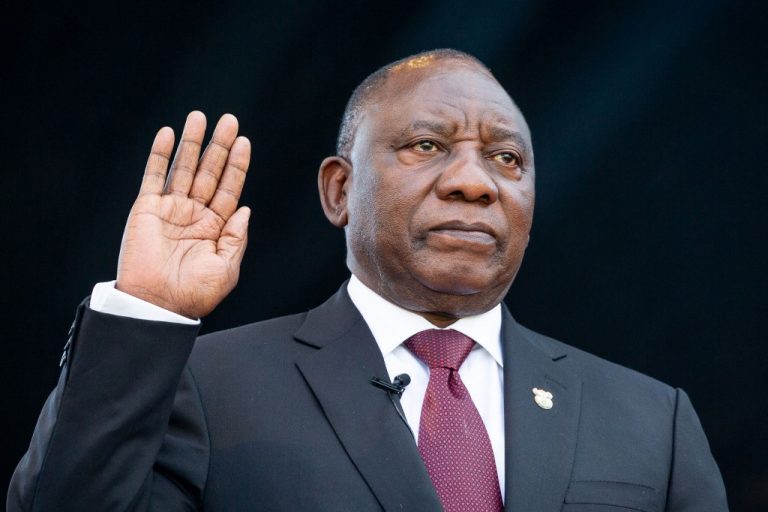

South Africa’s Cyril Ramaphosa hailed “the beginning of a new era” on Wednesday as he was sworn in for a second full term as president after his weakened African National Congress (ANC) struck a hard-won government coalition deal to remain in power.
Lawmakers voted overwhelmingly to re-elect the 71-year-old last week after a May 29 general election produced no outright winner for the first time in three decades.
“The formation of a government of national unity is a moment of profound significance. It is the beginning of a new era,” Ramaphosa said, after taking the oath of office during a ceremony at the Union Buildings, the seat of government, in Pretoria.
“The voters of South Africa did not give any single party the full mandate to govern our country alone,” he added, speaking before lawmakers, foreign dignitaries, religious and traditional leaders and cheering supporters.
“They have directed us to work together to address their plight and realise their aspirations.”
Ramaphosa is expected to announce his cabinet in the coming days, as talks with coalition members continue.
Numerous heads of state, including Nigerian President Bola Ahmed Tinubu, Angola’s Joao Lourenco, Congo Brazzaville’s Denis Sassou Nguesso and Eswatini’s absolute leader King Mswati III attended the inauguration.
Guests in suits, fancy dresses and coats to keep warm in the chilly winter weather started to arrive early in the morning amid a heavy police presence.
VIPs, some singing anti-apartheid struggle songs, were allowed into a small amphitheatre within the imposing, sandstone government building.
Other attendees, some holding South African flags, sat on a lawn outside as dancers and musicians performed on a big stage.
After Ramaphosa was sworn in, a band played the national anthem, followed by a 21-gun salute and a fly past by the air force.
Third time lucky
It was the third time Ramaphosa has taken the oath.
The former trade unionist turned millionaire businessman first came to power in 2018, after his predecessor and rival Jacob Zuma was forced out before the end of his term under the cloud of corruption allegations.
Ramaphosa was then re-appointed for a full five-year term in 2019. In South Africa, voters elect the parliament, which then votes for the president.
Ramaphosa promised a new dawn for South Africa, launched an anti-graft drive and started to reform a collapsing energy system.
But under his watch, the economy languished, blighted by power cuts, crime remained rife and unemployment increased to 32.9 percent.
In May, he led the ANC into yet another vote, but the historied party of the late Nelson Mandela came out bruised.
It won only 40 percent — down from 57.5 percent five years earlier.
For the first time since the advent of democracy in 1994, it lost its absolute majority in parliament and was left scrambling to find coalition partners to remain in power.
It has since agreed to form what it calls a national unity government with several other parties.
Unity
They include the centre-right Democratic Alliance (DA), the Zulu nationalist Inkatha Freedom Party, the anti-immigration Patriotic Alliance and the small centre-left GOOD party.
The deal allowed Ramaphosa to comfortably see off a last-minute challenge by firebrand leftist politician Julius Malema, with 283 lawmakers in the 400-seat National Assembly voting to put him back in office.
But it has faced a vociferous opposition from the left, with Malema’s Economic Freedom Fighters and former president Zuma’s uMkhonto weSizwe (MK) refusing to take part and denouncing the inclusion of right-wing parties and the white-led, free-market DA.
MK came third in the election but has contested the results.
Party spokesman Nhlamulo Ndhlela said in a statement ahead of the ceremony that its lawmakers would snub the “farcical inauguration of Cyril Ramaphosa as the puppet DA-sponsored President”, also using a racial slur to describe the ANC leader.
But Ramaphosa said voters had stressed they were “impatient with political bickering” and wanted parties to “put their needs and aspirations first” and “work together for the sake” of the country.
“We must reject every attempt to divide or distract us, to sow doubt or cynicism, or to turn us against one another,” he said, in an apparent, veiled dig at his opponents.
“As leaders, as political parties, we are called upon to work in partnership towards a growing economy, better jobs, safer communities and a government that works for its people.”
AFP