Former Kaduna Central Senator, Shehu Sani has said the Minister of the Federal Capital Territory, FCT, Nyesom Wike is a beneficiary of the struggle for democracy by him, Mike Ozekhome, and other freedom fighters during the military junta.
Sani said Wike would not have been a local government chairman, state governor, and Minister if not for the struggle by him, Ozekhome, and other freedom fighters during the military era.
He was reacting to Wike’s recent remark questioning how much significance his presence made to make Nigeria better when he was a senator.
Speaking at the Nigeria Annual Lecture and Gold Prize Award, 2024, an event organised to celebrate Nigeria’s 25 years of uninterrupted democracy, Sani called on President Bola Tinubu to wake up and do what is right because Nigerians are suffering.
But Wike questioned Sani for making such calls, asking that the former lawmaker tell Nigerians his key achievements in all the years he spent at the national assembly as a Senator.
Reacting, Sani asked where Wike was when he was locked up in Port Harcourt prison during the military junta.
Featuring on Channels Television’s Sunday Politics, Sani said: “Nobody can demean the struggle that we did to free Nigeria from military dictatorship, Mike Ozoekhome was a patriot.
“If not for the struggle which we did to de-establish military dictatorship and establish democracy in Nigeria, people like Wike wouldn’t have become local government Chairman, governor, or minister today.
“He’s a beneficiary of the struggle, the sweat, and all we have invested in it. And at a certain time, I was in Port Harcourt prison as a political prisoner; where was he then? He is a beneficiary of the struggle to which Nigerians have dedicated and committed their time to.”
Wike won’t be Gov, minister without me, Ozekhome, others – Shehu Sani
Wike won’t be Gov, minister without me, Ozekhome, others – Shehu Sani

Quest for Knowledge: Endless attacks on Nigerian students abroad raise concern

Nigerian students in foreign lands appear to have suddenly become targets for elimination.
If they are not murdered by the security agents of their host countries, they are murdered by citizens of foreign countries.
From Africa to Europe, Asia to America, the story is the same.
Many Nigerians who have travelled to countries like the United Kingdom, Canada, Ghana, South Africa, United Arab Emirates, Cyprus, among others to get quality education, have been gruesomely murdered in recent times.
It has been tales of sorrow, pains and anguish for parents whose wards have become victims of these unfortunate incidents.
Many of them were murdered when they had almost completed their course of studies. Others had scarcely settled down to their studies when the messengers of death came calling.
Unfortunately, offenders of such heinous crimes against Nigerians have never been brought to book. The host countries had always treated such incidents with levity.
Even where they appeared to have taken interest, they would not pursue the matter to a conclusive end, thereby eventually creating a window of escape for the offender.
Just last month, May 17, 2024 precisely, a 43-year old Nigerian, identified as Prince Ebuka was allegedly shot and killed by the South African Police in Danielskuil, Northern Cape, a development that sparked outrage by the Nigerian Diaspora Forum, NDF.
According to the report, the circumstances that led to it remained unclear, but sources close to the deceased family revealed that he was a law-abiding citizen who had no criminal record.
The NDF condemned the killing, describing it as a senseless and avoidable tragedy.
A statement by the NDF’s Country Director, Hon. Chike Amadichi called on the South African authorities to conduct a thorough and transparent investigation into the incident.
He said: “The Nigerian Diaspora Forum (NDF) expresses its deep concern over the recent tragic event in Danielskuil, Northern Cape, South Africa on May 17, 2024.
“We urge the public to stay informed as we closely follow developments and cooperate with the authorities to ensure a thorough and transparent investigation.
“Our commitment remains strong towards advocating for justice and upholding human rights for all Nigerians living in the Diaspora.”
This incident has raised concerns about the safety and well-being of Nigerians living in South Africa, many of whom have faced xenophobic attacks and harassment in recent years.
The group also urged the Federal Government to take decisive action to protect its citizens abroad
“As the investigation continues, the Nigerian community in South Africa and beyond is mourning the loss of Prince Ebuka, a husband, father, and friend who was brutally taken away from his loved ones.
“His family and friends are demanding answers and justice, and the world is watching to see how the South African authorities will respond to this tragic incident,” the NDF submitted.
Also, the family of the 19-year-old Afolabi Opaso is still waiting for answers on the circumstances surrounding the death of their son on December 31, 2023.
Afolabi was allegedly shot dead by Winnipeg police officers in Manitoba, Canada.
According to the Independent Investigation Unit of Manitoba, which investigates all serious incidents involving the police in the province, the officers were alleged to be responding to a well-being call at an apartment building at 77 University Cres, at about 2:30 pm on December 31.
In spite of the dangers Nigerian students in foreign lands are exposed to, parents and guardians still besiege the embassies of foreign countries seeking for education visas for their wards in those countries.
Very many Nigerians believe that the Nigerian education system is in comatose and that has been responsible for the increase in education tourism abroad.
They attributed what is happening to Nigerian students studying abroad to failure of leadership.
Commenting on Nigerians’ quest for foreign education, a human rights lawyer, Malachy Ugwumadu, attributed the scourge to total collapse of the educational system in Nigeria.
He said: “Nigeria has not ceased to amaze those who are critical. You do not wish away what you have no capacity to control.
“The bottom line is that the outsourcing of education is a direct function of the failure of the educational system in Nigeria.
“As you know, those who have the luxury of sending their wards to study abroad are paying through their nose; they are paying far more expensively than those studying in Nigeria.
“The corresponding risks to which our worlds are now exposed is one that underscores really the insufficiency of the government to provide education, and it has complicated the whole challenge of Nigerians and their search for quality education in such a way that our successive governments are now exposed to the ridicule of the entire world.
“Even as close as the Benin Republic here, the statistics of Nigerians there in the make-shift buildings in the name of education is pitiable.”
He also said that the failure of successive Nigerian governments to keep faith with the United Nations’ recommended minimum budgetary requirement of 26 percent of annual budget for education had also increased the poverty of our situation.
He equally agreed that the perennial cases of industrial actions by lecturers have not helped matters in the sense that students have continually experienced an endless educational system.
“And that is what has promoted the private universities in our country where our people are subjected to excruciating expenses to take their wards through normal academic education.
“So, instead of spending 10 years for a course of five years, parents tend to make do with the private universities where they are made to pay what it has taken the entire generation to go to school,” he submitted.
He attributed the upsurge in the number of Nigerian students abroad to what he called politicization of education in Nigeria.
“There is too much politicization of education in the system. It is no longer seen as a core professional and foundational enterprise that determines and defines the future of the country, as well as guarantees the quality and content of leadership that can come from there,” he added.
He, therefore, submitted that unless things were done right, Nigerians would continue to seek for foreign education in spite of all the dangers out there.
“So, to think that people will stop sending their children abroad, is to imagine that all of these things are already in place.
“But, the reality is that they are not in place, and there are no signs that they will soon be in place with the direct consequence that things will continue to be as they are,” he said.
On the nasty and poor treatment that Nigerians are exposed to in foreign land, he attributed that to the strong resentment, which other countries have for Nigeria and its citizens.
He said: “The poverty of the situation is that given the total resentment of the comity of nations against this huge and potentially great country that is squandering its fortunes, our people are subjected to the worst forms of attacks and harassment.
“In South Africa, it is xenophobia; in Asian countries, it is intolerance because anything committed by any Nigerian, be it the least of offences, attracts maximum punishment.
“The common denominator is that our citizens have come under direct siege in their pursuit for better education outside the shores of this country. It is an indictment of the government.”
He called on the National Assembly to rise up to its oversight function by whipping the Ministry of Foreign Affairs into line in this regard.
According to him, “I think that the Committees on Diaspora in the House of Representatives and Senate must find a way in furtherance of their over-sighting to compel the foreign affairs ministry to do something.
“It is not just drinking tea from one country to another; these are core responsibilities.
“The way and manner we have continued to undermine and expose ourselves to the ridicule of the world makes it easy for them to kill us and nothing happens. So, the ministry of foreign affairs should be able to mobilise and respond adequately.”
Also reacting, the President and Founder of SelfWorth Organisation for Women Development, Mrs Chinyere Anokwuru thinks that in spite of the dangers which Nigerians students abroad face, those who could afford to send their children abroad for studies, should not be discouraged.
She cited the dysfunctional educational system in Nigeria at present as one of the reasons for her position.
Such dysfunctional elements, according to her, include constant industrial action by lecturers, as well as unqualified teachers.
“So those that can afford it should go ahead and do so,” she stressed.
She also said that lack of proper parental counseling and orientation equally contributes to the disaster, which always befell their children.
“But it depends on parenting. I know that some of the victims were involved in clubbing and cult-related activities.
“If a child is properly orientated at home; properly taught and groomed at home; when such a child gets out of Nigeria to study, he knows he is representing his parents there and his family’s name is at stake.
“So, he will go there and behave well. He will try to stay out of trouble because he is there to study and not to club. Why the clubbing, the cultism and the fighting? He will hide himself and focus on what he has gone there to do.
“If parents train their kids properly, they will keep out of trouble in foreign lands,” she argued.
She noted that if the good private schools in Nigerian which were mostly owned by churches were made affordable, the craze to go abroad for quality education would be greatly minimized.
“If these churches can charge so high for the education they are offering, where is the charity; where is the love?
“I implore the churches to lessen their tuition fees, and I believe if their fees come down a bit, we might just stop sending our children abroad and patronize our local colleges that are also doing well,” she posited.
But, for the public administrator, Curis Anthony, people should look beyond why Nigerians travel abroad for studies.
He wants people to take a holistic look at such issues as why students even travel out in the first instance, as well as what the state of education and security in the country are.
He believes that the foregoing factors are critical because according to him, “When you talk in terms of safety, you need to relate it to the issue of the abducted school girls in northern states and many other Nigerian students who have been killed in the Northeast and across the country, on account of insecurity.
“I think it is very important to have a holistic approach to understand these issues and not just necessarily getting alarmed about what happens to Nigerian students abroad.
“What is also Nigeria’s role in protecting her citizens in the country or outside the country? So, these are the critical questions that must be addressed.”
He also looked at the matter from the economic angle, when he said: “When you run a global economy that is exploitative and more concerned about the profit and market forces, there is always a disregard for human life.
“So, the context of security whether in Nigeria or anywhere in the world, must be placed at the heart of who controls the economy and for what purpose. Is the economy being controlled in the interest of the people or not?
“You also have people, who also have their own peculiarities in terms of insecurity, irrespective of what is being presented. When you present such places as peaceful and comfortable, it is to the extent of what is being projected, which shows that there are some discontents in those societies.
“And for those who are marginalised of access to their basic needs, they also transfer aggression and that’s what has been responsible for violence instead of promoting unity and peace.
“My perspective has always been that the spirit of internationalism has to be based on what affects us and that is why the slogan of workers of all countries is, ‘unite against the oppressors and exploiters of various countries.’
“That is the context because without placing it in that context, we just get unnecessarily alarmed. For those who have to travel abroad, there is the material force that propels them because they have to survive, irrespective of the dangers they are going to face.
“It is like somebody who is in danger; he will assess which is less and that is the desperation of Nigerians wanting to travel abroad despite the dangers. The policy environment necessarily turns them into those frustrations.
“For them, death is a necessary consequence they have to face if they don’t want to starve to death.”
On whether parents should keep sending their wards overseas for studies in spite of the dangers ahead, he said: “It is not about parents.
“Do you know how many thousands of Nigerians that go abroad without the consent of their parents? That is the issue.
“How many parents in Nigeria can afford to send their children abroad? The children of the poor that you find abroad, stowed away in most cases; they struggled themselves to be there out of desperation. That is the issue to look at.
“If the academic environment in Nigeria is conducive for learning, people won’t be going abroad to study in such large numbers.”
He also agreed that the collapse of the educational system was largely responsible for the prevailing education tourism.
He said: “The decay has been over the years and that principally informed what has been the campaign over the years on the same public education.
“Several Nigerians have also been victims of travelling abroad which can also be attributed to the irresponsibility of the political environment. The approach is not just to have some of those cosmetic pronouncements by the government.
“It is basically to have a holistic approach to it. Once you have a system that cannot guarantee people the basic necessities of life, they are bound to have those kinds of things.”
Quest for Knowledge: Endless attacks on Nigerian students abroad raise concern
Tyla beats Arya Starr, Asake to win BET Awards


South African singer Tyla was named Best New Artist at the BET Awards 2024 on Monday.
Tyla’s debut single, ‘Water’, catapulted her to global fame and earned her several accolades, including the inaugural Grammy Award for Best African Music Performance in February 2024.
At 22 years old, she became the youngest African artist to receive a Grammy.
In the early hours of Monday, she accepted the award for Best New Artist, edging out her fellow African act, Ayra Starr, 41, 4Batz, Bossman Dlow, Fridayy, October London and Sexyy Red.
In her acceptance speech, Tyla said, “This is such a gift to be here. I want to dedicate this one to Africa. I want to dedicate this to all the African superstars before me that didn’t get these opportunities that I’m getting. This is just amazing. Africa to the world guys.”
She also won the award for ‘Best International Act’ beating Asake, Ayra Starr, Aya Nakamura (France) and other artistes from around the world.
Burna Boy, Tems and Seyi Vibes also earned nominations in yet-to-be-awarded categories.
All rights reserved. This material, and other digital content on this website, may not be reproduced, published, broadcast, rewritten or redistributed in whole or in part without prior express written permission from According.
Contact: [email protected]
Local refining faces big hurdle as crude shortage threatens investments

Operators in Nigeria’s oil and gas sector are sounding alarms over the impact of inadequate crude oil supply to local refineries, identifying it as a major deterrent to attracting Foreign Direct Investments. OKECHUKWU NNODIM highlights the crucial role played by indigenous investors in recent sector developments and the need for government support to enhance mid and downstream operations
The inadequate supply of crude oil to local refineries is one of the key factors stifling Foreign Direct Investments in Nigeria’s oil and gas sector, operators have stated.
According to them, most major investments in the oil sector in the last eight years were done by indigenous private investors, stressing that, for instance, the five functional refineries in Nigeria currently were developed by local players.
Oil marketers and refiners told our correspondent that it was high time the government provided the necessary support to mid and downstream operators in the industry.
An improvement in crude supply to local refiners would give a big boost to the production of refined products in-country and would pave the way for more FDIFDI into Nigeria’s oil sector, the operators explained.
The Crude Oil Refinery Owners Association of Nigeria, Petroleum Products Retail Outlets Owners Association of Nigeria, and Independent Petroleum Marketers Association of Nigeria, among others, pointed out that investors were watching developments in Nigeria’s oil sector concerning crude supply.
CORAN is a registered association of modular and conventional refinery companies in Nigeria. Modular refineries are simplified refineries with significantly less capital investment than traditional full-scale refineries.
The Publicity Secretary, CORAN, Eche Idoko, urged the government to treat indigenous refiners right because foreign investments were no longer flowing into the sector.
He told our correspondent that only private sector players in Nigeria were investing in the industry, adding that in the last eight years, no major foreign investments had been recorded.
“If you listen to what Dangote said in his interview with CNN, he (Dangote) said Africa, which includes Nigeria, is waiting for Foreign Direct Investments that will help build structures, but this will not come. Rather, we should leverage locals like us to create these structures.
“They are talking about FDIs, now, how many such FDIs have come into Nigeria in the last eight years? I can tell you that most of the FDIs came from private arrangements and not government. Apart from the Nigeria Liquefied Natural Gas company’s deal, tell me one other deal by a government agency in the last eight years that has delivered.
“But within the last eight years, we’ve delivered four functional modular refineries and the Dangote refinery. So the point is that they should create an enabling environment and let’s bring the investments in,” Idoko stated.
On June 4, 2024, The According reported that the Chairman of the Dangote Group, Aliko Dangote, during an interview with CNN, stated that Africa was not growing because of several factors, including the sale of its raw materials to the Western world and buying the same as finished goods.
“Africa is not growing as it should because we export raw materials and import finished goods. It doesn’t matter what it is, even if it is gold or whatever, raw material is always priced at a ridiculous amount compared to finished goods,” Dangote stated.
The Dangote Petroleum Refinery boss, who stated that the plant would start making money soon, pointed out that his satisfaction was that the $20bn facility was constructed to make Africa great.
“We will start making money soon. It is not about making money only, it also gives us great satisfaction that we are making Africa great,” the billionaire stated, as he revealed that the 650,000 barrels per day capacity refinery could absorb 21 million barrels of crude oil monthly.
“Almost 21 ships will no longer leave the African continent, either from Nigeria or Angola, we will be able to take the crude, refine and distribute the product. I feel very proud as an African that we have demonstrated that it can be done, and we’ve done it.
“If we take all the crude from Nigeria, it means we will take 21 million barrels per month and that will also help to reduce the CO2 emissions. Rather than ships coming from Europe to bring in products, or the ships going out of Nigeria, 21 ships going out of Nigeria every month, and then you have the product coming into Nigeria. In totality, when you calculate, you are talking about 480 ships of one million barrels,” he stated.
Refinery owners seek crude supply
Meanwhile, CORAN again called on the government to work hard in ensuring the supply of crude oil to refineries in Nigeria, as the association faulted the recent claims by the Nigerian Upstream Petroleum Regulatory Commission on the provision of crude to local refiners.
In a recent response to the demand for Conditional Term Sheets by the financiers of modular refiners earlier, NUPRC stated that it received figures on the production capacities of indigenous refineries and had presented them to crude oil producers to make the commodity available.
NUPRC’s Chief Executive Officer, Gbenga Komolafe, while reacting to a question by our correspondent on the matter, stated that the commission would not guarantee supply to refineries that had yet to come into existence.
“This still borders on the implementation of the domestic crude oil obligation. First of all, let me make it clear that establishing a refinery of whatever capacity, whether it is a modular refinery or a bigger-sized refinery, is a commercial engagement. So the commission can’t come in to give any form of guarantee. I need to make that clear.
“However, the regulator will only implement the provisions of the PIA, given that all the regulatory activities of the commission are expected to comply with the provision of the law. So as it relates to guaranteeing feed-stock to refiners, that is enshrined under Section 109 of the PIA.
“And what we have just done in furtherance of that provision is that we have put in place a regulation that has to do with domestic crude oil obligation. So, in the implementation of that provision, what we do is that we receive the figures on the domestic refining capacity from the Nigerian Midstream and Downstream Petroleum Regulatory Authority.
“And once we receive that, our development and production department factors the numbers against the capacities of the various producers within the upstream sector and makes it obligatory for them (crude producers) to meet those numbers, thereby guaranteeing that volume of supply to existing licensed and operating refineries, not refineries that have not come into existence,” Komolafe stated.
The NUPRC boss stressed that “we do not guarantee crude for financing of refineries that have not come into existence.”
The CORAN official, however, faulted the position of the NUPRC, as he argued that the guideline for the establishment of a hydrocarbon refinery in Nigeria made provision for crude supply to investors.
“The NUPRC contradicted the law because the guideline to establish a hydrocarbon refinery in Nigeria states that the Federal Government will guarantee 60 per cent of our feed-stock needs. It is there in the guidelines.
“So saying it can’t guarantee any refinery yet to be completed is not right. In my submission, I mentioned that even before now, they used to give us a letter, but the challenge is that the letter of guarantee submitted was just about Section 109 of the PIA, which he quoted there.
“But the guideline states that they should give us 60 per cent. The 60 per cent that the Federal Government committed to why we had the stakeholders’ meeting on how domestic crude should be given to local refiners.
“The guideline to establish a hydrocarbon refinery by the Nigerian Midstream and Downstream Petroleum Regulatory Authority states that the government will guarantee up to 60 per cent of our feed-stock needs for the refinery,” Idoko stated.
Joining in the call for the supply of crude to local refiners, the Public Relations Officer, IPMAN, Chief Ukadike Chinedu, said the government should listen to the demands of modular refineries as well as that of Dangote Refinery concerning crude oil supply.
“It is a genuine demand. We all saw the positives of in-country diesel production when Dangote started producing it in large volumes. We saw how diesel prices crashed from about N1,700/litre to N1,200/litre as soon as Dangote commenced production.
“So the government and the international oil companies should honour the demand by local refineries for crude oil supply. These local refineries should be given priority attention,” Ukadike stated.
The IPMAN official had earlier kicked against the hike in the crude oil price to local refineries by IOCs, stressing that this should be resisted.
“The government should not allow such to happen. Why should you raise the price of crude for local refiners? That shouldn’t be accepted. The government has to intervene.
“The continued support of Dangote Refinery by the Federal Government in supplying crude oil and other necessary assistance will further bring down prices of petroleum products. Diesel is sold between N1,000 and N1,200/litre and the product is available now. Before Dangote came on board, diesel rose to about N1,700/litre,” Ukadike stated.
The Vice President of Oil and Gas at Dangote Industries Limited, Devakumar Edwin, revealed last week that IOCs were willfully frustrating Dangote Refinery’s efforts to buy local crude by hiking the cost above the market price by $6.
This, he said, was forcing the refinery to import crude from countries as far as the US, with its attendant high costs.
But in his reaction to this, the President, PETROAN, Billy Gillis-Harry, declared, “Clearly, that is anti-country! Because when you are doing business in a country, the country’s welfare, well-being and economic growth should be your business.
“That is why some multinationals said they were packing out of Nigeria when they had exploited all the weaknesses and lukewarm policies that Nigeria has, which empowered them, without them empowering us and not leaving technology transfer to enable us to continue running such businesses.
“So, it is a wake-up call for the Nigerian government, not just in the oil and gas sector, but especially in the trade and investment sector, to insist on new rules on how to engage in doing business in Nigeria.”
FG assures operators
The Federal Government, through its oil sector upstream regulator, has continued to assure operators of its efforts to meet their crude oil demands.
The spokesperson of the NUPRC, Olaide Shonola, repeatedly stated that the matter was being tackled by the commission.
The commission also recently promised to ensure that crude oil was supplied to domestic refiners.
It stated that in compliance with the provisions of Section 109(2) of the Petroleum Industry Act 2021, the NUPRC, in a landmark move, had developed a template guiding the activities for Domestic Crude Oil Supply Obligation.
“The commission, in conjunction with relevant stakeholders from the NNPC Upstream Investment Management Services, representatives of Crude Oil/Condensate Producers, Crude Oil Refinery-Owners Association of Nigeria, and Dangote Petroleum Refinery, came up with the template for the buy-in of all.
“This is in a bid to foster a seamless implementation of the DCSO and ensure consistent supply of crude oil to domestic refineries,” Komolafe had stated.
Hotel manager remanded for alleged N.3m theft
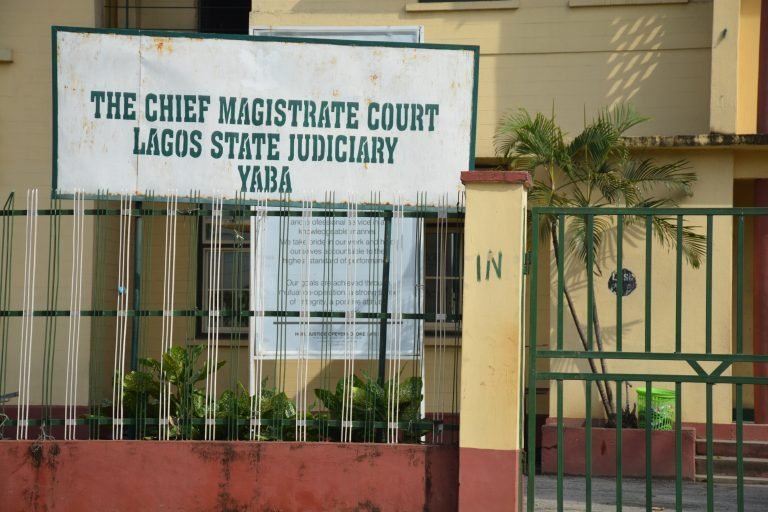

The Chief Magistrate Court, Yaba, before Magistrate O.Y. Adefope, on Friday, remanded a 30-year-old hotel manager, GodsWill Akpan, for allegedly stealing the sum of N360,000 entrusted to him.
The defendant was charged with one count of theft for allegedly stealing N360,000 while working as a manager of a guest house.
The charges alleged that GodsWill stole N360,000, the property of Owolabi Daniel.
According to According Metro, the complainant employed God’s Will as the manager of his guest house, Switch Guest House, and was required to deliver N180,000 from the weekly sales every week.
However, it was discovered that he made sales for two weeks but did not remit the money into the owner’s account and allegedly absconded with N360,000. All efforts to reach him proved abortive.
After the report was made at the police station, the defendant was arrested and questioned by police officers. He did not deny the allegations levelled against him.
Prosecutor Haruna Magaji informed the court that the alleged offence was committed on April 8, 2024. He stated that the alleged offence contravenes Section 287 of the Criminal Laws of Lagos State, Nigeria, 2015.
The prosecutor also said there was evidence that the defendant received money from hotel guests and made more than the amount required for him to deliver every week.
The defendant pleaded not guilty to the charges.
Adefope ordered a bail bond of N500,000 to be paid, and two sureties were to be provided.
He adjourned the case until July 17, 2024, for mention and ordered that the defendant be detained in police custody until he perfected the bail conditions.
Learn Africa creates over 96 million additional shares


Learn Africa Plc has created an additional 96,431,250 ordinary shares at N0.50k each to increase its share capital to N867.88m from N771.45m.
That was a fallout of the firm’s recent board of directors meeting.
The development was disclosed in a document filed with the Nigerian Exchange Limited on Friday.
“The increase in the share capital of the company from 771,450,000.00 to 867,881,250 by the creation of 96,431,250 units of Ordinary Shares of N0.50k at N0.50k per share,” it stated.
To reflect this change, Clause 6 of the company’s Memorandum of Association has been amended.
The updated clause states, “The share capital of the company is N433,940,625 divided into 867,881,250 ordinary shares of N0.50k each.”
According to the firm, the adjustment ensures the company’s legal framework aligns with the new share capital structure.
It added that the strategic decision not only rewarded current shareholders but also aimed to enhance investor confidence and support the company’s long-term growth objectives.
All rights reserved. This material, and other digital content on this website, may not be reproduced, published, broadcast, rewritten or redistributed in whole or in part without prior express written permission from According.
Contact: [email protected]
FG can raise more funds from capital market – CIS

The President and Chairman of the Governing Council of the Chartered Institute of Stockbrokers, Oluropo Dada, has stated that the country’s equity market has the potential to generate $500bn.
According to a release, he stated that during his inauguration as the 13th president and chairman of the council of the institute in Lagos, recently.
Dada emphasised his commitment to fostering inclusive participation among all stakeholders in the financial market, stating, “My vision is to build a Nigerian capital market where securities professionals receive the recognition and support they deserve.
“The economy must attain double-digit growth in gross domestic product. It is my conviction that the capital market alone can generate up to at least half of the envisaged $1tn.”
He aimed for an all-inclusive market with all stakeholders working as partners, adding, “My team and I will work assiduously towards upgrading capacity building in our community while ensuring a symbiotic relationship between securities dealers and all trading platforms in the country.”
Dada stressed the need to reduce Nigeria’s informal sector to achieve accelerated GDP growth.
He called for policies encouraging public limited liability companies to obtain listings and public quotations on SEC-registered securities exchanges.
“It is imperative that the size of the informal sector in Nigeria be substantially reduced if we are to attain the objectives of accelerated GDP growth. Appropriate policies should be crafted to encourage all public limited liability companies in Nigeria to obtain listings and public quotations on any of the SEC-registered securities exchanges in the country,” he asserted.
The CIS president expressed support for the ongoing banking sector recapitalisation programme and presented a 10-point recommendation to the government and capital market regulators to ensure seamless implementation of new capital injections.
“Our institute aligns with the ongoing recapitalisation programme in the banking sector. We have made a 10-point recommendation to the government and capital market regulators on how the new capital injection in the banking industry can be implemented seamlessly,” explained Dada.
Vice President Kashim Shettima urged the institute to partner with the Federal Government to transform the economy.
Also, the Governor of Ekiti State, Abiodun Oyebanji, praised Dada’s integrity and performance, assuring support for his administration.
SEC plans sanction for issuing houses over bank recapitalisation rule violations

To ensure compliance with banking sector recapitalisation guidelines, the Securities and Exchange Commission has threatened to impose a N1m penalty on banks if they fail to submit complete capital raise applications.
In a statement made available to The According on Friday, it was stated that banks must adhere to certain norms and procedures to acquire capital by rights issuance, private placements, or other authorized means.
It added that applications and supporting documentation must be submitted online via email, noting that documents that are transmitted will be examined and applicants will be notified electronically of any deficiencies found.
“Where an application is returned for being incomplete – a penalty of
N1,000,000 and re-filing fee of
N100,000 shall apply. This fee is payable by the Issuing House without a recourse to the Issuer or the Issue proceeds,’’ partly read the statement.
The SEC noted that the initiative supported the Central Bank of Nigeria’s directive for banks to raise additional capital, which was essential for navigating economic challenges and achieving a $1tn economy by 2030.
“As the regulatory institution mandated to regulate and develop the Nigerian capital market, the Securities and Exchange Commission has the responsibility to ensure a smooth, transparent, and efficient capital raising process by the banks.
“This framework outlines the guidelines and procedures banks are required to follow to raise capital through rights issuance, private placements, or other approved methods during the 2024–2026 recapitalization period.
“The SEC stated that applications and documents are filed electronically via email, adding that documents forwarded will be reviewed, and where there are observed deficiencies, this will be communicated to the applicants electronically.”
It noted that international banks must increase their capital base to N500bn under the new CBN capital requirement, while national banks must do the same with N200bn and regional banks with N5
“The commission said the framework would help to ensure that the capital raising process is conducted efficiently, transparently, and in a manner that protects the interests of all stakeholders,” it added.
The SEC advised banks and stakeholders to adhere to those guidelines meticulously, highlighting the framework’s alignment with existing regulatory provisions under the Investment and Securities Act of 2007.
It emphasised the importance of updating corporate information with the Corporate Affairs Commission before filing applications, streamlining the approval process, and enhancing regulatory oversight.
“The commission may require other documents or information as may be necessary. Where an issuer had already filed necessary documents with the SEC (e.g., a Memorandum and Articles of Association (Memart) or a certificate of incorporation or a certificate of increase in share capital, etc.),” the regulator explained.
On March 28, the CBN announced new minimum capital requirements for banks, setting the minimum capital base for commercial banks with international authorisation at N500bn.
Nigeria’s contribution to Liberia’s stability unforgettable – Boakai Jr


Tamba Boakai Jr, son of Liberian President Joseph Boakai, says Nigeria has always been a good brother to Liberia, recalling the role Nigeria played in bringing stability during the Liberian civil war.
Boakai Jr, therefore, called for the strengthening of the Nigeria-Liberia ties.
According to a statement made available to The According on Sunday, Boakai Jr spoke on Saturday during his visit to Ilawo town, Abeokuta, Ogun State.
He was a guest of the traditional ruler of Ilawo, Oba Olusegun Macgregor, and his wife, Olori Omolara.
Speaking during the visit, Boakai Jr praised the hospitality of the Ilawo people and commended their efforts in preserving its cultural heritage.
“I am not surprised with the warm reception I am receiving here in this great African community, because Liberia and Nigeria have always been good brothers from time immemorial.
“Nigeria’s efforts and contributions to ensure stability in Liberia during its civil wars are never lost to history, they are appreciated all the time.
“I, therefore, want to charge our youth to be agents of peace and unity. I want to urge you to embrace education and strive for excellence because you are all the next faces of African peace and prosperity.
“We must, therefore, be more purposeful and deliberate to work and do everything within our capacity to be worthy African ambassadors wherever we find ourselves,” he said.
Boakai and his entourage were received by Oba Macgregor, his wife, traditional chiefs, youths and residents of the community.
The entourage was treated to a display of rich Yoruba culture, including traditional music, dance, and attire.
Oba Macgregor said the essence of the visit was to strengthen the Liberia-Nigeria bond further and to foster greater cultural exchange and cooperation between the two nations.
Boakai Jr and his entourage later visited the Alake and the Paramount Ruler of Egbaland, Oba Adedotun Gbadebo, and the Olowu of Owu Kingdom, Oba Saka Matemilola.
IFAD empowers 26,000 N’Delta youths, women farmers


The International Fund for Agricultural Development in collaboration with Federal Government and the Niger Delta Development Commission said it has empowered no fewer than 26,000 youth and female farmers in the Niger Delta through its Livelihood Improvement Family Enterprises project.
The Country’s Director of the organisation, Madam Dede Ekoue, stated this on Saturday after the fourth supervision mission of the project in Akure, the Ondo State Capital.
Ekou, who was represented by the Project Technical Lead and Global Technical Specialist Rural Development and Institutions, Dr Abdoulaye Gonde, said the international organisation was committed to empowering the most vital segments of society.
According to her, the project provides the beneficiaries access to finance, inputs, and markets, significantly to enhance their productivity in agriculture.
She said, “We are witnessing these achievements first-hand during our field visits. For instance, LIFE-ND interventions are leading to a remarkable increase in the laying rate of poultry, exceeding 90 per cent , broilers reaching 2.5 kg in just 42 days, catfish achieving table size in six months, and tomato yields exceeding 37 tons per hectare.
“Moreover, the innovative use of poultry manure as organic fertilizer is not only boosting crop yields but also reducing fish feeding costs and protecting our environment. As we look forward, we remain committed to scaling these successes, enhancing climate resilience and ensuring sustainable agricultural practices. Together, we can continue to transform the agricultural landscape and empower the rural youth and women of Nigeria.”
Also speaking, the National Project Coordinator of the FGN/IFAD/ LIFE-ND, Dr Abiodun Sanni, expressed delight that the fourth supervision mission had been a great success as testified to by the IFAD team from IFAD headquarters in Rome, Italy.
Sanni explained that the organisation had increased the number of beneficiaries in the country, adding that specifically, “4,250 people have benefitted in the state while 3,500 out of them have been empowered.”@
He added that the beneficiaries were being supported holistically and being followed to address their challenges in whatever enterprises they had chosen.
In his remarks, the Ondo State Coordinator of the FGN /IFAD/LIFE-NG project, Prince Olawale Ademola, explained that the visit of the national coordinator and his team was about supervision, monitoring and evaluation of the project.
“The IFAD team in collaboration with the Federal Government team came to actually see some of the things we have implemented on the field in terms of empowerment in Ondo State. I know that the team is highly impressed. Though the team cannot get to all our beneficiaries across the state, where they have visited so far, the project is successful.”