Home Blog Page 1099

Makinde sets up 14-man committe for Olubadan’s coronation

0

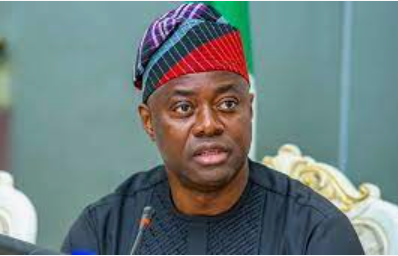
Oyo State Governor, Seyi Makinde, on Monday, set up a 14-man committee for the coronation and presentation of staff of office to the new Olubadan of Ibadanland, Oba Owolabi Olakulehin.


The committee is headed by the state Commissioner for Local Government and Chieftaincy Matters, Ademola Ojo.

A statement by the state Commissioner for Information, Dotun Oyelade, in Ibadan, the state capital, noted that other cabinet members in the committee are the Commissioner for Culture and Tourism, Wasiu Olatunbosun, Commissioner for Women Affairs and Social Inclusion, Toyin Balogun.

The statement partly reads, “The coronation committee also include the son of the Olubadan-designate, Folaseke Olakulehin, Onikepo Akande, Oba Abiodun Kola-Daisi, Oba Lateef Adebimpe, former state Deputy Governor, Hazeem Gbolarumi, Toye Arulogun, Bishop Ademola Moradeyo, retired CP Sunday Odukoya, Mogaji Abduljeleel Adanla and Senior Special Assistant to the Governor on Local Government and Chieftaincy Matters, Ramota Agberemi-Dabo.”

The According reports that the Olubadan throne became vacant after the demise of the 42nd Olubadan, Oba Lekan Balogun, in March 2024 after two years on the throne.

It will also be recalled that the governor had approved the nomination by the Olubadan-In-Council of Oba Olakulehin as the 43rd Olubadan of Ibadanland and subsequently fixed July 12 for the coronation and presentation of the staff of office.

All rights reserved. This material, and other digital content on this website, may not be reproduced, published, broadcast, rewritten or redistributed in whole or in part without prior express written permission from According.

Contact: [email protected]

FCT: Wike fumes over allocation of land meant for bus terminal to politician

0

The Minister of the Federal Capital Territory, FCT, Nyesom Wike, on Monday fumed over the allocation of land meant for a bus terminal in the Central Business District, Abuja.
Wike, who made the complaint at the inauguration of the construction of Mabushi Bus Terminal, Phase I, in Abuja, described the action as a gross distortion of the Abuja Master Plan.
He explained that the FCT Administration decided to build three terminals, one each in the Central Business District, Mabushi and Kugbo, to ensure a secure and convenient travel experience for commuters in the territory.
He, however, said that the land designated for the bus terminal in the Central Business District, where a train track was expected to pass through, had been allocated to somebody.
“When we went there to start preparation for the inauguration project last Tuesday, I received a text that I had taken somebody’s land, and I was surprised.
“In fact, in that text message, the person said, ‘after his sacrifices and inputs to the party, is this what he will suffer?”.
“When I enquired, we found out that the place has been given out and Certificate of Occupancy (C of O) had been signed, even consent judgement has been entered between FCTA and the person,” he said.
He explained that he directed that the Mabushi location should be used for the inauguration of the terminal project, pending when the issue would be resolved.
The minister noted that leadership was all about taking decisions, noting that in taking decisions, not everybody would be happy, but a decision must be taken.
“This is just to let people know some of the things we face; how the Master Plan of the FCT had been distorted.
“When you want to make a decision, so many people will be angry and when you are complaining, they won’t come with sincere facts; they will come with distorted facts,” he said.
The minister added that Abuja was supposed to be one of the best cities in the world but lacked the necessary infrastructure to be a first-class city.
He particularly pointed out that a city like Abuja does not have bus and taxi terminals, thereby forcing people to park and board vehicles on the road, and taxis all over the place.
This, according to him, is contributing to the level of insecurity in the territory, including the proliferation of “one chance” criminal elements.
He explained that the construction of the bus and taxi terminals was part of efforts to reduce the level of insecurity under the Renewed Hope Agenda of President Bola Tinubu.
“To reduce insecurity, we made a proposal to the National Assembly explaining that part of the security problem we are facing is because we have not been able to know who the people operating taxis and buses in FCT are and where they are loading from.
“One of the things that people don’t understand about the Renewed Hope Agenda, is that it is not just about human capital development; it is also about empowerment of our people.” he said.
FCT: Wike fumes over allocation of land meant for bus terminal to politician

FG, Oyo distribute food items as monarch laments insecurity 

0

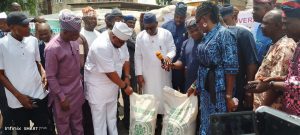
The Federal Government in conjunction with the Oyo State Government on Monday, distributed assorted commodities from the National Strategic Reserve to vulnerable persons in the state.

Also, the Ekarun Olubadan of Ibadanland, Oba Hamidu Ajibade has decried the rampant kidnapping and killing of farmers just as he called on the federal and state governments to find solutions to the issues of insecurity in the state, especially in the Oke-Ogun region.

The state governor, Seyi Makinde, who received the commodities at the Ministry of Local Government and Chieftaincy Affairs, Agodi Secretariat in Ibadan, the state capital warned the 33 Local Government chairmen in the state not to share the commodities among their political class.

Makinde, represented by his Deputy, Bayo Lawal, reminded them that security operatives, especially the Economic and Financial Crime Commission would monitor the distribution.

Lawal said, “This distribution would have come before now, you know the project is directly under my office but I intentionally delayed it by advising His Excellency, Governor Makinde.

“Now that you have been elected, you are now the chairmen of local governments, I want to warn you on behalf of the governor not to share it among yourselves or the political class.”

He further explained that the state government also released funds for the project, and urged them to distribute it to the appropriate people.

Earlier, the Director-General of the National Emergency Management Agency, Zubaida Umar, represented by the Zonal Director, South-West, Steven Adewale, recalled that one of President Tinubu’s promises was to reduce the impact of the current economic downturn being experienced in Nigeria.

Adewale said, “Mr President approved the release of 42,000MT of the assorted food commodities from the National Strategic Reserve under the custody of the Federal Ministry of Agriculture and Food Security. The assorted food commodities include maize, millet, sorghum and garri.

“Please note that membership of the committee in each Local Government is made up of the Chairman of the LGA, state Emergency Management Agency, a traditional ruler, Department of State Service, Nigeria Police Force, Nigerian Security and Civil Defence Corps, Faith-Based organisations, Nigerian Union of Employees, Nigerian Red Cross Society, Women Associations, Persons with Disability Group, Youth Associations, Principals of Boarding Schools, Civil Society Organisations and Media

“Based on the directives of Mr President, 20 % of the food items due for each Local Government Area should be given to religious organisations (JNI & CAN) and three per cent to be given to the boarding schools in the councils.”

Also speaking, the Ekarun Olubadan of Ibadanland, Oba Hamidu Ajibade urged both the federal and state governments to find solutions to the issues of insecurity in the state, especially in the Oke-Ogun region, lamenting that kidnapping and killing of farmers were rampant.

“I want to use this occasion to appeal to the Federal Government through our dear Governor, Makinde to help us find lasting solutions to the insecurity in this state, especially in the Oke-Ogun area. Our people are no longer going to the farms for fear of being killed or kidnapped.

“We need security in this state. Please, it is getting out of hand. We need to go back to farming. We need tractors, let’s go back to mechanised farming. We Obas are discussing this issue of insecurity on a daily basis. Your Excellency, help us to pass this message to President Tinubu that people are suffering.” Ajibade submitted.

Dignitaries at the ceremony were members of the Olubadan-In-Council, Oba Tajudeen Ajibola; Oba Gbadamosi Adebimpe; Oba Hamidu Ajibade; Oba Isioye Dada; the state’s former Deputy Governor, Hazeem Gbolarumi; the Okere of Saki, Oba Khalid Olabisi; the Onpetu of Ijeruland, Oba Sunday Olagbami; the state Chief Judge, Justice Iyabo Yerima; the state Head of Service, Olubunmi Oni; the Commissioner for Local Government and Chieftaincy Affairs, Ademola Ojo and a host of others.


FG sets advisory board, ministerial taskforce on malaria elimination

0

The Federal Government has established an advisory board on malaria elimination and a ministerial task force on malaria elimination in Nigeria.

This was disclosed in a press statement signed by Tashikalmah Hallah, the Senior Adviser, Media and External Relations to the Coordinating Minister of Health and Social Welfare, Muhammed Pate on Monday.

The advisory board and task force are to accelerate progress towards malaria elimination in the country.

Malaria—a life-threatening disease caused by parasites transmitted to humans through the bites of infected female Anopheles mosquitoes—occurs regularly and is widespread across Nigeria.

The World Health Organisation estimates that Nigeria had nearly 67 million cases in 2022 accounting for 27 percent of the global malaria burden. five. Also in 2022, Nigeria accounted for 31 per cent of global deaths and 38 per cent of global deaths in children under the age of five.

While inaugurating the advisory board and ministerial task force, Pate explained that malaria poses a significant burden on Nigerians in terms of mortality, morbidity, loss of work hours, out-of-pocket expenses, and government investments in treatments and interventions.

The minister emphasised that despite being preventable and treatable, malaria continues to be a major challenge for the country.

“Therefore, we need a paradigm shift from the standard approach to a more proactive and result-oriented method of defeating this disease.

“On this premise, we invited academics, malaria programme experts, development partners, private sectors, civil societies, business enthusiasts, policymakers as well as the political class to a roundtable discussion to rethink the country’s approaches and strategic views on malaria, which culminated to the setting up of the Advisory for Malaria Elimination in Nigeria, among other things agendas, and the Ministerial Task Force on Malaria in Nigeria,” he noted.

The Advisory on Malaria Elimination in Nigeria is chaired by Emeritus Rose Leke of the University of Yaoundé, Cameroun.

Other members included Prof Dyann Wirth of the Harvard School of Public Health, Dr Soji Adeyi, President of Resilience Health System, Prof Ibrahim Abubakar of the University College, London, and Prof Peter Piot of the London School of Hygiene and Tropical Medicine.

“They will offer evidence-based advisory services and meet regularly to review programme evidence and provide guidance on aligning with best practices for malaria elimination. They will also collaborate with the Coordinating Minister of Health and Social Welfare, and the Minister of State for Health and Social Welfare to review implementation when necessary. The team will meet every twice in a year,” Pate added.

The Ministerial Task Force, Pate explained that it will consist of stakeholders from various sectors who have extensive knowledge of malaria implementation in Nigeria and are based in Nigeria.

“They will ensure that the advice and recommendations from the AMEN are carefully considered, analysed, and implemented. The task force will collaborate with the Federal Ministry of Health, development partners, donor agencies, and the AMEN as needed.

“The task force will contribute to the overall goal of the National Malaria Elimination Programme and work to reduce the incidence of malaria. It will also aim to improve the impact of malaria interventions through coordinated efforts in prevention, diagnosis, treatment, and awareness creation,” he stated.

The Ministerial Taskforce is co-chaired by Pate and the Minister of State for Health and Social Welfare, Dr Tunji Alausa while the Chairman of the Malaria Technical Working Group in Nigeria will serve as the Vice Chairman.

Other members of the force are the Permanent Secretary, Director of Public Health, Representatives of WHO, Secretary, Country Coordinating Mechanism, Global Fund, Representatives of the Civil Society Organizations Secretary, Pharmaceutical Manufacturers Group of Manufacturers Association of Nigeria, Strategic Adviser to the Ministers of Health on Malaria, Secretary of the Governors’ Forum and the Technical Adviser to the Coordinating Minister on African Traditional Medicine.

The National Coordinator of the National Malaria Elimination Programme serves as the Secretary.

The team will meet every six to eight weeks and other scheduled meetings.

Pate, however, noted that the membership will be reviewed biennially to achieve optimum results.

Ethiopian Airlines says Nigeria no longer interested in airline venture

0

Ethiopian Airlines has announced that the Nigerian government is no longer interested in partnering in establishing the proposed Nigeria Air project.

The Airlines’ Group Chief Executive Officer, Mesfin Tasew, made this known over the weekend in Dubai, the United Arab Emirates, according to Ethiopian Tribune, a major Ethiopian media outlet.

“The Nigerian government has lost interest in partnering with a foreign airline,” Tasew was quoted as saying.

This announcement by Ethiopian Airlines comes barely two months after the Federal Government indefinitely suspended the Nigeria Air project.

The Minister of Aviation and Aerospace Development, Festus Keyamo, had on May 27, announced the indefinite suspension of the Nigeria Air project during the ministerial briefing marking the first year of President Bola Tinubu’s administration.

Keyamo had previously criticized the deal with Ethiopian Airlines, saying that the ownership structure of the suspended airline is not beneficial to the country.

The minister added that it would be irresponsible for the Federal Government to allow a foreign entity to monopolize Nigeria’s aviation industry, thereby compromising the growth of local businesses.

In 2023, the Ministry of Aviation, under former Minister Hadi Sirika, unveiled Nigeria Air three days before the end of former President Muhammadu Buhari’s administration.

The development had elicited concerns among stakeholders nationwide over the ownership arrangement which gave Ethiopian Airlines a 49 per cent equity stake.

The Federal Government had a 5 per cent equity, while a consortium of three Nigerian investors had 46 per cent.

Reacting to the deal in June 2023, the House of Representatives asked the Federal Government to suspend the operations of Nigeria Air, describing it as a fraud.

SPECIAL REPORT: How abandoned bridge compounds sufferings of Borno residents

0

After the Boko Haram insurgents destroyed the bridge linking Limankara village in Borno State to Mubi in Adamawa in 2014, the federal government awarded a contract for its reconstruction. Ten years after, IMRAM RIDWAN was on a fact finding mission, and reports on how the damaged bridge now affects the movement of agricultural products and commuting
On a beautiful morning in May 2024, at Limankara village in Gwoza local government area of Borno State, women, men, and children could be seen walking with hoes and cutlasses on their way to their farms.
Bulama Abba, the village head, said, ”it’s a normal thing” to salute the military men standing beside an uncompleted bridge.
But for this reporter, that day was another experience; he was detained by a military man for five hours after giving the ‘salutation’.
“What are you doing in Limankara Village? Who sent you? You are a Boko Haram member; keep quiet, don’t say anything, and you will learn. Thank God I’m in the right mood; I would have killed you, and nobody would know,” the military officer yelled at the reporter.
Limankara village

The Bridge

Mr Abba, 58, explains how the Boko Haram insurgents destroyed the bridge and how it has affected the movement of agricultural products and commuting.
“You see, one of the major problems we are facing here in our community is this uncompleted bridge, which has been the foundation of our problem. This bridge you see there was destroyed by Boko Haram because they don’t want us to transport our agricultural products to other communities, and it has disconnected us from our neighbouring villages. We were very happy when they started work on the bridge, but, unfortunately, the project has lasted for four years now they have not completed the bridge,” he said.
“Farming is our pride; we can’t survive without farming. Our agricultural products are not being transported because we find it difficult to transport, and the attack from the Boko Haram persists,” he added.

The abandoned bridge project

According to the progress report obtained by UDEME at the ministry, on 15th January 2019, the Federal Ministry of Works and Housing approved the rehabilitation of three insurgent-damaged bridges in the North East: Bridge at KM 131.5 Gamboru along Maiduguri-Dikwa-Gamboru, KM 133 Bridge at (Limankara Village), and KM 9 Bridge at Yamaltu-Deba Road, to Messrs SAPPERS ENGINEERING NIG. LTD, at the sum of N813 million.

Subsequently, the 8-month duration for the projects was extended to 23 months to be completed on 13th December 2020.
According to the progress report, the bridges’ repairs were awarded in 2019, and the funds have been released for the reconstruction of the bridges.
Despite that, the people of Limankara village are lamenting over the uncompleted bridge in their community. Other bridges have been completed.
When this reporter visited Limankara village in May, the bridge construction appeared to have been abandoned. There is still much work to be done on the bridge even though it has been covered to the road level. Cars are not allowed to pass over it.
The project was intended to provide easy access to transport agricultural products and people from Limankara to Gwoza, Maiduguri, and Mubi. However, leaving it uncompleted has caused residents and commuters untold hardship.

Reactions

Adamu
Musa Adamu, a 45-year-old farmer, expressed his frustration regarding the delayed completion of the bridge project. He plies the route to Maiduguri once a week. He says the bridge’s poor condition causes him stress and jeopardizes his business.
“You see, there have been instances where I couldn’t travel to Gwoza-Maiduguri from Limankara. I have to wait for days because if heavy rain falls big trucks cannot pass beside the under bridge road, and there will be no movement, everything will stop, most of the time, some farmers with perishable products will be frustrated,” he said.
He adds that the delay in the bridge project is disheartening and drastically affecting his farming business.
“It’s disheartening to witness the negative impact of this project delay on the well-being of our community. The bridge’s condition makes it extremely challenging for the growth of my business; if I don’t sell my farm product, how would I get money to sponsor my children to school?”
Nasiru Babagana, a 28-year-old resident of Limankara, also expressed his disappointment with the government and told UDEME how the unfinished bridge negatively affects his daily life and income.
“It’s been a real challenge. I’m a driver, and I rely on being able to transport agricultural products from Limankara to Maiduguri market. But with the bridge not completed, it’s become almost impossible to drive through the under-road of the bridge in large quantities because of the fear that the lorry might fall. It’s affecting my income and ability to provide for my family,” he said.
Likewise, Falmata Issah, a 50-year-old resident of Gwoza, conveyed her disappointment in the government.
Falmata
 
“You see, I have family in Limankara that I would like to visit, but the bridge has not been completed, and their road is not good; the last time I went there, it was God who saved my life when our car was hit by a big lorry because everybody is (was) eager to pass through the small road. It’s expected of the government to rehabilitate the bridge and save people from fatal accidents,” she said.
Aminat Bukar, a 25-year-old resident, spoke about how people lost their lives due to the uncompleted bridge.
“You know what, there was a time between the early or middle of last year when some farmers were coming from Gwoza to Limankara with their farm products, and a big trailer brake failed and hit their car. All of them died without anybody surviving there; it’s very unfortunate to see people lose their lives in the process of looking for a livelihood,” she said.

Official reaction

When this reporter reached out to Amos Tongman, the Federal Controller of Works in Borno State, via phone, he explained that one of the things facing project execution in Maiduguri is insecurity.
“You will even see some situations whereby contractors will run away from the site and abandon their work. Likewise, inflation stands up against the country now.”
He further noted that the reason for the delay was the contractor’s ”failure to survey accurately and estimate the work that will be carried out.”
“You see, the problem is that, after the commencement of work on the site, there were issues that came up, like the need to increase the length of the bridge, and it was a joint work. But now the project has been awarded to a new consultant to carry out the necessary survey, and a committee has been set up to look into it. Very soon, work will commence from the bridge,” he said.
“Interestingly, the new administration has awarded the rehabilitation and construction of the roads from Mubi in Adamawa through Limankara to Maiduguri; as soon as possible, work will commence on these roads,” he added.
However, all efforts to reach the Managing Director of SAPPERS ENGINEERING NIG. LTD in charge of the project were futile. He did not pick up his calls or respond to messages.
The story was supported with funding from the Centre for Journalism Innovation and Development (CJID)
The post SPECIAL REPORT: How abandoned bridge compounds sufferings of Borno residents appeared first on Latest Nigeria News | Top Stories from TVN.
No helicopter crash in Kaduna – Nigerian Air Force

0

The Nigerian Air Force, NAF, has debunked reports of a helicopter crash in Kaduna on Monday, 1st July 2024.
The Director of Public Relations and Information of the Nigerian Air Force, Air Vice Marshal Edward Gabkwet, in a statement on Monday, said, “Be informed that no helicopter crash occurred. Instead, a NAF Unmanned Aerial Vehicle (UAV) experienced a mishap after take-off for a mission, at a location near Rumji Village and about 15 Km from Base.”
The statement explained that since it is an unmanned vehicle, there were no casualties on board or on ground.
“Preliminary investigation has since commenced to ascertain what may have caused the mishap,” the statement added.
He stressed that Nigerians can be rest assured that the minor setback would not, in anyway, impinge on all ongoing operations.
“It should also be pointed out that the propensity to always rush to press in the name of ‘breaking news’ without a hold of the complete facts should be discouraged.
“This attitude should be discouraged as it negates the principle of developmental journalism, balanced reporting and fairness,” the statement further noted.
The NAF spokesman urged the media to always seek clarification from relevant authorities before reporting issues concerning the military.
No helicopter crash in Kaduna – Nigerian Air Force

Court frees 12 Ajayi Crowther varsity students facing murder charge

0

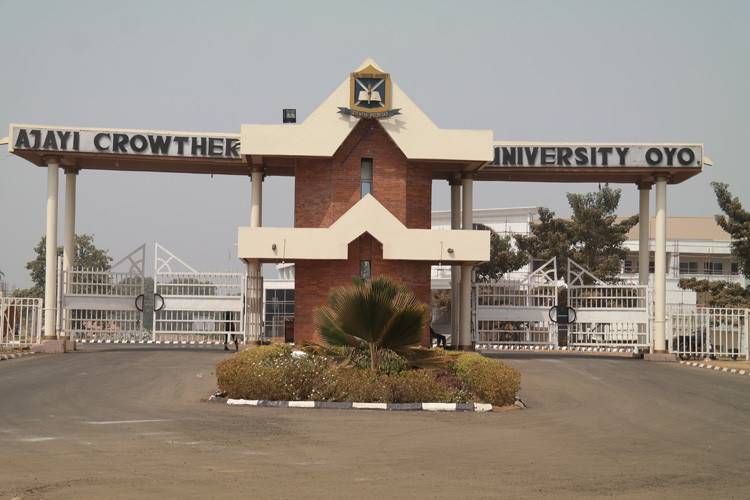
Twelve out of the 25 students of Ajayi Crowther University, Oyo, brought before an Iyaganku Chief Magistrates’ Court, Ibadan, Oyo State capital, for alleged murder were on Monday discharged.

On June 5, 25 students of the institution were arraigned and charged with conspiracy, murder and negligence.

The Chief Magistrate, Mrs Olabisi Ogunkanmi, had ordered the students to be remanded in a correctional facility in Ibadan, pending the outcome of legal advice.

The 12 discharged students are Kehinde Martins, Samuel Okorie, Mustapha Khalid, Yusuf Adeniran, Joseph Areoye, Iyanuoluwa Oyelakin, Obaloluwa Olalekan, Emmanuel Adejumobi, John Daudu, Moses Abiola, Hammad Tijani and David Kolawole.

Ogunkanmi, while discharging them, held that the legal advice was out and indicated that the 12 students should not be charged with any offence as there was no evidence linking any of them with the offences alleged to have been committed.

One of the 25 defendants, who is a security guard at the university, Femi Oladoye, earlier charged with negligence of duty, was also granted bail in the sum of N250,000, with two sureties in like sum.

Ogunkanmi, thereafter, adjourned the case till July 8 for mention.

Earlier, the prosecutor, CSP Funke Fawole, had told the court that the defendants committed the offences on May 24 at about 9 p.m. at the aforementioned university.

Fawole said that the defendants unlawfully caused the death of one 22-year-old Jefry Akro, a student of the university, by beating him with planks and electrical wire.

She said that Oladoye, as a security guard, however, failed to prevent the aggrieved students from beating Akro to death.

She said that the offences contravened Sections 516, 515 and 324 of the Criminal Laws of Oyo State, 2000.

(NAN)

Internet subscriptions reach 164 million as voice users drop by 3%

0

Nigeria’s telecom sector saw a surge in internet subscriptions to 164 million in Q1 2024, while voice users dropped 3 per cent, the National Bureau of Statistics said.

NBS Telecom Data report released on Monday, revealed, that “the total number of active voice subscribers in Q1 2024 was 219,304,281 from the 226,161,713 reported in Q1 2023, indicating a growth rate of –3.03 per cent. On a quarter-on-quarter basis, active voice subscribers fell by 2.41 per cent.

“Also, in Q1 2024, the total number of active internet subscribers stood at 164,368,292 from 157,551,104 reported in Q1 2023, showing an increase of 4.33 per cent on a quarter-on-quarter basis, this grew by 0.32 per cent,” it added.

According to the Bureau, Lagos State led in both categories with 25.96 million active voice subscribers and 18.84 million active internet subscribers.

Ogun and Kano followed closely behind in internet subscriptions, with 9.53 million and 9.07 million, respectively, while Bayelsa recorded the lowest figures in both voice and internet users.

The report noted that MTN solidified its market lead in Q1 2024, commanding the largest share of subscriptions.

The telecom giant recorded 81.8 million voice subscribers and 69.4 million internet users. Globacom followed closely in second place, with 62.2 million voice subscribers and 44.4 million internet users.

Airtel came in third, with 63.4 million voice subscribers and 46.8 million internet users. 9mobile trailed behind, with 11.7 million voice subscribers and 3.3 million internet users.

Mauritania’s President, Ghazouani, wins re-election

0

Mauritania’s incumbent President Mohamed Ould Cheikh El Ghazouani has comfortably won re-election with 56.12 per cent of the vote, the Independent National Electoral Commission (CENI) said Monday.

The victory gives the former army chief a second term as head of the vast desert country, seen as a rock of relative stability in Africa’s volatile Sahel region and set to become a gas producer.

Ghazouani would have faced a second round had he not won more than half the votes in Saturday’s election. As it was, he placed well ahead of his main rival, anti-slavery activist Biram Dah Abeid, who won 22.10 per cent, according to results announced by CENI chief Dah Ould Abdel Jelil.

Abeid said Sunday he would not recognise the results of CENI, which he accused of being manipulated by the government.

Ghazouani’s other main rival, Hamadi Ould Sid’ El Moctar, who heads the Islamist Tewassoul party, came third with 12.78 per cent, according to CENI.

“We did everything we could to prepare the conditions for a good election and we were relatively successful,” said the head of the electoral commission.

Mauritanians began voting Saturday to decide whether to re-elect Ghazouani.

Around 1.9 million registered voters chose between seven candidates vying to lead the West African nation, which has largely withstood a tide of jihadism in the region and is set to become a gas producer.

A 2019 election brought Ghazouani to power as the nation’s ninth president, marking the first transition between two elected presidents since independence from France in 1960 and a series of coups from 1978 to 2008.

While the Sahel has in recent years seen a string of military coups and escalating jihadism, particularly in Mali, Mauritania has not experienced an attack since 2011.

Ghazouani, 67, is widely regarded as the mastermind behind the West African state’s relative security.

– ‘Remain attentive’ –

Saturday’s presidential election had an overall turnout of 55.39 per cent, lower than in 2019.

The results had trickled in since Saturday evening and were published continuously on an official online platform, indicating the outcome.

“We will only recognise our own results, and therefore we will take to the streets” to refuse the electoral commission count, opponent Abeid said.

Some of his supporters demonstrated in the capital Nouakchott late Sunday, burning tyres and disrupting traffic.

At the end of the afternoon, Abeid’s campaign headquarters were surrounded by security forces, according to an AFP journalist. His campaign manager was arrested, a spokesman said.

The police presence in the capital increased significantly later in the evening.

Islamist candidate El Moctar said Saturday that he would “remain attentive” to any breach of voting regulations while calling on his supporters to steer clear of anything that could create public disorder.

Ghazouani has made helping the young a key priority in a country of 4.9 million people, where almost three-quarters are aged under 35.

After a first term hit by the fallout from the COVID-19 pandemic and the war in Ukraine, the incumbent says he hopes to make more reforms thanks to a favourable economic outlook.

Growth should average 4.9 per cent (3.1 per cent per capita) for the period 2024-2026, according to the World Bank, spurred by the launch of gas production in the second half of this year.

Inflation has fallen from a peak of 9.5 per cent in 2022 to 5 per cent in 2023 and should continue to slow to 2.5 per cent in 2024.

AFP