Home Blog Page 1096

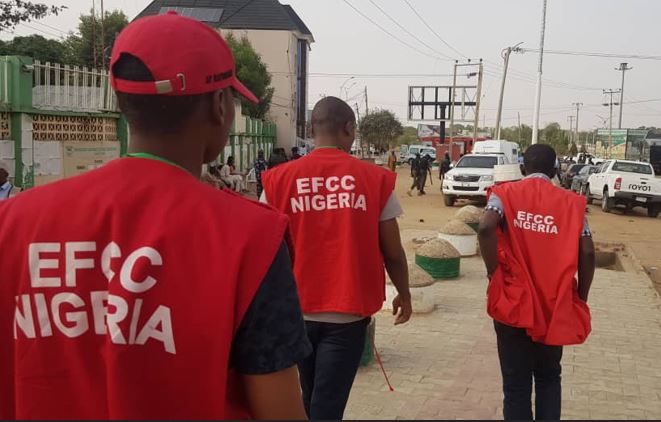
The problem with EFCC

0

In every government or institution, there is a corresponding invisible hand that remote-controls its affairs with immense influence over the decision-making process, predominantly on matters of interest. In most cases, while the head, and perhaps, the kitchen cabinet, may be aware of this imperceptible parallel, it is mostly unknown to other members of the team, who ignorantly, believe that the administration’s decisions are without external interference.

The Economic and Financial Crime Commission is a victim of this invisible hand.  The head of the commission, and possibly, his inner caucus, are not oblivious of its presence and interference but may be unknown to other members of staff.  By conferring the power to appoint the Chairman of the commission on the President, lawmakers have unwittingly created an invisible hand for the EFCC.  The invisible hand is the President, and by extension, the Presidency.

Section 2 (3) of the Economic and Financial Crimes Commission (Establishment) Act, 2004, clearly states that “the chairman and members of the commission, other than ex-officio members, shall be appointed by the President”, and the appointment shall be subject to confirmation by the Senate.

By this Act, the EFCC was delivered as a bond servant from inception, lacking autonomy and courage to function effectively outside the grip and body language rhythm of its master, the President. And since the head of the commission occupies the driver’s seat, obeying all traffic regulations as beamed by the President, liberty is replaced with dependency.

Under this circumstance, what courage can the commission’s chairman muster to prosecute the President’s loyalists without upsetting his ego and sensibilities? This is the burden of the EFCC.  Until the power to appoint the chairman of the commission is removed from the President, the head of EFCC will continue to operate under the dominance and influence of the President, doing his bidding and covertly yielding to his whims and caprices, without the ethical courage to act otherwise.

No matter how committed and sincerely intentional the EFCC chairman may be, his drive for efficiency is weakened by presidential interference.  Even if angels are imported from heaven, or heads of Terrorism and Financial Intelligence, and the Federal Bureau of Investigation of the United States are redeployed to manage the EFCC, their competence would be undermined by the effect of the President.

This finds expression in the crux of allusions to EFCC’s selective war against financial crime and money laundering in the country. The public must recognise that the President is first, and foremost, a politician, who came to power on the ticket of his political party.  He has his loyalists and those who supported the process of his ascension to power.  Besides political affiliates, some of these stalwarts permeate the critical public and private sectors.

As a politician who sets his eyes on consolidation and re-election, the President may want to stand with his loyalists during moments of travails, as part of a reciprocation gesture for sustained support.  By this action, he stifles the power of the commission to effectively go after real and powerful perpetrators of financial crime and money laundering in the country, making the commission’s chairman helpless without the courage to step on toes for fear of being removed from office.  The President also has the power to suspend or remove the chairman of the commission.

Evidently, circumstances that had led to the sack of all past EFCC chairmen could be linked to the invisible hand of the President.  To avoid this route, the EFCC handles high-profile cases deemed to have ties with the President with caution, classifying them as persons with blue blood in their veins.  This is the trouble with the EFCC, and why it is unable to effectively wage war against financial crimes and money laundering.

Most ex-governors, ministers and other political and business bigwigs that have been prosecuted and convicted to date are those with either a weak link or fallen out of favour with the President.  The EFCC now tread with caution without discretionary initiative, constraining itself mainly to petitions received from the public, as against initiating and executing investigations on suspected individuals, and organisations, particularly those that are prone to financial crimes and money laundering.  The ministries, agencies, departments of government, legislature, judiciary and the organised private sector are black spots.

The Nigerian environment is fraught with financial crimes and money laundering, particularly the political space, yet, the EFCC pretends not to know.  Politics is a big industry and a quick source of unearned income where people become multi-millionaires or billionaires overnight just by participating in politics or serving in the executive, legislature or judiciary.  For example, National Assembly members who carry out oversight functions in various MDAs and the private sector, also double as contractors to these same organisations despite the conflict of interest.  The Niger Delta Development Commission is replete with such unethical practices, yet, the EFCC feigns ignorance.

Why is the EFCC not interrogating legislators on the padding of budgets?  Why is the EFCC not putting the spotlight on MDAs’ budgets, matching line items against executed projects?   Why is the EFCC not looking at state governors and how they abuse Federal Account Allocation Committee remittances, including security votes and derivation funds?

Despite admitting that Nigerian banks perpetrate about 70 per cent of financial crimes in the country, why is the EFCC not quizzing banks’ chief executive officers over questionable funds’ inflow, foreign exchange manipulation, and round-tripping?  According to the Financial Institutions Training Centre, financial institutions in Nigeria collectively lost about N159 billion to fraud since 2020, yet, the EFCC has not deemed it necessary to initiate any probe. Why are key operators and players in the Nigerian capital market not being investigated over unlawful manipulation of stock prices?

Besides, since crude oil exports constitute about two-third of our earnings, and over 90 per cent of foreign exchange revenue of the government, why is the EFCC not extending its investigation into crude oil exports to determine a possible mismatch between actual production and revenue receipts?  Also, why are suspected financiers of terrorism and kidnapping not being investigated and prosecuted for money laundering?

Sadly, since the formation of the EFCC, corruption, including financial crimes and money laundering, has been on the upward swing. This is contrary to the intention of the originators, the Financial Action Task Force on Money Laundering, an intergovernmental organisation created by the Group of Seven.

The purpose of the FATF was to use the EFCC to reinforce the global war against money laundering, particularly at a time Nigeria was listed among 23 countries that were not supportive of the war against money laundering.  The response to this challenge led to the establishment of the commission through the EFCC Act, which further expanded the scope to include terrorism financing and, economic and financial crimes in Nigeria.

With a flourishing corruption menace, and by extension, financial crimes in the public and private sectors, the environment is fertile enough to keep the EFCC fully engaged.  But, so far, its efforts are not commensurate with the current depth and density of financial fraud in the country.  Except for those that are endorsed by the invisible hand for thorough investigation, high-profile cases with real negative impact on the economy are either deliberately overlooked or mismanaged.

Prosecuting Yahoo internet fraudsters without powerful links to authorities together with persons involved in spraying of naira notes is inadequate to justify EFCC’s existence.  In the absence of any underpinning motive to use them as a defence mechanism to showcase the commission’s efforts at fighting financial crimes, these categories of offenders should be left for the Nigeria Police Force to handle.

To rid the country of illicit wealth and growing corruption, Nigeria must review the process leading to the appointment and removal of the EFCC chairman in order to insulate the office from the influence and covert control of the President.  This is imperative given the country’s low political culture.

Dr Owhoko is a public policy analyst

Crisis hits Zamfara APC as Marafa announces parallel faction

0

Crisis has befallen the All Progressives Congress in Zamfara State as Senator Kabiru Marafa and his followers regrouped in Kaduna on Sunday night to announce the formation of their faction.

Marafa, who represented the Zamfara Central Senatorial District in the 7th and 8th National Assembly, said he and his group decided to form their own faction in protest to their exclusion in the affairs of the party in Zamfara State.

The APC chieftain while addressing newsmen in Kaduna on Sunday, shortly after the breakout session of a meeting with hundreds of his supporters from Zamfara, insisted that there have been two factions in APC running simultaneously since the Matawalle era.

According to him, the crisis rocking the party in the last six years had been a result of interests from some political heavyweights in the state.

He noted that the crisis led to the APC ruling party then losing major elections in the state, except for President Bola Tinubu, who won Zamfara in the 2023 presidential election.

He also dismissed the insinuation that his faction took the APC to court in 2019 while explaining that the Zamfara APC conducted an illegal primary and still went to the court seeking the legality of the process.

This he stressed was a development which led to his faction joining the group in court before the Supreme Court judgment that awarded the whole state to the opposition People’s Democratic Party came about.

Marafa stated that the decision to re-establish his own faction became necessary because Zamfara State APC could not do without him, thus, the need to assemble his disciples and mobilise for grassroots followership from polling unit to the state level.

He also lamented the spate of insecurity ravaging the state while stressing that the people were under siege as their economy and other activities were grounded as a result of insurgency confronting the state.

Marafa explained further, “The essence of the meeting is just to see ourselves, congratulate ourselves, and commiserate with one another, especially over the unfortunate happenings in Zamfara occasioned by the insecurity that is ravaging the state that is if it has not grounded the state.

“We witnessed the 2019 unprecedented fight between our faction and that of the government of the day then. That was former Governor AbdulAzeez Yari that led the APC to lose the whole of Zamfara State but not like it was erroneously quoted that we caused the problem.

“I was the coordinator of the Tinubu/Shettima campaign organisation in Zamfara to the Glory of God, and we were able to convince people, and Tinubu won Zamfara State. Since that time, I have not discussed nor sat with my supporters, so after one year in office by this government, we deem it necessary, timely, wise, and convenient now to see ourselves and commiserate with people who lost their loved ones.

“Now, shortly after we announced this meeting, suddenly APC came alive in Zamfara State. For three years, there was never a single meeting in Zamfara.’’

“Since they have now called the two factions and said that they are the owners of APC and they have called a meeting that they want everybody, then, we said fine. Since this is what they said, in line with our tradition, we don’t look for trouble, so we are going to re-established our own faction and we are going to do it from polling units to the state level.

“Therefore, we are going to reincarnate our faction which we dissolved in favour of the Yari faction,” he concluded.

Marketers fear high-priced petrol ahead of supply

0

•Crude price will determine cost of Dangote PMS, DAPPMAN, IPMAN warn FG

•Imported crude makes production costs higher, may affect petrol price – Dangote source

As Premium Motor Spirit also known as petrol from the Dangote Petrochemical Refinery hits the local market in two to three weeks, petroleum marketers have expressed the fear that the product’s price may be higher than expected.

They spoke against the backdrop of the 650,000-capacity refinery’s failed attempt to get feedstock locally from the international oil companies.

Dangote Refinery has continued to import crude oil from the United States and other countries at a higher cost. This development has reportedly made its diesel and aviation fuel not very attractive to some local marketers due to price reasons.

The marketers, who spoke with The According on Monday, raised concerns that the cost of importing crude oil would impact the cost of production, a development that may eventually hike the ex-depot price of the Dangote PMS.

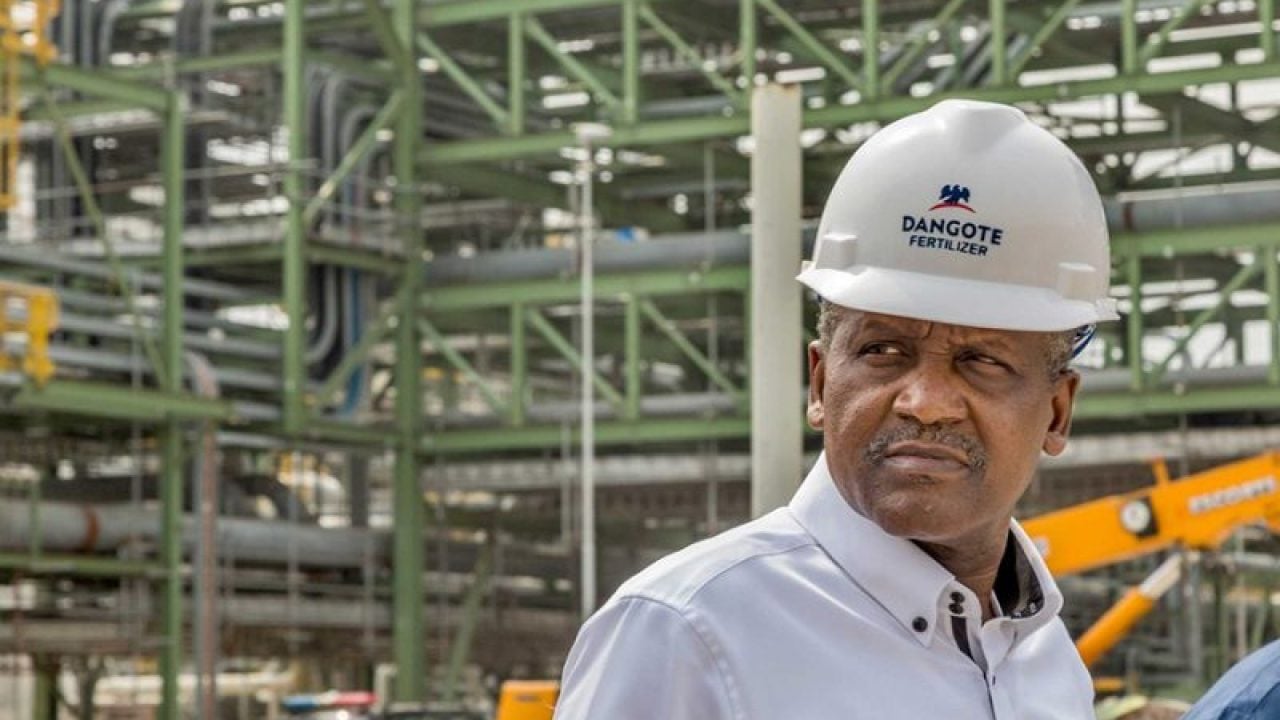
The Chairman of the Dangote Group, Aliko Dangote, has said PMS from the refinery will hit the Nigerian market by the third week of July.

Marketers and Nigerians have been hopeful that the Dangote refinery will cut down the price of PMS which jumped from around N200/litre to over N600/litre after the removal of fuel subsidies by President Bola Tinubu on May 29, 2023.

However, there are fears among stakeholders that Dangote’s lack of access to local crude oil may dash Nigerians’ hope of getting cheaper PMS.

Speaking in an interview with our correspondent, the National Vice President of the Independent Petroleum Marketers Association of Nigeria, Hammed Fashola, said the association was afraid that crude imports would jerk up the price of Dangote petrol.

According to Fashola, the refusal of IOCs to sell crude oil to Dangote will be a big challenge to the $20bn refinery, even as he acknowledged that the IOCs also have other business commitments.

“The non-supply of crude is a big challenge for Dangote. You know Dangote cried out too. The international oil companies too will have their reasons; you know they have their commitments too.  It’s not like they will start feeding Dangote only. People should understand that. I think Dangote should consider that. I know this prompted Dangote to go outside the soil of Nigeria to seek crude oil. You know when he keeps bringing crude oil from the United States, that is another cost. That is another problem we are scared of because it will still boil down to the high cost of petrol, unlike where he can source the crude locally in Nigeria,” Fashola said.

To resolve this, the IPMAN leader asked the Federal Government to assist Dangote with the supply of crude oil. This, he said, would solve the problems Nigerians face with fuel availability and affordability.

“I will advise that the government should assist Dangote in the supply of crude oil. If Dangote can get an adequate supply of crude oil locally, I think the whole problem will be solved somehow. I don’t think there will be any need for anybody to go and bring in petrol again, especially if Dangote is selling at a reasonable price,” he added.

Fashola, however, enjoined Dangote not to monopolise the petroleum if he eventually got the support of the government, saying the refinery must sell PMS at a reasonable price.

“Dangote too should not see it as an advantage to start monopolising the market by raising fuel prices. Dangote has to come with a clean mind by selling at a reasonable price to the public, otherwise, people will still go and start importing if Dangote’s price is high. But if the price is normal and anybody who brings in product from abroad knows that he would run at a loss, nobody will venture into it. Dangote should be sincere, and the government should support him,” he stated.

On pricing, Fashola expressed the hope that the refinery would close the price gap between major and independent marketers, including the Nigerian National Petroleum Company Limited Retail outlets. He also opined that there would be a marginal price reduction, subject to local crude availability.

“I don’t want to start predicting, but we envisage a situation where the price gap would be closed somehow, unlike what is obtainable now when the NNPC sells at N568 in Lagos and independent marketers sell at N650, N700 or more. I believe that the gap will be closed. Even if there is a price differential, it won’t be as wide as it is now.

“We also expect that there may be a little bit of a reduction in the price, but I believe that the price will be unified somehow. I don’t want to mention figures, I like to say something accurate. For now, I cannot mention any price, but I know that there may be a little reduction and there may be a little bit of uniformity in the price. It won’t be like what we have presently,” he noted.

While saying the independent marketers are ready to buy fuel from Dangote in the next two to three weeks, the IPMAN boss called on the management of Dangote refinery to finalise partnership discussions with the association.

Our correspondent recalled that the National President of IPMAN, Abubakar Maigandi, last week accused Dangote of refusing to partner with the association, which he said would help the company in the market.

Speaking on Monday, Fashola asked the company to work with the independent marketers as a body, being the owners of most of the filling stations in Nigeria.

“Yes, we are ready. We are all looking forward to importing fuel from Dangote this month. But at the same time, we want to use this opportunity to call on the management of Dangote to finalise discussions with IPMAN as a body. That will be more beneficial to both parties. Since all these days, they have not finalised the partnership discussions with us.

“We have some of our members who have already registered with Dangote, but we believe that going there as an association will be better for us and Dangote himself because we are the market. We are the ones buying from both MEMAN, DAPPMAN and others. So, it is an advantage, maybe they are not seeing it, but I think by now they have seen it; they should take advantage of the opportunity so that they will just have the whole market in their pocket,” he submitted.

Meanwhile, an official of the Dangote refinery told our correspondent that the President of the Dangote Group, Aliko Dangote, decided to let Nigerians know what he was facing in dealing with the IOCs, whom he had accused of frustrating his plans to make the refinery work.

The official, who did not want to be mentioned because he was not permitted to speak on the matter, said the businessman was aware that Nigerians might accuse him of hiking the price of fuel if they were not aware of how the IOCs were making it difficult for the refinery access crude locally with some crude producers reportedly offering the product as high as $6 above the market price.

To avoid this, the official said the refinery company decided to raise the alarm to inform Nigerians of the happenings in the sector since no businessman can sell below the cost price.

“If Dangote gets crude oil locally, there wouldn’t be any issue. You know Dangote is importing with dollars. So, there is no way Dangote will sell below the cost price. But these traders are importing dirty fuels from Russia at a cheaper price.

“We keep importing crude from the US because the IOCs refuse to sell to us. That’s the problem. If IOCs could be selling to us, we wouldn’t have any crisis; we would be selling at a price everybody would be happy with. Look at what the dollar is saying now; if we are buying crude at a dollar that exchanges for N1,484, how much do you want us to sell? But if we are getting it in Nigeria, the cost will be reduced, and it will be cheaper.

“If the Federal Government allows us to buy in Nigeria, it will be cheaper. What we need to do is just to refine and sell. But in this case, we have to import from the US, so it’s very expensive. Some people are just playing politics with this thing to frustrate the refinery,” the Dangote Group official stated.

Dangote refinery had recently crashed the price of diesel in the country from around N1,600 per litre to N1,000. The price of a litre of diesel currently sells around N1,200/litre.

Dangote recently said Nigeria would no longer import any fuel by the time he begins the sale of PMS in the second or third week of July.

DAPPMAN speaks

Meanwhile, the Secretary of the Depot and Petroleum Products Marketers Association of Nigeria, Olufemi Adewole, said the price of Dangote petrol would be determined by how he gets his crude oil, saying the association would not want to speculate the price.

“It is not for us to speculate. The crude he gets at the time he gets it is what determines the price. We are not going to speculate on what we have not received,” Adewole stated.

Asked if the NNPC price would not affect that of Dangote, the DAPPMAN secretary retorted, “Whoever we get the product from will determine the price. Has Dangote revealed how much he will sell his PMS? Let’s wait until Dangote releases his price. For as long as Dangote has not released any price, we may watch and wait. We buy diesel from him; we buy aviation fuel from him. Those are the ones that are on right now. Anything on PMS, until then we will cross the bridge. Whatever price he gives us, we will buy and sell to Nigerians.”

Like IPMAN, Adewole also declared that the depot owners were ready to lift PMS from the refinery.

“Of course, if Dangote starts PMS loading tomorrow, we will buy from him. We have recently stated that we are ready and willing to cooperate with everybody in the downstream sector. Dangote is the one we will be buying from, forget the fact that we made a press release last week. It is the only refinery that is available for us for now and we are going to buy from them,” he disclosed.

On whether his members have registered to get PMS supply from Dangote, he said, “Has Dangote started giving out the PMS? We are picking ATK from him, we are picking diesel; marketers are picking from him, so there is no problem about that. Once he starts PMS, we fall in line too.”

The Vice President of Oil and Gas at Dangote Industries Limited, Devakumar Edwin, had last week accused international oil companies in the country of plotting to frustrate the survival of the new Dangote refinery.

Edwin said the IOCs were deliberately and willfully frustrating the refinery’s efforts to buy local crude by hiking the cost above the market price by $6, thereby forcing the refinery to import crude from countries as far as the US, with its attendant high costs.

Edwin stated, “The IOCs are deliberately and willfully frustrating our efforts to buy the local crude.

“It seems that the IOCs’ objective is to ensure that our petroleum refinery fails. It is either they are deliberately asking for a ridiculous and humongous premium or they simply state that crude is not available.

“At some point, we paid $6 over and above the market price. This has forced us to reduce our output as well as import crude from countries as far as the US, increasing our cost of production.

“It appears that the objective of the IOCs is to ensure that Nigeria remains a country, which exports crude oil and imports refined petroleum products. They are keen on exporting the raw materials to their home countries, creating employment and wealth for their countries, adding to their Gross Domestic Product (GDP), and dumping the expensive refined products into Nigeria, thus making us to be dependent on imported products.”

Meanwhile, the Dangote oil refinery is increasing diesel exports to West Africa, taking market share from European refiners, according to traders and shipping data, Reuters reported.

Reuters reports that the refinery was producing a lower grade of gasoil than expected as it awaits the restart of units needed to produce cleaner fuels, prompting the plant to seek buyers in neighbouring markets.

Exports of gas oil from the refinery hit nearly 100,000 barrels per day in May, nearly doubling April’s levels, Reuters reported quoting data from Kepler.

The bulk of the exports, it said, went to other West African countries, but one cargo was shipped to Spain.

Preliminary June gasoil volumes have fallen sharply, though overall oil product exports including fuel oil, naphtha and jet fuel remained relatively elevated at 225,000 bpd, the data showed.

Ronaldo misses penalty but Costa saves 3 to send Portugal to Euros Q’final

0

Cristiano Ronaldo missed a penalty in extra time but Portugal successfully reached the quarter-finals of the European Championship on Monday night.
Ronaldo was in tears after his shot was stopped by Jon Oblak in the first half of extra time.
Portugal were held goalless by an impressive Slovenia for 120 minutes, with the game forced into penalty shootout.
But Slovenia failed to convert any of their shots as goalkeeper Diogo Costa saved all three, while Portugal converted theirs, including Ronaldo’s opening shot, to win 3-0.
Read Also: Spain set up Euro quarter-final meeting with hosts Germany
Victory sets up a Euro 2024 quarter-final tie for Portugal against France.
Earlier on Monday, Kylian Mbappe struggled but France successfully advanced to the quarter-finals after a 1-0 win over Belgium.
France had 19 shots against the Belgians but just two were on target and ultimately it was a touch of fortune that saw them through.
It was a late own goal by Jan Vertonghen that sent France into the quarter-finals.
The post Ronaldo misses penalty but Costa saves 3 to send Portugal to Euros Q’final appeared first on Latest Nigeria News | Top Stories from TVN.

NGX: Equities market begins week on losing note as investors lose N20b

0

The equities market started the week on a losing note as investors recorded a loss of N20bn at the end of trading session on Monday, July 1, 2024.
This is even as stocks like ETRANZACT, FIDSON, and CORNERSTONE amongst others depreciated on the trading floor today.
After five hours of trading at the capital market, the equity capitalization decreased to N56,581 trillion from N56,602 trillion posted by the bourse on Friday, June 28, 2024.
The All-Share Index (ASI) decreased to decreased to 100,020.83 from 100,057.49 recorded the previous trading day.
The market breadth was negative as 19 stocks advanced and 28 stocks declined, while 73 stocks remained unchanged in 10,112 deals.
LINKASSURE, AFRIPRUD, and UNITYBNK led other gainers with 10%, 9.76% and 9.74 growth in share price each to close at N1. 10, N9.00, and N1.69 from the previous prices of N1.00, N8.20, and N1.54 per share.
On the flip side, ETRANZACT, FIDSON, and CORNERSTONE led other price decliners as they shed 10%, 9.70%, and 9.52% each to close at N4.50, N13.50, and N1.90 from the initial prices of N5.00, N14.96, and N2.10 per share.
On the volume index, UCAP led trading with 26.638 million shares valued at N737mn in 625 deals followed by LINKASSURE which traded 23.913 million shares in 88 deals valued at N364mn.
AIICO traded 14.213 million shares valued at N314mn in 171 deals.
On the value index UCAP recorded the highest value for the day trading stocks worth N737mn in 625 deals followed by GEREGU which traded equities worth N364mn in 165 deals.
GTCO traded stocks worth N314mn in 384 deals.
By: Babajide Okeowo
The post NGX: Equities market begins week on losing note as investors lose N20b appeared first on Latest Nigeria News | Top Stories from TVN.

Edo guber: We’ll conduct hitch-free election – INEC

0

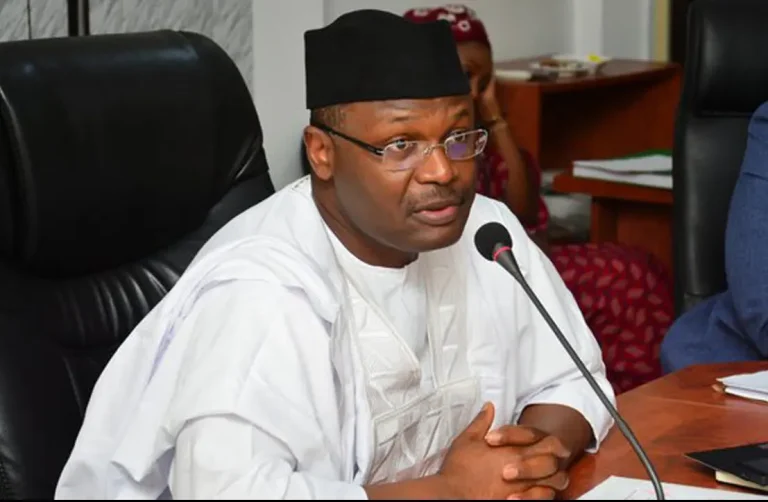
The Independent National Electoral Commission, INEC, has restated its commitment to conducting hitch-free polls in the forthcoming Edo governorship election.
INEC National Chairman, Prof. Mahmood Yakubu, stated this, assuring Nigerians that the commission will continue to push the boundaries of credible and inclusive elections.
While answering questions from newsmen during the formal induction of 10 new Resident Electoral Commissioners, RECs, in Lagos, Yakubu reacted to the flood that affected INEC’s office in Edo State, promising Nigerians that the election would be hitch-free.
“Although we had an unfortunate flooding in our office in Edo State, over 4000 machines were affected, but we deployed our technical staff, and we have already recovered over 3500 machines.
“It seems like it’s an off-cycle election. We will call for additional support from neighbouring states, so in terms of machines, rest assured that we have enough. We are going to recover from Edo, and rest assured that we won’t suffer any encumbrances at all,” he said.
He called on the inducted RECs to focus and acquaint themselves more with the processes and procedures of the Commission.
The 10 RECs inducted include Mr Abubakar Dambo (Kebbi State); Mr Abubakar Ma’aji-Ahmed (Bornu State); Dr. Anugbum Onuoha (Edo State); Mr Ehimeke Shaka-Isha (Akwa Ibom State); Mr Aminu Idris (Kaduna State); Mr. Mohammed Sadiq Abubakar (Kwara State); Mrs Oluwatoyin Babalola (Ondo State); Dr. Olubunmi Omoseyindemi (Ekiti); Alhaji Shehu Wahab (Nasarawa State); and Sir Etekamba Umoren (Delta State).
Edo guber: We’ll conduct hitch-free election – INEC

Banking, trading, manufacturing sectors lead as capital importation surges by 210% in Q1 2024- NBS

0

The banking, trading and manufacturing sectors led the way as Nigeria’s capital importation grew by 210.16 percent in the first quarter (Q1) of 2024.
This is according to the latest Nigeria Capital Importation Q1 2024 report published by the National Bureau of Statistics (NBS) on Monday.
Capital importation is the inflow of funds from abroad to fuel investment, trade, and manufacturing within a country.
According to the report, the banking sector recorded the highest inflow with $2.07 billion, representing 61.24 percent of total capital imported in Q1 2024,” the NBS said.
The trading sector recorded $494.93 million (14.66 percent), while production and manufacturing sector received $191.92 million (5.68 percent).
The report further stated that the total capital imported stood at $3.38 billion in Q1 2024, up from the $1.09 billion recorded in Q4 2023.
On a year-on-year basis, the NBS data show that foreign investment into the country grew by 198.06 percent compared to $1.13 billion in Q1 2023.
“In Q1 2024, total capital importation into Nigeria stood at US$3,376.01 million, higher than US$1,132.65 million recorded in Q1 2023, indicating an increase of 198.06%,” NBS said.
“In comparison to the preceding quarter, capital importation rose by 210.16% from US$1,088.48 million in Q4 2023.”
The bureau said foreign portfolio investments (FPI) ranked top with $2.08 billion, accounting for 61.48 percent, followed by other investments with $1.18 billion, accounting for 34.99 percent.
Foreign direct investment (FDI) recorded the least, with $119.18 million (3.53 percent) of total capital importation in Q1 2024.
“Capital importation during the reference period originated largely from the United Kingdom with US$1,805.83 million, showing 53.49% of the total capital imported,” the bureau said.
“This was followed by Republic of South Africa with US$582.34 million (17.25%) and the Cayman Islands with US$186.21 million (5.52%).”
According to NBS, only Lagos, Abuja and Ekiti states attracted capital importation.
Lagos State remained the top destination with $2.78 billion, accounting for 82.42 percent of the total imported capital, Abuja (FCT) followed with $593.58 million (17.58 percent), and Ekiti State with $12,750 million.
NBS said Stanbic IBTC Bank Plc received the highest capital importation by banks, recording $1.25 billion (37.24 percent) during the reviewed period, Citibank Nigeria Limited got $547.71 million (16.22 percent) and Rand Merchant Bank Plc received $528.73 (15.66 percent).
By: Babajide Okeowo
The post Banking, trading, manufacturing sectors lead as capital importation surges by 210% in Q1 2024- NBS appeared first on Latest Nigeria News | Top Stories from TVN.

Volume of non-bank transactions pose threat to West Africa’s financial stability- Cardoso

0

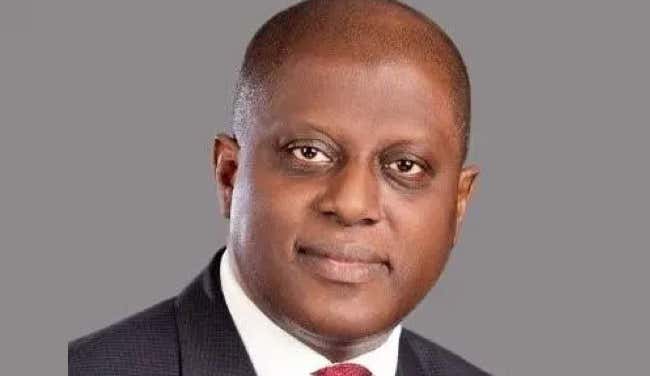
The Governor of the Central Bank of Nigeria (CBN), Olayemi Cardoso has expressed worries over the rising volume of non-bank transactions, which he said, threatens financial stability in West Africa.
Cardoso stated this on Monday at the 10th meeting of the College of Supervisors for Non-Bank Financial Institutions of the West African Monetary Zone.
Cardoso, was represented by the apex bank’s Acting Director of the Other Financial Institutions Department, Abayomi Arogundade.
He said, “We reiterate the importance of monitoring trends, risks and innovations of NBFIs/OFIs (Non-Bank Financial Institutions or Other Financial Institutions) as their increasing transaction volumes pose major financial system stability risk.
“Fintech loans is one of the most commonly reported innovation. While overall this may appear small in relation to the size of credit by DMBs, some jurisdictions globally, have noted a growing trend in the volume of these loans.
“In many cases, fintech credit is provided via electronic platforms that connect lenders to borrowers – in which case the platform takes the role of a financial auxiliary.
“In some cases, however, loans are taken on the balance sheet of these platforms (even if it is short-term), in which case the platforms are akin to new types of financial intermediaries. These entities are typically fintech firms that offer applications, software, and other technologies to streamline mobile and online banking.
“In many jurisdictions, these digital firms have a banking license and are subject to prudential requirements or they may just be regulated as Fintech payment service firms. Innovations linked to crypto or stablecoin assets were also reported by some jurisdictions.”
Non-bank financial firms offer financial services but don’t hold banking licences and therefore can’t accept deposits.
By: Babajide Okeowo
The post Volume of non-bank transactions pose threat to West Africa’s financial stability- Cardoso appeared first on Latest Nigeria News | Top Stories from TVN.

Shettima donates to bomb blast victims in Maiduguri

0

Vice President Kashim Shettima paid a condolence visit to the victims and families who lost their members in the suicide bombings in Gwoza, Borno State, on Saturday.
Hell was let loose on Saturday, as news filtered in that a female detonated bombs in a wedding ceremony and killed over 30 persons and injured many others.
Shettima, while on the condolence visit, described the incident as pathetic.
Speaking with journalists immediately after meeting and commiserating with victims of the attack at the State Specialist Hospital, Maiduguri, the Number Two citizen conveyed the condolences of President Bola Ahmed Tinubu to the Borno State government and the people of Gwoza.
The Vice President later made a personal donation to all the victims of the attacks and condoled with the families of those killed by the multiple explosions, saying the heart of the President is with them.
“The heart of President Bola Ahmed Tinubu is with the victims and he specifically instructed us to come and offer our condolences and commiserations to the victims of this incident.
“We are here with the Director General of NEMA, with the Minister of Agriculture, with the Minister of Transportation and, of course, the Chief Whip of the Senate, a son of the soil from Gwoza, who was here since yesterday (Sunday), and the Acting Governor. They have been working round the clock to provide succour and support to the victims,” Shettima stated.
He said further: “It was a very pathetic scene. Our hearts go out to the victims. So far, we have recorded 32 deaths; 42 of those injured were brought in from Gwoza and about 14 have been discharged, while about 26 are currently receiving attention.”
Shettima donates to bomb blast victims in Maiduguri

Court releases man after 15 years in prison without trial

0

An Ikeja High Court on Monday ordered the release of a man, Kazeen Adeshina, after spending 15 years in a correctional facility without charge or trial.
According to the News Agency of Nigeria, Justice Oyindamola Ogala, while ruling in a fundamental rights enforcement suit No. D/16997MFHR/24 filed by Adeshina’s counsel, Mr Ben Okeke, held that detaining Adeshina in prison without charge or trial was unjustifiable.
Ogala, in her ruling, said the arrest and continued detention of Adeshina in the custody of the Medium Correctional Centre, Kirikiri, Lagos, without a trial, was wrong, illegal and unjustifiable.
She added that it was a gross violation of the applicant’s fundamental human rights as enshrined in the 1999 Constitution of the Federal Republic of Nigeria and the African Charter on Human and Peoples Rights (Ratification Enforcement Act, Cap. 10).
“As aforestated, there is unchallenged fact that this applicant has remained in custody for about 15 years and is yet to be arraigned before a court of competent jurisdiction.
“The presumption of innocence enshrined in our constitution remains sacrosanct and it is indeed a travesty of justice for this to occur with the administration of criminal justice, no matter where the delay emanates from.
“Counsel to the first respondent has exhibited correspondence to the police to transfer the suspect for arraignment since 2003 which has remained unattended to and it appears that this applicant has fallen through the cracks and thus remained in custody for such years without trial.
“The presumption of innocence in our constitution remains sacrosanct and it is clear to this court that no good cause has been exhibited necessitating the continued remand of the applicant and therefore this court finds that the applicant is entitled to the declaratory order sought,” she said.
The judge, thereafter, ordered the immediate and unconditional release of the applicant from the custody of the Kirikiri Medium Correctional Centre.
Court releases man after 15 years in prison without trial