Home Blog Page 106

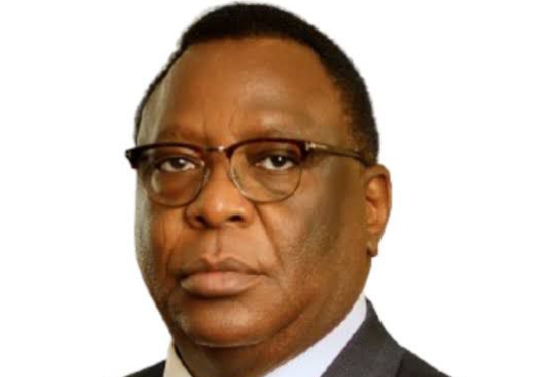
Badaru Denies Resigning Over US, Tinubu Military Threat Allegations

0

Former Minister of Defence, Mohammed Badaru Abubakar, has refuted a viral publication saying he resigned from office because he “could not stand and watch the US and Tinubu government bombing our brothers in the forest”.

In a statement on Wednesday, Badaru described the allegation as inaccurate, spiteful, and aimed to misrepresent his motives for leaving office.

He said that neither he nor any of his authorized representatives ever made such remarks.

He said that the publishing was intended to damage his reputation, cause tension between him and President Bola Tinubu, and spark needless controversy.

Badaru indicated that the grounds for his resignation were duly communicated to the President and had already been made public through appropriate channels.

In advance of the 2027 general elections, he reiterated his dedication to the peace and stability of Nigeria and stated that he still supports the All Progressives Congress, or APC.

The former minister asked the public to dismiss the release, calling it as the product of mischief makers.

General Musa Reveals Comprehensive Plan for Fresh Offensive Against Bandits

0

General Christopher Musa (Rtd), the designated Minister of Defence, has promised to implement a zero-tolerance stance on terrorism and banditry as soon as he takes office.

It was stated that the former general spoke during his senatorial screening in Abuja on Wednesday.

Musa promised Senators that he will deploy robust and decisive tactics to face the country’s security issues.

The previous Chief of Defence Staff underscored that his leadership will not hesitate to employ the full force of the armed forces against criminal elements destabilising communities.

He remarked, “There will be zero policy on anything banditry or terrorism under my watch. We are going to go out. I will make sure that the armed forces will go out fully because security is localised.”

It was claimed that Musa is now being vetted by the Nigeria Senate ahead of his confirmation.

Musa’s nomination came a day after the ex-Minister of Defence, Abubakar Badaru, offered his resignation.

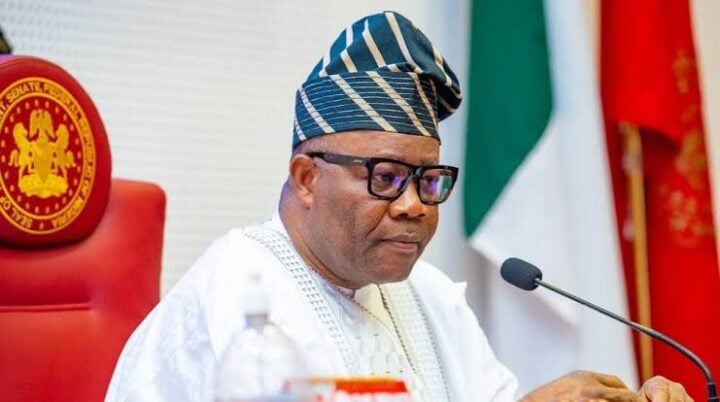
Tinubu, in a letter addressed to the President of the Senate, Senator Godswill Akpabio, on Tuesday, requested the senators to consider the former CDS’ candidacy.

The correspondence was read by the President of the Senate, Godswill Akpabio, during plenary.

$35m NCDMB Fraud Case: Sylva Allegedly Directed $13.45m Payment, Court Hears

0

A witness for the Economic and Financial Crimes Commission (EFCC) told a Federal High Court in Abuja on Tuesday that Timipre Sylva, the former Minister of State for Petroleum Resources, verbally instructed him to pay $13.45 million, which is a portion of the money needed to construct a 2000 bpd refinery on Brass Island in Bayelsa State.

The assertion was made by the witness, Mr. Isaac Yalah, a former Director of the Nigerian Content Development and Monitoring Board (NCDMB), during his testimony in the alleged fraud trial of Dr. Akintoye Akindele, an oil billionaire.

Recall that last month, the commission declared Sylva wanted in relation to an alleged case of conspiracy and dishonest conversion of $14,859,257, which was a portion of money given to Atlantic International Refinery and Petrochemical Limited for the construction of a refinery by the Nigerian Content Development and Monitoring Board (NCDMB).

A statement by the Spokesman of the EFCC, Mr Dele Oyewale, had said that a warrant for the arrest of the former Minister was secured on November 6, 2025, from a Federal High Court sitting in Lagos.

The EFCC is prosecuting Akindele and two entities linked to him, over alleged cooperation in the conversion of the sum of $35 million dollars belonging to the NCDMB.

According to the charge, the said sums were allegedly converted from the money paid by the NCDMB Capacity Development Intervention Company Ltd to Atlantic International Refinery and Petrochemical Limited as investment in the establishment of a modular refinery, a jetty amongst others in Brass, Bayelsa State.

However, the witness who claimed to be the Director of Finance and Personnel for six and half years, before he was resigned as Director of Planning, Research and Statistics, informed the court that the project embarked by the NCDMB in conjunction with Atlantic International Refinery and Petrochemical Ltd, remains abandoned till date despite the payment of $35 million being the total cost of the project.

Yalah, the 4th Prosecution Witness (PW4), described how Akindele’s application for the construction of the modular refinery cleared all four “decision gates” of the NCDMB, resulting in the approval of the sum of $35 million for the project, under the direction of EFCC attorney E. E. Iheanacho, SAN.

“The board received an excerpt from the Governing Council after the proposal was adopted. highlight of the extract included that the NCDMB invest $35 million to acquire 40% stake in the Atlantic International Refinery and Petrochemical Ltd”, he said.

He claimed further that NCDMB was expected to offer two delegates in the board and they were also to maintain a joint project account to warehouse the $35 million.

Yalah told the court that himself and the former Executive Secretary were nominated as representatives of the NCDMB to the board of Atlantic International Refinery and Petrochemical Ltd.

“In addition, myself and the 1st defendant were made co-signatories to the Project Account”, he claimed, adding that the project account was formed in the name of Atlantic International Refinery and Petrochemical Ltd with Zenith Bank Plc.

The witness told the court that the first defendant sent NCDMB a distribution schedule with six milestones in December 2020 after receiving the monies in the project account.

“The sum of $21.55 million covering milestone 1 and 2 were paid into the Operation Account of Atlantic International Refinery and Petrochemical Ltd with Zenith Bank. The remaining $13.45 million was moved from the project account to Atlantic International Refinery and Petrochemical Ltd.’s operation account on January 29, 2021.

“The second tranche of payment accounts for milestones 3-6, the payment was made on the instruction of the then Minister of State for Petroleum Resources and the instruction was given to me verbally. The Minister of State for Petroleum Resources then was Timipre Sylva. He was the chairman of the Governing Council of the NCDMB”, the witness stated.

When questioned if there was any report submitted to the NCDMB stating milestone 1 and 2 were executed, the witness stated in the negative.

Additionally, he said that there was no official report detailing how the $21.5 million was spent. “However in our board meetings of Atlantic International Refinery and Petrochemical Ltd evidence of work done and services was based on the initial disbursement were presented. This includes paying for the power system (generator), data center, and some advance payment for the refinery, as well as continuing cite removal and sand-filling, renovating the health center at Brass Island, renovating the water system in Brass, and being the community where the project was being completed, he clarified.

While noted that the project was meant to be completed within 24 months, the witness added, “this project which the NCDMB paid $35 million has not been completed up till now. The project today as it stands is abandoned.

“I am not aware of any request for variation in terms of cost of materials, other than it been discussed at the Atlantic International Refinery and Petrochemical Ltd board meetings”, he stated.

He also claimed not to be aware of any work done in respect of milestones 3 – 6.

“I was only a signatory to the project account of Atlantic International Refinery and Petrochemical Ltd, I was not a signatory to the operation account. The 1st defendant and his management team were the signatories to the operation account”, witness added.

Following the conclusion of the evidence, trial judge Justice Ekerete Akpan postponed the hearing to December 3 so that the defendants’ attorneys may cross-examine the witness.

Along with two other people, Akindele was charged with four counts of keeping and consuming a significant portion of the NCDMB’s finances while being aware that they came from illegal activity.

The two additional defendants in the suit marked: FHC/ ABJ/ CR/ 641/2024, are Platform Capital Investment Partners Ltd and Duport Midstream Company Ltd.

But in order to thoroughly prepare for his trial, he entered a not guilty plea and was granted bail.

His arraignment occurred following a petition by a former member of the Bayelsa State House of Assembly, Hon. Isreal Sunny Goli.

The lawmaker had last year petitioned the EFCC over the disbursement of funds for the Brass Fertilizer and Petrochemical Company Ltd, Atlantic International Refinery and Petrochemical Limited and the Brass Petroleum Product Terminal Limited under the immediate Executive Secretary of the NCDMB, Kiyesi Simbi Wabote.

According to him, the NCDMB secretary had informed them that the sum of $30 million for the project have been paid in full, unfortunately nothing substantial was done at the project site.

Meanwhile, the EFCC last month revised the allegation against the defendants from four to six.

PDP Disowns Faction Urging Plateau Gov Mutfwang’s Defection to APC

0

The Plateau State branch of the Peoples Democratic Party (PDP) has distanced itself from a group that conducted a demonstration encouraging Governor Caleb Mutfwang to leave the PDP and migrate to the All Progressives Congress (APC).

The party’s state publicity secretary, Hon., made a statement late on Tuesday. The group, commanded by Hon. Felix Choji, was discharged. Christopher Danjem, as an unnamed, unregistered, and “faceless” body with no affiliation to the PDP.

Choji claimed that the APC was funding the group in order to create discord inside the state’s ruling party.

He said: “The group is acting out a script by its sponsors, who are obviously from the APC, which is trying everything possible to distract and destabilize the PDP and derail the good works the Governor is doing in the state.”

The statement said that the group’s press conference held on December 1 at Secretariat Junction, Jos, amounted to deliberate disinformation.

Quoting the party’s position, Choji wrote: “The People’s Democratic Party (PDP), Plateau State chapter, today issues a formal response to the erroneous claims made by a strange and faceless group who pride themselves as the coalition of Peoples Democratic Party support groups… where its coordinator, one Hon. Christopher Danjem, converged with some of his selected friends and associates.”

The PDP reaffirmed that its records did not acknowledge Danjem’s group.

According to the statement: “The People’s Democratic Party, Plateau State Chapter, does not recognize in any way, and also does not have in its database, the said group as one of its registered support platforms or affiliated support groups, as erroneously claimed and presented by Danjem.”

Choji highlighted that the activities of the group do not reflect the position of the party. He said, “We urge all and sundry to disregard such claims and to carefully engage the party through fact-based findings, rather than relying on a mere fabricated and deceitful outing.”

The party further stated that the words linked to Danjem represent only his personal views and those of his associates.

“For the documents, declarations, viewpoints, and actions organized by Hon. Christopher Danjem are purely those of his selected friends and associates, and do not necessarily reflect the real, official views or endorsements of the Peoples Democratic organization, Plateau State Chapter,” the party noted.

While reassuring the people of its stability, the PDP maintained it remained focused on its mandate and fundamental values.

“The People’s Democratic Party, Plateau State Chapter, remains resolute and focused on its mandate and commitment to its party ideology centred on democracy, national cohesion, social justice, and good governance,” the statement said, adding that it would continue to disseminate accurate and transparent information whenever necessary.

‘It Was a Legitimate Call’ – Presidency Justifies Tinubu on Jonathan’s Resignation

0

In the wake of the 2014 crisis, President Bola Tinubu called for the resignation of former President Goodluck Jonathan, and the Presidency has maintained that this demand was valid.

Daniel Bwala, President Tinubu’s Special Advisor on Policy Communication, reportedly revealed this during an interview on Channels Television’s “The Morning Brief” program in response to an earlier statement made by Tinubu in which he requested Jonathan’s resignation due to insecurity and the terrorists’ kidnapping of the Chibok girls.

Tinubu had stated in an earlier post, “Why should any section of this country be under occupation? In any civilized country, Jonathan should resign.”

Speaking on the matter, Bwala stated that while calling Jonathan to quit was OK, calling Tinubu to do so was not.

He claims that, in contrast to Jonathan’s administration, which denied the kidnapping of the Chibok girls, Tinubu has a solution to the present instability.

He stated, “When Asiwaju called for then-President Jonathan to resign, it was a legitimate call. Now, it’s not legitimate to ask for President Tinubu’s resignation.

“Being confronted with a problem is not a problem, but when you lack a solution to solving a problem, then you have a problem. Because in life, there is no place of this globe where there are no security situations.

“I was telling my guys at the BBC that the crime rate in the United States is higher than the crime rate in Nigeria. People in a democratic context have the right to speak what they want, but the next thing is you back up what you said.

“Start the procedure if you think that calling for the president to step down is a valid request; otherwise, the government’s concern about people exercising their right to free speech will be a display of indolence.

“In the days of former President Goodluck Jonathan, they didn’t have any idea of a solution because they were in denial about the Chibok girls’ abduction.”

Nigerians Celebrate General Musa’s Nomination as Defence Minister

0

Yesterday, President Bola Tinubu named General Christopher Musa as the new Defence Minister, pending Senate clearance.

According to reports, Bayo Onanuga, the President’s Special Advisor on Information and Strategy, revealed Musa’s nomination in a statement released on Tuesday afternoon.

The President in a letter to the Senate President Godswill Akpabio expressed confidence in General Musa’s capacity to manage the Ministry of Defence and further develop Nigeria’s security architecture.

Recall that Musa’s nomination came days after Mohammed Badaru Abubakar resigned as Nigeria’s defence minister.

Abubakar had resigned on the grounds of health.

A few hours before to Badaru’s resignation, the former CDS held a private meeting with the President in the Presidential Villa, where he was spotted on Monday.

Reactions have reportedly followed President Tinubu’s selection of him as Defense Minister.

Mutfwang commends Tinubu

In response, Caleb Manasseh Mutfwang, the governor of Plateau State, congratulated the former chief of defense staff on President Bola Tinubu’s selection of him as minister of defense.

In a statement published by his Director of Press and Public Affairs, Gyang Bere, the governor hailed Musa as a qualified and daring officer whose service has contributed greatly to national security.

He added the former CDS displayed professionalism, discipline and devotion in different command posts, including Theatre Commander of Operation Hadin Kai, Commander of the Infantry Corps, and head of Sector 3 of both Operation Lafiya Dole and the Multinational Joint Task Force.

Mutfwang said General Musa’s nomination indicates President Tinubu’s confidence in his abilities to build Nigeria’s defence architecture and lead continuing operations against terrorism, banditry and other security threats.

He expressed optimism that the retired military leader will bring newfound enthusiasm and excellent strategies to the role.

Musa’s nomination timely – Gov Sani

Governor Uba Sani of Kaduna State also praised Musa’s appointment as Minister of Defense.

In a statement posted on his X account, the governor described the appointment as well-deserved, stressing that it displays the president’s faith in Musa’s expertise, honesty and dedication to national service.

Sani said the selection underlines the administration’s commitment to bolstering Nigeria’s security architecture.

He noted that his close working connection with the former Defence Chief provides him certainty that Musa is “a round peg in a round hole.”

The governor stated that the country stands to gain from Musa’s experience and patriotism and encouraged the Senate to expedite the screening and confirmation process.

“General Musa’s nomination evokes deep gratitude for us in Kaduna State,” Governor Sani stated.

Communities that had previously suffered severe security issues were stabilized thanks in large part to his astute advice and unwavering support. The modest but considerable benefits we recorded bore his abiding imprint.”

‘Round peg in round hole’ – Shehu Sani

Shehu Sani, a former senator from Kaduna Central, also praised the nomination.

In a post using his verified X handle on Tuesday, Sani described the appointment of General Musa as a round peg in a round hole.

Sani remarked, “The appointment of former CDS Christopher Musa as Defense Minister is about a round peg in a round hole.”

Adamu Garba told terrorists to “get ready to die.”

Meanwhile, a chieftain of the All Progressives Congress, APC, Adamu Garba, has advised terrorists in the northern portion of the country to either surrender or be prepared to die.

Garba’s warning followed Tinubu’s nomination of Musa as the next Minister of Defence.

The APC leader cautioned that terrorists should be ready to experience the death they desire for others now that Musa has been appointed Minister of Defense.

In a statement via X, Garba wrote: “General C.G Musa, as the Minister of Defence, will restore high morale and high confidence in the rank and file of the military across the country.

“It will further strengthen the confidence level of the Nigerian public in the willingness, readiness, and ability of the Nigerian Government to move forward and eliminate the threat of terrorism in our country.

“General Musa earned this office through merit, competency, and delivery, unlike the usual political consideration dominating ministerial positions. It can be claimed that he forms part of the Military Technocrats within the Tinubu Administration’s cabinet.

“I congratulate President Tinubu for this well-informed decision. I congratulate General C.G Musa for his new role.

“Most importantly, I congratulate Nigerians for standing firm on what is right, regardless of all other primordial considerations.

“Finally, I congratulate the terrorists, for what they wished others for, DEATH, has finally come to them. They should either submit or perish; no middle ground.”

APC Confirms Dates for Upcoming National Caucus and NEC Sessions

0

The National Caucus and National Executive Committee (NEC) meeting agenda has been released by the ruling All Progressives Congress (APC).

It was said that the notice of the meetings was published in a statement on Wednesday signed by its National Secretary, Senator Ajibola Bashiru.

He remarked that: “NOTICE OF APC NATIONAL CAUCUS & NATIONAL EXECUTIVE COMMITTEE (NEC) MEETINGS

“National Caucus Gathering
Date: Monday, 15th December 2025
Time: 6pm

“NEC Meeting Date: Tuesday, 16th December 2025
Time: 12noon

“Both meetings will take place at the Banquet Hall, Presidential Villa, Abuja.”

Senate President Godswill Akpabio, House of Representatives Speaker Tajudeen Abbas, Vice President Kashim Shettima, and President Bola Ahmed Tinubu are all anticipated to be present.

State governors and certain selected federal parliamentarians elected on the platform of the party are also anticipated to attend.

For the Caucus and NEC meeting, Bashiru said: “All members of the National Caucus are by this invitation to take notice of the meeting in accordance with Article 12.5 of the APC constitution.”


IPOB, Marginalization, and the Nigerian State. A Historical and Contemporary Overview of Conflict, Crackdown, and Calls for Self-determination

0

The Indigenous People of Biafra (IPOB) is a freedom movement advocating for the independence of Biafra, a region in southeastern Nigeria primarily inhabited by the Igbo ethnic group. Its formation, ideology, and activities are deeply rooted in historical grievances, ethnic tensions, and the legacy of the Nigerian Civil War (1967–1970). Historical Context: The Roots of IPOB The Nigerian Civil War (1967–1970): Biafran Agitation: The origins of IPOB trace back to the Nigerian Civil War, when the southeastern region, led by Lt. Col. Chukwuemeka Odumegwu Ojukwu, declared the Republic of Biafra in May 1967.

This followed ethnic tensions, particularly after the 1966 anti-Igbo pogroms in northern Nigeria, where thousands of Igbos were killed, prompting calls for Biafra Sovereignty declaration. War and Defeat: The war, driven by ethnic, economic, and political disputes, including control over oil-rich southeastern territories, ended in January 1970 with Biafra’s surrender. The conflict caused an estimated 1–3 million deaths, mostly from starvation due to Nigeria’s blockade, and left deep scars among the Igbo, who felt marginalized in post-war Nigeria. Post-War Marginalization: The Nigerian government’s “no victor, no vanquished” policy promised reconciliation, but Igbos faced systemic exclusion, including limited political representation, economic neglect, and discriminatory policies like the £20 compensation irrespective of your millions in the bank. These grievances fueled resentment, setting the stage for continued demand for Biafra sovereignty.

Pre-IPOB Movements: Ohanaeze Ndigbo (1976): Formed as a socio-cultural organization to represent Igbo interests, Ohanaeze advocated for integration within Nigeria but failed to address radical demands for Biafra agitation, creating space for groups like IPOB. Movement for the Actualization of the Sovereign State of Biafra (MASSOB, 1999): Founded by Ralph Uwazuruike, MASSOB revived Biafran agitation through nonviolent advocacy. However, its arrests and internal splits by the early 2000s weakened its influence, paving the way for IPOB’s emergence. MASSOB’s moderate approach contrasted with IPOB’s more vocal stance.
Formation and Early Years of IPOB

Founding (2012): IPOB was founded in 2012 by Nnamdi Kanu, a British-Nigerian activist, in response to the perceived failures of MASSOB and ongoing Igbo marginalization. Kanu, born in 1967 in Abia State, leveraged his platform as director of Radio Biafra, a London-based station, to advocate for Biafran independence.
Early Activities (2012–2015): Radio Biafra: Kanu used Radio Biafra to spread IPOB’s message, accusing Nigeria of marginalizing Igbos and calling for self-determination. His broadcasts gained traction among Igbo youths and the diaspora, raising IPOB’s profile above every other Freedom agitating movement in Africa.
Protests and Rallies: From 2013, IPOB organized protests in cities like Onitsha, Aba, Owerri, Portharcourt, Abakaliki and Enugu, demanding a referendum. These events drew thousands but faced police crackdowns, with Amnesty International later documenting 150 deaths in 2015–2016 IPOB peaceful protests.
Government Response: The Nigerian government being threatened IPOB’s growing influence arrested Nnamdi Kanu on October 19, 2015, in Lagos by the DSS on charges of sedition and treasonable felony marked the start of escalated tensions

Strongholds of IPOB IPOB’s strongholds are concentrated in Nigeria’s Southeast, where the Igbo ethnic group, the movement’s primary base, predominates. These areas are characterized by significant grassroots support, frequent protests, sit-at-home orders, and activities of the Eastern Security Network

(ESN): The Eastern Security Network (ESN), a security vigilantee group of the Indigenous People of Biafra (IPOB), confronts Fulani herdsmen primarily to protect Igbo farmlands and communities in Nigeria’s Southeast from threats. It is widely reported that Fulani herdsmen, often armed and involved in violent clashes with farmers, engage in activities like crop destruction, kidnapping, and land grabbing, which disrupt agricultural activities and threaten local security. Report indicate ESN’s actions are framed as a defense against these Fulani herdsmen incursions, especially during farming seasons, with orders to drive herdsmen out of Biafra land to safeguard Igbo farmers.

Abia State: Significance: Aba, a commercial center, like every other state is a key IPOB stronghold due to its economic importance and dense Igbo population. Protests and sit-at-home orders are highly effective there, often paralyzing every activity.
Key Events: The Nigerian military invasion of Nnamdi Kanu’s home in Afaraukwu, Umuahia, Abia State, occurred in September 2017, during Operation Python Dance II. Nnamdi Kanu, leader of the Indigenous People of Biafra (IPOB), was targeted due to his agitation advocating for Biafran independence. 28 unarmed people were reportedly killed by Nigerian soldiers.

Enugu State: Significance: Enugu, the historical capital of the Eastern Region, hosts significant IPOB activity, though less intense than Anambra or Imo. Protests in 2015–2016 and sit-at-home compliance demonstrate strong support. Legal Milestone: The 2023 Enugu High Court ruling nullifying IPOB’s proscription as a terrorist group underscored the state’s symbolic importance, though the ruling was later overturned

Ebonyi State: Significance: Ebonyi has a quieter but consistent IPOB presence, with protests and sit-at-home adherence. The state’s relative underdevelopment fuels IPOB’s narrative of marginalization. Academic Perspective: A 2020 study by Ebonyi State University scholars noted IPOB’s growing influence here, driven by federal neglect.

Anambra State: Significance: Anambra, particularly, onitsha is a major commercial hub and a focal point for IPOB activities. The state has seen large-scale protest, such as 2015 protest in onitsha were nine IPOB protesters was murdered in a cold blood by suspected nigeria security agents.

Imo State: Significance: Imo, especially Orlu and Okigwe is a Hotspot for ESN activities at the earlier stage of ESN formation in 2020. It’s very vital to state that ESN was assigned and mandated to operate in farm settlements and forests to protect and defend farmers and locals from the atrocities being committed by fulani herdsmen who kill and maim the locals. Recently, the same armed fulani herdsmen killed hundreds of people in Benue state and Enugu state respectively including Adults, women and children. Yet no single arrest was made by the state or federal government. Most heinous incidents in orlu and okigwe was sponsored Nigeria state via Imo state government who hijacked and sponsored BDF, unknown government, Ebube-agụ etc through individual called Simon Ekpa who is facing trial in Finland in order to blackmail ESN operations. True to this saying “Give a dog a bad name to hang it”.
The Nigerian military now found a ground to attack and kill IPOB members in hundreds. The Imo state led APC government being the same ruling party at the federal level sponsored air bombing and raids in Ubah Agwa/Izombe rainforest (April 2023) and other forested areas killing several ESN operatives, but failed to curb the activities of the deadly fulani terrorists.

IPOB Presence in Other States
Beyond the Southeast, IPOB has varying degrees of presence in states associated with the former Biafran territory or areas with Igbo populations. These regions show sympathy for IPOB’s cause, though operational activities are less intense.

South-South States:
Rivers State: Parts of Rivers, particularly Igweocha (Port Harcourt), have Igbo communities sympathetic to IPOB. IPOB’s presence extends to coastal areas, but activities are limited to sensitization campaigns and occasional protests. Delta State: Igbo-speaking areas like Asaba and Aniocha show support, with IPOB claiming influence in the 2020 UN submission.

Cross River and Akwa Ibom States: These states, part of the former Biafra, have minority ethnic groups (e.g., Efik, Ibibio) with historical Biafran ties. IPOB’s presence is minimal, focusing on advocacy rather than militancy. Bayelsa and Edo States: IPOB claims a presence in these states, particularly among Ijaw and Igbo communities, but activities are sporadic and lack the intensity of Southeast operations.

Middle Belt States: Benue and Kogi States: IPOB has limited presence here, driven by shared grievances against Fulani herdsmen attacks, sympathy among Christian communities, but no significant operational bases exist. Context: The Council on Foreign Relations (2021) noted that conflicts over land and water, once confined to the Middle Belt, are spreading south, amplifying IPOB’s appeal among marginalized groups.
IPOB Mission Statement And Core Values

The Indigenous People of Biafra (IPOB), an agitating movement advocating for the independence of Biafra in southeastern Nigeria, has articulated its mission and core values through various public statements, official documents, and its leadership’s pronouncements, particularly by founder Nnamdi Kanu. While IPOB does not maintain a singular, publicly archived mission statement in the style of corporate entities, its objectives and principles are consistently reflected in its communications, such as Radio Biafra broadcasts, press releases, and submissions to international bodies like the United Nations. Below is a synthesized account of IPOB’s mission statement and core values.

Mission Statement IPOB’s mission is to achieve the restoration of the sovereign state of Biafra through peaceful, nonviolent means, primarily via a United Nations-supervised referendum, to secure self-determination for the Igbo people and other ethnic groups in the former Biafran territory. The movement seeks to address historical and ongoing marginalization, ethnic discrimination, and political exclusion within Nigeria, advocating for the creation of an independent nation where Biafrans can exercise full control over their political, economic, and cultural destiny. Key Elements of the Mission: Self-Determination: Secure the right of Biafrans to decide their political future through a democratic referendum, as guaranteed by the UN Charter and the African Charter on Human and Peoples’ Rights. Peaceful Advocacy: Pursue independence through nonviolent strategies, including protests, legal challenges, international lobbying, and public awareness campaigns. Restoration of Biafra: Re-establish the Republic of Biafra, which existed from 1967 to 1970, encompassing the Southeast and parts of the South-South regions of Nigeria. Protection of Rights: Safeguard the human rights, dignity, and security of Biafrans, addressing grievances like ethnic violence, economic neglect, and political alienation. Global Engagement: Mobilize the Biafran diaspora and international community to support the cause, as seen in the 2020 UN submission documenting abuses. This mission is articulated in IPOB’s public rhetoric, such as Kanu’s Radio Biafra broadcasts and the group’s 2020 letter to the UN Special Rapporteur, which emphasized “the inalienable right to self-determination” and condemned Nigeria’s “systematic persecution” of Biafrans.

Core Values IPOB’s core values reflect its ideological foundation, rooted in Igbo cultural principles, the legacy of the Nigerian Civil War, and a commitment to justice and self-governance. These values guide its operations, member conduct, and public image, as outlined in official statements and inferred from its activities.
Self-Determination and Freedom:

Value: The belief that Biafrans have an inherent right to self-governance and freedom from oppression, as enshrined in international law. Application: IPOB prioritizes a referendum as the democratic path to independence, rejecting forced integration into Nigeria. This is evident in its global campaigns, such as protests in the U.S. and U.K., and legal challenges like the 2023 Enugu High Court case nullifying its proscription. Example: The 2020 UN submission cited Article 20 of the African Charter, asserting Biafrans’ right to “exist as a distinct people” free from domination. Nonviolence and Peace:
Value: A commitment to achieving its goals through peaceful means, condemning bloodshed and prioritizing human life. Application: IPOB’s early activities (2012–2017) focused on protests, sit-at-home orders, and media advocacy via Radio Biafra. Despite the formation of the Eastern Security Network (ESN) in 2020, IPOB’s leadership insists ESN’s role is defensive, protecting communities from external threats like Fulani herdsmen, not offensive warfare. Example: Kanu’s 2015–2017 statements emphasized “no guns, no violence”.

Justice and Accountability:
Value: A demand for justice against historical and ongoing wrongs, including the 1966 anti-Igbo pogroms, the Nigerian Civil War’s atrocities, and post-war marginalization. Application: IPOB seeks accountability through legal avenues, such as the ECOWAS Court’s 2020 ruling awarding Kanu ₦25 million for unlawful detention, and international advocacy documenting abuses, as in the 2020 UN letter listing 12 incidents of state violence. Example: The 2023 Enugu High Court ruling, which declared IPOB’s proscription unconstitutional, aligns with this value, though its reversal by the Abuja Court of Appeal limited its impact. Unity and Solidarity: Value: Fostering unity among Biafrans, including Igbos and other ethnic groups like Ijaw and Efik, to build a cohesive movement. Application: IPOB organizes across the Southeast and parts of the South-South, using cultural symbols like the Biafran flag and Remembrance Day (May 30) to rally support. The diaspora’s role, with coordinators in the U.S., U.K., and Europe, reinforces global solidarity. Example: The 2015–2016 protests in Onitsha and Aba, drawing thousands, showcased regional unity. Rule of Law and Human Rights:

Value: Upholding the rule of law and advocating for human rights, including freedom of expression, association, and protection from state violence. Application: IPOB has pursued legal challenges, such as the 2020 ECOWAS case and 2023 Enugu ruling, and submitted evidence of abuses to the UN, citing violations of the UN Charter and African Charter. It also provides legal support to detained members. Example: The Supreme Court’s 2023 acknowledgment of Kanu’s unlawful rendition from Kenya reflects IPOB’s push for legal recourse, though the trial’s continuation limited its success. Cultural Preservation and Identity:

Value: Preserving Igbo and Biafran cultural heritage, language, and history as a foundation for nationhood. Application: IPOB promotes Igbo traditions through events like Biafra Remembrance Day and media content celebrating pre-colonial Biafran governance. It frames Biafra as a restoration of a historically autonomous identity disrupted by British colonialism and Nigerian amalgamation. Example: Kanu’s Radio Biafra broadcasts often invoke Igbo proverbs and historical narratives, reinforcing cultural pride among supporters. Resilience and Sacrifice:

Value: A commitment to persevere despite persecution, inspired by the sacrifices of the Nigerian Civil War and ongoing struggles. Application: IPOB members, including those in exile (e.g., in the U.S., U.K., or Russia), and supporters enduring arrests or sit-at-home disruptions, embody this value. Kanu’s continued leadership despite detentions (2015, 2021–present) symbolizes resilience. Example: The 2020 formation of ESN, despite IPOB’s proscription, reflects a willingness to confront state forces to protect Biafran communities, though it risks escalating violence.
IPOB Leadership Structure

IPOB’s organizational structure includes a centralized leadership with regional coordinators and grassroots supporters. Key figures and roles include:
Supreme Leader: Nnamdi Kanu, the founder and primary figurehead, leads IPOB’s global and local operations. Despite his arrests in 2015 and 2021, he remains the symbolic and strategic head.

Directorate of State (DOS): A leadership council based outside Nigeria (often in Europe or the U.S.) oversees policy, strategy, and international advocacy.
Spokespersons and Media: Emma Powerful, IPOB’s Media and Publicity Secretary, is a prominent voice issuing statements and coordinating propaganda.
Regional and State Coordinators: IPOB has coordinators in each South-East state and some South-South areas, responsible for organizing protests, sit-at-home orders, and local recruitment. These roles are fluid and often undisclosed to avoid government crackdowns.

Eastern Security Network (ESN): Established in 2020, tasked with protecting Igbo communities from alleged attacks by Fulani herdsmen and security forces. ESN operatives are not formally ranked in public records but operate in cells across the South-East, particularly in rural areas like Orlu (Imo) and Aba (Abia).
Grassroots Members: The bulk of IPOB’s rank-and-file consists of supporters, including youths, traders, and diaspora Igbo, who participate in protests, fundraise, or spread propaganda via Radio Biafra.

Key Developments and Escalation (2015–2020) Kanu’s Arrest and Detention (2015–2017): Kanu’s 2015 arrest sparked widespread protests across the Southeast, with IPOB supporters demanding his release. The Nigerian government accused him of inciting violence via Radio Biafra. Amnesty International’s 2016 report detailed the killing of over 150 peaceful protesters, notably in Nkpor, Anambra, on May 29–30, 2016, during a Biafra Remembrance Day event. In April 2017, the Federal High Court in Abuja granted Kanu bail on health grounds, but stringent conditions limited his activism. The September 2017 military raid on his Umuahia home during Operation Python Dance II forced Kanu to flee Nigeria, intensifying IPOB’s defiance. Proscription as a Terrorist Organization (2017): On September 15, 2017, the Southeast Governors’ Forum, led by David Umahi, proscribed IPOB’s activities, citing threats to regional stability. Days later, on September 18, 2017, the Federal High Court in Abuja declared IPOB a terrorist organization under the Terrorism (Prevention) Act, following a request from the Attorney General. This provided legal backing for intensified military crackdowns, including raids and arrests. IPOB rejected the label, arguing it was a nonviolent movement. The proscription drove many members underground or into exile, mirroring the NADECO experience in the 1990s. Formation of the Eastern Security Network (2020): In December 2020, IPOB established the ESN,, to protect Igbo communities from Fulani herdsmen attacks and security force abuses.

The unlawful Abduction and Rendition of Nnamdi Kanu

The unlawful abduction and rendition of Nnamdi Kanu, leader of the Indigenous People of Biafra (IPOB), from Kenya to Nigeria in June 2021 is a significant and controversial event that raised concerns about human rights violations, international law, and Nigeria’s approach to separatist movements. Background: Nnamdi Kanu, a British-Nigerian activist and IPOB leader, was first arrested in Nigeria in October 2015 on charges of treasonable felony and sedition for advocating Biafran independence. Granted bail in April 2017, he fled Nigeria after a military raid on his home in Umuahia during Operation Python Dance II in September 2017, which IPOB claimed was an assassination attempt. Kanu’s whereabouts were unknown until his rearrest in 2021, sparking speculation about how and where he was apprehended.
Circumstances of the Rendition Date and Location: Kanu was abducted on June 19, 2021, in Kenya and forcibly returned to Nigeria by June 27, 2021. His brother, Kingsley Kanu, and IPOB’s legal team claimed he was “kidnapped” in Nairobi, tortured for eight days, and then renditioned to Nigeria without formal extradition proceedings.

Details of the Operation:

Arrest: According to Kingsley Kanu, Nnamdi was abducted in Kenya by agents acting on behalf of the Nigerian government. Reports suggest he was lured to a meeting in Nairobi, where he was detained by Kenyan authorities or operatives collaborating with Nigeria. Torture Allegations: IPOB and Kanu’s legal team, led by Barrister Aloy Ejimakor, alleged that Kanu was held in a “non-official secret facility” in Kenya, subjected to torture, and denied access to legal representation during his eight-day detention.

Transfer to Nigeria: On June 27, 2021, Kanu was forcibly transported to Nigeria and handed over to the Department of State Services (DSS) in Abuja. Nigeria’s Minister of Information, Lai Mohammed, described the operation as a “classic” intelligence effort involving Nigerian security agencies and international partners, but he did not confirm Kenya’s role.

Legal and Human Rights Implications Violation of International Law: African Charter on Human and Peoples’ Rights: Kanu’s legal team argued that his rendition violated Article 12(4), which prohibits expulsion from a state without a legal decision. The absence of formal extradition proceedings, as required by Kenyan law and international treaties, rendered the transfer unlawful. Nigerian Constitution: Chapter IV of the 1999 Constitution guarantees rights to a fair hearing and freedom from arbitrary detention, both of which were breached by Kanu’s abduction and secret detention, according to his counsel. Extradition Protocols: Nigeria and Kenya are signatories to treaties requiring judicial oversight for extraditions. Kanu’s forcible transfer without court approval in Kenya was labeled “extraordinary rendition,” a serious breach of international law. Judicial Acknowledgment: Court of Appeal Ruling (October 13, 2022): The Court of Appeal in Abuja declared Kanu’s rendition from Kenya unlawful, quashing the terrorism charges against him due to the violation of his fundamental rights. The court ordered his release, stating that the Nigerian government’s actions undermined the legal process. Supreme Court Ruling (December 15, 2023): Nigeria’s Supreme Court acknowledged that Kanu’s rendition was unlawful, confirming violations of his rights under the African Charter and Nigeria’s Extradition Act. Justice E. A. Agim specifically noted that Kanu was “kidnapped, abducted, and extraordinarily renditioned” without legal proceedings. However, the court upheld the continuation of his trial, arguing that the unlawful rendition did not nullify the charges. Federal High Court, Umuahia (Ongoing, 2022–): Kanu’s counsel filed a suit in March 2022 at the Federal High Court in Umuahia, seeking to redress the rendition’s violations, including torture, unlawful detention, and denial of a fair hearing. The case, heard on October 4, 2022, aimed to halt Kanu’s prosecution and restore his pre-rendition status, but no final ruling is documented as of June 2025.

The Nigeria State Human Rights Violations

Nigeria’s military and security agencies have faced significant accusations of human rights violations, particularly against the Indigenous People of Biafra (IPOB), from international organizations like the United Nations, Amnesty International, and others. These indictments focus on extrajudicial killings, arbitrary arrests, torture, and excessive use of force, primarily in the South-East region, where IPOB operates. Below is a detailed account of past and recent allegations, supported by available evidence from international bodies and reports, with a focus on IPOB-related violations and broader patterns of abuse by Nigerian security forces.

Indictments by International Organizations

2019 UN Special Rapporteur Report on Extrajudicial Killings: In September 2019, Agnes Callamard, the UN Special Rapporteur on Extrajudicial, Summary, or Arbitrary Executions, conducted a country visit to Nigeria and highlighted violations against IPOB. Her report noted arbitrary killings of IPOB members by Nigerian security forces, describing a pattern of excessive lethal force and lack of accountability. The report criticized Nigeria’s legal framework, including the Constitution and Police Order 237, for allowing broad use of lethal force without adhering to principles of necessity and proportionality. It also referenced the government’s 2016 acknowledgment of accusations of extrajudicial killings, torture, and arbitrary arrests against IPOB, the Islamic Movement of Nigeria (IMN), and others, with no significant investigations or prosecutions. Callamard’s findings emphasized the militarization of policing, lack of transparency, and failure to investigate allegations, fueling distrust in security agencies. The report specifically flagged the repression of IPOB as part of a broader trend of state violence against separatist groups.

2020 IPOB Submission to the UN: On March 25, 2020, IPOB submitted a letter to Agnes Callamard, documenting 12 incidents of human rights abuses against Biafrans by Nigerian military, police, and security forces. The letter, signed by IPOB leader Nnamdi Kanu, U.S. National Coordinator Dr. Clement Okoro, and 22 U.S. state coordinators, highlighted incidents from indiscriminate arrests to mass executions. A notable case was the alleged killing of up to 150 IPOB supporters by the Nigerian military in May 2016 during a protest in Nkpor, Anambra State. The letter accused the Nigerian government, under President Muhammadu Buhari, of ignoring or sanctioning these abuses, with no mechanism to hold perpetrators accountable. The UN has not issued a formal indictment based on this submission, but the documentation was acknowledged as part of ongoing concerns about Nigeria’s human rights record.

UN Human Rights Committee (2019): The UN Human Rights Committee’s 2019 Concluding Observations on Nigeria criticized the country’s legal provisions allowing excessive force, referencing earlier 2006 findings by the Special Rapporteur on extrajudicial killings. While not exclusively focused on IPOB, the report noted the lack of effective investigations into allegations of state violence, including against separatist groups like IPOB, as a systemic issue.

Amnesty International: 2016 Report on IPOB Killings: Amnesty International’s November 24, 2016, report, titled “Nigeria: ‘Bullets Were Raining Everywhere’: Deadly Repression of Pro-Biafra Activists,” documented the extrajudicial execution of at least 150 peaceful IPOB protesters between August 2015 and May 2016. The report focused on a specific incident on May 29–30, 2016, during a march in Nkpor, Anambra State, where security forces allegedly killed numerous IPOB supporters. Amnesty claimed the Nigerian army acted in self-defense, reporting only five deaths, but evidence, including eyewitness accounts and satellite imagery, supported a higher death toll. The report called for investigations, but as of 2018, Amnesty noted no justice had been served for the victims.
The report accused the Nigerian military of deliberate, excessive force and a lack of accountability, with no investigations into the killings despite international pressure

U.S. State Department (2024-2025): The U.S. State Department’s 2024 human rights report on Nigeria noted the continued detention of Nnamdi Kanu on charges of treason, terrorism, and illegal possession of firearms, which DSS witness after cross examination by Kanu’s legal team failed to provide evidence of these charges in the recent court proceedings at the Federal High Court in Abuja(2025 trial). It highlighted violations during his 2021 arrest and unlawful rendition, with Nigeria’s Supreme Court acknowledging that the DSS violated Kanu’s rights.

Past and Recent Patterns of Violations Extrajudicial Killings: The May 2016 Nkpor massacre, where up to 150 IPOB protesters were allegedly killed, remains a focal point of international criticism. Amnesty’s 2016 report and IPOB’s 2020 UN submission cite this as a deliberate act of repression, with no subsequent investigations.
Excessive Force: Operations like Python Dance II (2017) involved heavy military presence, gunfire, and property destruction, as seen in the raid on Kanu’s Umuahia home. The UN Special Rapporteur criticized the militarization of policing, with IPOB as a key target.

Torture and Incommunicado Detention: Reports indicate IPOB members face torture and lack of access to lawyers, as alleged in the 2025 WAWA trial concerns. While not formally indicted by the UN, these claims echo Amnesty’s findings of systemic abuse. Lack of Accountability: Both the UN and Amnesty have repeatedly noted Nigeria’s failure to investigate or prosecute security personnel. The 2017 Presidential Investigation Panel (PIP) was established to review military compliance with human rights, but no significant outcomes regarding IPOB have been reported.

Key Judgments in Favor of IPOB or Nnamdi Kanu
ECOWAS Court Ruling (July 7, 2020):

Case: Nnamdi Kanu v. Federal Republic of Nigeria Court: Economic Community of West African States (ECOWAS) Community Court of Justice, Abuja Details: Kanu filed a suit against the Nigerian government, alleging human rights violations during his 2015 arrest and detention by the Department of State Services (DSS). He claimed unlawful detention, torture, and infringement of his rights to free expression and movement, citing violations of the African Charter on Human and Peoples’ Rights. The ECOWAS Court ruled that Kanu’s arrest and detention in 2015 were unlawful and arbitrary. The court found that the Nigerian government violated Kanu’s rights under Articles 6 and 12 of the African Charter, which protect against arbitrary detention and ensure freedom of movement. The court awarded Kanu ₦25 million in damages for the violation of his rights and ordered the Nigerian government to ensure such abuses did not recur.

Implications: The ruling was a significant victory, affirming international oversight of Nigeria’s human rights record and validating Kanu’s claims of state persecution. It emboldened IPOB’s narrative of systemic Igbo marginalization. However, Nigeria’s non-compliance with the ruling, as the government did not pay the damages or alter its stance on Kanu, limited its practical impact. Kanu’s 2017 bail and subsequent flight after the Umuahia raid overshadowed the judgment’s enforcement. Limitations: The ECOWAS Court lacks enforcement powers, and Nigeria’s sovereignty allowed it to ignore the ruling. The judgment did not address IPOB’s proscription or broader activities, focusing solely on Kanu’s personal treatment.

Enugu High Court Ruling (March 23, 2023):

Case: Indigenous People of Biafra v. Federal Republic of Nigeria
Court: Enugu State High Court, Enugu

Details: IPOB challenged the 2017 proscription of the group as a terrorist organization, arguing it was unconstitutional and violated their rights to free association and expression under Nigeria’s 1999 Constitution and international law. Justice Anthony Onovo ruled that the proscription was illegal and unconstitutional, as the Nigerian government failed to follow due process. The court noted that IPOB was not given a fair hearing before the Federal High Court in Abuja issued the 2017 proscription order, contravening principles of natural justice.

The court declared the proscription null and void, ordering the government to lift the terrorist designation and pay ₦8 billion in damages to IPOB for violating their rights. Implications: This was a landmark victory for IPOB, challenging the legal basis of the government’s crackdowns. It briefly raised hopes of de-escalation, as the ruling suggested IPOB could operate legally and seek dialogue. The judgment embarrassed the federal government and Southeast governors, who had endorsed the proscription in 2017, exposing procedural flaws in their approach. Limitations: The ruling was overturned by the Abuja Court of Appeal in 2023, which upheld the federal government’s proscription, citing national security concerns and IPOB’s alleged violent activities through the Eastern Security Network (ESN). The appeal court’s decision nullified the Enugu ruling’s practical effects. The ₦8 billion damages were not paid, and the government continued its operations against IPOB, including raids in Imo (2024) and Anambra (2025). The ruling’s impact was thus symbolic rather than transformative.

Federal High Court Bail Grant for Nnamdi Kanu (April 25, 2017):

Case: Federal Republic of Nigeria v. Nnamdi Kanu Court: Federal High Court, Abuja Details: Following Kanu’s arrest in October 2015 on charges of treasonable felony, sedition, and ethnic incitement, he was detained by the DSS for nearly two years. His legal team argued that his detention without trial violated his right to a fair hearing under Section 36 of Nigeria’s 1999 Constitution. Justice Binta Nyako granted Kanu bail on health grounds, citing his deteriorating condition in detention. The bail was set at ₦100 million with stringent conditions, including three sureties (one a serving senator), a ban on public rallies, and surrender of his passport. Implications: The bail was a partial victory, allowing Kanu temporary freedom and highlighting judicial acknowledgment of his unlawful prolonged detention. It galvanized IPOB’s supporters, who saw it as a step toward challenging state repression. The ruling pressured the government to adhere to legal standards, as Kanu’s detention had drawn criticism from Amnesty International and local activists. Limitations: The bail conditions were restrictive, limiting Kanu’s activism. After the September 2017 military raid on his Umuahia home during Operation Python Dance II, Kanu fled Nigeria, violating bail terms, which led to its revocation. This undermined the ruling’s long-term impact. The government’s subsequent actions, including Kanu’s 2021 rearrest, showed limited respect for the court’s leniency.

Supreme Court Acknowledgment of Rights Violation (December 15, 2023):

Case: Federal Republic of Nigeria v. Nnamdi Kanu Court: Supreme Court of Nigeria Details: Kanu’s legal team challenged his 2021 rearrest and extradition from Kenya, alleging violations of his rights to a fair trial and freedom from unlawful rendition. They argued that the DSS’s actions, including intercepting him abroad, breached international law and Nigeria’s Extradition Act. The Supreme Court, in a split decision, acknowledged that Kanu’s rendition was unlawful, as it bypassed legal extradition processes. The court noted violations of his rights under international treaties Nigeria is party to, such as the African Charter. However, the court upheld the continuation of Kanu’s trial on terrorism charges, ruling that the unlawful rendition did not nullify the charges, as the government had sufficient evidence to proceed. Implications: The acknowledgment of unlawful rendition was a significant moral victory for Kanu and IPOB, reinforcing claims of state persecution. It aligned with the U.S. State Department’s 2024 report, which noted rights abuses during Kanu’s arrest. The ruling pressured the government to address procedural irregularities, drawing international attention to Kanu’s case and IPOB’s broader struggle.

Limitations: The decision did not lead to Kanu’s release or dismissal of charges, as the court prioritized national security over rights violations. Kanu remained detained, with trials ongoing as of June 2025, limiting the ruling’s practical effect. The government’s non-compliance with calls for Kanu’s release, as urged by some Southeast leaders post-ruling, diminished its impact.

Conclusion

Since the end of the Nigerian Civil War, the Igbo people have faced systemic marginalization, political exclusion, and alleged human rights abuses—issues that fueled the rise of IPOB and its calls for Biafran self-determination. Despite the group’s emphasis on nonviolence and legal advocacy, the Nigerian government’s military responses have been widely criticized for excessive force and rights violations. The contrast between the treatment of IPOB members and the reintegration of ‘repentant’ Boko Haram insurgents has further deepened perceptions of injustice and ethnic bias. As tensions persist, a peaceful resolution rooted in dialogue, justice, and respect for human rights remains crucial to preventing further unrest and fostering national unity.


Authored by Joe Ubasinachi Eke

Violence Against Christians in Nigeria: US Lawmakers Convene Meeting Today

0

There will be a joint congressional briefing of the United States House Appropriations Committee on Tuesday.

The committee officials will discuss the wave of violence and alleged persecution of Christians in Nigeria.

Congressman Riley Moore of the United States disclosed this in a notification posted on X.

The session will be convened by the House Appropriations Committee Vice Chair and National Security Subcommittee Chairman Mario Díaz-Balart, with colleagues Appropriators as well as members of the Foreign Affairs and Financial Services Committees.

The notification states that the briefing’s goal is “to spotlight the escalating violence and targeted persecution of Christians in Nigeria.”

The roundtable will collect testimony for a thorough report “directed by President Trump on the massacre of Nigerian Christians and the steps Congress can take to support the White House’s efforts to protect vulnerable faith communities worldwide.”

The briefing comes amid heightened US–Nigeria security collaboration.

President Bola Tinubu has already approved Nigeria’s team to the new US–Nigeria Joint Working Group, established to implement security agreements from high-level meetings in Washington led by National Security Adviser Nuhu Ribadu.

Herders-Farmers Conflict: MACBAN Denied Criminal Status by Chairman Ngelzarma

0

National President of the Miyetti Allah Cattle Breeders Association, MACBAN, Baba Othman Ngelzarma, on Tuesday refuted charges that the group is a criminal organization.

Ngelzarma clarified that individuals attempting to classify MACBAN as a terrorist organization are ignorant of the group’s internal operations.

In an interview on Arise Television’s Morning Show, he highlighted that killer herders are not members of MACBAN, underlining that there are other offshoot factions of Miyetti Allah.

He said: “MACBAN does not represent any criminal activities, we are never a criminal group, we are an association that was duly registered in 1986 and was registered by General John Shagaya when he was the Minister of Internal Affairs, a Christian from Plateau State.

“His Eminence, the Sultan of Sokoto is the Chairman BoT of MACBAN, so we never represent any criminal activities in this country and we are never a criminal group.

“Let me make it clear that MACBAN is not the only rearing group in the country, we have a lot them, ranging to about 30 pastoralist groups that all have members, but because MACBAN is well structured and the only Democratic group of pastoralist in the country, every pastoralist identify with it and people think that all pastoralists are members of MACBAN.

Since pastoralism is the only way for the country’s pastoralists to exist, it is necessary to fully comprehend the dynamics of this dilemma before offering any solutions.

“They are not educated on how to monidenize, so they are doing this for the animal to survive.

“Whoever is trying to designate MACBAN as a criminal group does not understand anything about MACBAN. For many years, MACBAN has worked with USAID to find common ground for humanitarian conversation on how to improve production systems and alleviate crises with farmers.

“This year alone, we lost a state chairman in Kwara who was killed in his home, and we lost a chairman in Katsina who was assassinated in his home, taking away his wife and daughter. We lost about eight of our state chairmen to banditry attacks.”