Home Blog Page 104

E-Transmission in Focus: Reform, Retreat, or Compromise Politics?

0

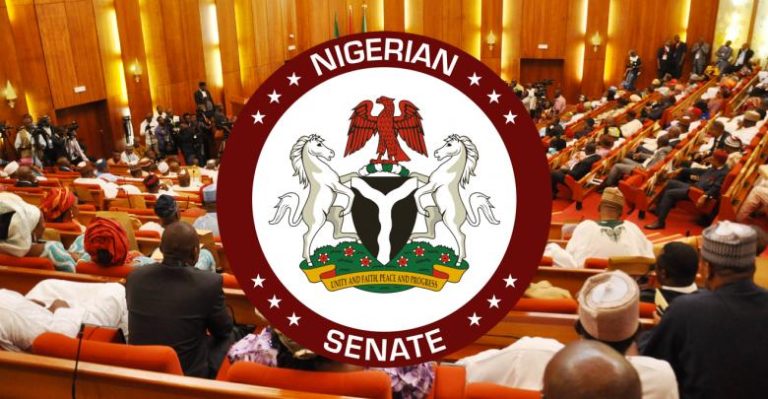
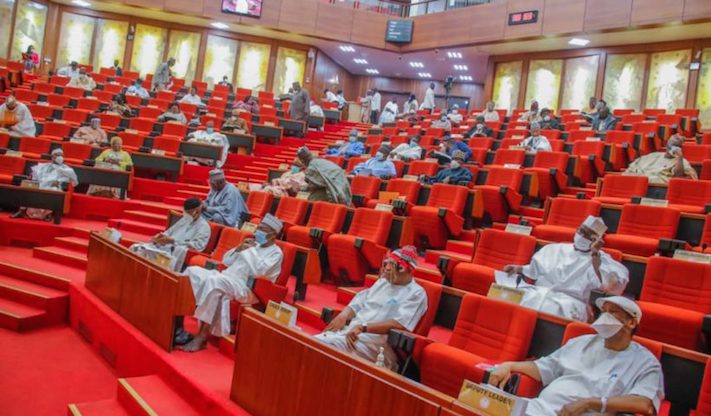
The Senate has largely reversed its prior opposition to the electronic broadcast of election results following weeks of public indignation and persistent civic pressure. In order to allow the electronic transmission of results from polling places to the Result Viewing Portal (IREV) of the Independent National Electoral Commission (INEC), senators revised the Electoral Act on Tuesday. However, there were significant restrictions attached to the concession, which fell well short of the comprehensive transformation that many Nigerians had called for.

Although electronic transmission has been accepted into Nigeria’s voting system, it does so as a guest, welcome but subject to strict oversight.

After votes are counted, election results may be sent online under the amended clause. But legislators added a crucial disclaimer: the physical result sheet, Form EC8A, will be the main source of information in the event that network or internet connectivity fails. Rather than fully embracing electoral transparency, the Senate has chosen a careful, politically calculated compromise by refusing to mandate electronic transmission and keeping manual collation as a backup.

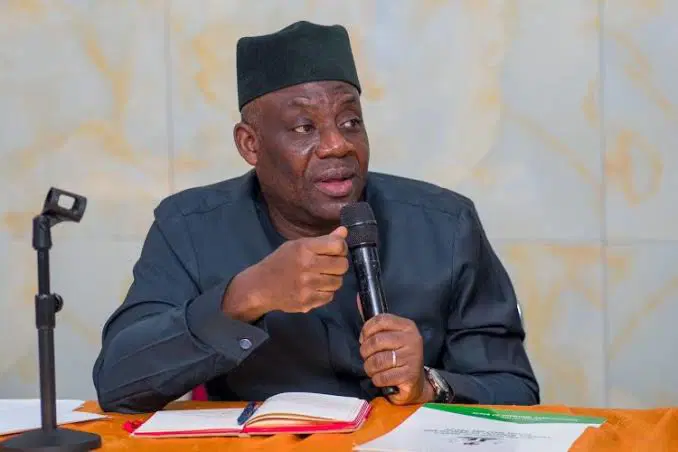
Sen. Tahir Monguno (APC, Borno North), the Senate Chief Whip, moved for an emergency plenary session, which resulted in the amendment. In order to better match the Electoral Act with changing technical realities and public expectations, he contended that the chamber ought to review its previous position. The move was praised by its proponents as striking a practical balance between idealism and viability. But more concerning to critics is a reform that has been slightly watered down to maintain historical vulnerabilities.

Indeed, there was a strong popular outcry after the Senate first rejected mandatory electronic transmission. Pro-democracy groups, media professional associations, and civil society organizations, notably the Nigerian Guild of Editors, cautioned that the ruling might potentially reopen well-known avenues for manipulating results. For many Nigerians, technology is a necessity during elections rather than a luxury; it protects against meddling between polling places and collation centers, which is the most susceptible part of the process.

Thus, the Senate’s reversal seems more like a capitulation than a conversion. From a political perspective, it shows a legislature trying to strike a balance between two opposing forces: the expanding public’s demand for credible elections and the apprehension of long-standing political interests. Human discretion and, thus, political power are curtailed by electronic transmission. That loss of discretion is upsetting to many members of the political class.

The amendment’s changes are significant, but maybe even more significant are the things it protects. The law maintains a procedure that has long been linked to controversy, disagreements, and accusations of manipulation by specifically permitting manual collation to take precedence in situations of “network failure.”

The phrase “network failure” creates ambiguity that is broad enough to include the reform itself in a nation where technological malfunctions and logistical difficulties are frequently mentioned. Disagreements frequently ensue when discretion flourishes.

It is undeniable to any sane observer that Nigeria’s infrastructure is not uniform. Administratively speaking, the clause allows INEC more operational freedom, especially in remote or underdeveloped areas where requiring electronic transmission would not be feasible. In cases where there are real technological difficulties, it protects the electoral authority from charges of non-compliance.

Politically speaking, however, this flexibility is reciprocal. Now, INEC would have to explain why some polling places could transmit information electronically while others couldn’t.

Whether intentional or not, selective application has the potential to erode public confidence, increase suspicion, and open up new legal issues after the election. The amendment may make elections more difficult rather than easier.

More fundamentally, the Senate has maintained the very discretion that reformers aimed to limit by making electronic transmission voluntary rather than required. Disagreements at the polling station are uncommon in hotly contested elections with narrow margins and high stakes. They show up during collation, which is exactly the stage that electronic transmission was intended to protect.

The amendment serves as a political pressure valve in this regard. It calms the populace without radically changing the balance of power throughout the election process. Instead of addressing the more fundamental issue of election credibility, some characterize it as an effort to manage disagreement. This skepticism is reinforced by Nigeria’s reform history, which shows that electoral reforms are frequently presented as advancements while covertly maintaining the status quo.

The amendment is significant, though. For the first time, the legislation clearly recognizes the use of electronic results transmission. That’s important. Legal recognition creates a framework for upcoming improvements. It precludes the claim that electronic transmission is unlawful or unnecessary for Nigeria’s election system.

However, acknowledgment without coercion is not change. As long as electronic transmission is still optional, its effects would be more dependent on political will, which is frequently the most unpredictable factor in Nigerian elections, than on legislative authority. The reform’s credibility will depend on how consistently INEC implements it, how openly it explains deviations, and how resolutely it defies political pressure.

There are equally important legal ramifications. In election law, ambiguity usually travels directly to the courts rather than ending at the polling station. Together with the “network failure” allowance, the amendment’s non-mandatory wording is probably going to be a major point of contention in election petitions. tribunals may be required to decide whether reliance on manual collation was warranted, whether failure to send harmed results, and whether electronic transmission was reasonably achievable in particular locations.

The change could potentially increase post-election disputes rather than decrease them. The Senate’s reversal, however, also highlights a positive development: the growing power of popular pressure in Nigeria’s democratic arena. Lawmakers were compelled to reconsider an unpopular decision due to public outcry, protests, and persistent campaigning. That is a democratic win in and of itself.

The issue is that piecemeal reform frequently delays actual change while giving the appearance of progress. Senators might have reduced political tensions by reaching a settlement without tackling the root cause of the election system’s lack of trust. For those who want reform, the worry is still present and legitimate: half-measures won’t save Nigeria’s elections.

After all, the amendment is a step forward, but it’s a step forward measured in inches rather than steps. It is a reflection of a political system that finds it difficult to balance elite concerns about losing power with public demands for transparency.

The way INEC operationalizes the clause, how courts interpret its ambiguities, and how persistent public pressure continues will determine whether electronic transmission turns into a step toward truly credible elections or just a convenient compromise.

Electronic transmission is currently permitted in Nigeria’s voting system, but only as a guest and not as a standard. Additionally, the credibility crisis it was intended to address will not be resolved until it is become a regulation.

Airport Traffic Relief in Sight as Wike Targets June for Mega Road Completion

0

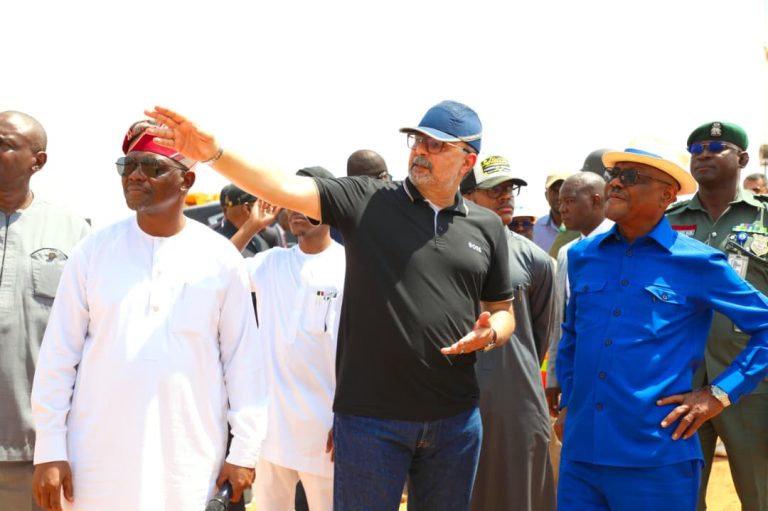
Barr. Nyesom Wike, Minister of the Federal Capital Territory (FCT), has expressed delight over the Airport–Kuje–Gwagwalada road’s rapid progress and said that the project will be ready for inauguration by June.

Wike described the route as a crucial piece of infrastructure that will revolutionize transportation within the Federal Capital Territory (FCT) and expressed his admiration for the amount of work completed thus far during his inspection of the enormous road project on Wednesday.

“I’m pretty amazed. You are aware that one of the most important roads for us is the one connecting the airport to Kuje,” Wike stated during the visit.

The Minister remembered his previous trip to the Kuje–Gwagwalada axis, where he praised the contractors for their work and paused close to a mosque that was still under construction.

God willing, we will have started this project by the first week of June or the end of June, as the contractors have stated. You won’t have to go through the airport if you’re traveling to or from Gwagwalada to town because of this crucial initiative. We are quite pleased with what we have observed,” he said.

It’s anticipated that the new road will give drivers a significant alternate path, lowering travel times and the high traffic that frequently surrounds the airport area.

Wike provided a progress report, stating that the Airport–Kuje length is already more than 70% finished, and the Kuje–Gwagwalada section is over 65% finished.

“Well, if you take from the airport to Kuje, it is over 70%, and here (from Kuje to Gwagwalada), I can see it’s almost 65%, so I think they will meet up,” he declared with assurance.

The initiative is part of Wike’s vigorous campaign to expand satellite towns and decongest the city center, and it is anticipated to have a significant positive impact on residents of Kuje, Gwagwalada, and the adjacent districts.

Now that June is approaching, all eyes are on the contractors to complete the revolutionary road that would put an end to many commuters’ nightmares with airport gridlock.

Panic As Arik Air Plane Suffers Mid-air Engine Fault

0

An in-flight engine issue occurred on Wednesday on a planned domestic flight from Lagos to Port Harcourt on an Arik Air Boeing 737-7GL, according to confirmation from the Nigerian Safety Investigation Bureau (NSIB).

The plane, registered 5N-MJF, was said to have been compelled to make a safe and incident-free landing at Benin Airport.

In a statement, Bimbo Olawumi Oladeji, the NSIB’s Director of Public Affairs and Family Assistance, disclosed the information.

The agency claims that during the flight’s cruise phase, the flight crew noticed unusual signals coming from one of the aircraft’s engines.

As a precaution, the pilots turned down the faulty engine and decided to divert to the closest appropriate airfield, adhering to established safety procedures in the tight environment.

All passengers and crew disembarked normally after the plane made a safe landing at Benin Airport. There were no reported injured.

Based on an initial visual examination, the NSIB reported that first observations revealed considerable damage to the afflicted engine.

“Based on a preliminary visual evaluation, preliminary observations at Benin Airport indicate serious damage to the afflicted engine. According to the statement, the NSIB has started an inquiry in accordance with its statutory mission and international norms under ICAO Annex 13.

In order to secure the aircraft and collect pertinent evidence, it further stated that an assessment team had been sent to the location.

The statement continued, “The assessment team is on their way to Benin to secure the aircraft, document evidence, interview pertinent witnesses and personnel, and recover flight data and cockpit voice recorder information.”

The agency further revealed that in order to ascertain the chronology of events and pinpoint any contributing elements, it is collaborating closely with Arik Air, the Nigerian Civil Aviation Authority (NCAA), and other important parties.

It is anticipated that the investigation’s findings will inform safety guidelines meant to stop future occurrences of the same kind.

2027 Elections: Cubana Chief Priest Says He’ll Campaign Against Peter Obi

0

Known by his stage name Cubana Chief Priest, celebrity socialite and businessman Pascal Okechukwu has declared his intention to run against Peter Obi in the 2027 presidential election.

The socialite declared his changing stance on Instagram amid a heated discussion with followers. The socialite had previously enthusiastically backed the Labour Party candidate in the 2023 elections.

The internet dispute was brought on by inquiries regarding his sudden political change and affiliation with the pro-Tinubu “City Boy Movement.”

He didn’t hesitate to answer a follower’s question about if he really planned to work against Obi in the upcoming election.

“Yes,” he answered, “I hope that it won’t be a crime because I worked for Obi previous election, including serving as a special adviser to an APC governor.

Critics of his remarks cited his prior problems with the Economic and Financial Crimes Commission, or EFCC.

Aligning with the current administration, according to others, would not protect him from scrutiny in the future.

In response, he dismissed the issue and boasted that going to the anti-graft agency is almost a sign of accomplishment.

He remarked, “You never make am if you never go EFCC for Naija.”

During the 2023 election, the debate later turned to the South-East and the issue of regional union.

Some comments said that Obi may have done better if he had had more support from powerful people in the area. Cubana Chief Priest replied aggressively, encouraging detractors to back whoever they choose and asking what real progress such sentiments had made in the South-East.

Why You Pamper Fulani Terrorists But Went After Nnamdi Kanu – Ejimakor Challenges FG

0

Eloy Ejimakor, the attorney representing Nnamdi Kanu, the leader of the Indigenous People of Biafra (IPOB), has demanded that the Nigerian government answer for the way it handles the country’s security concerns.

Through his 𝕏 account, Ejimakor asked why Kanu is still being held in custody while Fulani terrorists are being granted carte blanche.

He demanded that the people who have controlled the nation since 2015 explain why suspected Fulani terrorists are given preferential treatment while IPOB and its leader, Kanu, are subjected to harsher measures.

Ejimakor stated that the United States had just addressed issues that, in his opinion, ought to have been resolved a long time ago.

Ejimakor expressed worries about what he called unfair treatment and questioned whether the government’s actions were influenced by ethnic factors.

He claimed that there are still a lot of unsolved questions about the incident.

“Those in power in Nigeria from 2015 to the present must explain why they shielded Fulani terrorists while targeting IPOB and Mazi Nnamdi Kanu, who didn’t even qualify, now that America has taken action that should have been taken years ago.

Is it because they’re Igbo? “So many questions,” Ejimakor wrote.

Bagudu Defends Tinubu, Warns Against Regional Bias in Assessment

0

According to Abubakar Bagudu, the Minister of Budget and Economic Planning, it is unjust for any Nigerian to evaluate President Tinubu based on sentiments specific to the region.

In response to questioning during an interview on Arise Television’s “Morning Show,” the minister made this statement on Wednesday.

He claims that President Tinubu’s reforms are inclusive of the North and transformative.

He claimed that the president’s outlook on national affairs had always been patriotic.

Naturally, we are aware that Nigeria is plagued by numerous fault lines, and we hope that every action we take would enable us to pass the port line.

“Any Nigerian who judges President Tinubu based on sentiments from their region is being unfair. President Tinubu has always governed with a nationalist stance.

It is evident to all that President Tinubu has a history of backing Northern leaders, having backed President Buhari, Yar’Adua, Atiku, and Nuhu Ribadu.

“Every region of Nigeria has benefited from President Tinubu’s policies. In every region of Nigeria, President Tinubu is implementing revolutionary programs,” he declared.

Election Results: Senate Maintains Electronic, Manual Transmission System

0

Amid the issue surrounding the transmission of election results, the Senate clarified its position on Section 60(3) of the Electoral Act (Amendment) Bill, 2026 in its modified Votes and Proceedings of Wednesday, February 4 plenary.

The Senate Chief Whip, Mohammed Tahir Monguno, proposed the modification, which was later approved by the Red Chamber.

The Senate reiterated its adoption of electronic transmission of polling station election results, as stated in the amended resolution.

Lawmakers did, however, incorporate a safeguard to account for potential technical issues.

According to the latest clarification, the hard copy of Form EC8, which contains the results recorded at the polling station, will be the main source of collation in the event that a technical malfunction or communication error hinders the successful electronic transfer of results.

Party representatives at the polling station must counter-sign the form after it has been properly filled out, stamped, and signed by the presiding election officer.

The change essentially indicates that, although if electronic transmission is still the preferred method, Form EC8 manual documentation will be used as a fallback in the event of a technical malfunction.

Senator Enyinnaya Abaribe made a counter-motion after the motion was adopted, requesting a division. This would necessitate separate votes on Section 60(3) in order to clearly define each senator’s stance.

However, Abaribe retracted the motion after Senate President Godswill Akpabio encouraged him to move on with the proposal formally.

The clarification follows increased public scrutiny of the Senate’s previous discussions, which provoked demonstrations and debate across the country due to worries that the findings’ real-time electronic transmission had been compromised.

The Senate currently maintains that, subject to practical circumstances, electronic transmission is still a component of the law with the amendment to the Votes and Proceedings.

Mo

‘You Said You Have 31 Governors’ — Amaechi Challenges APC on E-Transmission

0

Rotimi Amaechi, a former governor of Rivers State, has urged opposition members to publicly oppose the Senate’s decision to reject the obligation to transmit election results electronically.

It was said that Amaechi participated in Tuesday morning’s demonstration at the National Assembly.

Speaking to reporters, he said the ruling All Progressives Congress (APC) was obstructing the broadcast because it was worried about losing the next election.

Amaechi stated that the opposition parties need to stick together and oppose what he called a single party’s attempt to control the election process.

According to Amaechi, “I think that the opposition parties should come out PDP, ADC, everybody should be out to protest against the attempt of one party.”

He cast doubt on the APC’s own conduct and rejected allegations that opposition forces could take control of such demonstrations.

“What is the APC doing if we show up and they claim the opposition has taken over the protest? Are they not stealing? Of what do they fear? They mentioned having 31 governors, I believe. David is not Tinubu. “Only the people can tell a good politician that he has done well,” he remarked.

Even though the ruling party boasted of having multiple governors and prominent opposition party defectors joining it, Amaechi questioned why the party would feel threatened.

He also said he was skeptical that either President Bola Tinubu or Senate President Godswill Akpabio would listen to Nigerians’ concerns, emphasizing that opposition parties and civil society organizations would keep pushing back until the ruling was reversed.

“M”

Bugaje Alleges Senate Plot to Manipulate Elections, Says E-Transmission Evidence Is Clear

0

Dr. Usman Bugaje, a political activist and Islamic scholar, has said that efforts to prevent the mandated electronic transmission of election results are intended to create the conditions for electoral tampering and provide some political actors with an unfair advantage.

Speaking on Arise Television’s Morning Show on Tuesday, Bugaje made the accusation while addressing criticism of those who oppose the electronic transmission of results in real time.

He asserts that the nation’s inability to electronically transmit election results is only a pretext meant to undermine the political process.

“All of these are alibis to get ready for rigging.” It’s really obvious. Even in the most isolated villages, you have POS. People are chatting and sending messages on WhatsApp, working, and having phones,” Bugaje remarked.

He contended that since INEC had already demonstrated its preparedness, it was not the duty of legislators to assess the Independent National Electoral Commission’s operational capability.

“In any event, INEC has the right to state that we are unable to deliver. Legislators are not supposed to do that. Additionally, as I mentioned earlier, INEC itself suggested in its response at the public hearing that this is the stance,” he continued.

Bugaje asked why the Senate would conjecture about INEC’s purported incapacity to transmit in real time when, in his view, experts had confirmed that the nation’s network coverage was sufficient.

“The Senate is very clear on his own position, so what is the point of speculating about INEC’s incapacity to do that?” he asked.

“And in recent days, experts have publicly stated that INEC can provide the necessary level of coverage.”

He insisted that once network access was established, findings could still be uploaded, even in places with poor connectivity.

“Keep in mind that the message will reach the portal by the time you enter an area of coverage, even if you post at a faraway location. Therefore, it’s not an impossible thing,” he continued.

According to reports, the activist went on to claim that electronic transmission of election results has been effectively adopted in a number of nations with less developed internet infrastructure.

This is exactly what many nations across the world that have much less established internet access have done. In actuality, these aren’t any justifications,” Bugaje said.

“They are making excuses and alibis in order to get ready for rigging.” Otherwise, given all the developments in the twenty-first century, why should it be blocked? In any event, we have enough time to increase INEC’s capacity. One month is enough time to do this.

Electoral Manipulation Allegations
Resistance to real-time transmission, according to Bugaje, is suspicious and intended to undermine the election system.

Therefore, I believe that making excuses is a dubious concept. And it’s obvious that the goal is to figure out how to weaken the voting process so that some individuals may take advantage of it to rig our elections the way they have,” he said.

He also brought up previous election disputes, raising concerns about why some of them were not looked at in detail.

You may easily remember what happened even last year. After they turned off, a variety of pictures began to appear, and as of right now, no one has really given us a satisfactory explanation of what transpired,” he stated.

“I mean, why didn’t it occur with other outcomes if it was a glitch? Why just the presidential outcomes? And in a serious nation, this is something that has to have been looked into. If anyone was found to be at fault, they would have faced consequences, but many of these crooks are getting away with it.

Federal Government Increases ASUU Academic Allowance by 40%

0

A 40 percent increase in the Consolidated Academic Allowance (CAA) for lecturers at federal universities is one of the major welfare provisions that the Federal Government has started implementing as part of the recently renegotiated 2025 agreement with the Academic Staff Union of Universities (ASUU).

In an official statement and directive sent to vice-chancellors of federal universities on Monday, Education Minister Dr. Tunji Alausa revealed this information.

The most recent event comes after the updated agreement was signed on January 14, 2026, after months of talks to prevent more strikes and enhance working conditions in the nation’s public higher education institutions.

“By approving the 40% consolidated academic allowance (CAA) increase for ASUU members, with effect from January 1, 2026, the Federal Government has fulfilled its obligation under the agreement,” Alausa said.

The Minister affirmed that while certain federal universities have already started to make compensation changes in line with the allowance rise, others are anticipated to do the same.

To guarantee that qualified academic staff members receive the increased salaries on time, vice-chancellors nationwide have now been explicitly instructed to incorporate the increase into their payroll systems.

“We are trying to guarantee consistent application across the country. All VCs have been informed, and they must cooperate right away,” Alausa continued.

The Minister also emphasized the need to implement the Consolidated Academic Tools Allowance (CATA), which he stated is already included in the federal budget for 2026 and is non-taxable.

He asserts that the National Salaries, Incomes and Wages Commission (NSIWC) has also issued a circular about the allowance and that it has been handled via the required statutory channels.

Alausa declared, “The academic environment will be strengthened, staff morale will be raised, and teaching, research, and learning outcomes across Nigerian universities will be improved with the timely implementation of both the CAA and CATA.”

The education minister emphasized that the action is in line with President Bola Tinubu’s Renewed Hope Agenda and reaffirmed the administration’s commitment to upholding agreements made with education sector stakeholders.

“Transparency, industrial harmony, and quantifiable improvements in the quality of higher education are our priorities,” Alausa stated.

Since ASUU had repeatedly blamed inadequate financing and unfulfilled agreements for its repeated strikes, the introduction of the updated allowances represents a major step in resolving long-standing issues within the university system.

In addition to promoting industrial harmony, the government hopes that the actions would boost academic output at all of the country’s higher education institutions.