Home Blog Page 1018

World leaders condemn Trump rally shooting

0

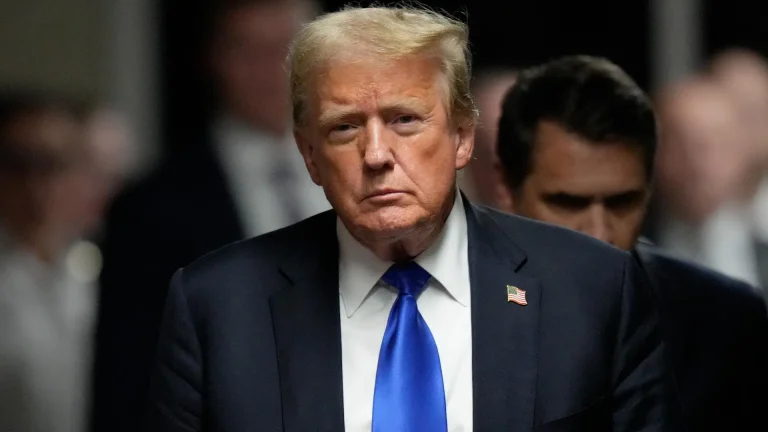
World leaders reacted with shock to the wounding of Donald Trump in an assassination attempt against the former US president at an election rally.

Presidents and prime ministers globally spoke out against political violence and expressed their support for those affected by the shooting on Saturday, which killed one bystander and left two other spectators critically wounded.

Europe

The European Union’s foreign policy chief, Josep Borrell, condemned the attack.

“Once again, we are witnessing unacceptable acts of violence against political representatives,” the bloc’s top diplomat said.

British Prime Minister Keir Starmer said Sunday he was “appalled by the shocking scenes” at the rally.

“Political violence in any form has no place in our societies,” the premier said.

Referring to “these dark hours”, Hungary’s nationalist leader Viktor Orban offered his “thoughts and prayers” to Trump.

Italian Prime Minister Giorgia Meloni said she was “following with apprehension” updates from Pennsylvania and wished Trump a speedy recovery.

The right-wing leader expressed her hope that “in the following months of the electoral campaign, dialogue and responsibility can prevail over hate and violence.”

Ukraine’s President Volodymyr Zelensky said he was “appalled to learn about the shooting” and wished Trump a “speedy recovery”.

“Such violence has no justification and no place anywhere in the world. Never should violence prevail,” he said.

Americas

Argentina’s President Javier Milei blamed the “international left” after the assassination attempt.

“In panic of losing at the polls, they resort to terrorism to impose their backward and authoritarian agenda,” said the populist president.

Brazil’s President Luiz Inacio Lula da Silva said the shooting “must be strongly condemned by all defenders of democracy and political dialogue.”

Costa Rica’s government condemned the attack and said it was following updates on “this unacceptable act”.

“As a leader in democracy and peace, we reject all forms of violence,” the presidency said.

Chilean President Gabriel Boric expressed his “unqualified condemnation” of the shooting.

“Violence is a threat to democracies and weakens our life together. We must all reject it,” said Boric.

In Bolivia, President Luis Arce said “despite our deep ideological and political differences, violence, wherever it comes from, must always be rejected by everyone.”

Asia Pacific –

Indian Prime Minister Narendra Modi said he was “deeply concerned by the attack on my friend.”

“Violence has no place in politics and democracies,” said Modi.

Japanese Prime Minister Fumio Kishida also spoke out against political attacks, saying “we must stand firm against any form of violence that challenges democracy.”

Taiwan’s President Lai Ching-te offered his “sincere condolences” to the shooting victims.

“Political violence of any form is never acceptable in our democracies,” he said.

Australia’s Anthony Albanese said he was “shocked by the terrible scenes” at the Trump campaign event, expressing his relief that the former US president was safe.

“This was an inexcusable attack on the democratic values that Australians and Americans share and the freedom that we treasure,” Albanese said.

New Zealand’s Prime Minister Chris Luxon echoed these views, writing “no country should encounter such political violence.”

Middle East –

Israel’s Prime Minister Benjamin Netanyahu said he and his wife Sara “were shocked by the apparent attack on President Trump”.

“We pray for his safety and speedy recovery,” Netanyahu said.

AFP

US election: Trump’s shooter identified as 20-year-old Thomas Cooks

0

The gunman who attempted to assassinate former President Donald Trump Saturday has been identified, according to the New York Post.
He has been identified as 20-year-old Thomas Matthew Crooks.
One of Crooks’ bullets at Bethel Park grazed the former President in the ear during an outdoor rally in Butler, just outside Pittsburgh.
Sources told the New York Post that Crooks was planted on a roof of a manufacturing plant more than 130 yards away from the stage at Butler Farm Show grounds.
Cooks was shot dead by Secret Service snipers and an AR-style rifle recovered from him.
Bethel Park is a village 40 miles south of where the Butler rally was held.
Meanwhile, it remains unclear as to why Crooks attempted to assassinate Trump, who is the presidential candidate of the Republican party.
US election: Trump’s shooter identified as 20-year-old Thomas Cooks

US: Trump assassination attempt will be investigated – Speaker

0

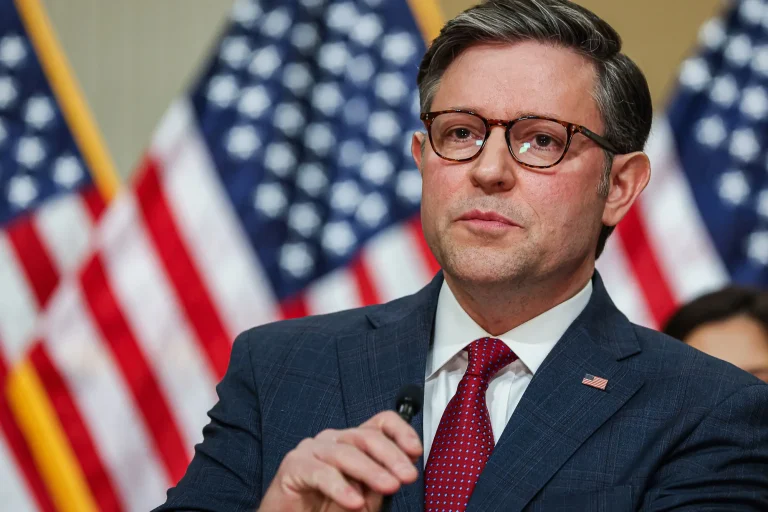
The Speaker of the United States House of Representatives, Mike Johnson has said a full investigation into the assassination attempt on former US president Donald Trump will be conducted.
Johnson said the Director of US Secret Service, Kimberly Cheatle and other officials of the FBI will appear before the House committee for questioning.
According to Johnson: “The American people deserve to know the truth.
“We will have Secret Service Director Kimberly Cheatle and other appropriate officials from DHS and the FBI appear for a hearing before our committees ASAP.”
At 6:02 pm on Saturday, an assassination attempt was carried out on Trump in Butler, Pennsylvania.
The assassination attempt was carried out while he was on a campaign train at Fairgrounds.
US: Trump assassination attempt will be investigated – Speaker

Israeli PM, Benjamin Netanyahu expresses shock over assassination attempt on Trump

0

Israeli Prime Minister, Benjamin Netanyahu has expressed shock over the assassination attempt on former US President and Republican Party candidate, Donald Trump.
TVN reports that two people died after gunshots were fired at Trump’s rally in Pennsylvania on Saturday – with the injured former president rushed off stage by security staff, according to the Associated Press.
Video appeared to show blood on Trump’s ear as he was rushed off-stage by security staff.
Reacting via his X handle, Netanyahu wished Trump a speedy recovery.
He wrote, “[My wife,] Sara and I were shocked by the apparent attack on President Trump. We pray for his safety and speedy recovery.”
Israeli PM, Benjamin Netanyahu expresses shock over assassination attempt on Trump

Joe Biden condemns assassination attempt on Donald Trump

0

US President and Democratic Party candidate in the upcoming election, Joe Biden, has condemned the assassination attempt on his Republican Party counterpart, Donald Trump.
TVN reports that two people died after gunshots were fired at Trump’s rally in Pennsylvania on Saturday – with the injured former president rushed off stage by armed security, according to the Associated Press.
In a swift statement, Biden strongly condemned the incident, stressing that there was no place for political violence in America.
He commended the secret service for foiling the assassination attempt on the former president.
“Jill and I are grateful to the Secret Service for getting him to safety. There’s no place for this kind of violence in America. We must unite as one nation to condemn it,” the statement added.
Joe Biden condemns assassination attempt on Donald Trump

US Election: Elon Musk endorses Donald Trump

0

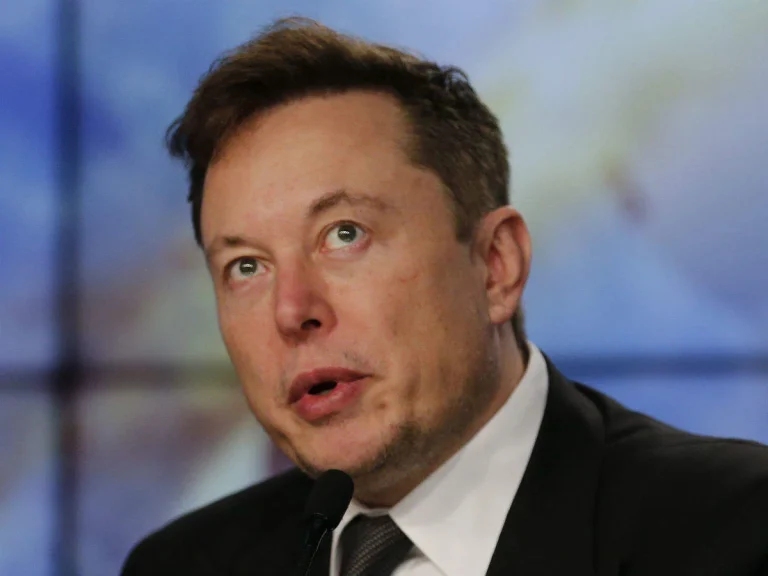
Billionaire businessman, Elon Musk has endorsed former US President and Republican Party candidate, Donald Trump, for the upcoming election.
Musk openly declared his support for Trump on Saturday night while reacting to reports of a shooting at the former President’s rally in Pennsylvania.
Video appeared to show blood on Trump’s ear as he was rushed off-stage by security staff.
The shooting resulted in the deaths of the shooter and one audience member, according to the Associated Press.
Reacting to the incident via his X handle, Musk wrote: “I fully endorse President Trump and hope for his rapid recovery.”
In another post, he wrote: “Last time America had a candidate this tough was Theodore Roosevelt.”
On November 5th, Donald Trump would run against incumbent Joe Biden of the Democratic Party on the platform of the Republican Party in what would be America’s first rematch election in almost 70 years.
US Election: Elon Musk endorses Donald Trump

Trump assassination attempt: Shooter killed – US Secret Service

0

The United States Secret Service has said the assassination attempt on former President Donald Trump at Butler Pennsylvania is under investigation.
Anthony Guglielmi, Chief of Communications of the Secret Service disclosed this in a statement on Saturday.
The Secret Service explained that the shooter fired multiple shots toward the stage from an elevated position outside of the rally venue.
It stated that US Secret Service personnel neutralized the shooter, who is now deceased.
The Secret Service added that the former president, Trump, is safe and being evaluated, stating that one spectator was killed, two spectators were critically injured.
Full text: “During former President Trump’s campaign rally in Butler, Pennsylvania on the evening of July 13th at approximately 6:15 p.m., a suspected shooter fired multiple shots toward the stage from an elevated position outside of the rally venue.
“US Secret Service personnel neutralized the shooter, who is now deceased.
“US Secret Service quickly responded with protective measures and the former president is safe and being evaluated. One spectator was killed, two spectators were critically injured.
“The incident is currently under investigation and the Secret Service has formally notified the Federal Bureau of investigation.”
Trump assassination attempt: Shooter killed – US Secret Service

Ajibola Ogunshola: Triumph of the non-newspaperman

0

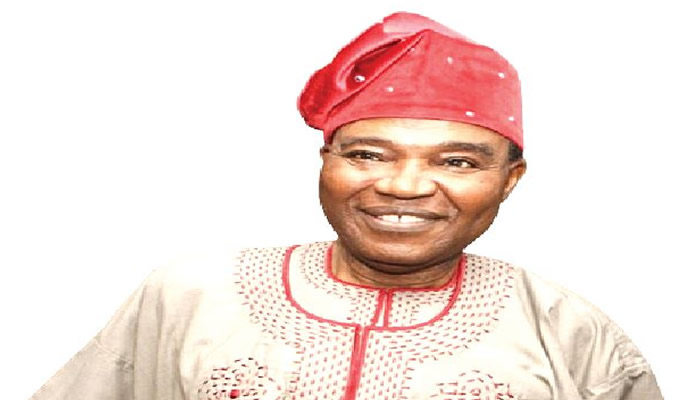
I’ve written this before. Ten years ago, but this man’s story is new every time. To me. And to many who have crossed his path. On his 80th birthday today, I’m repeating this story with the zeal and delight I shared it ten years ago:

If the lot had fallen on ChiefAjibolaOgunshola to be the undertaker, not many would have blamed him for the fate of According.

He was 40 when he was appointed director.Though he was a star in the insurance world (former Managing Director of Niger Insurance) and one of Africa’s leading actuaries (a consultant to the UN on pensions), he did not know jack about newspapers, if you get what I mean.

For the three months thatI worked in According as an intern in 1986, after Olatunji Dare’s note paved the way, our paths did not cross. The Aboderin family was still in turmoil after the passing of the founder, James OlubunmiAboderin, in 1984 at 49 years of age.

Aboderin, an accomplished accountant at National Bank, was an extraordinary man whose presence and legacy were legendary. At the time, co-founder Sam Amuka (fondly called Uncle Sam) had left, but a relic of his time, like the famous armchair tucked away in a room in the last office at the old wooden building, was still there.

After the founder’s death, Ogunshola’s half brother, Moyosore Aboderin, who took over, invested quite a fortune to turn the company around, but the prospects remained bleak. The destiny of the Aboderin publishing empire – quite formidable in its heyday – now rested mainly on the shoulders of a 43-year-old non-newspaperman.

I returned in 1989, this time as a reporter. At that time, you could gauge the public mood or government temperament by the writings of newspapermen, whether in the Tribune, Sketch, Triumph, DailyTimes, New Nigerian, Newbreedor Newswatch.

According was also a significant force. On the Boardwere the likes of Dr Lekan Are and Lolu Forsythe, who, together with those in the editorial department, especially Najeem Jimoh and Ademola Osinubi, would be instrumental in helping Ogunshola rebuild in the years ahead. However, the company’s redemption was simply and squarely the burden of this non-newspaperman.

He turned this “disadvantage” into an incentive. He became an avid consumer of the news and how it is produced, distributed and consumed, letting facts and figures show the way.Most of all, whenever decisions were made, he ensured execution with ruthless efficiency.

I learnt of one rare occasion when Dr. Are – perhaps the most feared and respected in equal measure on the Board – brought an advert for publication. Are handed the copy to the editor (in the presence of Ogunshola) and asked him to publish the next day. There was no discussion of payment. The Editor was afraid to ask.

When Are left the office, Ogunshola asked the editor about payment.

“I didn’t ask him, sir,” the editor replied.

“Well, go and tell him it will be paid for.”

The editor rushed after Are, who returned with him to the office, obviously upset.

He asked Ogunshola if he sent the editor after him.

“I did, boda,” Ogunshola reportedly responded firmly but politely. “You remember that we agreed at the Board meeting that all adverts must be paid, without exception.”

Are opened his wallet and wrote the cheque.

I am trying to remember which of my stories or feature articles first caught Ogunshola’s attention.I was a small fry, unconcerned about what was happening at the top. But, somehow, Ogunshola noticed.

After I had been in the According for nearly one year, the Editor, Osinubi, told me that the chairman was gathering materials for a book. He wondered if I could help with research.

I was confused. At the time, Ogunshola had the reputation of a taskmaster amongst staff. When he took over as Chairman, he sacked 400 or so of the 600 staff members in one day. I thought sending me to his Ajele, Lagos office was putting me on the supplementary sack list.

But I met a completely different man. He is challenging, deep and engaging – a man who calls a spade by its first name. I spent the next 18 months in his office researching, asking questions and taking notes. This was the inside story of how court battles, family feuds and not a few frenemiesbrought Aboderin’s dream dangerously close to the edge.

We toyed with a few names for the book, and I think he finally settled for Against All Odds – a fitting title for a book that never was.

If he didn’t restart the book on his 70th birthday, it’s improbable he would do so now.

“I have cleared my library substantially,” he told me at the height of COVID-19 in 2021. “I do only essential reading and retain the most important records.”

He has left a trove of living words in my heart with chapters to read for a lifetime. I still have one of his lectures, “Lessons from the 2014 National Conference,” delivered at the Second Chief Chris Ogunbanjo Lecture Series on May 18, 2017.

I believe there is no better summary of the National Conference than the one provided in Ogunshola’s 16-page lecture. I have carried it in my bag for seven years and used it very often, especially on matters related to restructuring.

Before measurement became a hot topic at international journalism conferences, Ogunsholainsisted that “what cannot be measured cannot be rewarded”. He infused According with the values of innovativeness and a near-obsession for rational thinking. His work ethic makes you strong if it doesn’t kill you.

He is a man of strong views. He resents tardiness, collectivism and all shades of intermediariesin a way that reminds me of Thomas Sowell’s contempt for collective bargaining.

He waged trade wars against newspaper agents and advertising agencies for fairer commissions or more transparent practices. Some of these were solo wars, which earned him powerful enemies, while a few were under the umbrella of newspaper publishers, of which he was president.

Apart from the crisis after the death of the founding chairman, perhaps one of the most challenging wars was the one against the military. According was shutdown thrice, the third and longest being under General Sani Abacha, which lasted 18 months.

There was pressure on Ogunshola to beg Abacha. He refused, insisting that the newspaper had done nothing wrong. It was a very, very tough call. I remember him saying afterwards, “If the closure had continued for another three months, the paper would have gone down irretrievably.”

But he stood his ground, and the rest is history.

At 80, he is slowing down. But thanks to a lifestyle of moderation, contentment, and empiricism– a decent amount of money to keep him as well as he can be at 80 – he looks good for another 10, at least.

The non-newspaperman has paid his dues, with some change to the bargain.

Long may your legacies endure, Ba’royin of Ibadan!

  • Ishiekwene is the Editor-In-Chief of LEADERSHIP

Oba Olakulehin crowned as 43rd Olubadan

0

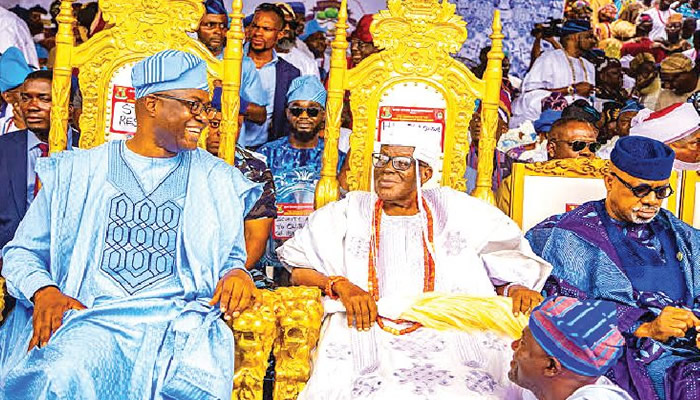
Oba Owolabi Olakulehin has finally been crowned the 43rd Olubadan of Ibadanland, and was presented with the staff of office by Governor Seyi Makinde of Oyo State on Friday, July 12, 2024.

The venue was packed with residents who trooped out in their numbers to witness the ceremony.

A welcome address was delivered by the Secretary to the Oyo State Government, Olanike Adeyemo; while the citation of the Olubadan was read by Chief Toye Arulogun.

The newly crowned monarch had begun the coronation rites with a tour of the Oluwo Labosinde Compound at Oja’ba, where he performed traditional rites, before heading to the Ose Meji Shrine, where he was crowned as the new Olubadan of Ibadan land. He then moved to the iconic Mapo Hall where he was presented with the staff of office and instrument of office by Governor Seyi Makinde.

Prior to Friday’s coronation, the newly completed Olubadan palace and the official residence of the Olubadan, located at Oke-Aremo, was commissioned by Makinde on Wednesday.

Also, as part of events leading to the coronation, the Egungun-Amala-Fuji Festival was held at Lekan Salami Sports Complex, Adamasingba, Ibadan, on Thursday, July 11, 2024.

After the governor presented the staff of office to the Olubadan at the main event, the monarch appreciated the president, governors and other dignitaries who felicitated him. He also prayed for the prosperity of the land and the people of Ibadan.

The crowning took place at the Labosinde compound, and was attended by Ogun State Governor, Dapo Abiodun; a former Oyo State Governor and member of the Olubadan-in-Council, Rashidi Ladoja; the Ooni of Ife, Oba Adeyeye Ogunwusi; the Sultan of Sokoto, Sa’ad Abubakar; Deputy Governor of Osun State, Kola Adewusi;; the Deputy Governor of Osun state representing the governor of Osun State, Kola Adewusi, and a former Senate Leader, Teslim Folarin, among others.

Others include the representative of President Bola Tinubu and the Minister of Power, Adebayo Adelabu; Lagos State Chief of Staff, Tayo Ayinde; representative of the governor of Ondo State, the Deputy Governor of Ondo State, Olayide Adelami; Oyo State Deputy Governor, Bayo Lawal; Vice Chancellor of the First Technical University, Adesola Ajayi, and others.

Why quality of life, healthcare have not improved despite increased government budgets — Septuagenarian physician

0

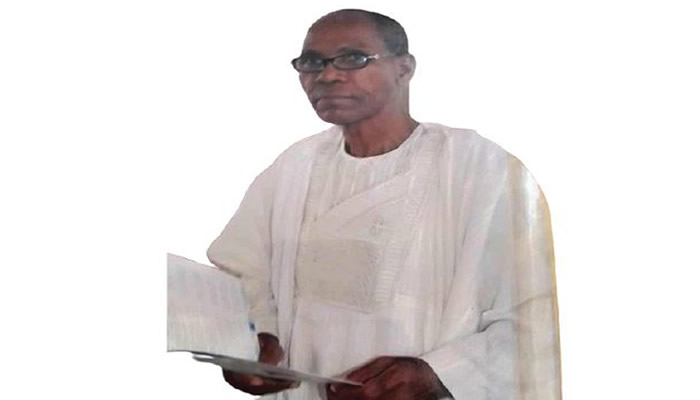
A 78-year-old retired medical practitioner, Dr Ademola Dixon, in this interview with JANET OGUNDEPO, speaks about his biography; “Age Gracefully” and the state of the nation’s health sector

How did your medical journey begin?

My name is Dr Ademola Dixon. I am 78 years old. After over two years in the service of the Lagos State Government, I resigned to join Mt Sinai Hospital, Lagos, in 1978. In 1992, I became the pioneer Medical Director, managing when the hospital was incorporated. Following a reorganisation in 2011, I became the Medical Director, Finance, until my retirement in 2019. After retirement, I wrote my biography titled “Omo Eko” at the prompting of my editor, Pa Modupe Oduyoye. I also documented my experiences in medical practice from 1974 to 2015. Along with three other resource persons, the book “Age Gracefully: Why and How to Live Long and Age Gracefully” was published in 2023.

As a retired physician, what can you say about the current state of the health sector compared to when you were practising?

The present state of medical practice reflects the state of the nation, with challenges that remain daunting and overwhelming. The major culprit is overpopulation, which exceeds our capacity to sustain effective healthcare delivery services.

While the geographical area of Nigeria has not changed since 1960, the livable space has reduced considerably due to increasing desert encroachment in the northern states, insurgency, and banditry, predominantly in the North, and unabated migration of people from rural to urban areas. This has resulted in overcrowding in major towns and state capitals, with many people residing in unplanned communities commonly known as slums in our major cities.

These developments have negatively affected and drastically reduced food production, leading to chronic malnutrition and malnourishment among our people. Poor nutrition, especially low protein intake, reduces immunity levels and resistance to infections, which commonly cause preventable deaths.

Nigerians have a significantly shorter lifespan compared to other countries: 53 and 61 years, compared to 79 years in Costa Rica and Cuba, and 81 years in the United Kingdom.

The annual budget of the Federal Government of Nigeria, the 36 states, and 774 local governments has risen considerably since 1999. Unfortunately, the quality of life, and access to food, water, shelter, education, and healthcare has not improved significantly. More funds are allocated to general administration, bureaucracy, road and bridge construction, flyovers, and the building of offices and residences.

In his 1973 book, “How Europe Underdeveloped Africa,” Walter Rodney asserted that in most African countries, general administration is the major industry.

The mass exodus of health practitioners has further reduced the quality of healthcare services. What needs to be done to revive the sector?

We need to examine the basics of governance, education, and health. The exodus of health practitioners, occurring randomly, reflects governance issues. With more care and wisdom, the migration could have been better managed. India produced medical doctors for “export” to generate foreign exchange in the 70s/80s, and we can emulate this practice. We could envisage a scenario where some of our doctors work overseas, remitting foreign exchange while honing their skills. These doctors, with enhanced expertise, would be more inclined to return to the country if, from the outset, the government actively supported them.

How will the mass departure of experienced trainers and consultants affect the quality of training for new doctors?

It is a pity that we are now reaping the fruits of over 50 years of neglect in the health sector, but there is no use crying over spilt milk. We can and should retrace our steps. It is never too late to turn back, even if we have been on the wrong path for that length of time.

The exodus of experienced trainers and consultants is very devastating. With the right mix of incentives for those who have chosen to remain in the country, we can mitigate the damage. In the interim, addressing the obstacles that hinder us from actively participating in governance can help reverse the debilitating effects of existing structures.

With processed foods becoming more prevalent over traditional local foods, how can Nigerians maintain a healthy lifestyle and age gracefully?

You have again raised the role of the educated mind, which is our capacity to appreciate the negative effects of bad habits. In any case, don’t forget that the healthcare delivery system, family medical history, lifestyle, and environment are factors influencing each individual’s health status.

The role of health education is critical, as an educated mind will respond positively to these factors and do what is necessary to enjoy robust health. The greatest impediments in life include various forms of addictions, cravings, lusts, and addictions to unwholesome foods. Our dieticians and health educators must guide us on how to overcome these challenges. That is why continuous health education is necessary.

In your book, “Age Gracefully: Why and How to Live Long and Age Gracefully,” you mentioned the principles needed to increase the overall lifespan of men and women. How can this be achieved?

Our genes play a significant role in determining how long we live. Longevity runs in some families, independent of diet and lifestyle, among other factors. However, the majority of us may not naturally be endowed with long life. There are indeed necessary practical steps to promote a long life and age gracefully.

These steps include tracking your family’s medical history to see how long they lived, dating back one or two generations. Also, examine your lifestyle for clearly injurious habits, such as smoking, alcohol abuse, and cravings that can lead to illness. We need both physical and spiritual efforts to tame our appetites, lusts, and excessive libido.

Make sure you live in a healthy and clean environment and undergo periodic medical check-ups to determine your health status. Furthermore, avoid a sedentary lifestyle and unnecessary stress while trying to live “a good life.” Avoid self-medication, ensure adequate rest, and take care of your body from head to toe.

Additionally, it is customary to plan for retirement. The usual emphasis is on creating a retirement plan, an egg nest to ensure a blissful life in retirement. This includes having a trust to manage physical acquisitions, such as stocks and profit-yielding assets, to ensure comfort in retirement. This will certainly promote longevity and graceful ageing.

In addition to physical assets, we should equally address the spiritual aspect of our being. After the age of 75, life can become boring and monotonous, irrespective of one’s physical acquisitions. Thus, the spirit needs to be nourished daily through whatever means are at our disposal.

At 75, there is a need for stocktaking, what legacies are we leaving behind?

Life in all seasons must have a purpose. We can always seek avenues to be more relevant to our family, friends, and community at any age. We should strive to leave a lasting legacy.

Ageing gracefully entails a lifelong walk with our Creator. It is a process during which we create a spiritual asset that will continually replenish our frail body from the wear and tear of growing old. The inner mind is more resilient, and if regularly nurtured, it is an engine that must be serviced without fail. No price is too high for doing so.

Seeing how Nigeria and the health sector fared during COVID-19, what lessons have been learnt and can be implemented for pandemic preparedness?

COVID-19 exposed the limitations and challenges of tremendous advances made over the centuries in curative medicine and modern healthcare services. Fortunately, the damage in African countries was less severe relative to advanced countries. What could have caused this disparity in the number of victims between Africa and these other countries? There is also the startling revelation that people of colour in the United States of America and the United Kingdom succumbed relatively more than the white population.

Not being a medical scientist or researcher, I can only hazard guesses. The famous COVID-19 victims in Nigeria were people of affluence; among them were a serving state governor, a senator, and the former chief of staff to the immediate past president. The role of exercise is also significant. While Caucasians are free, unencumbered, and acclimatised to temperate climates, enjoying leisurely walks in all seasons, people of colour in the UK and USA, originally from tropical Africa, are cold intolerant. They are inclined to stay indoors when it is cold, leading to a sedentary lifestyle with its attendant damage to health.

The lessons we must learn include moderating our appetite for Western food and diet. We must encourage our affluent Nigerians, especially their children, to avoid this practice. Prevention is better than cure. Another lesson is our level of preparedness in terms of facilities to manage future pandemics. We must shift our focus. There is an urgent need to establish comprehensive preventive healthcare facilities in our communities so that any possible outbreak of contagious diseases can be contained speedily at this level, preventing spread.

Fortunately, the Alma-Ata Declaration of 1978 spelt out the modality for setting up an effective healthcare delivery system. If embraced and fully implemented, our communities will become centres of development and effective governance. As citizens, we need to develop the willpower to do what is necessary at all levels of governance.

What specific steps can the health sector take to mitigate the negative effects of future pandemics?

The health sector, on its own, can do very little unless there is a drastic change in governance. For the last 25 years, there has been much discussion and agitation for the devolution of powers, with the usual demand being to devolve more resources from the centre to state and local governments.

Unfortunately, our experience over the same period has clearly shown that the emphasis at all three levels of government is currently and persistently on infrastructure. When a hospital is built, the focus is on constructing large edifices at a huge cost. After construction, there is little left to equip the facility and pay professional staff adequately.

There ought to be a focus on the development of schools, health facilities, markets, sanitation, and security. Infections constitute a major cause of illness in Nigeria, so public health deserves more attention and resources at the communal level.

As a student of history, I recall that Lagos in the 1950s was so well administered that it was voted the cleanest town in the British Commonwealth of 56 nations in 1952. This feat was a result of effective urban planning by the colonial authorities. Public health was taken very seriously after the bubonic plague epidemic in Lagos between 1924 and 1930. Dr Isaac Ladipo Oluwole, of blessed memory, was the foremost public health physician of that glorious era. He was the architect of impressive initiatives such as founding the School of Health Services in 1925, located at the corner of Broad Street and Ajele Street for the training of sanitary inspectors, commonly called wole wole. He also established the Infectious Disease Hospital in Yaba and the Massey Street Children’s Hospital in Lagos, among others.

Health and education must be promoted at the communal level to ensure a longer lifespan for our people. Ultimately, the provision of life’s necessities — food, water, and shelter — should be done with the full participation of citizens in various communities.