Home Blog Page 1008

Withholding CONUA members’ salaries over ASUU strike wrong – President

0

The Congress of University Academics has called on the Federal Government to pay outstanding salaries, promotion arrears, and other benefits owed to its members.

The union made the call in a communiqué issued on Sunday at the end of its second National Executive Council held in Benin.

The communique read by the President of the union, Dr Niyi Sunmonu, expressed concern over the members’ unpaid three and a half months salaries.

The News Agency of Nigeria recalls that the Academic Staff Union of Universities in February 2022, declared an industrial action that lasted for about eight months to press for proper funding of university education, among others.

Consequently, the Federal Government invoked a “no work no pay rule,” by withholding seven and a half month salaries of all academic staff in the Nigerian universities.

ASUU, however, challenged the decision, but failed, as the National Industrial Court in 2023 upheld the policy of the government.

President Bola Tinubu, after dialogue, approved the payment of four-month salaries for ASUU members.

But CONUA, in its resolutions at the NEC meeting, said the union had consistently maintained that it never declared and was not part of the strike action.

It said the continued withholding of the three and a half months salary of its members was rather unfair because it never believed in industrial action as the best tool to enforce their wishes and welfare.

“What the government has done was to lump together those who embarked on strike and those who did not! This is unjust and is tantamount to punishing the innocent along with the guilty.

“Through its unwarranted punishment of CONUA members, the government is inadvertently promoting the use of strikes as a means of pursuing workers’ demands.

“CONUA NEC, therefore, notes with apprehension that failure to process and pay these outstanding salaries could throw the universities into serious crises and jeopardise the peace currently being enjoyed.”

CONUA also demanded the release of third-party deductions for March, April, May, and June 2022 salaries, which it said, were withheld due to the strike action.

“We demand that the agencies of government involved be directed immediately to release these third-party remittances without further delay,” said the communique.

The union called for the payment of promotion arrears spanning up to seven years in some cases, particularly in many state universities.

“This dispiriting state of affairs should be addressed expeditiously to enhance the diligence of the many academics affected by the counter-productive delay in the payment of promotion arrears,” it said.

Other demands by CONUA include the payment of Earned Academic Allowance arrears, review of the 2014 Pension Act, and an end to discrimination by TETFUND as a union.

It also called on the Federal Government to work with the relevant departments in the university to generate electricity and grant special status to universities on electricity tariffs.

On the state of the nation, the congress expressed deep concern over the excruciating pains Nigerians have been going through since the removal of the fuel subsidy on May 29, 2023.

“The union notes that President Bola Ahmed Tinubu has assured the nation that a series of measures are being put in place to alleviate the suffering of the people.

“We urge the President to expedite action on those measures,” union said.

Family escapes death as building collapses in Lagos

0

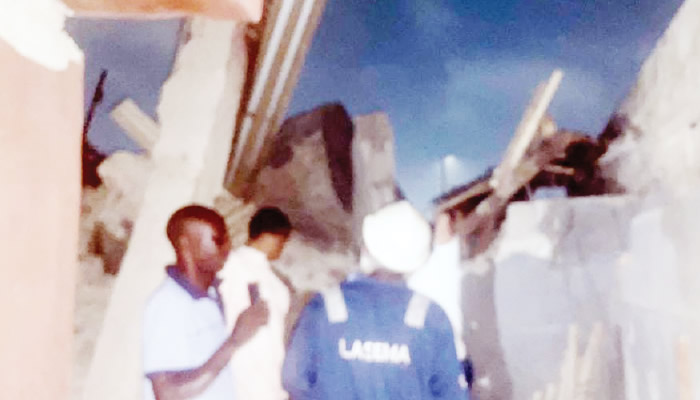
Family members living in the boys’ quarters behind a storey building on No 49 Oyinlola Street, Off Adealu Bus Stop, Iyana Ipaja, Lagos State, escaped death by a whisker when the quarters caved in on Saturday.

Following the collapse, people in the area alerted emergency responders including the Lagos State Emergency Management Agency, which stormed the premises to observe the situation.

The Permanent Secretary, LASEMA, Dr. Olufemi Damilola Oke-Osanyintolu, in a statement on Sunday, said the boys’ quarters self-collapsed, adding that none of the family members were affected.

The statement read, “The Lagos State Emergency Management Agency responded to the distress calls received via the 767/112 Emergency Toll-Free lines at 10.44 pm on Saturday, July 13, 2024, from its Igando and Cappa Base.

“Upon arrival at the scene, investigations revealed that it was the boys’ quarters domiciled behind a storey building at the location that self-collapsed. Fortunately, the single family involved was able to escape before the collapse. There were no casualties or fatalities involved in the incident.

“Further investigations revealed that the boys’ quarter of the said storey-building self-collapsed as a result of neglect and poor maintenance. The agency’s response teams conducted public enlightenment for awareness and knowledge of the inherent and real dangers to occupants of the building during their continuous stay there.”

According to the statement, the main building which consisted of nine rooms downstairs and two flats upstairs had been cordoned off as all occupants were advised to evacuate the building immediately for the safety of their lives and property.

The statement said, “The location of the self-collapsed boys’ quarters is inaccessible. Therefore, manual demolition of its remnants is recommended. Manual clearing of the debris from the self-collapsed boy’s quarters is equally recommended for the above reason of space.

“Integrity tests by the Material Testing Laboratory have also been recommended for the main building, to determine its continued existence. LASEMA Response Teams from Cappa and Igando Base, the agency’s pre-hospital care team, and the Lagos State Fire and Rescue Service were in attendance.”

inDrive expands with new safety, earnings initiatives

0

inDrive, the mobility and urban services platform, has unveiled new measures to enhance passenger safety and boost driver earnings in Nigeria.

The announcement was made during the 2024 Lagos Startup Week by the Senior Business Development Representative at inDrive, Dimeji Timothy, during a fireside chat.

Timothy outlined inDrive’s latest initiatives aimed at ensuring the comfort and security of passengers while providing significant benefits to drivers. “We have intensified efforts to provide necessary security features and educate users on their application,” he said.

Discussing efforts designed to help drivers increase their earnings, Timothy explained that improvements on the supply end of the company have boosted drivers’ profitability.

“Last year, we grew tremendously on the demand end, and we saw that we needed to match that energy on the supply end,” he stated.

At the start of Q1, inDrive had a roundtable conversation with stakeholders, including drivers, driver unions, and the Ministry of Transportation.

“With the feedback, we implemented new initiatives. For example, inDrive offers the lowest commission,”

Timothy added. “This is one of the things we did to help boost our supply end. Our drivers have started enjoying an increase in their earnings because of the low commission.

All rights reserved. This material, and other digital content on this website, may not be reproduced, published, broadcast, rewritten or redistributed in whole or in part without prior express written permission from According.

Contact: [email protected]

Customers to win N200m as UBA begins 75th anniversary promo

0

In line with its usual custom of rewarding loyalty, Africa’s Global Bank, United Bank for Africa Plc, is set to launch the “UBA Legacy Promo” as part of activities to mark its 75th year anniversary.

This campaign has been specially designed by the bank to celebrate UBA’s rich legacy spanning over 75 years, as well as the bank’s longstanding commitment towards rewarding its loyal customers in a grand style.

According to a statement, the UBA Legacy Promo which will run for a period of six months beginning from July 2024, will see the bank doling out of N200m in cash prizes as well as other consolidation prizes to its teeming customers from various categories.

The lender said, “This promo is open to several categories of account holders including Bumper Account holders, Savings account, Kiddies & Teens Account holders as well as Nextgen account holders.

“Specifically, 75 customers will win the star prize of N1 million each during the promo, while 75 other customers will each win N500,000. 75 customers will win N250,000 each, while another 75 customers will each win N100,000.”

It added, “In the promo, 75 Kiddies, Teens, and NextGen customers will receive N200,000 in scholarship rewards and N180,000 in pocket money rewards respectively, just as many more customers will win N10,000 monthly cash prizes. Other consolidation prizes including shopping vouchers, loaded prepaid cards, and additional exciting rewards.”

To qualify for the promo, Bumper customers are expected to have a minimum of N 5,000 operating balance and multiples of N5,000 will give the customers a higher chance of winning. Customers under the savings category are expected to save a minimum of N 100,000 monthly, while multiples of N100,000 will give them more chances of winning.

Kiddies & Teens Account holders will however need to maintain a standing instruction of N10,000 monthly to qualify for the scholarship reward, while NextGen customers, are expected to maintain a minimum of N5,000 and get a debit card to qualify for the N180,000 pocket money reward.

UBA’s Group Head, Retail & Digital Banking, Shamsideen Fashola, expressed his excitement about the promo and said the bank is always excited to reward loyalty while encouraging the savings culture amongst its customers.

He said, “The UBA Legacy Promo is a testament to our enduring commitment to our customers. For 75 years, UBA has been at the forefront of banking innovation, and this promo is another way we are showing our appreciation and continuing to build on our legacy of trust and excellence.”

UBA’s Group Head, Marketing & Corporate Communications, Alero Ladipo, who emphasised the significance of the campaign, said, “As we mark this monumental anniversary, the UBA Legacy Promo not only celebrates our rich history but also reinforces our dedication to enriching the lives of our customers. We are thrilled to offer these fantastic rewards as a thank you for their unwavering loyalty.”

She invited customers to participate in the exciting promo and take advantage of the incredible rewards on offer.

Customs command generates $184m in two months

0

The Nigeria Customs Service, Lilypond Export Command, has said that 2,488 export containers with duty paid value of $184.8m, were handled by the command between April and June 2024.

The command also said that its payment into the Nigeria Export Supervision Scheme for the period under review stood at N1.2bn.

The Customs Area Comptroller in charge of the command, Mr Ajibola Odusanya, made this known in a statement issued on Sunday.

Odusanya said that NESS payments recorded a significant rise in 2024 when compared to N478.7m recorded within the same period of 2023.

According to him, in line with the fiscal policy directive of the Federal Government, N29.6m was generated as a surcharge on the export of previously imported goods and other machinery as approved by the Federal Ministry of Finance in 2024, while N535,000 was generated in 2023.

“As we all know, the year 2024 is facing numerous challenges, and Nigeria is not exempted. Important sectors of the economy were adversely affected due to the unstable exchange rate’s surge in trade activities, among others,” he said.

He said that the command exported diverse commodities, including agricultural produce, manufactured goods, and solid and extractive minerals, among others.

“A total of 2,488 20ft and 40ft export containers were stuffed with agricultural produce, generating earnings amounting to $184.4m. Notably, NESS received a payment of N914m underscoring the robust contribution of agricultural exports to the national economy,” Odunsanya said.

Odunsanya stated that with 267 containers dispatched, manufactured goods contributed significantly to export revenue, totaling $9.5m.

 “The export of solid and extractive minerals witnessed a notable upsurge, with 623 containers of both 20 and 40-foot dispatched, valued at $34m. The NESS payment of N232m highlights the growing potential of Nigeria’s mineral resources on the international stage,” he said.

The Lilypond customs boss reiterated that various goods such as plants and machinery, and personal effects were exported in 162 20ft and 40ft containers, contributing $5.5m to the export revenue.

 Odusanya added that a NESS payment of N24m was made, emphasising the diversified nature of Nigeria’s export portfolio.

 He commended the Comptroller-General of Customs, Adewale Adeniyi, and his management team for harmonising with the Nigerian Ports Authority and for collapsing all the export seats in Zone “A” to Lilypond Export Command.

Odusanya appreciated all the stakeholders and sister agencies for contributing to the increase in exports, adding that they remained committed to ensuring seamless trade facilitation.

Recalibrating the Nigerian economy

0

Some government policy announcements this past week indicate that Nigerian economic managers are rethinking the appropriateness of existing policy measures to move the economy in the desired direction for economic prosperity. The Governor of the Central Bank of Nigeria, Mr Olayemi Cardoso, hinted at bringing down interest rates at the next Monetary Policy Committee meeting. It is not unlikely that the Bank has realised that higher interest rates imply a high cost of borrowing or high cost of production for industrialists, thus fuelling inflation. The nominal interest rates on lending are in the range of 25 to 30 per cent and the argument has been what kind of business that could generate over 20 to 30 per cent profit in a year! Thus, the high interest rate reduced credits to businesses and constrained the expansion of many enterprises and employment generation.

The decision of the Federal Government to join hands with the state governments in promoting agriculture, particularly food production is the right thing to do. Many of the state governments have no plan but to survive with federal allocations and palliative funds. Of course, the Federal Government too has no national economic plan but gets lots of suggestions from which to choose from national and international communities.

The backing or cooperation on agriculture from the Federal Government would assist many of the states to engage in meaningful production. What is important is that each state should specialise in the crops best suited to the land and weather. Fortunately, most food crops can be produced multiple times within a year. They used to call them annual crops, and research outputs from research institutes have shortened the planting to harvesting period for most crops.

Agricultural production in this state of the nation should be modernised and be focused on local consumption rather than the production for exports. Some states like Lagos and Rivers are more suited for processing farm outputs than the production of crops themselves and the Federal Government will also need to assist them. From the beginning, timelines and targets are set in the planning process.

The policy of improving the capital base of banks through bank consolidation processes is capable of promoting portfolio investments from local and international markets, apart from improving the ability of the banks to withstand internal and external shocks. Strengthening the activities in the capital market in this manner is capable of positive multiplier effects on economic development in the macroeconomy because of the medium to long-term funds the market generates. The bank consolidation exercise can make credits cheaper in the money market due to the amount of funds the banks will attract and the eventual credit creation activities by the banks.

Lastly, the government’s decision to release N1.2 trillion for items in the capital expenditure is capable of greater multiplier effects on economic growth than concentrating on recurrent expenditure. Realising that this is the second quarter, it is quite late in the day. However, if the decision is not continuous but a discrete implementation, it may not have the desired positive effects. By the way, which budget is the government implementing – 2023 or 2024?

Two major problems still exist: The issue of mounting debts and debt servicing, as well as the value of the exchange rate. A careful study of the book entitled, “Concession of an Economic Hit Man” by John Pekins (which can be downloaded from the net) explains how advanced economies, particularly the United States, use the Bretton Woods institutions to promote economic subjugation through debt manipulations. The World Bank or IMF would warn developing countries, on the one hand, about the precarious situation of their growing external debts, and on the other hand, offer the countries loans to tidy up their economies.

You cannot use loans to tidy up a debt-dependent economy. Once these countries get hooked, the institutions (World Bank and IMF) start introducing measures that could compound the problems. The debt-sustained economy will be told, for example, to scale down the huge employment in the public sector which results in the first level of unemployment and a fall in government revenue from personal income taxes.

The next is to ask the country to remove subsidies on consumption and production as these are not good for fiscal management. Finally, they raise issues of low revenue from taxes and ask the government to increase taxes on a number of consumer goods while liberalising trade by reducing or removing tariff on imported goods which are produced in the advanced economies. This policy is capable of withdrawing money from the economy such that money is unable to perform its primary function as a medium of exchange and dampen consumption. Secondly, it promotes production and employment in the countries that produce the imported goods, the advanced economies. Which of these policies have we not implemented or are we not implementing in recent times?

No developing country goes through these processes and repays the loans. It is a well-crafted cul de sac. The country going through these policies will be unable to increase domestic production to meet the demand for goods, resulting in inflation. Its foreign reserves will not grow because it will be using foreign receipts to pay and service debts, pay for imports, and support the international value of its domestic currency through interventions.

When Kemi Adeosun assumed office as the Minister of Finance, she opined that Nigeria would have to borrow its way out of poverty. We warmed against such a proposition but she pursued her dream and by the time she left, her successor, who happened to be her assistant or the Minister of State for Finance, Zainab Ahmed, had imbibed the policy, either for the personal gain that is attached to sourcing foreign loans or out of sheer incompetence. The Nigerian debts mounted to the point that no institution was ready to give us loans and the Muhammadu Buhari administration had to resort to direct borrowing from the CBN. What compounds our debt case is that the borrowed fund is often stolen and returned to the international market by the thieves. That is why research reports have, in recent times, shown that there is a negative relationship between debts and economic growth in Nigeria!

The World Bank and IMF had set a target of a debt-to-GDP ratio of 50 per cent and the Buhari government remained comfortable with their debt statistics since the borrowing was far from that ratio; albeit, it is not the GDP that pays debts but a country’s revenue. So, it is dubious to use the debt-to-GDP ratio rather than the revenue-to-GDP ratio. Whatever the case, the present government continued from where the Buhari government stopped and has now hit the debt-to-GDP ratio of 50 per cent and still counting. That is why the external reserves remain a weak instrument to support the exchange rate and the exchange rate has declined by almost 150 per cent since this government assumed leadership.

The country continues to go in circles of palliatives on borrowed funds. There is a revelation that one dead military chief had $92 billion in his foreign account in the United States. Is it still there or has it been transferred to another officer’s account? This government seems not to show interest even when it’s clear we need such money to shore up our reserves. Is someone waiting for the issue to cool off before acting for personal benefit?

Nigeria is an interesting place. An accountant-general stole about N109 billion and is still walking on the streets, collecting chieftaincy titles as he lives on in bliss. His successor, who was also accused of stealing billions of naira, is asking for time to settle part of the money, which means he has agreed to the fraud. Should they be walking on the streets as if the government and the people are fools?

The government needs to recalibrate the economy to achieve an increase in domestic output, generate employment, achieve low inflation, and improve the external value of the naira. Thus, in addition to the commendable policies highlighted above, the government must retrieve the $92 billion wherever it is and add it to our reserves. Of course, no country would want such a huge money withdrawn from its economy but if it is transferred into our reserves with the World Bank, it remains in America and useful to us. All verifiable stolen monies should be returned to the CBN vault for budget implementation and let us stop borrowing.

Court orders remand of three for alleged diesel theft

0

The Chief Magistrate Court in Yaba, Lagos State has ordered the remand of Adeagbo Oluwagbeminiyi, Oluwagbenga Alex, and Obinna Igwe for allegedly stealing 5,000 litres of diesel worth N5,250,000.

They were arraigned on Friday by the Lagos State Police Command before Magistrate O.Y. Adefope on three counts of obtaining goods by false pretence, stealing, and fraudulently obtaining 5,000 litres of diesel.

The charges alleged that on April 24, 2024, at Surulere, Lagos State, the defendants pretended to need 5,000 litres of diesel and stole its worth of N5,250,000 from one Elegamhe Frank.

According Metro gathered that a report was made at the police station by Elegamhe on April 24, 2024, stating that he was defrauded by the defendants, who pretended that they needed 5,000 litres of diesel, and that after the sale, the money would be remitted to his account. However, he claimed that after the diesel was delivered, all efforts to reach them proved abortive.

After the report was made, the defendants were invited to the police station, questioned, and volunteered their statements, confirming that they bought the diesel but had yet to pay the complainant.

Prosecutor Haruna Magaji informed the court that the alleged offences were committed on April 24, 2024, at Surulere, Lagos State, and contravened Section 411, 314(i)(a)(2), and 287(d) of the Criminal Laws of Lagos State of Nigeria, 2015.

He also stated that the statements of the defendants and the complainant serve as evidence against the defendants.

The defendants pleaded not guilty to the charges against them.

Adefope ordered a bail bond of N300,000 to be paid and two sureties each to be provided.

She also stated that the defendants be remanded in police custody until they had perfected their bail conditions.

The case was adjourned until July 31, 2024, for further hearing.

According Metro reported in June that Jeremiah Sefan and Williams David were arraigned for allegedly stealing 400 litres of diesel worth N420,000 from an ice-making company where they worked as security guards and company drivers, respectively.

They were caught on a Closed Circuit Television footage which revealed that they committed the alleged crimes. They were subsequently arrested and charged in court.

Police hunt abductors of three in Anambra

0

The Anambra State Police Command said it had begun a search for the kidnappers who abducted no fewer than three persons at different locations in the state and also to rescue the victims.

According Metro gathered that no fewer than three persons were feared kidnapped at different locations in the state on Saturday.

According to some videos circulating on social media, which our correspondent watched, one of the abductions occurred at the Ifite-Amansea-Awka Road in the Awka North LGA on Saturday afternoon while the other occurred along the Agulu-Oraukwu Road in the Anaocha LGA on Saturday evening.

In the video, two yet-to-be-identified occupants of a Sports Utility Vehicle were kidnapped by gunmen on Saturday afternoon at the Ifite-Amansea-Awka, close to the Nnamdi Azikiwe University’s second gate.

While one yet-to-be-identified person was taken away by another set of gunmen along the Agulu-Oraukwu Road.

The voices in the videos narrated that the assailants double-crossed the victims with their vehicle, dragged them out into their waiting vehicle and zoomed off while abandoning the victims’ vehicles.

The videos show masked gunmen ordering the victims out of their vehicles and into their waiting vehicles.

It was gathered from sources in the areas that the gunmen shot into the air as they made away with the victims, while one of them also took the victims’ car.

One of the sources and a resident living around the Ifite-Amansea-Awka Road where two victims were taken away said, “It was a scary scene to behold. The hooded gunmen double-crossed the occupants of an SUV vehicle, shot into the air and ordered them out and into their waiting vehicle, after which they immediately zoomed off. They left the SUV.

“Shortly after the incident, the assailants returned to the same area and abducted a man from his car, a Lexus 350 salon. The men picked their victim without a challenge and unlike the first incident where they shot in the air to instil fear among the people of the area, this time, they leisurely drove away after picking the victim.”

Our correspondent further gathered that at the Agulu-Oraukwu Road, two other incidents happened.

The source said, “In Oraukwu, the victim was trailed and abducted, and his Lexus 350 SUV abandoned on the road. The victim, a petrol station owner was driving home with one of his petrol attendants when they were accosted by gunmen.

“The petrol attendant, a young man was shot dead and his master, who is the owner of the petrol station, was abducted and taken to an unknown location.”

Reacting to the development after inquiries in a statement on Sunday, the Anambra State police spokesman, SP Tochukwu Ikenga, said after studying the videos, the police responding team recovered the victims’ vehicles and placed joint security measures/operational positioning to forestall such or related incident in the state.

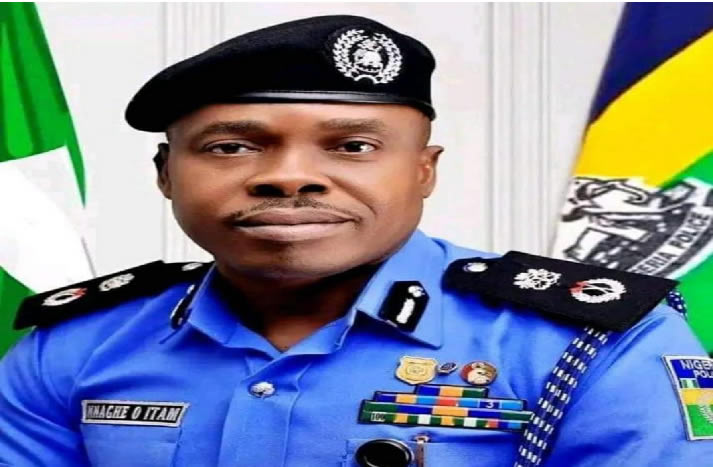
Ikenga said manhunt and rescue operations were ongoing to rescue the victims and arrest the assailants as directed by the Commissioner of Police, Nnaghe Obono Itam.

He said, “Efforts are ongoing to arrest the assailants and rescue the victims of the abduction incidents on Saturday captured in a video along Ifite-Amansea Road, Awka.

“Meanwhile, the police responding team recovered the abandoned victim’s vehicle, and joint security measures/personnel positioning are already in place to forestall such and related incidents in the state.

“To this end, the CP charges the command’s tactical teams deployed to complement the joint security team to redouble their efforts to deprive the hoodlums of any space they desire to perpetrate their evil acts and vows that the police command shall leave no stone unturned in hunting down the assailants

“Further development on other locations shall be communicated, please.”

Police probe officer accused of raping Lagos teenager

0

The Lagos State Police Command said it had begun a full-scale investigation into the alleged rape accusation against one of its officers by a 17-year-old girl.

The command’s Public Relations Officer, Benjamin Hundeyin, in a statement on Sunday, also disclosed that the officer whose identity was yet to be disclosed had been taken into custody.

According City Round had reported on Saturday that the victim alleged that she was raped inside the Ogudu Police Station in the Ojota area of the state.

Our correspondent gathered that the officer had promised to help the teenager retrieve her phone, which had been taken by ‘one chance’ robbers on June 16 while she, her grandmother, and her siblings were returning from Ikeja.

The suspect reportedly overheard the teenager recounting her ordeal to her mother at her shop and offered to help track her missing phone and take her statement.

The victim also noted that she was invited into the suspect’s office in the guise of getting her phone but the suspect carried out the alleged act.

The mother of the victim, Aramide Olupona, had disclosed that her daughter began bleeding a day after the assault and was taken to the Mirabel Centre, adding that the incident was also reported to the authorities.

Olupona, however, accused the police of trying to bury the case, saying, “The suspect’s wife and the rest of his family have come to my shop to plead with me saying he would soon retire, but what about my daughter who was raped? Is it because I am a poor woman?”

Reacting, Hundeyin added that the alleged act contravened the code of conduct of the police and therefore assured the victim’s family and the general public that there was no attempt to cover up the incident.

He said, “The Lagos State Police Command has placed under arrest one of its personnel accused of defiling a 17-year-old girl. The Commissioner of Police, Lagos State Command, CP Adegoke Fayoade, has directed a full-scale and thorough investigation into the allegation.

“The command assures the public that there is no attempt at a cover-up as such hideous acts are at variance with the code of conduct and professional ethics of the Nigeria Police Force.

“To this end, CP Fayoade once again assures Nigerians that the officer will be dealt with under police regulations and the law if found culpable.”

Dangote lists refinery shares March, supplies petrol August

0

•Dangote eyes fertiliser supply to African countries in two weeks, plans 70% of group’s revenue in forex

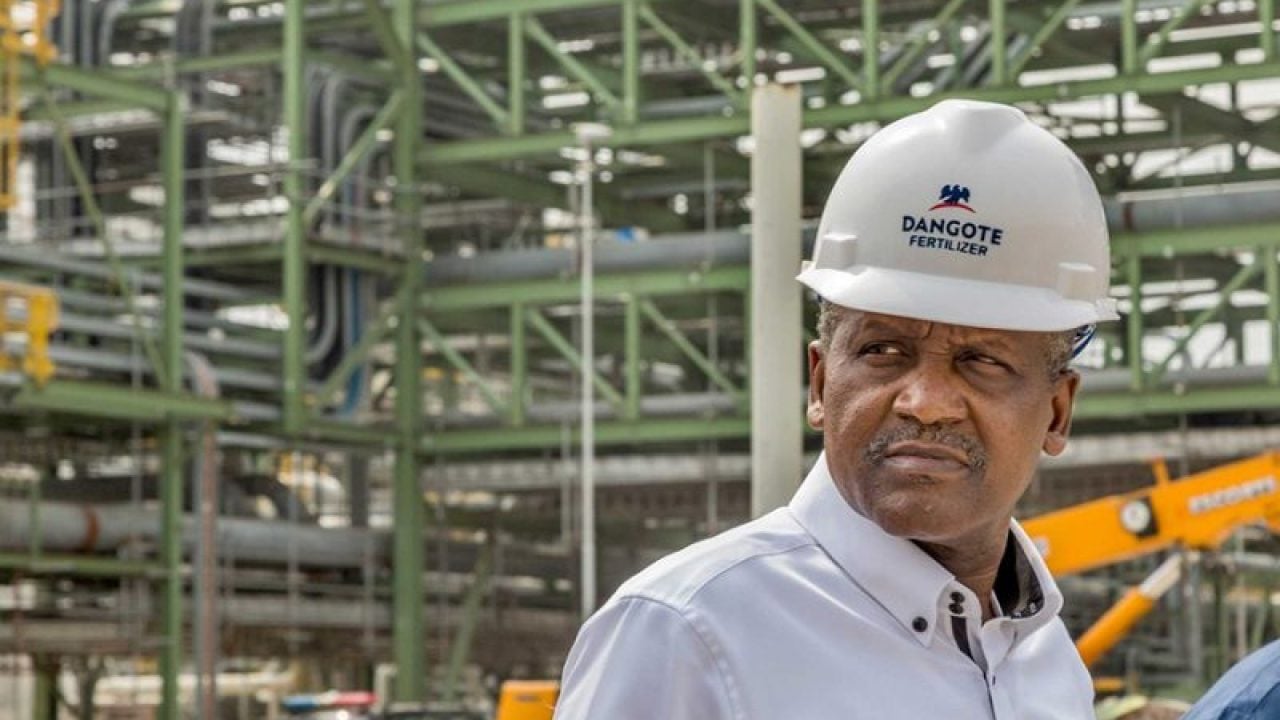
The President and Chief Executive Officer of Dangote Industries Limited, Alhaji Aliko Dangote, has disclosed that the Dangote Petroleum Refinery will be listed on the Nigerian Exchange before the end of March, 2025.

This came as the refinery again delayed the date for the supply of Premium Motor Spirit, popularly known as petrol, till August, another shift from July.

Dangote disclosed that the refinery was set to roll out its petrol in August 2024, having resolved its crude oil supply issues through the help of the Nigerian National Petroleum Company Limited and the Federal Government.

He stated these when he took senior journalists on a tour of the refinery and Dangote Fertilizer plants in Ibeji-Lekki, Lagos on Sunday.

“We plan to list the refinery and petrochemical before the end of the first quarter of next year, ” he stated.

He noted that the issue the refinery was having with international oil companies regarding the supply of crude was resolved last week.

“The issue of crude has been settled last week. But we hope that the IOCs will respect it, ” he added.

Dangote also revealed that the Federal Government owned only a 7.2 per cent stake in the Dangote Refinery against the 20 per cent that was publicised.

“The Federal Government have only 7.2 per cent because it failed to pay for the balance for the 20 per cent stake

Recently, the Vice President of Oil and Gas at Dangote Industries Limited, Devakumar Edwin, had last week accused international oil companies in the country of plotting to frustrate the survival of the new Dangote refinery.

Edwin said the IOCs were deliberately and willfully frustrating the refinery’s efforts to buy local crude by hiking the cost above the market price by $6, thereby forcing the refinery to import crude from countries as far as the US, with its attendant high costs.

Edwin stated, “The IOCs are deliberately and willfully frustrating our efforts to buy the local crude.

“It seems that the IOCs’ objective is to ensure that our petroleum refinery fails. It is either they are deliberately asking for a ridiculous and humongous premium or they simply state that crude is not available.

“At some point, we paid $6 over and above the market price. This has forced us to reduce our output as well as import crude from countries as far as the US, increasing our cost of production.

“It appears that the objective of the IOCs is to ensure that Nigeria remains a country, which exports crude oil and imports refined petroleum products. They are keen on exporting the raw materials to their home countries, creating employment and wealth for their countries, adding to their Gross Domestic Product (GDP), and dumping the expensive refined products into Nigeria, thus making us dependent on imported products.”

‘Crude crisis resolved’

However, Dangote’s confirmation of the resolution of the crude crisis might be a soothing balm to Nigerians who feared the lack of feedstock might jerk up the price of the refinery’s PMS.

Our correspondents report that this will be about the third time the refinery will postpone its PMS delivery date since it commenced the supply of diesel and aviation fuel into the Nigerian market.

According to Dangote, the refinery commenced full operations in 2024. starting with the refining of intermediate products such as polypropylene, naphtha, RCO, gasoline, diesel, and jet fuel.

He noted that the refinery steady state production phase commenced in March 2024 while also expecting the ramping up production to reach 500,000 barrels per day with 15 crude cargoes a month by next August, 550,000bpd by the end of the year, and 650,000bpd by the first quarter of 2025.

According to a presentation by Dangote during the tour, the refinery project is said to be fully online, with over $26bn being expected annually.

“Successful completion of trial run in January 2024. Refined and intermediate products include polypropylene, naphtha, RCO, gasoline, diesel, and jet fuel. Steady state production phase commenced in March 2024.

“Ramping up production to reach 500kbpd (15 crude cargoes a month) by next August, 550kbpd by the end of the year, and 650kbpd by the first quarter of 2025. Gasoline production is to commence in July with sales from August. Annual revenue is projected to exceed $26bn,” Dangote stated.

He added that the refinery had dedicated loading gantries with 86 loading bays; dedicated marine facilities for offtake of crude and loading of petroleum products; 900-kilo tonnes per annum polypropylene plant, 36ktpa sulphur, and 585ktpa carbon black production.

The total storage capacity of the refinery is put at 4.5 billion litres, which can cover 20 days of crude requirement product storage for 15 days of Nigeria’s petrol consumption.

He averred that the refinery would produce 53 million litres of petrol per day and 1.1 million tonnes per day.

“The Dangote Refinery can meet Nigeria’s requirements and have a surplus for exports,” he boasted.

On oil and gas, he added further, “We have built over 200km of gas pipelines in partnership with NGIC on a BOT basis. We also have other projects in the pipeline including a 3 billion cubic feet East-West Gas Gathering System offshore pipeline (design and engineering completed, awaiting commercial framework); 600 million standard cubic feet onshore gas pipeline(construction stage); and 300mscf gas processing facility (design stage).

These projects, he said, would help deliver gas for further investment and also help stabilise gas pressure in the Escravos–Lagos Pipeline System

The According recalls that during the Africa CEO Summit in Rwanda, Dangote promised that the refinery would put an end to the monthly importation of an average of 1 billion litres of premium motor spirit in Nigeria the moment the refinery started selling the product in June.

According to him, following the laid-down plans of the Dangote refinery, Nigeria will no longer need to import petrol starting in June.

Dangote also stated that his refinery can meet West Africa’s petrol and diesel needs, as well as the continent’s aviation fuel demand.

He said, “Right now, Nigeria has no cause to import anything apart from gasoline and by sometime in June, within the next four or five weeks, Nigeria shouldn’t import anything like gasoline; not one drop of a litre,” he declared.

He added, “We have enough gasoline to give to at least the entire West Africa, diesel to give to West Africa and Central Africa. We have enough aviation fuel to give to the entire continent and also export some to Brazil and Mexico.

“We have started producing jet fuel, we are producing diesel, and by next month, we’ll be producing gasoline. What that will do is that, it will be able to take most African crudes.”

In June, Dangote informed Nigerians his plan to release premium motor spirit into the market in the sixth month of the year would no longer be possible, sparking reactions from Nigerians.

The President of Dangote Group, Aliko Dangote told newsmen during a tour of the facility with Governor Babajide Sanwo-olu of Lagos State and other dignitaries that the petrol from the 650,000 barrels capacity refinery would be out in July.

Dangote said this was due to some minor challenges, stating that the product would be out by July 10 to 15.

“We had a bit of delay, but PMS will start coming out by 10 to 15 of July. But then we want to keep it in the tank to make sure that it settles. So by the third week of July, we’ll be able to come out to take it into the market,” Dangote had said.

Contrary to popular belief, Dangote announced that the NNPC has a 7.2 per cent stake and not 20 per cent as being speculated.

He stated that while the NNPC had promised to provide the funds, it had been unable to meet its obligations, thus reducing its stake in the $19bn refinery to 7.2 per cent.

He said, “The NNPC no longer owns a 20 per cent stake in the Dangote refinery. They were meant to pay their balance in June but have yet to fulfil the obligations. Now, they only own a 7.2 per cent stake in the refinery.”

In a statement on Sunday, the NNPC confirmed that it decided not to add to its earlier investment in the refinery.

According to the NNPC Chief Corporate Communications Officer, Olufemi Soneye, the energy company had several months ago decided to cap its investment at the amount already paid. Soneye hinted that the decision not to invest any further in the Dangote refinery did not impact NNPC’s business.

“Several months ago, we made a commercial decision to cap our investment at the amount already paid. This decision was taken by NNPC Ltd and has no impact on our business,” he said tersely.

Listing in Q1

Dangote announced plans to list his refinery and fertilizer plants on the Nigerian Exchange Group by the first quarter of 2025.

The decision to list the two subsidiaries comes as the group seeks to expand its investor base and unlock further value for shareholders.

Dangote disclosed that the company’s construction of rice mills with a 1-million-tonne capacity is ongoing, saying the Jigawa plant is expected to be commissioned in a few months.

Dangote disclosed that the delay in securing a site for the Dangote Petrochemical Facility in Ogun State resulted in a $500m loss.

He attributed the financial setback to the protracted process of acquiring land at the Olokola Free Trade Zone refinery cost him $500m on the $2.5bn initial drawdown on bank loans.

He expressed displeasure over the bureaucratic hurdles encountered, which he said negatively impacted the project timeline and overall costs.

“The three years and eight months delay by Ogun State govt over Olokola land for petrochemicals facility cost us $500m,” Dangote said.

Fertiliser production resumes

It was gathered that the company’s fertiliser plant would resume production in two weeks to give farmers a more productive harvest.

He said there was a massive request for Dangote fertiliser from Nigerians and the rest of Africa.

He noted that the fertiliser plant has 3Mta of granulated urea (2 lines of 1.5Mta each), saying it was largely export-driven business with 12 per cent sold domestically and 88 per cent exported to Sub-Saharan Africa, South America, the United States and Europe.

He revealed that the production of fertiliser has increased by 48 per cent to 1.2 million tonnes in 2023, creating 1,500 direct jobs and about 5,000 indirect jobs.

The richest man in Africa has projected that the company’s revenue would grow to about $30bn in the next few years, increasing six times.

It was mentioned that 75 per cent of the group’s revenue currently comes from the cement business; 80 per cent of of Earnings Before Interest, Taxes, Depreciation and Amortization comes from Nigeria, with 90 per cent of revenue in various local currencies.

In future, the Dangote Group projected that 15 per cent of revenue would come from the cement business; 50 per cent of EBITDA from outside Nigeria (including exports) and 70 per cent of revenue in hard currency.

During the presentation, Dangote noted that the company’s cement is the leading cement player in Africa with a total capacity of 52 million tonnes per annum across 10 countries. He said, “Plans are underway to add a total of 9m tons of capacity in Nigeria and Cote d’Ivoire”.

The According reported recently that the Federal Government and crude oil producers in Nigeria have committed to working towards a sustainable supply of crude oil to Dangote and other local refineries under a market-determined pricing system.

Both parties said the aim of the commitment was to ensure that while the operators (crude oil producers) do business optimally, the refineries are not starved of feedstock.

Accordingly, the industry regulator, the Nigeria Upstream Petroleum Regulatory Commission has directed oil refiners in the country to provide monthly price quotes on crude supply.

This came as the $20bn Dangote Petroleum Refinery is reportedly ramping up the importation of crude from the United States, Bloomberg reported on Thursday.

Oil producers

In a statement issued in Abuja on Thursday, the NUPRC stated that oil producers under the umbrella of the Oil Producers Trade Section of the Lagos Chamber of Commerce and Industry, at a meeting called by NUPRC, agreed to concede to a framework that would be mutually beneficial with the aim of ensuring that local refineries are not strangulated due to off-the-curve prices.

“The focus of the meeting held at the instance of the Commission Chief Executive, Gbenga Komolafe, was on the status review of the Framework for Seamless Operationalisation of Domestic Crude Oil Supply Obligation Template.

“It was part of efforts to effectively implement key sections of the Petroleum Industry Act (PIA) 2021, especially the issue of pricing and crude supply to the domestic refineries,” the commission stated.

According to Komolafe, President Bola Tinubu is fully committed to providing a level playing ground for producers and refiners to do business in the industry.

He said there is a need to have a rule of engagement “to ensure that the pricing model from the oil producers is not seen to be strangulating the domestic refineries”.

He directed producers and refiners to henceforth provide the regulator with cargo price quotes on crude supply and delivery to monitor and regulate transactions among parties effectively.

“We need to have the price quotes on a monthly basis,” he directed.

Komolafe emphasised that the Domestic Crude Oil Supply Obligation has a convergence with the nation’s energy security.

The NURPC boss said his administration is re-engineering its regulatory processes.

“We allow all our processes to be transparent. While the Federal Government targets implementation of the regulation, all parties must concede to the rules of engagement as a guide for operation,” he said.

The regulator said it is committed to driving the issue of willing buyer/willing seller.

“We need to discuss pricing especially as parties have committed to respecting their domestic crude oil obligation. For us as the regulator, we don’t want the upstream sector to be operated sub-optimally through cost under-recovery. So, the regulator is very alive to that. In crude pricing, we will never allow price strangulation to disincentivise our domestic refining capacity optimisation.

“The regulator does not support cost under-recovery in the upstream sector, and we will continue to work to ensure that crude supply profiteering as a negative factor that can strangulate our domestic refining capacity optimisation is disallowed,” he stressed.

The CCE further stated that the NUPRC is truly committed to the attraction of needed investments to boost upstream development and optimisation of our hydrocarbon resources just as we want sustainability of domestic energy supply in the midstream and downstream sector.”