Home Blog Page 100

Judicial Decision: Rivers Chief Judge Declines Panel for Fubara and Deputy

0

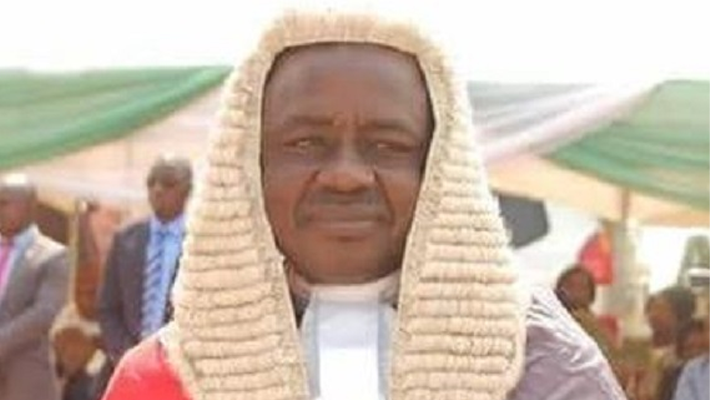
Judge Chibuzor Simeon Amadi, the Chief Judge of Rivers State, has refused to form a seven-person panel to look into claims of egregious misconduct against Governor Sim Fubara and his deputy, Ngozi Ordu.

Justice Amadi cited two court orders prohibiting him from accepting, sending, or considering any petitions to constitute such a panel in a letter dated January 20, 2026, to Martins Amaewhule, the Speaker of the Rivers State House of Assembly.

On January 16, 2026, the orders were delivered to his office and are still in effect.

The Chief Judge underlined that regardless of their opinion of the validity of existing court orders, all authorities must abide by them due to constitutionalism and the rule of law.
He cited court rulings, pointing out that in a comparable situation in 2007, the Chief Judge of Kwara State was found guilty of disobeying a restraining court order when establishing an investigating panel; the Court of Appeal later overturned this ruling.

The Speaker has already filed an appeal against the court orders at the Court of Appeal, according to Justice Amadi, adding another level of complexity to the continuing legal proceedings surrounding the claims.


He cited court rulings, pointing out that in a comparable situation in 2007, the Chief Judge of Kwara State was found guilty of disobeying a restraining court order when establishing an investigating panel; the Court of Appeal later overturned this ruling.

The Speaker has already filed an appeal against the court orders at the Court of Appeal, according to Justice Amadi, adding another level of complexity to the continuing legal proceedings surrounding the claims.

El-Rufai Claims APC Members Don’t Face Corruption Allegations

0

Nasir El-Rufai, a former governor of Kaduna State, expressed concerns on Thursday about what he called selective accountability in Nigeria, cautioning that the idea that members of the All Progressives Congress (APC) are rarely charged with corruption needs to be addressed immediately.

El-Rufai reportedly gave a speech at the 23rd Daily Trust Dialogue in Abuja, which had as its theme “Nigeria’s Fourth Republic: What is Working and What is Not?”

He claims that Nigeria suffers from unaccountable governance, pointing out that changes have prioritized procedures above results.

Without accountability, we have governance. Nigeria has developed accountability and change more quickly than in terms of content, he claimed.

“We hold elections, establish agencies, and declare asset recoveries, but accountability by simply governing remains selective,” he continued. Corruption is now invisible to those in positions of power, negotiable for those who are on the fence and wish to switch to the APC, and dangerous for others who are in opposition. Members of the APC are never charged with corruption.

The former governor cautioned that ordinary Nigerians would suffer greatly from unequal enforcement of the law.

Unpaid salaries, shelved projects, deteriorating infrastructure, and general cynicism are examples of this; it is not abstract. Deterrence breaks down when laws are applied inconsistently. Additionally, confidence disappears when deterrence fails, which is what is occurring in Nigeria, he stated.

El-Rufai emphasized that in order to ensure legitimate elections and an impartial electoral commission, institutions must be strengthened, especially through judicial reforms.

Ultimately, for our politics to have purpose, we need to reinstate moral and capable governance. He continued, “Reform is about what needs to end as well as what needs to change.

Sunday Dare, the President’s Special Advisor on Media and Policy Communication, and Hon. Nnenna Elendu-Ukeje, the Chair of the Foreign Affairs Committee of the 7th and 8th House of Representatives, were among the other panelists at the event.

Former Senate President Bukola Saraki presided over the discussion, and Rashidi Ladoja served as the Special Guest of Honor.

Oshiomhole: Some Nigerians Are Saying Food Is Becoming Too Cheap

0

Senator Adams Oshiomhole’s comments on Channels Television while defending the government’s economic policies have caused controversy.

According to reports, Oshiomhole responded to inquiries regarding whether the reforms have had a detrimental impact on regular Nigerians.

Reports that the reforms had caused hardship were refuted by him, who argued that they were intended to effect change.

He claimed that many of the issues brought up were largely hypothetical rather than grounded in reality.

Contrary to popular belief, he said, some Nigerians believe that food prices are suddenly getting cheaper.

Oshiomhole questioned whether there was actual proof of numerous complaints and contested the notion that common people are suffering.

In actuality, we promised drastic changes, Oshiomhole stated. What do average people look like? These are stuff you take from people’s mouths. Have you visited individuals who are complaining? Nigerians are complaining that food is getting too cheap.

According to Oshiomhole, President Bola Tinubu’s tax policies align with the principles of a progressive government.

He claimed that the tax reforms shift the burden from the poor to the wealthiest while speaking on Channels Television.

He claimed to be one of the lawmakers that backed the tax legislation that was subsequently signed into law.

According to Oshiomhole, President Tinubu’s tax policy is in line with the principles of a progressive administration.

“And this is a progressive tax policy that offers tax exemptions to those who earn less while placing a greater burden on those who earn more.”

ADC Kicks Off Council Election Campaign with Peter Obi Storming FCT

0

Prior to the Federal Capital Territory (FCT) council election, former Labour Party presidential candidate Peter Obi undertook a campaign tour with African Democratic Party (ADC) members and supporters.

The well-known Kugbo furniture market, which was impacted by a fire outbreak, was the first place the former Labour Party member, who just defected to the ADC, visited.

He revealed this on his X page, writing, “Such losses are especially painful at a time when many Nigerians are grappling with deepening hardship and poverty.”

“Despite the setbacks they faced, they will recover and thrive again with the right support,” he added, reassuring traders in the market square who related their stories of the tragic event.

“This incident underscores my consistent call for a comprehensive reform of our emergency response systems,” he continued.

“In order to save lives and livelihoods, a country that genuinely cares for its citizens must invest in effective, well-coordinated emergency services.”

Alongside Moses Paul, the contender for ADC chairmanship in the Abuja Municipal Area Council election, the former governor of Anambra State went to a local market.

According to Obi, the visit was intended to increase community involvement prior to the elections, highlighting the significance of active citizen participation.

“We must strive towards a Nigeria where avoidable tragedies are avoided and where institutions function effectively for the benefit of everyone,” he continued.

Property dispute: EFCC not debt recovery agency – Witness

0

A witness of the Economic and Financial Crimes Commission, Emmanuel Adide, has told a Lagos State High Court that the Commission was not requested by a Nigerian-American engineer, Anthony Ugbebor, to recover the sum of N152m allegedly paid for two luxury flats developed by Oak Homes Limited.

While under cross-examination,
Adide stressed that the EFCC is not a debt recovery agency.

In his evidence before the court in a suit filed by property developer Olukayode Olusanya and his firm, Oak Homes Limited (Suit No: LD/4471LM/2023), against Ugbebor (first defendant) over alleged trespass on two second-floor apartments located at No. 14A Musa Yar’Adua Street, Victoria Island, Lagos.

Aside, an EFCC operative, told the court that, when the claimant agreed to refund the money, there was no discussion or understanding that the flats would be sold to facilitate the repayment.

Responding to questions on whether the EFCC directed the claimant to refund the money, Adide explained that the discussions formed part of the commission’s internal processes.

However, he said it was unclear, at the time, whether disposal of the flats would be required to effect the refund, adding that compelling the sale of property in such circumstances would amount to improper practice.

He further explained that once allegations of fraud arise, the EFCC’s standard procedure is to investigate the complaint and, where appropriate, recover funds connected to criminal conduct as part of its operational mandate.

Adide told the court that the petition submitted to the EFCC alleged criminal breach of trust and obtaining money by false pretence, which justified the commission’s investigation.

However, he said the investigation later revealed that the dispute was civil in nature.

“As a result, the claimant was contacted and asked to retrieve the bank draft earlier submitted to the EFCC,” he said.

The witness confirmed that Olusanya, the Managing Director of Oak Homes Limited, was detained when he first visited the EFCC office in Abuja.

He also confirmed that Olusanya never denied that a transaction occurred between him and Ugbebor.

“He did not deny it, my lord,” Adide said.

When asked whether the refund arrangement was reached while Olusanya was in detention, the witness answered in the negative, adding that Olusanya was already on bail when he made the refund.

He said the claimant paid the money in instalments but could not recall the number of tranches.

He confirmed that Olusanya submitted three bank drafts to the EFCC totalling N102m.

Earlier in the proceedings, counsel to Ugbebor, I.B. Mamood, informed the court that the defence had decided not to call any further witnesses.

“Upon careful review of our case, we have resolved not to call additional witnesses. We are therefore closing our case,” he said.

Following this, the EFCC, listed as the second defendant, opened its defence.

Its counsel, M.A. Shehu, called Adide as a witness and adopted his witness statement on oath.

The commission also tendered documents, including the petition, extra-judicial statements, and a letter.

Justice George admitted the documents in evidence and marked them as Exhibits 2DW1, 2DW2, and 2DW3, respectively.

The court also admitted Adide’s witness statement on oath dated January 17, 2024, as his evidence.

During cross-examination by lead counsel to the first defendant, Nasiru Salau, Adide confirmed that there was no written request from Ugbebor asking the EFCC to recover the money.

After hearing the testimony, Justice George adjourned the case until March 23, 2026, for the adoption of final written addresses.

At the last adjourned date, Ugbebor had opened his defence and told the court that he paid for two luxury flats with his “life savings” totalling $400,000.

He said he paid N152m (representing 80 per cent of the total purchase price of N190m) but that the developer later denied having any record of the transaction.

He testified that, on October 11, 2022, he sent a representative to inspect the flats, only for Oak Homes Limited to allegedly claim there was “no record” of his purchase despite the payments.

Under cross-examination by counsel Agboola, Ugbebor confirmed that he petitioned the EFCC in Abuja after suspecting fraud.

Kano APC Begins Membership Drive as Gov Yusuf’s Defection Faces Hold-Up

0

Amidst mounting uncertainty surrounding Governor Abba Yusuf’s defection, the All Progressives Congress (APC) Kano State branch has started its online membership registration process. Yusuf has repeatedly delayed the date of his anticipated move to the ruling party.

The state’s APC leaders had previously scheduled the e-membership registration to begin on January 15. However, the governor reportedly requested that the exercise be put on hold indefinitely.

According to a source with knowledge of the situation who spoke to Daily Nigerian, Yusuf informed Vice President Kashim Shettima about the situation when he realized the Kano APC was getting ready to move forward with the registration.

The source claims that the vice president then ordered Yilwatda Nentawe, the national chairman of the party, and Abdullahi Ganduje, the former governor of Kano, to wait until the governor formally defected before initiating the exercise.

At first, the APC anticipated that Yusuf would defect on January 5, which was also his birthday. However, because many state APC leaders were either on vacation or participating in the Umrah pilgrimage, the date was suddenly changed to January 12.

As January 12 drew near, the announcement was once more rescheduled until January 16, to be made soon after an Executive Council meeting in Abuja that was off-site and covered by the media.

However, following the council meeting, the expected proclamation did not materialize, disappointing party officials.

The governor allegedly scheduled January 20, one day after his meeting with President Bola Tinubu, in response to the postponement of January 16.

However, as the date drew near, a senior party official—who wished to remain anonymous—said the governor requested “more time in order to widen consultations” from the party leadership.

Following a covert meeting between Yusuf and his political godfather, Senator Rabiu Kwankwaso, at the latter’s Miller Road home in Kano, there was ambiguity about the governor’s defection.

According to sources, the purpose of the meeting was to defuse the tension and criticism surrounding Yusuf’s alleged intention to leave Kwankwaso and join the APC.

Insiders claim that the governor promised Kwankwaso that no action would be taken until he saw President Tinubu in France and communicated Kwankwaso’s “terms and conditions” for joining the APC.

Yusuf finally met Tinubu on Tuesday in the Presidential Villa in Abuja, following failed attempts to meet the president in Paris and Abu Dhabi last week.

According to sources, Tinubu was supposed to welcome Kwankwaso the day following Yusuf’s visit, but the meeting was allegedly placed “on hold.”

The Kano APC had previously established an e-membership registration committee, co-chaired by Rabiu Suleiman-Bichi, Managing Director of the Hadejia-Jama’are River Basin Authority, and Baffa Babba-Dan’agundi, Director-General of the National Productivity Center, despite the ongoing uncertainty.

Registration has officially started throughout the state, despite reports that a “001 membership card” was set aside for Governor Yusuf in his Diso Ward in Gwale Local Government Area.

Soludo Calls on Igbo Community to Embrace Full Integration into Nigeria

0

David-Chyddy Eleke examines the legitimacy of Anambra State Governor Prof. Chukwuma Soludo’s recent request that Ndigbo appropriately reintegrate into the Nigerian project.

Despite receiving more than 90% of the total votes voted in the state’s governorship election on November 8, 2025, Anambra State Governor Chukwuma Soludo cannot claim to be particularly popular with the general public. That might need to be clarified later. However, the professor of econometrics and former governor of Nigeria’s top bank is one governor whose open opinions cannot be wished away.

It doesn’t matter if Soludo’s words make you love or despise him; what matters is that no matter how unpleasant or painful his opinions may be, you cannot ignore the truth they contain. Since taking office as governor in 2021, Soludo has frequently expressed unpopular opinions that, while neither untrue nor debatable, were seen negatively by his detractors.

His famous open letter, “History Beckons, I Shall not be Quiet,” continues to be one of the most well-known of these opinions. His opinions in the book were direct criticisms of Mr. Peter Obi, his predecessor, a former UNN classmate, and the godfather of his kid. Mr. Obi was a Labour Party presidential contender in the 2023 election.

The entire Igbo race in South East Nigeria was the focus of Soludo’s recent decision to reveal such reality on the 2026 Armed Forces Remembrance Day. The governor urged the Igbo people of the South East to stop marginalizing themselves, especially its young people, and to accept their position as “co-owners” of the Nigerian project by enlisting in the Nigerian Armed Forces.

Following a vibrant military procession and the symbolic placing of a wreath on the tomb of the “unknown soldier,” Soludo addressed the platform to deliver what he saw as home truth while considering the 56th anniversary of the end of the Nigerian civil war. He called the civil war “needless” and pointed out that the idea of “no victor, no vanquished” must continue to serve as the nation’s compass. However, Soludo felt that the South East’s residents needed to shed the toga of marginalization, which has been a recurring theme in the region’s discourse.

He bemoaned the fact that, despite the fact that the war ended 56 years ago, Igbo people still have feelings of marginalization, to the extent that they refuse to be recruited into important institutions that may further their development and strengthen their position in the Nigerian project.

For instance, the South East consistently reports low enrollment rates in vital sectors like the military. The South East states declined to occupy the slots, even after quotas were given out. This has persisted and has been exacerbated by hazardous propaganda disseminated by secessionist elements who want everyone to think that the system would always despise Igbo people. For instance, the Movement for the Actualization of the Sovereign State of Biafra (MASSOB), a separatist organization led by Ralph Uwazuruike, advocated for the Igbo people to avoid the 2006 national census, claiming it was useless.

Later, the group violently interfered with the exercise, even resorting to violence against census takers. Even the justifications that the census served as the foundation for allocating utilities and other benefits of democracy were insufficient to persuade them to change their minds.

Additionally, members of the Indigenous People of Biafra (IPOB), a later-day secessionist organization headed by Nnamdi Kanu, who is currently incarcerated, has launched a propaganda campaign opposing military enlistment. The false information that Igbo officers in the force are targeted and sent to bandits and Boko Haram, which devastated the North East and West, respectively, in the hopes that they will be used as sacrificial lambs, is where this all began.

After this failed, the group went on to declare war on their own brothers who were in the police, calling them “saboteurs.” There are numerous videos depicting members of the Eastern Security Network (ESN), the militant wing of the IPOB, attacking police formations and even targeting Igbo officers for daring to register in the Nigeria Police, which they call “zoo police.” Some of these officers are killed, while others are abducted and forced to die slowly.

During the Armed Forces Remembrance Day, Soludo stated, “The Police is working hard, the army; you’re working hard, but Anambra people and the rest of the South East, this is the moment that we have to tell ourselves that the civil war has ended and the civil war ended 56 years ago,” in an attempt to dispel their misconceptions and provide home truths about how the Igbo can integrate into the Nigerian project and reap the many benefits of doing so. Our young people from the South East, especially those from Anambra, have the lowest recruitment rates in the nation for both the Army and the Police.

“I would like to take this opportunity to encourage our young people to join the Nigerian military. Nigeria belongs to all of us, and we cannot be full members of a group and choose not to participate or stay out at the same time. We have been marginalizing ourselves in this particular sector. In a few decades, we would turn around and cry that there are no officials of Igbo or Anambra descent because we refused to join the police or military. Therefore, as equal owners of Project Nigeria, we must contribute equally.

Soludo is aware of the actions of a small group of criminals who pretend to be separatists and liberators in an effort to free the people from the “suffocating” hold of Nigerian authorities, who are thought to despise Igbo people. Soludo, who has consistently offered a carrot before a stick, seized another chance to urge criminals posing as freedom fighters to leave the bushes or face consequences for their actions.

“I also want to call on our brothers and a few sisters who are in the bushes and in the forest and so called camps; some say they are liberators but these people are criminals, kidnappers, and terrorists,” Soludo stated in reference to them. Humans do not reside in bushes or woodlands, therefore leave as you are not freeing anyone. People reside in homes. We have extended an olive branch to the remaining terrorists, and we will assist them in becoming contributing members of society. The terror age must end. However, the line is carved in the sand if you choose to remain there, and I always remind our young people that nobody has closed themselves off and survived off crime till old age. We use this occasion once again to extend the olive branch.

“As we celebrate the Armed Forces Day today, we call on you to lay down your arms because the civil war is over. There is no other way to end the civil war, and it affects not only the people in the South East but all of Nigeria. Nigeria needs to be developed in order to fulfill its manifest destiny and become the world’s most progressive country in addition to its greatest population, according to Soludo.

Even though many have criticized Soludo for what they called “loud mouthedness,” his message has resonated sufficiently in the minds of many. Soludo is adamant that he has said the correct thing after numerous conversations.

In defense of his principal, his press secretary, Mr. Christian Aburime, wrote: “History demonstrates that groups that choose not to participate in national processes frequently wake up ten years later to find themselves statistically “diminished” or under-represented in federal institutions, leading to a fresh cycle of disadvantage that is difficult to reverse.” The aforementioned dynamics make it important that Ndigbo, particularly our brothers and sisters from Anambra State and the energetic, resilient youth of the Southeast, wake up! Sitting on the sidelines is no longer an option. Now is the time to put an end to the period of self-imposed exile from the core of Nigeria’s security architecture.

“Consider the heroes that the Southeast would lose if they chose not to enlist. Future generals, strategists, and reformers may be among our bright, creative, and resilient young people. Thus, the Light of the Nation has always set an example for young people in Anambra. We have done well in both business and education. Let us now rule in the service of our country. No other road may compare to the discipline, abilities, and sense of purpose that enlistment provides. It also serves as a doorway to power, prestige, and pensions. We have rebuilt from the devastation of war for the greater Southeast; now is the time to reestablish our presence in every institution that unites Nigeria. Saying “never again” to self-marginalization is appropriate at this point.

Central Bank of Nigeria Calls on Banks to Combat Fraud, Adhere to 30-Minute Rule

0

Banks and payment service providers have been urged by the Central Bank of Nigeria (CBN) to make quantifiable reductions in electronic fraud.

Additionally, under the Nigeria Electronic Fraud Forum (NeFF) framework, it advised institutions to react to suspicious transactions within 30 minutes.

Speaking at the “Shrinking Fraud Losses with ISO 20022 and Identity Management” Technical Kick-Off Session of the 2026 Nigeria Electronic Fraud Forum (NeFF), According to Mr. Philip Ikeazor, Deputy Governor, Financial System Stability, CBN, the sector has to implement enterprise-wide, data-driven fraud management solutions that can produce noticeable outcomes in place of dispersed controls.

Premier Oiwoh, Managing Director and Chief Executive Officer of Nigeria Inter-Bank Settlement System Plc (NIBSS), also spoke at the conference. He disclosed that the financial system saw a notable improvement in fraud outcomes in 2025, with the value of money lost to fraud decreasing by 51% year over year.

Ikeazor went on, “The industry must commit to bold, measurable fraud-reduction targets, supported by clear strategic priorities.”

Full utilization of ISO 20022 data, universal and real-time identity verification, improved round-the-clock fraud monitoring and response, organized liability-sharing and consumer reimbursement frameworks, increased interaction with telecoms and payment service providers, and stringent performance evaluation via transparent scorecards are some of these. Improving what is measured is necessary.

In the end, fraud is a problem that affects financial stability rather than just operations. Unchecked fraud raises systemic dangers, jeopardizes advances in inclusiveness, and erodes confidence in digital finance.

Nigeria promotes economic growth, maintains macro-financial stability, and protects trust in its payment system by bolstering fraud controls. The central bank is still totally dedicated to offering the coordination, policy assistance, and regulatory leadership needed to accomplish these goals.

“We have an important collective duty ahead of us. 2026 may and should be remembered as the pivotal year when Nigeria significantly reduced fraud losses and safeguarded the future of its digital financial ecosystem thanks to clear goals, shared accountability, and ongoing cooperation under NeFF.

As a result, the sector came to an agreement under NeFF to cut the time it takes to respond to fraud to less than 30 minutes, which Ikeazor said is essential to enhancing recovery results and reducing systemic vulnerability.

He claims that “efforts to mitigate fraud have evolved in tandem with changing threat vectors.” While more recent threats like internet fraud, social engineering, SIM-swap misuse, insider compromise, and authorized push payment (APP) scams have surfaced, older frauds like ATM card cloning have been successfully eliminated.

“NeFF has been instrumental in organizing prompt actions, such as industry alerts, public awareness campaigns, mandated two-factor authentication, round-the-clock bank fraud desks, and, most recently, the creation of a Standardized APP Scam Framework.

“A significant step that significantly improves recovery outcomes and limits systemic exposure is the industry’s agreement to reduce fraud response times to under 30 minutes.”

Ikeazor also emphasized the relevance of identification infrastructure in preventing fraud, citing the reduction of impersonation and synthetic identity fraud as a result of the Bank Verification Number (BVN) and its integration with the National Identification Number (NIN).

He stated that maintaining cooperation with the National Identity Management Commission (NIMC) will be essential to enhancing the integrity of the payment system.

According to Oiwoh’s contribution, total fraud losses decreased from N52.26 billion in 2024 to N25.85 billion in 2025. Additionally, the number of reported fraud cases decreased by 4% to 67,518 from 70,111 in 2024.

He credited stricter regulations, increased cooperation between regulators, banks, and security agencies, and enhanced fraud detection capabilities throughout the payments ecosystem for the dramatic decline in fraud losses.

“The number of cases of industry fraud has significantly decreased over the past five years,” he stated. Losses increased to N52.26 billion in 2024, mostly due to a single N31.1 billion fraud occurrence involving one firm. Losses fell dramatically to N25.85 billion in 2025.

“I have to thank the police, DSS, and other security agencies for their work. Fraud must be reduced as much as possible if we are to attain financial inclusion. It is possible.

According to Oiwoh, insider misuse has emerged as the single greatest concern, and social engineering is still the most common fraud strategy. He noted that the ongoing evolution of SIM-swap fraud, phishing, and account penetration highlights the necessity of more robust internal controls, employee monitoring, and collaborative industry action.

However, he warned that non-reporting is still unacceptable and voiced alarm over the decline in fraud reporting, which dropped by almost 34% in the final quarter of 2025.

“Reporting makes tracking and research possible. Because crimes were not recorded, scammers often just moved from one institution to another, he claimed.

In response, Oiwoh said that the NIBSS created the Person of Interest Portal in collaboration with the CBN, the Nigeria Financial Intelligence Unit (NFIU), and security agencies. As of right now, 13,417 people have been implicated in fraudulent operations since 2019. He said that law enforcement authorities were actively using the portal.

Along with the introduction of the National Payment Stack (NPS), which was developed in accordance with ISO 20022 and integrated with advanced security and Nigerian data sovereignty, he also emphasized the expanding significance of AI-driven cybersecurity and digital intelligence capabilities. He said that all instant payments were now risk-scored and that suspicious transactions were immediately flagged.

In the future, Oiwoh stated that financial knowledge and access to reasonably priced cellphones are still essential for expanding digital inclusion, while the recovery of pilfered money is still ongoing.

He emphasized that good BVN and NIN validation using APIs may prevent up to 95% of identity-related fraud, but cautioned that weak account restrictions, poor client profile, and insufficient KYC measures continue to put institutions at risk.

Dr. Rakiya Yusuf, the CBN Director of Payment System Supervision and NeFF Chairman, stated in her presentation that the apex bank will soon start inspecting banks to guarantee adherence to ISO 20022 standards and improved use of electronic channels.

She emphasized that all institutions must make sure that appropriate know-your-business (KYB), know-your-customer (KYC), and customer due diligence (CDD) procedures are properly followed, reiterating that there was no “KYC zero” policy.

“We have KYC 1, 2, and 3 with different thresholds,” she stated. When there is absolutely no identity, there is no KYC known as KYC zero.

“There isn’t a KYC four policy that the central bank has developed. It will therefore be quite convenient to address them if you have that in your books.

Legal Battle Looms as Glencore, AFC, Mauritius Bank, Fidelity Sue First Bank Trustees, Receiver

0

A group of foreign financial institutions, including Glencore Energy UK Limited, Africa Finance Corporation, Mauritius Commercial Bank, and Fidelity Bank, has launched a lawsuit against FBN Trustees Limited in a major escalation of the ongoing legal disputes influencing Nigeria’s oil and gas industry.

Due to what the international lenders claim is an illegal attempt to take control of Neconde Energy Limited’s holdings in the valuable Oil Mining Lease 42 (OML 42), the case is directed at both FBN Trustees and the designated receiver, Abubakar Sulu-Gambari SAN.

The foreign lenders claim that Abubakar Sulu-Gambari SAN’s appointment as Receiver/Manager violates their rights by being an illegal attempt to enforce a subordinate security.

Context: Neconde and OML 42’s Conflicting Interests

A significant participant in Nigeria’s oil and gas industry, Neconde Energy Limited owns 45% of OML 42, a strategically significant oil asset.

Neconde received credit facilities from overseas lenders, including international financial institutions, an international oil trading company, and Fidelity Bank. FBN Trustees were designated as their security trustees in accordance with the provisions of the agreements.

The complicated network of connections between Neconde, the foreign lenders, and a group of Nigerian banks known as the “Nestoil Lenders” at the root of the conflict.

First Bank Limited and FBN Trustees, a company connected to First Bank Nigeria Limited, served as trustees for these Nestoil lenders.

Claims: Violation of Trust and Illegal Establishment of Security

Allegations that FBN Trustees violated their fiduciary duties and trust obligations by arranging the development of a secondary security interest over Neconde’s assets in OML 42 in order to benefit the Nestoil Lenders are at the center of the complaint.

Despite the foreign lenders’ express lack of consent—a requirement outlined in the original terms of their lending agreement including FBN Trustees—the foreign lenders maintain that this security was constituted through a Deed of Charge executed by FBN Trustees.

Notably, the lawsuit claims that Neconde does not owe the Nestoil Lenders, which makes it entirely illegal to create this extra security without the necessary approval.

Legal Arguments and Demands from Foreign Lenders

The plaintiffs contend that FBN Trustees created the challenged security interest despite being fully aware that previous approval was required and receiving an unequivocal rejection.

They contend that this activity amounts to a grave breach of fiduciary duty and trust, making FBN Trustees liable for acting in the best interests of persons that have no right to claim Neconde’s assets.

In order to invalidate the disputed security, remove FBN Trustees from their position as security trustees, and remove Abubakar Sulu-Gambari SAN as a putative receiver, the foreign lenders are requesting damages and court orders.

They want the court to decide whether the following security and the receiver’s appointment are lawful, as well as to interpret and uphold the priority clauses of the facility agreement, debenture, and intercreditor deed.

The plaintiffs contended in a written letter supporting an originating summons dated December 11, 2025, that the December 2022 Deed of Charge was performed without their agreement and is therefore null and void, invalid, and legally ineffectual.

Consequences: A Novel Development in First Bank Litigation and the Investment Environment

The current legal conflicts between First Bank Nigeria entities, Neconde, and Nestoil are complicated by this development.

Legal experts point out that the accusations of fraudulent security creation and the involvement of several foreign lenders could have significant ramifications.

The case casts doubt on Nigeria’s investment climate and raises significant ethical concerns about the country’s banking system’s transparency and governance.

Opponents caution that if these disagreements are not resolved, they may discourage future foreign investment and harm Nigeria’s financial institutions’ reputations.

Conclusion: Next Actions and Industry Monitoring

Stakeholders from the banking and oil industries are keeping a close eye on the court’s decision as it evaluates the claims of the foreign lenders.

Don’t Write Off Nigeria Over Isolated Security Issues – Tuggar Tells Investors

0

Yusuf Tuggar, the Minister of Foreign Affairs, advised foreign investors yesterday not to evaluate Nigeria’s potential based solely on individual security occurrences. According to Tuggar, these examples did not accurately represent the long-term investment fundamentals of Africa’s biggest economy.

Tuggar acknowledged Nigeria’s security issues while speaking to CNN on the fringes of the current World Economic Forum (WEF) in Davos, Switzerland. However, he emphasized that the administration was aggressively addressing them and that they were localized.

According to him, the propensity to generalize insecurity throughout the nation has frequently resulted in inflated risk perceptions that have concealed potential in important industries. He called on the world community to reconsider its perception of Nigeria.

Nigerians are among the most diverse people on the continent, according to the minister. He emphasized the nation’s progressive macroeconomic reforms and the Bola Tinubu administration’s continuous attempts to improve governance.

According to Tuggar, investors should have a more nuanced perspective on Nigeria, evaluating the nation on its unique qualities rather than making generalizations, even though no nation is immune to security problems.

“I think it would be nice to see (Nigeria) as a very diverse country that actually has not fared bad compared to countries that are more homogenous,” he said to CNN. that notwithstanding some peripheral or even conflict zones in border areas that are currently cascading downward, we have been coexisting peacefully.

However, in order to identify the appropriate remedies, it is crucial to define it for what it is. We have a number of activities, including forest guards. We had actually performed admirably in the battle against Boko Haram.

The minister refuted what he saw as the misrepresentation of both the Nigerian and African situations, stating that many of the allegations are exaggerated.

“Some of the conversations that are taking place here also have to do with Africa’s risk bias, where the issue of risk, particularly geopolitical risk, is overhyped when it comes to Africa, which doesn’t apply in other parts of the world,” he stated.

Therefore, it is crucial that we examine the advancements made by the Tinubu government in macroeconomic reforms, such as the tax reforms that facilitate investment in Nigeria, the reduction of corporate income tax, and the foreign exchange reform.

“We have $43 billion in foreign reserves, so we can come to Davos and use our Nigerian cards, which are limitless credit cards. The yield on our Treasury bills and national bonds is between 8 and 10 percent. So let’s take a comprehensive look at Nigeria. Let’s stop focusing on a few of these isolated occurrences and using them to characterize the entire nation.

“And it’s also important to note that sometimes when we dwell on some of these incidents, sorry, when we don’t frame the narrative correctly, we actually trigger some of these incidents, because that’s when some of the bandits and terrorists try to go for innocent civilians and use them as human shields because they know they’re going to be targeted,” he continued.

Tuggar admitted that the recent coup in the Niger Republic had a detrimental impact on security in the Sahel, but he emphasized that Nigeria is still willing to collaborate with other countries in order to provide equipment and training to address the country’s security issues.

“We were trying to sort out the thousands that had surrendered,” he said. Before the coup in Niger, some were innocent victims trapped in combat zones. And since it permits the right of pursuit, Niger withdrew from the global joint task force that was functioning so effectively.

It enables Nigerian forces to track down militants in Niger and vice versa. We are pleading with prospective investors to view us in the same manner as they view other nations.

“You do not write off the entire country just because an incident occurred in a 923,000-square-kilometer country.”

The minister declined to provide a definitive answer when asked if the targets in Sokoto were targeted by the recent US-Nigeria airstrikes. He claimed that people in command of the armed forces and security were most suited to respond to such queries.

“Enough to say that certain targets were hit, and as is the case with some of these strikes, sometimes you don’t get the right target,” stated Tuggar.

However, it emphasizes how eager Nigeria, the US, and other nations are to comprehend the situation in the area and cooperate to put an end to it.

“The West African region, as well as the Sahel and Lake Shad regions in particular, are among the fastest growing regions in the world because it is a global conflict.” In the next 24 years, there will be 400 million Nigerians. The continent with the largest population will be Africa.

And it’s critical that we put an end to these wars as soon as possible to prevent them from spreading to other continents and to prevent terrorism, extremism, and other criminal activity from flourishing in the Sahel. We’re also doing a lot on a regional level.

“Nigeria is taking on a lot of responsibilities,” Tuggar said. We have a lot of obligations, and we need your help. In just one month, we have intervened in the Republic of Benin, where there was a coup attempt, sheltered an opposition leader following an election, and carried out a coup in Guinea-Bissau.

“We require support in the form of equipment, training, and—above all—understanding and appropriate framing of the events occurring in our area and the nation.”