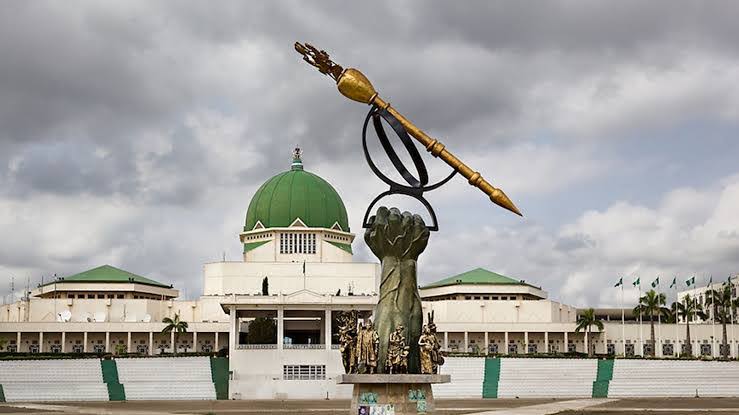
A contentious constitutional amendment that reserves legislative seats for women has become a litmus test for political bravery as Nigeria’s National Assembly approaches a final vote. Beyond gender fairness, proponents claim that if the measure is not passed, Nigeria will lose out on an estimated $269 billion in economic benefits and its democratic deficit will widen.
Nigeria is on the verge of yet another pivotal moment in the quiet hallways of the National Assembly, where agreements are discussed in whispers and history is frequently determined by delay. Now in its crucial third reading stage, the Reserved Seats for Women Bill has evolved from a gender advocacy proposal into a high-stakes test of Nigeria’s political integrity, economic acumen, and democratic maturity.
Discussions about women’s political participation were long written off as romantic or culturally awkward. But this time, the debate has gained quantifiable figures, deadlines, and a clear sense of urgency.
Nigeria may increase its GDP by over $269 billion over the next ten years by increasing the participation of women in formal education, governance, and the economy, according to research cited by the bill’s proponents.
Legislators are now asked if Nigeria can afford to keep women out of the spotlight rather than whether they should be included.
Chief Osasu Igbinedion-Ogwuche, CEO of TOS Group and coordinator of the coalition supporting the bill, has once again taken the lead.
“If this bill does not scale through in February 2026, it cannot be operationalized for the 2027 general elections,” she stated plainly when speaking to reporters in Abuja last week. And if that occurs, we would essentially keep 50% of Nigerians on the sidelines for an additional four years.
Nigeria’s stats are startling and getting harder to defend. Despite making up almost half of the population, women only hold 4% of the seats in the National Assembly, which includes 4 out of 109 senators and 16 out of 360 members of the House of Representatives.
At the subnational level, the situation is worse: 36 State Houses of Assembly have 51 female lawmakers out of 993 total, and 16 states have no female representation. Campaigners frequently use the sad irony to point out that a male chairs the state’s women’s issues committee.
Nigeria has the lowest percentage of women in parliament in Africa when compared to continental standards. Rwanda’s quota-based system has increased female representation above 60%, while the continental average is between 23 and 27%.
The contradiction is obvious for a nation that calls itself the “Giant of Africa.”
The purposeful rebranding of the bill as an economic and governance reform rather than a social compromise is what has changed the debate’s tone. Igbinedion-Ogwuche makes the case that inclusive government is closely related to better development outcomes, citing research from the World Bank, the UN, and McKinsey.
According to her, a 2024 analysis by McKinsey and the Mastercard Foundation also projects that by 2030, the GDP of Africa might increase by $287 billion if more young women joined the continent’s formal labor.
“This is about productivity, human capital, and national competitiveness,” she stated. The socioeconomic benefit is evident. We can’t keep discussing progress while systematically keeping women out of decision-making.
Advocacy Lead at TOS Group Andikah Umoh provided legal and policy framing, characterizing the law as a democratic correction rather than an empowerment program.
According to her, “More investments in social protection, health, and education, as well as better social policy outcomes, are associated with women’s representation.” Additionally, it is associated with less corruption and more cooperative policymaking. Legitimacy is lacking in a legislature that excludes half of the populace.
The Reserved Seats for Women Bill calls for the introduction of 108 seats in State Houses of Assembly and 74 additional seats in the National Assembly. These seats would be filled by competitive elections between female candidates nominated by political parties. Advocates are adamant that no one is guaranteed office by the bill.
“Tokenism is not what this is. There isn’t an appointment. Igbinedion-Ogwuche emphasized time and again that it is not a handout.
These are roles that are elective. Candidates will be brought by the APC, PDP, and other parties, and women would compete with one another, she clarified.
The bill is intended to address long-standing obstacles that have made Nigerian politics one of the most inhospitable environments for women, including the weaponization of religion, political violence, expensive nomination fees, informal gatekeeping by male power brokers, and cultural expectations.
Advocates contend that many wealthy, educated, and politically aspirational women have been routinely excluded even before the election.
Nigeria has attempted to enact laws promoting inclusivity before. Claims that the Gender and Equal Opportunities Bill went against religious and cultural values caused it to fail in the 8th Assembly.
Despite support from the then-legislative leadership, a new attempt in the 9th Assembly likewise failed. These losses served as examples of what not to do.
The present bill’s supporters started an unprecedented consultation process because they were determined not to repeat the past.
To interact directly with communities, the coalition set up coordinators at the ward, state, municipal, and geopolitical levels during the previous year. All six geopolitical zones’ lawmakers participated in closed-door caucus meetings, where the opposition was met head-on rather than sidelined.
A few legislators were open. Igbinedion-Ogwuche remembered, “Some openly told us that they did not believe there should be any women in parliament at all.” We therefore inquired as to what it would take for them to reconsider.
According to Igbinedion-Ogwuche, religion—long mentioned as a barrier—became a focal focus.
“TOS Foundation Africa partnered with the Sultan of Sokoto, Nigeria’s highest Islamic authority, to organize a symposium that brought together lawmakers, clerics, and political stakeholders in October last year on the International Day of the Girl Child,” she stated.
She clarified that the Sultan’s support for the legislation was crucial. He said that it was a distortion of faith to use religion as an excuse for exclusion and that women have traditionally occupied prominent positions in Islamic cultures.
She noted that snippets of his comments were then broadcast on major radio and television networks, specifically focusing on areas where religious concerns had been most pronounced.
High-level political endorsements quickly followed, she said.
“The President publicly declared his support in December 2025,” Igbinedion-Ogwuche stated. The Senate President, Speaker of the House, Deputy Speaker, Vice President, and Chief of Staff to the President were all present for a strategic meeting called by the First Lady in the Presidential Villa.
The Deputy Speaker of the House of Representatives became the bill’s sponsor, and more than 50 senators promised support.
Prior to the state-level ratification procedure, the coalition also obtained guarantees of support from governors and a formal relationship with the Governors’ Spouses Forum.
However, there is discomfort underlying the momentum. Nigeria’s legislative history is replete with proposals that were endorsed by elites but quietly perished during vote, as advocates are well aware.
“Assurances alone are insufficient since electronic voting protects individual choices from instantaneous public scrutiny.
The coalition responded to this by launching the 469 Tracker, a monitoring tool that documents and disseminates each National Assembly member’s declared stance. The goal is straightforward: make it politically expensive to go back.
She claims that the last point of pressure has been determined to be the media. Kingsley Sintim, Managing Director of TOS Group, pleaded for consistent coverage during a high-level conference with editors and bureau chiefs.
“Mindsets don’t change overnight,” he stated. Repetition is necessary. It requires visibility. Human-centered narrative is necessary. Lawmakers’ priorities and fears are shaped by the media.
“Especially in areas where resistance is still strong, radio outreach, TV discussions, and social media amplification have increased.
In order to emphasize that support for the law is a reflection of popular opinion rather than elite lobbying, constituents are being urged to give their representatives a call directly.
But time does not pardon.
Before the 2027 election cycle, constitutional revisions must be approved by the National Assembly in time for two-thirds of State Houses of Assembly to ratify them. Delays after February run the possibility of delaying implementation until 2031, so undoing years of lobbying.
“Delay is just as deadly as rejection. The ramifications are significant for the 10th National Assembly. The passage would establish Nigeria as a late but serious reformer and represent a historic departure from decades of marginalization.
Its reputation as a legislative incapable of or unwilling to address structural inequity, even when the financial costs are obvious, would be cemented if it failed.
Without the people at the table, we are unable to enact laws on their behalf. This is about dignity, progress, and democracy. Legislators have a straightforward decision to make: will we advance Nigeria or will we make the same mistakes again for future generations?
Nigeria is waiting for evidence that its politics can finally match its potential as the election draws near, rather than just for a bill to pass.
Since the federal parliamentarians started plenary on January 27, numerous women’s advocacy groups have descended upon the National Assembly building, either to mobilize the parliament leadership to support the bill or to protest the alleged delay in the adoption of the crucial legislation.
Advocacy groups are already very concerned about whether the legislators’ engagement with the various ministries, departments, and agencies of the federal government, which will start this week on the 2026 national budget, which is scheduled for passage in the second week of March, will give them time for the bill.
This is due to the fact that the Senate is anticipated to do the same after voting on the controversial parts of the 2022 Electoral Act modifications bill this week. The House of Representatives had previously suspended plenary to allow the green chamber to attend to the money measure.