Home Blog

DSS Arrests Man Over Alleged Assassination Plot Against Peter Obi, Others

0

According to reports, Obi and a number of leaders and members of the opposition African Democratic Congress (ADC), as well as former All Progressives Congress (APC) National Chairman John Oyegun, barely avoided death on February 24 when armed men opened fire during a political gathering in Benin.

Later, Udeme Monday Stephen, a netizen, claimed responsibility for the attack and threatened Obi further on his 𝕏 account.

Online, Stephen declared that Obi was fortunate to have escaped in Benin and promised that the former presidential candidate would not have the same luck the next time.

“We cautioned Obi not to enter Edo State, but he confused our determination with the online chatter of his Obidiots. Thank heavens, Obi made it through this one.

“I found out he’s visiting my state, Rivers. My soldiers will take care of that one and they won’t miss the target. “A bastard is destined to die, so speak no peace to him and wish him a long life,” Stephen wrote.

The man has been taken into custody, according to Zagazola Makama, a security and counterinsurgency specialist in the Lake Chad region.

On Monday, Makama announced this via a post on its official X account.

According to the post, a top security source disclosed that DSS agents initiated a clandestine investigation as soon as the threat was made, using forensic equipment to track down and capture the suspect.

The source claims that Stephen teaches at Jessica High School in Eliozu, which is situated in the Obio-Akpor Local Government Area of Rivers State’s Umuehere Community.

The source emphasized, “I firmly believe that the result of the agency’s forensic investigations implicated the suspect.”

“You are aware that the DSS is always aware of its duty to investigate credible intelligence, regardless of tribe or religion, as a responsible security organization tasked with counter-espionage, VIP protection, and other asset protection duties.”

According to Makaka, the source stated, “They quickly deployed operatives, and the man who threatened Peter Obi was caught and is in custody.”

Borno Operation: Military Neutralises ISWAP Fighters, Recovers Arms

0

In intense overnight fighting, troops of Operation HADIN KAI defeated ISWAP terrorists’ coordinated strikes on important military posts in Borno State, killing a number of rebels and seizing heavy weapons and ammunition.

Between the late hours of February 28 and the early hours of March 1, 2026, the Joint Task Force (North East) soldiers repelled attacks on Forward Operating Bases at Mayanti, Gajigana, and Gajiram as part of Operation HADIN KAI.

While soldiers at Gajigana were able to hold their ground and keep complete control of the base, the insurgents suffered significant fatalities in battles at Mayanti and Gajiram, and significant combat equipment was recovered.

On February 28, Mayanti was the target of a massive terrorist strike. While reinforcements battled through ambushes and threats of improvised explosive devices (IEDs) to drive out the invaders, brave soldiers remained steadfast in the face of heavy enemy fire.

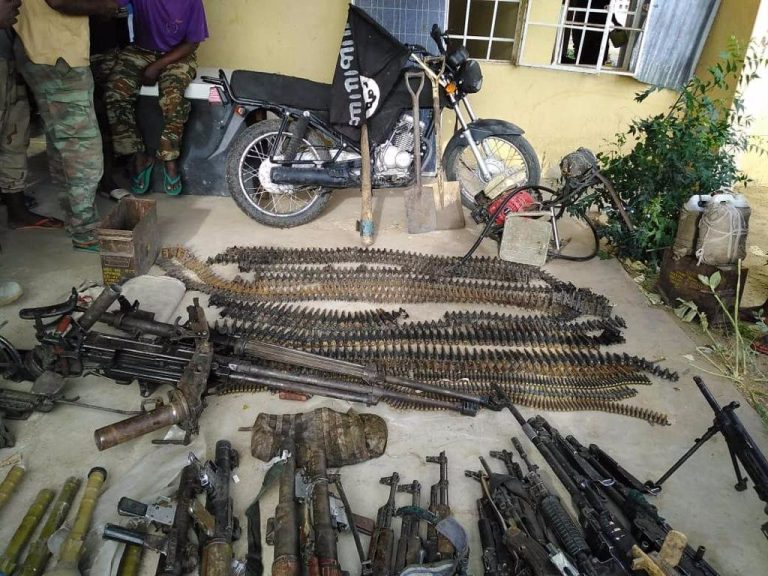
Five terrorist bodies were found by the army following the gunfight, along with a cache of weaponry that included three PKT automatic anti-aircraft guns, two RPG-7 tubes, four AK-47 rifles, two FN rifles, three RPG explosives, and a significant amount of 7.62mm ammo. More terrorists may have fled with gunshot wounds, according to bloodstains along the escape routes.

Nonetheless, the military affirmed that an officer gave his life in the conflict.

The Forward Operating Base in Gajiram was overrun by terrorists armed with PKT rifles, rocket-propelled grenades, and armed drones just hours later on March 1 at around 1:15 a.m. Determined soldiers, backed by air support, put up a fierce fight against the assault.

Three bodies were left behind by the terrorists as they fled in a disorganized manner. Additionally, troops found six fully filled 7.62mm NATO magazines, four AK-47 rifles, five anti-tank bombs, three locally manufactured mortar bombs, one armed drone, barbed wire cutters, specialized ammo, and poisoned arrows that had been left in flight.

A Nigerian Army Aviation chopper promptly transported one injured soldier for more specialized medical care.

At Kayawa Village, forces confronted terrorists who were escaping during associated offensive operations under Sector 2. Three motorcycles, five bicycles, and a tricycle were left behind by the rebels as they ran.

Additionally, troops detained two confessed ISWAP logistical providers and destroyed known life-support facilities used by the terrorists. Additionally found were medications and medical supplies intended to treat injured rebels.

Similar to this, troops neutralized two terrorists during an ambush operation near Bulturam Corner and Dadingel in Gujba Local Government Area. They also found a bicycle, four AK-47 magazines, and two AK-47 weapons.

Lieutenant Colonel Sani Uba, the Media Information Officer for Headquarters Joint Task Force (North East), Operation HADIN KAI, confirmed the development.

“A significant number of terrorists attacked FOB Mayanti on February 28, 2026. While reinforcements battled through ambush and IED threats to defeat the invaders, valiant troops remained steadfast in the face of heavy enemy fire. Five terrorist bodies were confirmed to have been used, and three PKT automatic anti-aircraft weapons, two RPG-7 tubes, four AK-47 rifles, two FN rifles, three RPG bombs, and a significant amount of 7.62mm ammunition were recovered. Blood trails suggested that there may have been more victims.

Similar to this, on March 1, 2026, at around 01:15, terrorists armed with PKT rifles, RPGs, and armed drones attacked FOB Gajiram. However, resolute forces backed by air assets defeated them. Along the withdrawal route, three terrorist bodies, four AK-47 rifles, five anti-tank bombs, three locally manufactured mortar bombs, one armed drone, six fully loaded 7.62mm NATO magazines, barbed wire cutters, specialized ammo, and poisoned arrows left behind in flight were all found.

“Terrorists were forced to flee and abandon a tricycle, three motorcycles, and five bicycles during related offensive actions under Sector 2 at Kayawa Village.” Additionally, troops recovered medications and medical supplies used to treat injured terrorists, detained two confessed ISWAP logistical providers, and demolished identified life-support systems. Additionally, troops neutralized two terrorists during an ambush near Bulturam Corner and Dadingel in Gujba LGA and found two AK-47 rifles, four AK-47 magazines, and other stuff. Every place is still completely under personal control.

He reiterated that soldiers will continue their offensive operations until all terrorist elements in the North-East theater were eliminated.

On Monday, two terrorists were killed and an automatic rifle was found in Benue by troops of Sector 1 of Operation Whirl Stroke (OPWS).

This was verified in a Makurdi announcement by Lt. Ahmad Zubairu, the OPWS Headquarters Makurdi’s acting Media Information Officer.

According to Zubairu, the soldiers accomplished the feat while conducting a combined combat and confidence-boosting patrol along the Katsina-Ala–Zaki Biam Road.

According to the media and information officer, they quickly mobilized to the scene in coordination with Benue State Civil Protection Guard personnel, acting on reliable information provided by the people.

“Troops made touch with the suspected bandits upon reaching the designated site.

Two of the terrorists were neutralized during the ensuing battle, while the rest ran into the nearby jungle, possibly suffering gunshot wounds.

“One AK-47 rifle, one AK-47 magazine, eight rounds of 7.62mm special ammunition, and two green camouflage uniforms abandoned by the fleeing criminals were recovered by the troops after they exploited the area,” he stated.

The OPWS Commander, Maj.-Gen. Moses Gara, was cited by Zubairu as praising the troops’ bravery, professionalism, and prompt response.

In the battle against terrorism and banditry, Gara stated, their proactive approach and dedication to duty continue to produce favorable outcomes.

The commander thanked the locals for their timely and useful intelligence, which was still essential to the operation’s success.

He reassured the locals of the military’s steadfast commitment to protecting people and property and urged them to continue cooperating with security services.

Setting a Strategic Security Agenda for New IGP, Olatunji Disu

0

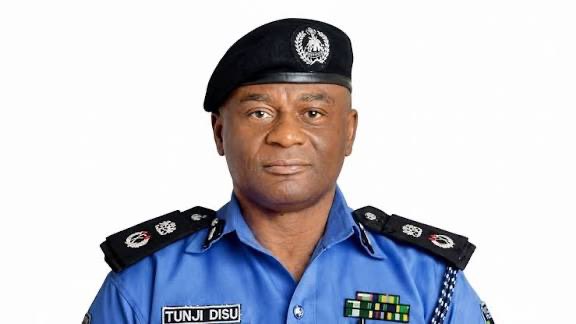
According to Linus Aleke, Nigerians and security experts have presented a list of strategic initiatives and changes that they think Acting Inspector-General of Police Olatunji Disu should follow in order to improve national security and fortify the Nigeria Police Force.

The Acting Inspector-General of Police, Olatunji Disu, has been presented with a comprehensive reform agenda by Nigerians and security professionals, who have urged him to take decisive action to reposition the Nigeria Police Force for increased efficiency and public trust. The necessity for strong leadership that fosters professionalism, discipline, and responsibility while rebuilding confidence between the police and the communities they serve is at the heart of their recommendations.

The use of intelligence-led policing to replace an excessive reliance on checkpoints and routine patrols is a recurrent theme in their submissions. Stakeholders claim that better intelligence collection and analysis would allow the Force to break up criminal networks across the country and respond more strategically to new threats.

Additionally, they emphasized that the police would be more credible and effective if operational standards were strengthened in accordance with worldwide best practices.

Another top priority was bettering the wellbeing of Force officers and personnel. In order to raise morale and promote greater dedication to duty, contributors emphasized the need for improved working conditions, contemporary equipment, appropriate clothing, and higher compensation. They emphasized that stronger cooperation between the police and local communities is essential to safeguarding lives and property across the country and asked for the full implementation of the Police Act, especially the sections pertaining to community policing and specialized units.

Sule Momodu, a former deputy commander-general of the National Drug Law Enforcement Agency (NDLEA), argued for broad reforms, stating that in order to effectively combat crime, no police division should have fewer than 20 operating cars.

Speaking during a news conference in Abuja, he emphasized the significance of sufficient logistics under each division’s purview. In addition to patrol cars, he suggested using bicycles, motorcycles, and foot patrols to increase security coverage, particularly in remote locations.

In order to reposition the Force, Momodu advised the Acting Inspector-General to give the full implementation of the new Police Act first priority.

He maintained that the Act’s correct application would improve productivity and service provision. He demanded better welfare packages, including enough uniforms and shoes, as well as upgraded radio communication equipment to guarantee smooth information transfer between divisional stations and state command headquarters, in addition to logistics.

Additionally, he insisted that intelligence-led policing should be prioritized above regular “show of force” operations and static roadblocks, which he claimed had little effect. While congratulating Disu on his appointment, Momodu emphasized that concrete reforms would ultimately define his term and expressed confidence in his ability to make the Force a more professional and people-friendly organization.

Momodu called attention to Section 20 of the Police Act, stating that police officers in Nigeria should not be paid less than those in other law enforcement agencies. He also called for the clause to be put into effect right away. Additionally, he suggested activating the Act’s provisions for specialized “spy police” teams to protect properties and VIPs, with the requesting organizations covering the costs of hiring, training, and compensation.

He claimed that this would enable the redeployment of thousands of personnel who had previously been tasked with protecting VIPs, lessen the financial strain on the government, and provide job possibilities.

In order to close policing gaps in marginalized neighborhoods, he also urged the activation of special constable laws. He suggested that the Acting Inspector-General get an executive summary of the Police Act from the Force’s legal department to guarantee thorough implementation of the law. Momodu also called for the establishment of community policing committees at the municipal and state levels, as well as the reactivation of police call centers in state capitals. He stated that improving divisional police stations across the country would improve operational performance and foster favorable working conditions.

Ambassador Ogbole Amedu Ode, a former spokeswoman for the Ministry of Foreign Affairs, also emphasized better welfare, such as better housing and salaries, as a means of raising morale. Additionally, he demanded that operational standards be raised to align with global best practices. He suggested increasing recruiting to reach the widely cited ratio of one police officer to 400 inhabitants so that the police could take entire responsibility for internal security and the military could concentrate on protecting the country’s territorial integrity.

Odita Sunday, a renowned crime reporter and former president of the Crime Reporters Association of Nigeria (CRAN), called on Disu to request a state of emergency for police funds. He maintained that without sufficient Force motivation and equipment, significant transformation would be difficult. He asserts that a typical police command should have at least 500 patrol cars, assisted by drones and helicopters. He also suggested significant emergency financing, sufficient monthly operational allotments for divisional headquarters, and higher constable salaries, cautioning that inadequate compensation weakens professionalism and creates unfavorable incentives.

In order to stop employees from abusing their positions, former FCT Command Commissioner of Police Lawrence Alobi advocated for strong oversight procedures. He advised Disu to concentrate on training, capacity building, and efficient monitoring while praising President Bola Tinubu for selecting a skilled officer. Alobi emphasized that effective supervision allows senior executives to direct subordinates and guarantee seamless operations. Additionally, he argued that the Inspector-General, who is familiar with the capabilities and deployment requirements of his officers, should have complete operational discretion, freeing the police from needless political meddling.

The authors as a whole concurred that repositioning the Nigeria Police Force requires professionalism, better welfare, intelligence-driven operations, and faithful application of the Police Act. They expressed hope that Acting Inspector-General Olatunji Disu’s resolute leadership and persistent reforms would greatly improve internal security and rebuild public trust in the Force.

One Dead, Five Missing After Nigerian Tugboat Sinks Off South Africa Coast

0

After the Nigerian tugboat LEO sank in South African waters on Saturday night, a Nigerian national has been officially declared deceased.

According to reports, the ship, carrying eighteen passengers, went down after running aground in inclement weather. Search and rescue operations are ongoing, and while 12 crew members were saved, five more are still unaccounted for.

The incident was revealed by the Federal Government in a statement sent to Dr. Magnus Eze, the Minister of State for Foreign Affairs, by the Special Assistant on Communication and New Media.

The statement claims that after the tugboat ran into problems about eighteen nautical miles off the coast between Cape Town and Durban, South African transport authorities notified Nigerian officials. After completing repairs in South Africa, the ship reportedly went aground during a storm while en way to Lagos.

Ambassador Bianca Odumegwu Ojukwu, the Minister of State for Foreign Affairs, said that five people are still missing and that one death has been reported.

She further revealed that survivors are being transported to Port Elizabeth, where officials of the Nigerian High Commission are expected to receive them and provide necessary support.

The Federal Government stated that while attempts to find the missing crew members escalate, it is keeping regular communication with South African authorities. Although extreme weather has been identified as a contributing factor, maritime officials have not yet ascertained the complete circumstances surrounding the tragedy.

Breaking: Edo Governor Okpebholo Demands Resignation of Government Officials

0

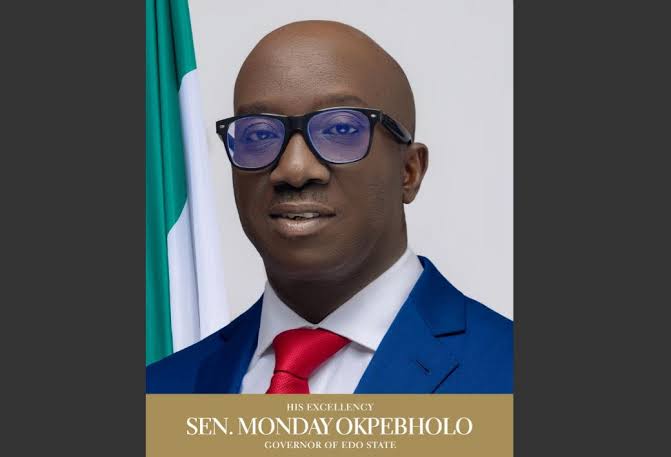
All public employees, political appointees, and government employees planning to run for elective office in the upcoming election cycle have been instructed by Edo State Governor Monday Okpebholo to step down by March 1, 2026, at the latest.

The Okpebholo government stated that the decision was made in strict accordance with the Electoral Act (Amendment) 2026 in a Government Special Announcement dated February 28, 2026.

The statement, which was signed by Umar Musa Ikhilor, the Secretary to the State Government, cautioned that any officer who intends to take part in party primaries or any other election procedure must first resign from their job within the allotted period.

It pointed out that candidates who don’t follow the rules run the risk of being disqualified by the appropriate electoral authorities.

The statement stated, “This directive is issued in strict compliance with the provisions of the Electoral Act (Amendment) 2026, and is aimed at ensuring that all aspiring candidates do not run the risk of disqualification by the relevant electoral authorities.”

According to the administration, the goal of the policy was to encourage equity, openness, and a level playing field for all candidates.

It further emphasized that partisan political involvement should not jeopardize governance duties and that the impartiality and integrity of public institutions must be protected.

It said, “The government stresses that this requirement is meant to safeguard the integrity and neutrality of public institutions while simultaneously promoting fairness, transparency, and a level playing field for all aspirants.”

In order to guarantee complete compliance, the Edo Governor instructed all Ministries, Departments, and Agencies (MDAs) to distribute the notice as widely as possible.

Tehran Condemns US‑Israel Strikes, Sends Letter to UN Calling Them Terrorism

0

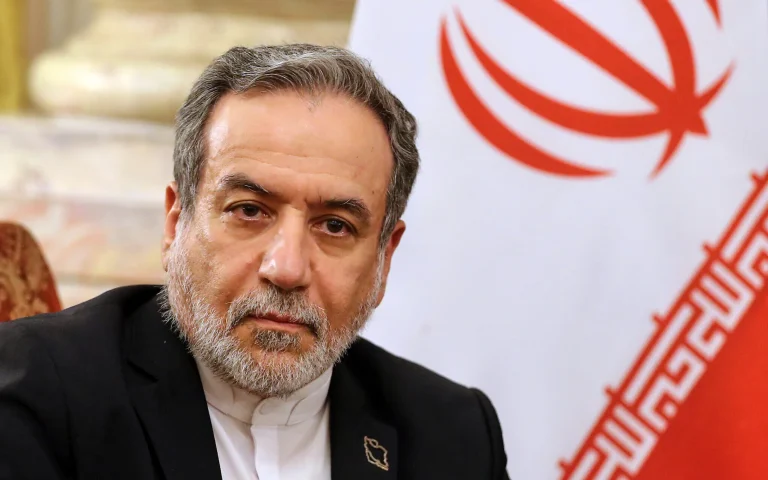
Abbas Araghchi, the Iranian Foreign Minister, formally accused Israel and the United States of committing a “cowardly act of terror” against Ayatollah Ali Khamenei, the country’s supreme leader, on Sunday.

Araghchi claimed in a letter to Security Council members and UN Secretary-General Antonio Guterres that the US and Israel had intentionally targeted Khamenei on February 28 in “unprovoked and unjustified acts of aggression” against Iran’s sovereignty.I’m writing to urgently draw your attention to the most recent heinous and illegal conduct committed by the Israeli government and the United States against the wonderful country of Iran.The foundations of the international legal order will suffer permanent and irreversible harm for decades to come if such behavior is not addressed forcefully, Araghchi wrote in the letter. It will also give its perpetrators more confidence.

Referencing Article 2(4) of the UN Charter, which forbids the use of force against any state’s territorial integrity or political independence, he described the strike as a “grave and unprecedented breach” of international law.

Israel and the US have been attacking Iran since Saturday morning, killing the country’s supreme leader and numerous other high-ranking security personnel.

Many Gulf states closed their airspace as a result of Iran’s drone and missile attacks against US and Israeli targets in the area.

The letter affirmed Iran’s “inherent and unequivocal right” to self-defense by citing Article 51.With the aforementioned in mind, and at a time when the normalization of serious transgressions of international law unfortunately jeopardizes the integrity of the international system, the Islamic Republic of Iran humbly urges the Secretary-General of the United Nations and the Security Council to fulfill their duties under the Charter to maintain international peace and security and to take prompt, decisive, and efficient action to ensure that the United States and the Israeli regime are held fully accountable for the aforementioned heinous terrorist act,” Araghchi stated.

As an official Security Council document, he asked that the letter be distributed. In AA

‘Massive Votes Await Me If I Contest Presidency’ – Nyesom Wike

0

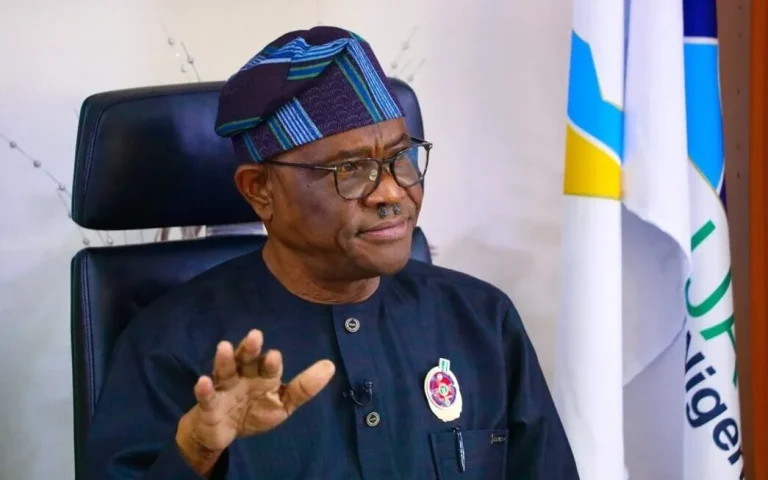
Nyesom Wike, the Minister of the Federal Capital Territory (FCT), has said that he is still adored by many Nigerians.

Wike reportedly disclosed this to a few journalists on Monday at a media chat.

If he runs for president, the former governor of Rivers State expressed hope that Nigerians will overwhelmingly support him.

Wike emphasized his ability to relate to regular Nigerians and said his accomplishments in Rivers State and the Federal Capital Territory will always speak for him.

Wike also said he was confident his followers would win a repetition of the just ended council election in the nation’s capital.

“Nigerians still love me, and they will vote for me with great fervor if I run for president,” he stated.

In the meantime, Wike has justified the curfew that was implemented in advance of the Abuja area council elections on February 21, claiming that it was within his authority and that President Bola Tinubu had given his approval.

Wike insisted that he had the power to make security decisions, including limiting travel, because he was the “governor of the FCT.”

Wike responded to criticism that the restriction on human and vehicle mobility from 8 p.m. on Friday to 6 p.m. on Saturday was solely for security reasons.

‘Loopholes Remain in 2026 Electoral Act’ – Ex-INEC Officer

0

Nigeria’s modified election legislative framework still has flaws that could jeopardize the nation’s democratic process, according to political science professor and former electoral commissioner Okechukwu Ibeanu.

Ibeanu made the comments while giving the keynote talk at a Citizens’ Townhall, an Abuja policy discussion on electoral changes, where he called on people to assume more responsibility for preserving democracy.

He pointed out that Nigerians frequently have too much faith in laws as the only way to overcome election difficulties, and that relying too much on legal frameworks in the absence of institutional and civic reforms may not produce the intended results.

“I believe the law still has holes and inconsistencies, and it’s a shame that it took the nation to agree that electronic transmission was included in the 2022 act after we debated a proviso. In reality, however, what we have done is to transport us back to 2018, when those discussions took place in this nation.

“We constantly tamper with the election law framework as though it has all the solutions to our electoral issues. More significantly, however, we give politicians—the same people the law is intended to regulate—the authority to change the Act,” he stated.

The professor claimed that Nigeria’s electoral legislation has undergone numerous repeals and reenactments along with numerous amendments, a pattern he deemed detrimental to a stable democracy.

“Amending and repealing the law should be its medicine, not its daily bread,” Ibeanu said, cautioning that frequent changes run the risk of transforming reforms into political ploys rather than protections for the rights of voters.

He went on to say that if the law is continuously changed, it may result in measures that are largely intended to further political agendas rather than safeguard voters’ rights.

Additionally, Ibeanu warned against the electoral commission’s overzealous regulatory control of political parties, comparing it to a “military regime spectre” if not properly balanced with democratic ideals.

He emphasized civic duty and exhorted Nigerians to take a more active role in keeping elected officials accountable and safeguarding their ballots. This is about you, citizens. Politicians and INEC are not the issue.

Our objective of a fully democratic nation will remain a pipe dream until voters are able to safeguard their ballots and exert control over those who purport to represent them,” he stated.

The political scientist also urged the electoral commission to produce clearer rules and recommendations to eliminate uncertainties and called for a thorough examination of particular sections of the election legislation, such as Sections 50, 60, and 62.

Prior to the general elections in 2027, President Bola Tinubu signed the Electoral Act 2026 into law on February 18, 2026, updating Nigeria’s electoral system.

The new law’s main features include: requiring results to be sent electronically to the INEC Result Viewing (IReV) portal; acknowledging the Bimodal Voter Accreditation System (BVAS); establishing new deadlines for candidate nominations and election notices; updating procedures for party primaries; and allocating funds for the electoral commission sooner.

Opposition parties and civil society organizations have criticized parts of the bill, claiming that specific discretionary powers granted to election officials during technical problems could influence accountability, despite the fact that the revisions aim to enhance openness.

CISLAC Questions INEC’s Preparedness Ahead of 2027 Polls

0

Concerns have been raised about the Independent National Electoral Commission’s (INEC) readiness for the general elections in 2027 by the Civil Society Legislative Advocacy Centre (CISLAC), a civil society organization.

When he appeared on the News Agency of Nigeria (NAN) Personality Interview Series in Abuja on Sunday, Auwal Rafsanjani, the Executive Director of CISLAC and the Head of Transparency International Nigeria, voiced the concerns.

Rafsanjani stated that the reported shortcomings in the Federal Capital Territory (FCT) local council elections and the recent by-elections in Rivers and Kano were the reason he was skeptical of the commission’s competence to hold the election.

According to him, the past experiences have raised concerns about INEC’s ability to hold credible national elections in the absence of immediate reforms.

To be honest, we are not quite sure that INEC is ready for 2027 given what happened in Rivers and Kano States, as well as during the most recent council elections in Abuja.

He stated, “The commission will need to work seriously towards blocking the gaps and lapses that were evident.”

He emphasized a number of issues, including the purported exclusion of significant opposition political parties from the ballot in some areas, which he called a “costly mistake” that could jeopardize the legitimacy and equity of the election process.

Another significant issue he raised was the supposed mistreatment of people with disabilities (PWDs) during the elections.

People with disabilities have fiercely complained about not being able to access, participate in, or receive assistance during these three elections.

Since many Nigerians are still unfamiliar with the modified eEectoral Act, INEC needs to perform a lot of public education and sensitization.

Civil societies are trying their best, but they are merely a supplement to the government; they are not it. He stated that INEC must be the driving force behind public education.

Logistical issues, according to Rafsanjani, are persistent issues that, if left unchecked, could undermine public confidence.

He said that other variables that could impact voter confidence include complaints about missing election materials, delays at voting places, and issues with election staff training.

It will be very difficult for Nigerians to trust INEC’s ability, he cautioned, “if basic supplies intended for polling stations are not delivered, if voters continue to face challenges, or if personnel are not adequately trained to handle election processes.”

Transparency International’s head in Nigeria counseled the electoral commission to take decisive action in order to win back public trust and satisfy international and domestic demands for genuine elections.

He stated that the upcoming months will be critical for INEC to show reforms, bolster logistics, improve inclusivity, and restore confidence in Nigeria’s electoral process as preparations for the 2027 general elections progressively get underway.(NAN) (www.nannews.ng).APC refutes ADC claims and conforms to INEC’s schedule.

In a related development, the Independent National Electoral Commission’s (INEC) updated 2027 election schedule has garnered significant support from the All Progressives Congress (APC) in Ondo State, which describes it as realistic, organized, and equitable to all political parties.

Steve Otaloro, State Director of Media & Publicity, told reporters in Akure over the weekend that the schedule demonstrates institutional balance and administrative vision.

“The requirement for digital membership registers is a progressive reform,” he said. It increases internal democracy within political parties, fortifies institutional discipline, and improves transparency. In the end, it strengthens the legitimacy of party primaries by lowering the disputes related to manipulated registers.

He stressed that the dates were made public well before the 2027 election cycle, giving all major political parties the time to adhere to the rules.

“Maintaining current membership records and holding peaceful primaries shouldn’t be a problem for properly organized political organizations. Any respectable political party must fulfill these fundamental obligations. Reforms that support election integrity and accountability are welcomed by the APC, Otaloro continued.

In response to the African Democratic Congress’ (ADC) claims that the new schedule was created to benefit President Bola Tinubu and the APC, the party rejected the assertion as hypothetical and devoid of supporting evidence.

“INEC functions under precisely specified constitutional bounds. Its scheduling decisions are not political tools; rather, they are administrative and legal judgments. “Politizing procedural timelines only serves to erode public trust in democratic institutions,” he stated.

Otaloro emphasized further that government performance is still the most important factor in any democracy and that President Tinubu does not need institutional manipulation to win the 2027 election.

“The President’s track record is self-evident. Nigeria is moving toward efficiency, fiscal restraint, and compliance with international best practices as a result of ongoing reforms in its energy sector, financial architecture, and infrastructure development. Long-term economic stability-focused structural reforms are already yielding quantifiable results in several important areas.

He emphasized revenue optimization, institutional reforms, energy sector recalibration, and macroeconomic restructuring as significant accomplishments that will inevitably affect voter choices.

The legitimacy of a performance, not conspiracies, determines an election. Policy continuity is necessary if Nigerians are to unite and sustain the benefits of these reforms. Stability, deeper structural corrections, and the full maturation of reform cycles will all be ensured by a second term.

The APC urged all political parties to uphold INEC’s constitutional independence, adhere to all election laws, fortify internal democratic processes, and offer policy options rather than spreading baseless accusations in order to guarantee fair competition before 2027.

The APC in Ondo State restated its belief that the party will be able to significantly influence the 2027 election outcome through a transparent electoral process and verifiable governance performance.Abbas explains why NASS authorized manual and electronic transmission.

Additionally, in order to prevent voter disenfranchisement and lower apathy in the run-up to the general elections in 2027, the National Assembly approved a hybrid system of electronic and manual transmission of election results in the amended Electoral Act, according to Speaker of the House of Representatives Tajudeen Abbas on Sunday.

According to Abbas, relying exclusively on real-time electronic transmission throughout Nigeria is not feasible due to the country’s low internet penetration and erratic power supply.

During a courtesy visit to his office in the National Assembly compound in Abuja, the Speaker addressed Ambassador Felix Costales, the Spanish ambassador to Nigeria.

Abbas welcomed the envoy with Abubakar Bichi, the chairman of the House Committee on Appropriations; Wole Oke, the chairman of the House Committee on Foreign Affairs; and Jafaru Yakubu, the chairman of the Nigeria-China Parliamentary Friendship Group, according to a statement released by his Special Adviser on Media and Publicity, Musa Krishi.

According to the statement, the Spanish envoy also mentioned that Spain has a system in place that enables the manual transfer of election results.

Based on his discussions with the Independent National Electoral Commission’s leadership, Abbas promised that the general elections in 2027 will be more inclusive and credible.

“Sometimes, people scream far beyond the exact level of the issue,” the Speaker acknowledged in reference to the Electoral Act. Many believe that Nigeria needs to adopt real-time electronic transmission, but in the short time you’ve been here, you ought to be able to comment on the state of our internet infrastructure. You should be aware that reliable internet access is not always guaranteed, especially in developed places like Abuja.

According to the NCC report, he added, “Nigeria is still underserved by nearly 40%, meaning that 40% of the country’s total territory is not internet-connected.” Now, for those who are suggesting that we should already do that, let me tell you that the amount of people that are registered to vote in our country is concerning.

Sadly, we are only able to record 12–15% of registered voters who cast ballots every four years, even with the manual system we are utilizing. Voter apathy is what that is. Few persons cast ballots.

“Exclusive electronic transmission could further suppress participation,” he said. “Now, if we just implement the electronic system, it will further decrease the number because 40% of the population is likely to be unable to vote due to inadequate internet capabilities. In addition to depriving certain voters of their right to vote, it means that we should anticipate possibly the lowest turnout in the upcoming elections.

All of these can be prevented. Because of this, we wisely suggested that the Electoral Act be a hybrid, combining elements of the automated and manual processes. Because no single form, especially the electronic one, can be used completely throughout the nation for the elections, use the electronic transmission where it is practical and the manual when it is not.

The Speaker further maintained that even those who opposed the clause understood the limitations of the nation’s infrastructure.

The opposition is aware that Nigeria’s internet penetration rate is insufficient, despite the fact that they are Nigerians, live in Nigeria, and travel throughout the country. We cannot hold transparent elections with a system that is insufficient, and we also lack enough electricity due to the nation’s energy crisis.

“Energy is the foundation of the internet. How do you ensure that there is enough electricity to power the entire nation on voting day so that phones and the internet are operational? All of those issues will prevent us from doing real-time web transmission at this time.

Democracy, according to Abbas, is a process that develops gradually. “We will keep getting better year after year, election after election, throughout our entire democracy,” he declared. With the backing of nations like Spain, I think Nigeria would perform better.

We anticipate that you will continue to lead us and provide us with all the technical guidance and assistance we need to perform better, especially in the National Assembly, through cooperation between our parliament and your nation. It will significantly increase our level of proficiency, especially in the areas of drafting legislation and other related fields. I think Nigeria can gain a great deal from what you have in Spain.

Despite current difficulties, he continued, Nigeria was making consistent progress. You cannot claim to have everything you need. You’re constantly learning. Even while we may not be progressing as quickly as the outside community would want, we think Nigeria is doing okay.

Costales had previously stated that the goal of his visit was to develop bilateral connections between Spain and Nigeria and to advance legislative diplomacy. According to him, Spain would keep a careful eye on Nigeria’s election process and back initiatives to fortify democratic institutions.

You can rely on us to do everything in our power to strengthen Nigerian democracy. Although there can be difficulties, you can rely on us in every manner.

Additionally, the ambassador pointed out that political polarization was a worldwide occurrence. “When you dig down, sometimes you realize that the issues are not that big, or not as big as they seem in the public discourse,” he remarked. It’s common in Spain. In the end, compromise is necessary if you wish to advance in democracy. We must strive for consensus-based rule and governance.
Kenneth Okonkwo Cautions Nigerians Against APC’s Questionable Actions

0

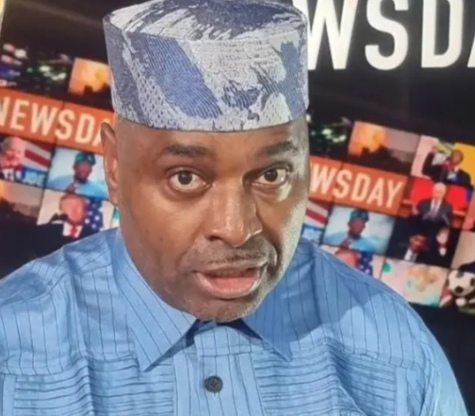
The All Progressives Congress (APC) government has been accused by Nollywood actor and politician Kenneth Okonkwo of purposefully keeping a lot of information from Nigerians.

According to reports, Okonkwo said this in an interview with the Channels Television program “Sunrise Daily.”

Kenneth discussed how an unidentified law was used to conduct the just finished Federal Capital Territory (FCT) Area Council elections, when the APC won five of the six Area Councils.

The African Democratic Congress (ADC) chieftain is skeptical of the ruling party and cautioned that Nigerians should not be influenced by their actions.

In addition, Kenneth Okonkwo asked why the gazetted copy of the Electoral Act 2026 was still unavailable.

“Nigerians should not be carried away by this dubious APC’s actions,” he declared. As of right moment, the Electoral Act 2026 has not been gazetted.

The purpose of APC’s deliberate concealment is to prevent Nigerians from understanding anything until it is too late.

“Unknown legislation was used to conduct the FCT election. Furthermore, this violates the rule of law. A law must be publicized in the public domain before it may be enforced against the people.

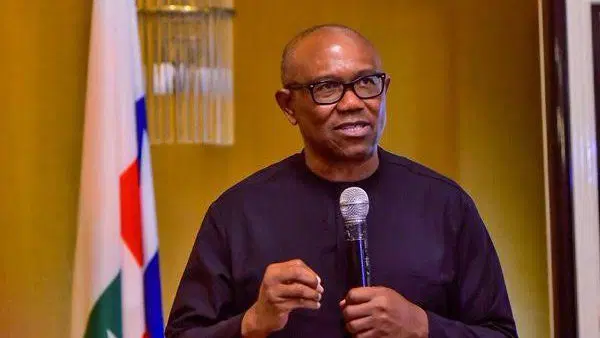
The Edo State government or its operatives, according to Kenneth Okonkwo, were responsible for the latest assassination attempt on Peter Obi, the presidential candidate of the Labour Party for 2023.

It was remembered that Peter Obi and other ADC chieftains in Edo State were ambushed by gunmen.

In an interview with Arise Television’s “Prime Time,” Okonkwo claimed that incumbent Edo State Governor Monday Okpehbolo had once threatened Peter Obi with expulsion if he entered the state without his permission.