
A young doctor has died of Ebola in Kisangani, as cases surge beyond the epicentre of the outbreak in the Democratic Republic of Congo.
Dr. Victor Kingombe, an internal medicine doctor, succumbed to the virus at the Ebola treatment centre in Kisangani, capital of Tshopo province.
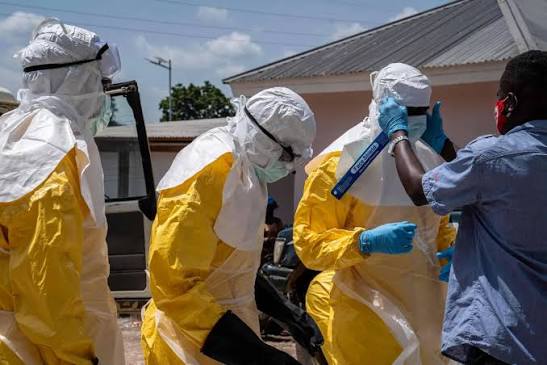
Colleagues and family gathered for his funeral, watching from a distance as health workers in full protective gear carried his body to a coffin.
“Our internal medicine doctor is gone. Doctor Victor, why? Why, Doctor? Our internal medicine doctor,” fellow doctor Agnes Kalokola cried.
Read Also: Tinubu, Guterres and Ruto Push Again for Africa’s Representation on UN Security Council
Kisangani first reported Ebola cases in late June, and the treatment centre where Kingombe died was inaugurated less than two weeks ago.
While cases have decreased this month in Ituri province, the epicentre of the outbreak, neighbouring provinces have recorded sharp increases, with North Kivu seeing a 73 percent surge in the past three weeks.
The World Health Organization has warned that the epidemic is on track to surpass the 2014-2016 West Africa outbreak, the deadliest on record.
The virus is spreading under difficult conditions, fuelled by insecurity, displacement, a health workers’ strike and intense population movements.
Health workers are also facing community mistrust, with treatment centres and burial teams attacked on several occasions as rumours spread that Ebola is not real.
Tshopo vice-governor Didier Lomoyo Iteku, who attended Kingombe’s funeral, said after viewing the body through a plastic window: “This disease is real. Here is a doctor who was here trying to save lives, and he himself was a victim.”
Congo began vaccinating health workers in Kisangani in August with the Ervebo vaccine, originally developed for the Zaire strain, which has been found to offer some protection against the current Bundibugyo strain. Trials for potential treatments are underway nationwide.