
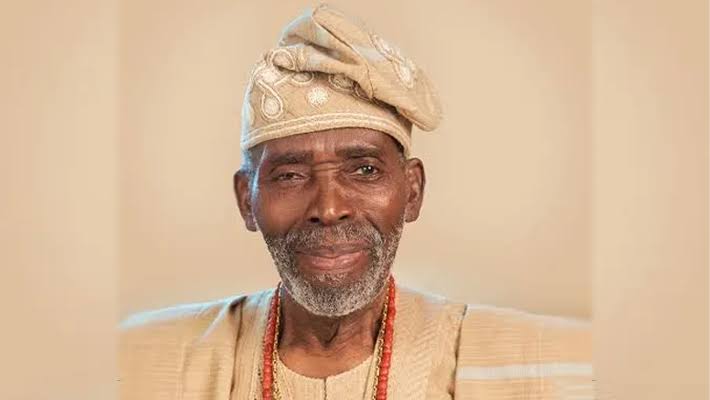
Before his exit , veteran actor Oludotun Baiyewu Jacobs, popularly known as Olu Jacobs, had repeatedly been announced dead by fake social media blogs and feeder websites.
However, yesterday, his son, Olusoji Jacobs, in a collaboration post with his father’s wife, Joke Silva, shared the shocking news.
“It is with gratitude to God for a life well lived and fought, that we announce the passing of our dear husband, father, grandfather and uncle. The Lion of Lufodo,” the post read in part.
The announcement came from the rightful source. No correction. No family denial and no video of the actor appearing to prove the reports wrong.
Olu Jacobs, born on July 11, 1942, died at 84.
The announcement brings to an end not only the life of one of Nigeria’s most excellent character interpreters but also a peculiar chapter in the history of Nigerian celebrity culture: years of false reports announcing his death. DownloadInteractive Maps
Egba heritage, Kano-raised, England-trained
Born in 1942 to parents of Egba Alake heritage, Jacobs spent part of his childhood in Kano, where he attended Holy Trinity School and participated in debating and drama.
His interest in acting was reportedly strengthened after watching one of Chief Hubert Ogunde’s concert parties at the Colonial Hotel in Kano.
He eventually travelled to England and trained at the Royal Academy of Dramatic Art (RADA), London.
Jacobs began building his reputation on the British stage and television before becoming a familiar face in international productions.
His early stage career included a role in A Taste of Honey at the Crucible Theatre in Sheffield in 1972.
He subsequently appeared in British television productions including The Goodies, Till Death Us Do Part, Barlow at Large, The Venturers, Angels, The Tomorrow People and The Professionals.
In 1978, he played President Mageeba in Tom Stoppard’s Night and Day.
His international film credits included The Dogs of War, Roman Polanski’s Pirates and Baby: Secret of the Lost Legend. Lufodo Group’s official biography also records his work with organisations including the BBC, National Theatre, Royal Shakespeare Company, Universal Pictures, MGM and Walt Disney.
But Jacobs eventually chose to return home.
The Nigerian chapter DownloadInteractive Maps
Upon his return to Nigeria in 1990, Olu Jacobs starred in the NTA detective series The Third Eye, which helped establish the foundation for the career for which he would become best known. Jacobs became one of the familiar faces of Nigeria’s emerging television and film industry, eventually becoming one of the veteran actors associated with the development of Nollywood.
His deep voice, commanding presence and ability to portray authority figures made him particularly memorable in roles as fathers, elders, traditional rulers, politicians and other figures of influence.
He appeared in more than 100 Nigerian films, with credits including Oloibiri and The Royal Hibiscus Hotel. Lufodo Group, which he co-founded, says his body of work spans stage, film and radio and includes more than 300 Nigerian movies.
Lufodo Academy of Performing Arts was established to train performers and raise professional standards in stage, television and film production.
The honours
His contribution to the arts brought numerous recognitions.
Jacobs won the African Movie Academy Award for Best Actor in a Leading Role for Dancing Heart in 2007. He was honoured with the Industry Merit Award for outstanding achievement in acting at the 2013 Africa Magic Viewers’ Choice Awards and an AMAA Lifetime Achievement Award in 2016.
In 2011, the Federal Government conferred on him the national honour of Member of the Order of the Federal Republic (MFR).
In November 2021, after another wave of reports that he had died, Jacobs appeared at the Africa International Film Festival, where he received a Lifetime Achievement Award. The appearance provided perhaps the most dramatic rebuttal to the rumours that had dogged him.
A final goodbye
Olu Jacobs leaves behind a body of work, a great personality and an institution-building legacy that extended beyond the screen.
The man whom colleagues and admirers in the movie industry fondly called “Uncle Olu” is now finally gone.