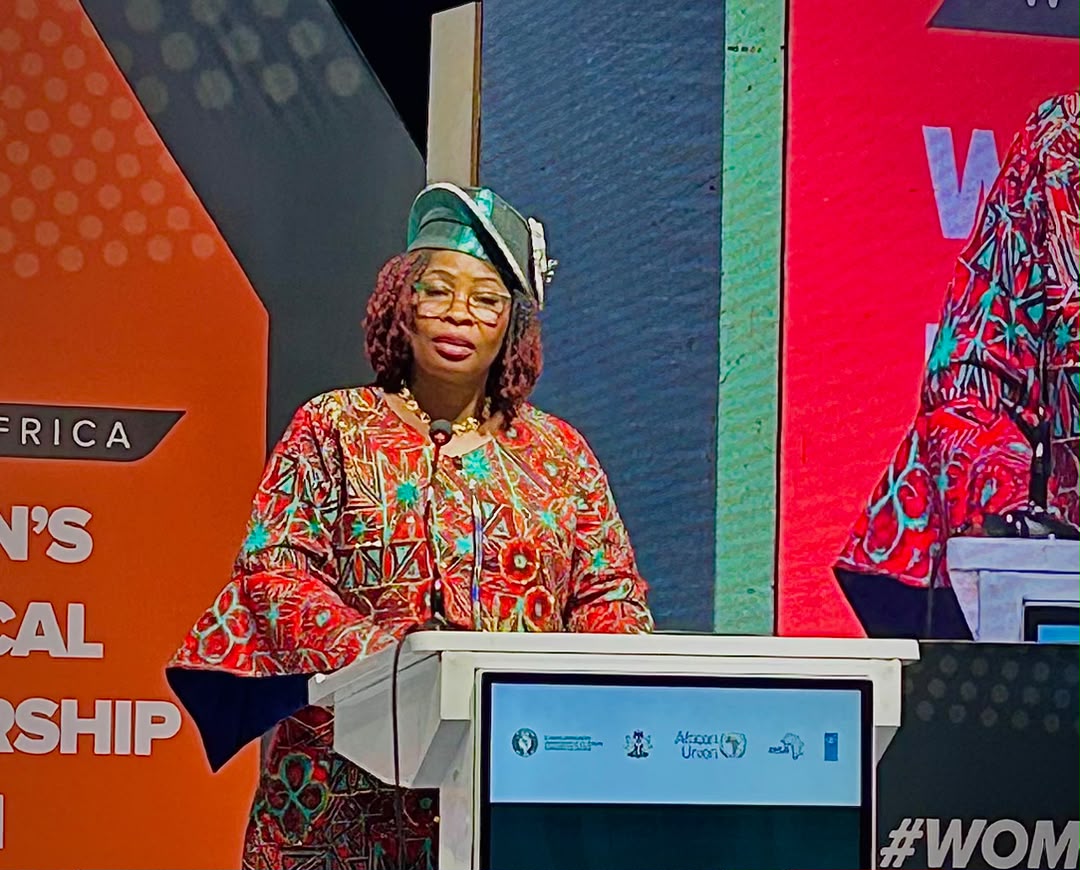
The West Africa Women’s Political Leadership Forum has adopted the Abuja Regional Action Plan on Accelerating Women’s Political Participation and Leadership in West Africa. This is a collective commitment by governments and stakeholders to translate the region’s gender parity aspirations into concrete action across the ECOWAS region.
Presenting the Action Plan at the close of the forum in Abuja, Dr Isata Mahoi, Sierra Leone’s Minister of Gender and Children’s Affairs, said the framework was adopted by representatives of ECOWAS governments, the African Women Leaders Network (AWLN), political leaders, parliamentarians, civil society organisations, the media, academia, development partners and young women leaders.
The Action Plan reiterates that “women’s equal and meaningful participation in political and public life is not only a fundamental human right, but also essential to democratic legitimacy, inclusive development, sustainable peace and resilient societies”.
It further notes that West Africa is “at a critical political juncture” with elections, constitutional reforms and political transitions determining the future of democracy, peace and development.
Read Also: Nigeria Launches National Safe Schools Department to Protect Students
It recalls the Freetown Declaration adopted by the ECOWAS Authority of Heads of State and Government, and commits governments and stakeholders to legal and policy reforms, safe political spaces, stronger mentorship, accountability mechanisms, and measures to address structural financial barriers limiting women’s political participation.
In his closing submissions, United Nations Development Programme Director, Dr Jide Okeke, promised continued support to the implementation of the roadmap while reminding the participants that “ensuring implementation lies in their hands.”
Bineta Diop, Co-Convener of the African Women Leaders Network, said the adoption of the framework was a defining moment for women political leadership.
Today we adopt the Abuja Regional Action Plan. This is no mere declaration. This is a call to arms. It’s a collective commitment to take us from where we are today in our aspiration and for women in politics,” she added.
Diop said the focus now must be on implementation, adding, “The forum therefore is not just a talk show for women political leadership. It’s something tangible for us, a platform for action, a platform for implementation, accountability and results to be achieved.”
“As AWLN, I also commit to continue to support the implementation of the Action Plan,” she pledged continued support.
Now it is up to governments and institutions to translate commitments into concrete actions, ECOWAS Vice President, Damtien Tchintchibidja said.
It is now our responsibility to translate the Presidential Declaration and the Abuja Regional Action Plan into tangible results. “We need to take this framework into our national institutions, our parliaments, our political parties, our electoral systems and our communities as well,” she said.
“It provides a pragmatic framework for implementation, identifying priority actions, assigning responsibilities and establishing measures for monitoring progress across the broader political ecosystem,” she said. Implementation must be supported by “adequate resources, strong coordination, reliable data and clear accountability”, she added.
Tchintchibidja reaffirmed ECOWAS’ commitment to support member states through technical assistance, strategic alliances, and peer learning. “Together, hand in hand, we can make real change happen.”
The two-day forum was organised by ECOWAS in partnership with the Federal Government of Nigeria, the African Union, the African Women Leaders Network and the United Nations Development Programme.