Nigeria’s Senate found itself at the center of national concerns during a turbulent and unpredictable year, dealing with pressing economic issues and growing insecurity. Every legislative session represented the pulse of a country demanding responsive governance as inflation skyrocketed and public unrest increased. Lawmakers had to balance upholding order with attending to the urgent issues of their constituents while dealing with the demands of constituency expectations and internal party dynamics. During a crucial year in Nigerian politics, SOLA SHITTU explores the Senate’s perseverance and shortcomings as it navigated these choppy waters.
The gavel struck more forcefully than normal on a stressful afternoon in the crimson chamber. While the galleries were calm, the surrounding countryside was not. The morning news was dominated by inflation statistics, security briefings were popular on digital platforms, and senators’ phones were constantly ringing with comments from constituents who were affected by every policy move made in Abuja. This was obviously not your typical sitting when the presiding officer called the chamber to order. It was simply another day in a year that kept pushing Nigeria’s Senate to the edge of institutional resolve and public tolerance.
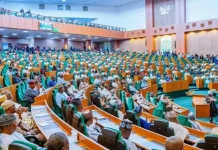
The Senate functioned under the scrutiny of widespread fear all year long. Lawmaking was no more a far-off process shielded by procedure; instead, it took place in the context of growing costs, growing insecurity, and irate citizens. While confirmations, budget approvals, and policy endorsements were assessed based on their immediate impact on day-to-day living, motions discussed on the floor were immediately scrutinized outside the chamber. The Red Chamber essentially turned into a mirror reflecting the tensions in the nation.
“This was a perfect storm for the legislature,” says Dr. Nkechi Onu, a Center for Democracy and Development governance specialist. Senators were required to enact laws not just according to protocol but also in accordance with national sentiment. Beyond simple legal compliance, each vote and motion carried symbolic weight.
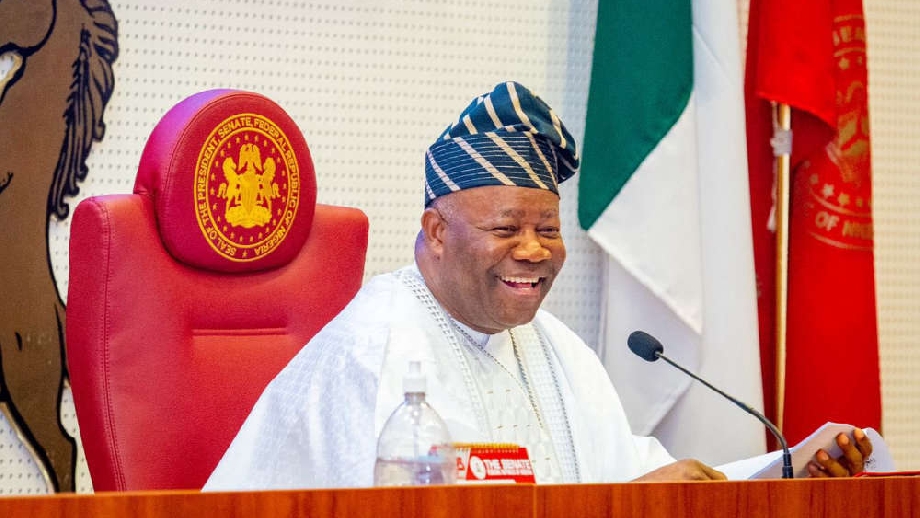
This delicate balance was overseen by a leadership committed to maintaining control in the face of uncertainty. Godswill Akpabio, the president of the Senate, kept a tight hold on the proceedings and insisted on discipline, speed, and order as stabilizing factors in a volatile political environment. Because both the Senate and the executive branch shared the view that legislative paralysis may worsen economic hardship and security issues, their relationship remained largely cooperative. However, this cooperation was frequently put to the test, especially when measures sparked opposition from the public and lawmakers had to balance party allegiance against demands from constituents.
The Senate’s agenda and public scrutiny were mostly focused on economic issues. Discussions over budget standards, taxation, income generation, and subsidy modifications became hot topics for criticism. Aware of the sentiment back home, senators spoke not only as lawmakers but also as political representatives. On the floor, a number of people publicly cautioned that hasty or insensitive actions could undermine confidence and stoke animosity.
Usually procedural, budget sessions became unusually intense. In a period of widespread hardship, debates on borrowing plans, oil benchmarks, and deficit finance were framed not only as financial choices but also as moral ones. Labor unions, civil society organizations, and market players kept a careful eye on the Senate’s approval procedures since they were all looking for clues regarding the government’s economic agenda. Beyond the chamber, every modification or alteration had symbolic significance.
“Senators weren’t just rubber-stamping budgets,” says economic policy researcher Chinyere Uzo. They had to deal with changes to the oil benchmark, improvements to subsidies, and financing for deficits. Every choice has an instant societal impact. Lawmakers were under tremendous pressure as a result of the constituents’ financial hardship.
The 2025 Appropriations Re-enactment Bill did, in fact, highlight the level of fiscal scrutiny. Senators from both parties examined President Bola Ahmed Tinubu’s request for parliamentary clearance to release ₦43.56 trillion in-depth. The breakdown of capital projects, debt servicing, statutory transfers, and recurring expenditures was discussed by lawmakers. While some questioned the viability of borrowing plans, others called for quick approval to avoid administrative stagnation.
“Every figure debated on the floor carried a real human story,” a senior senator who wished to remain anonymous stated. “You couldn’t talk about billions without considering families that are having a hard time making ends meet or students who are having trouble paying their tuition.”
Concerns about security were a persistent undercurrent. Plenary sessions were soberingly frequently interrupted by motions on violent attacks, kidnappings, and regional instability. As senators described episodes from their constituencies, the chamber occasionally fell into uncomfortable quiet as they blended legislative language with personal sorrow. The calendar began to regularly incorporate emergency sessions and private briefings, which strengthened the impression that the legislature was under constant pressure.
“Motions on violent attacks weren’t just parliamentary rhetoric,” says political analyst and former security assistant Peter Adebayo. The constituencies’ actual pain was reflected in them. Direct testimony from communities and families was given to senators. Because they were trying to get it right, that emotional weight influenced discussion and occasionally slowed down decision-making.
Legislation and oversight were frequently combined in the Senate’s reaction to security-related issues. Chiefs of the police and military were called before committees to discuss tactical gaps, budgets, and operations. A critical audience seeking for accountability saw several hearings in real time as they developed into public clashes. Others were settled amicably through backstage discussions that seldom made the news. A fundamental conundrum was brought to light by this contrast: how to use authority without undermining governance.
Oversight operations led to some of the most dramatic events of the year. Committees questioned agency leaders, budgets, and well-known projects. Live broadcasts of hearings increased public interest as confrontation and accountability became entwined. From technical budget clarifications to direct requests for justifications of public service failures, senatorial questioning covered a wide range.
Professor Emeka Okafor, a constitutional attorney at the University of Lagos, states that the Senate had to balance upholding accountability with permitting governance to continue. Oversight is crucial, but institutional stagnation could result from ongoing conflict without a resolution. They had to tread carefully all year long.
The Senate’s internal dynamics put unity to the test. Hasty caucus meetings and short-term adjournments were the result of intense discussions about economic measures. The moral need to alleviate public suffering, regional interests, and party allegiance had to be balanced by the leadership.
Political scientist Ibrahim Sule observes that Senate leadership has to constantly strike a balance between party allegiance and constituency demands, as well as speed and inspection. “Akpabio’s insistence on order was a stabilizing response to pressure on multiple fronts; it was not just formalism.”
Criticisms of obstructionism followed accusations that the chamber was too close to the executive. Senators discussed how to strike the right balance between independence and cooperation, knowing that public confidence changed with each choice.
Public opinion turned out to be one of the Senate’s most enduring problems. Civil society criticism, protests outside the National Assembly building, and constant media coverage made sure that few choices went ignored. Every motion, vote, and comment was magnified by social media, which frequently presented the discussion as a test of the legislators’ abilities.
According to media strategist Funke Adeyemi, “24-hour news cycles and social media made sure that no decision went unnoticed.” The Senate’s responsiveness and institutional rigor had to be balanced. Too much delay led to criticism, and too much hurry increased the chance of errors.
While some senators used stakeholder consultations and town halls to interact directly with critics, others relied on protocol to handle public criticism. The year’s defining fault line was the discrepancy between public expectations and institutional rationale.
Beyond the formalities of committee and plenary work, there was a personal cost. Senators discussed in private how lobby organizations, party leaders, and constituents were putting constant pressure on them. Late into the night, calls for assistance, clarification, or intervention rang out. Employees put in long hours to monitor movements, write reports, and plan public relations campaigns.
“The amount of calls, emails, and messages was overwhelming,” a legislative assistant remarked. “Managing expectations and making sure people felt heard were more important than simply passing laws.”
Quieter victories frequently went mostly unnoticed in the middle of this upheaval. Following stakeholder involvement, amendments were improved, committee reports incorporated constituency concerns, and potentially divisive proposals were defused through concessions. The hidden unfolding of legislative action was made up of these small victories that were obscured by more dramatic catastrophes.
Dr. Onu points out that not every achievement gets headlines. However, sustainable governance requires these behind-the-scenes changes. They show that the Senate is able to compromise and change.
As the year went on, it became evident that the Senate was being put to the test on empathy, discretion, and resilience in addition to productivity. Moments of unusual consensus were also produced by decisions made under duress, which exposed divisions within parties and between regions.
By the last few months of the year, weariness was apparent. Both politicians and staff were burdened by the sheer number of motions, debates, and emergency sessions. However, a sense of institutional resilience was also present. Even if questions remained about whether the Senate had done enough to close the gap between policy and perception, it had absorbed waves of criticism, modified its procedures, and carried on with its operations.
According to Professor Okafor, “Nigerian institutions can withstand crises because of the Senate’s resilience under pressure.” However, converting legislative efforts into concrete results is essential for maintaining public trust over the long term. Even well-meaning choices will be questioned if they have no obvious effect.
At the end of the year, the red chamber was clearly at a turning point. Its strengths and weaknesses had been revealed after months of working under close observation. Even if unanswered concerns about openness, responsiveness, and independence persisted, the Senate showed the capacity to absorb shocks, modify deadlines, and reevaluate priorities.
In the end, the year was more defined by what it showed about Nigeria’s struggling legislature than by any particular measures. The Senate emerged as an institution walking a tightrope between stability and sensitivity rather than as an inflexible gatekeeper or a passive appendage. It was a year of cautious reform, crisis management, and nonstop compromise.
Within the red walls of the chamber, the lessons of pressure, compromise, and consequence reverberate as another legislative year approaches. It’s still unclear if the Senate can use these lessons to build more public trust. It is evident that the institution has been altered by the experience, molded by a year in which the daily challenges of the country it serves were inextricably linked to the legislative process.