Following President Bola Tinubu’s declaration of a national security emergency, the Nigerian Army has stated that all statutory and voluntary retirements for specific categories of officers will be suspended.
With almost 600 mass kidnapping cases reported in November alone, the action is a reaction to the nation’s growing insecurity. Among the notable events were the abduction of more than 300 students in Niger State, 38 worshippers in Kwara State, and 25 students in Kebbi State.
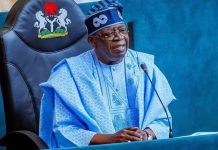
President Tinubu declared a national security emergency on November 26 in response to these crimes, ordering the military, police, and intelligence services to greatly increase recruiting and deploy thousands of additional troops in order to counter the growing number of kidnappings and acts of terrorism.
The decision to halt retirements for impacted officers was detailed in an internal memo dated December 3 and signed by Maj. Gen. E. I. Okoro on behalf of the Chief of Army Staff.
As the Armed Forces step up efforts to address the escalating security issue, the directive emphasized the necessity of keeping experienced people to sustain operational capacity.
Referencing the Harmonised Terms and Conditions of Service Officers (HTACOS) 2024, the memo stated that although officers are typically expected to retire upon reaching their age limit, completing 35 years of service, or following repeated promotion or conversion failures, extensions of service are allowed under Paragraph 3.10(e) in the interest of the military’s operational needs.
“A commissioned officer’s military service comprises a period of uninterrupted service in the AFN from the date of enlistment or commissioning to the date of retirement,” the document stated in part. The terms outlined in the HTACOS Officers 2024 define the duration of service. These include meeting age restrictions on different ranks, serving for a maximum of 35 years, and meeting additional requirements listed in Paragraphs 11.02(d) and 17.15, among other current regulations.
“Chapter 3.10(e) of HTACOS Officers 2024 permits officers to extend their service in the interest of the service, despite these limitations.
On November 26, the President and Commander-in-Chief proclaimed a national security emergency, requiring the AFN and other security agencies to be expanded. In keeping with this, it has become necessary to temporarily halt all statutory and voluntary retirements from the Nigerian Army with immediate effect in order to quickly increase manpower.
The circular states that officers who have failed promotion exams three times, passed promotion boards three times, reached the age limit for their ranks, failed conversion boards three times, and completed 35 years of service are all subject to a temporary suspension.
Affected officers may request to serve over their regular retirement dates, according to the Army.
“Officers in these categories should proceed with the standard retirement process if they are not interested in extending their service. According to the document, officers who want an extension should be aware that they will not be able to advance in their careers through career courses, promotion, NA sponsorship, self-sponsored courses, secondment, or extra-regimental postings.
It stated that the policy will be revised as the security situation improved and instructed all commanders to control morale and distribute the directive.
Ex-Generals and Veterans React to Retirement Suspension
In an interview with Punch, Awwal Abdullahi, Secretary-General of the Military Veterans Federation of Nigeria, described it as a positive step.
“I firmly support it,” he declared. In addition to being insecure, these policemen receive taxpayer funding for their training, yet due to appointments, many are retiring early.
When service heads are appointed, junior officers are asked to leave; however, if their junior is selected, these officers can be transferred to the defense headquarters, where they will directly report to the chief of defense staff.
Additionally, it is a waste of money to retire these trained officers because you appointed their junior because the majority of them have more experience than the junior ones. Thus, I believe that delaying retirement is the best course of action.
Additionally, retired Brigadier General Peter Aro stated that keeping experienced staff would help stabilize command structures during ongoing operations and that the policy was a legitimate short-term emergency reaction.
The Army must improve welfare and offer additional financial incentives, he said, even though the extension’s voluntary character was praiseworthy.
“Retaining seasoned officers and soldiers will help stabilize command, preserve operational experience, and prevent leadership gaps given the scale of insecurity and the shortage of experienced personnel,” Aro said. That aspect of the policy is praiseworthy as officers are required to demonstrate voluntary interest.
However, there must be appropriate welfare and financial incentives because they will not be able to advance in their careers or receive promotions. A higher wage and benefit package based on seniority and the extra years they must serve should be offered to those who have used up all of their opportunities for advancement, age restrictions, or service years. Many might turn down the offer in the absence of such rewards.
In addition, he urged the military to eliminate the “silent dichotomy” between regular officers and short-service entrants and advocated for aggressive recruitment, expedited training, better welfare, and reforms to solve manpower shortages.
Brigadier General Bashir Adewinbi (retd.), another retired commander, supported the suspension as well, characterizing it as a sensible measure in a crucial security scenario.
He said that continuing to serve the country after a typical retirement should be viewed as a pleasure and a chance to do so.
This system is well-structured. “I am confident that the leadership will make any necessary changes to the terms and conditions of service,” he stated.
Adewinbi insisted that the current institutions would minimize confusion, dismissing worries that officers who failed promotion exams could find it difficult to serve under junior commanders.
The policy was also applauded by retired Brigadier General George Emdin, who urged the military to abandon the custom of retiring commanders when their classmates become service heads, claiming that this approach deprives the military of important knowledge.
He was against keeping cops who consistently failed promotion tests, nevertheless.
He continued, “The work is dangerous; their welfare should be top-notch.”